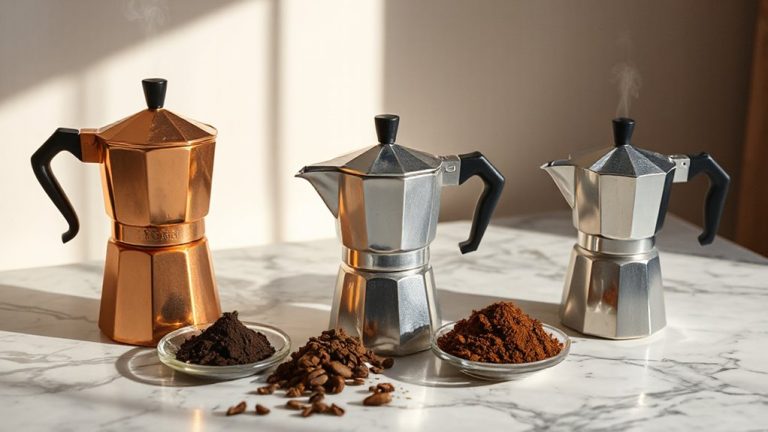
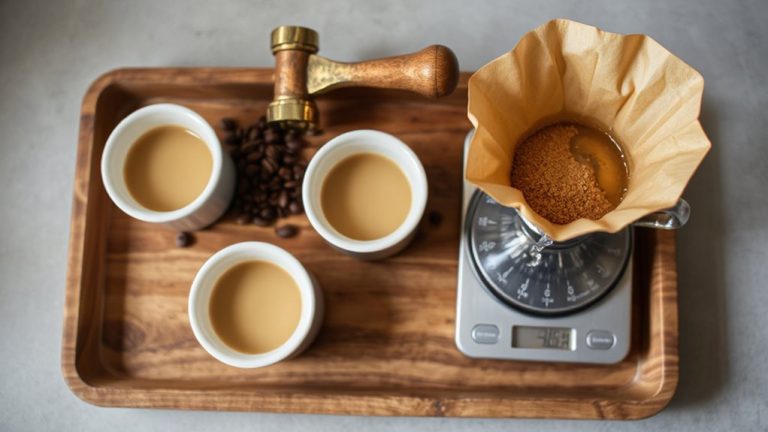
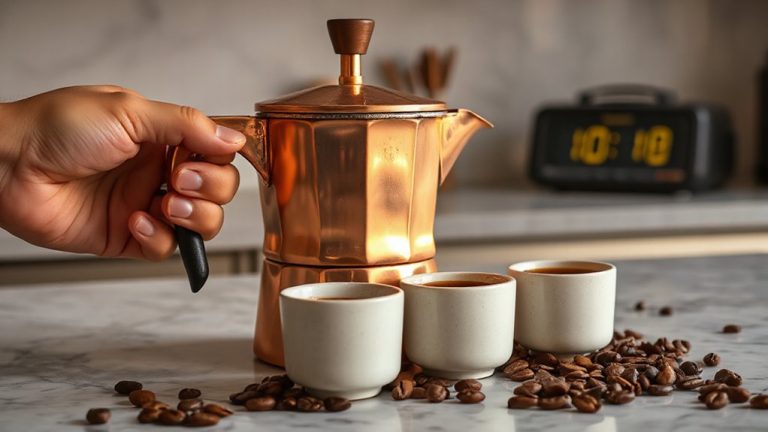
Maximizing Extraction Efficiency for Espresso Machines Through Proper Bean Selection and Grind Size Adjustment
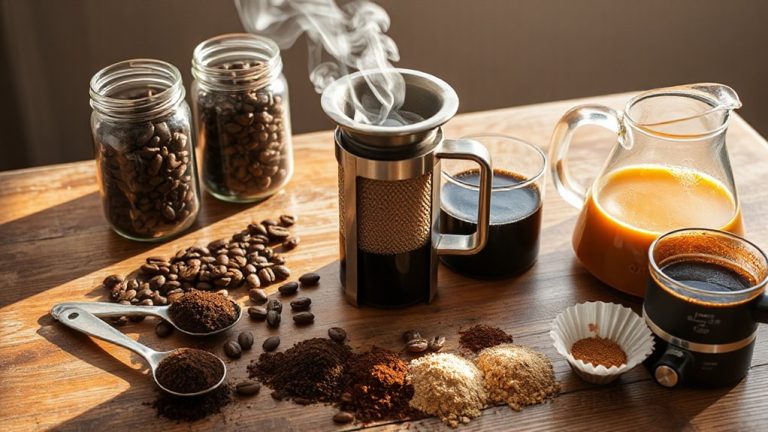
You get better extraction by using fresh beans, ideally 2–4 weeks post-roast, stored in airtight, opaque containers. Pick a roast and origin that match your taste-Ethiopian for bright notes, Brazilian for chocolate. Grind just before brewing with a burr grinder like the Baratza Encore for consistency. Adjust grind size to hit a 25–30 second extraction; too coarse tastes sour, too fine turns bitter. Calibrate your machine to hold 9 bars and 200°F. Track dose, time, and flavor to fine-tune results. The right setup makes precision repeatable.
Notable Insights
- Select fresh, high-quality beans within 2–4 weeks post-roast to ensure optimal flavor and extraction potential.
- Match bean origin and roast level to desired flavor profile, using medium-dark roasts for balanced traditional shots.
- Grind beans immediately before brewing to preserve freshness and achieve consistent particle size.
- Adjust grind size to achieve a 25–30 second extraction time, targeting table salt-like consistency for even flow.
- Use a burr grinder and calibrate settings based on bean density and machine temperature for precise extraction control.
Optimize Extraction for Better Espresso
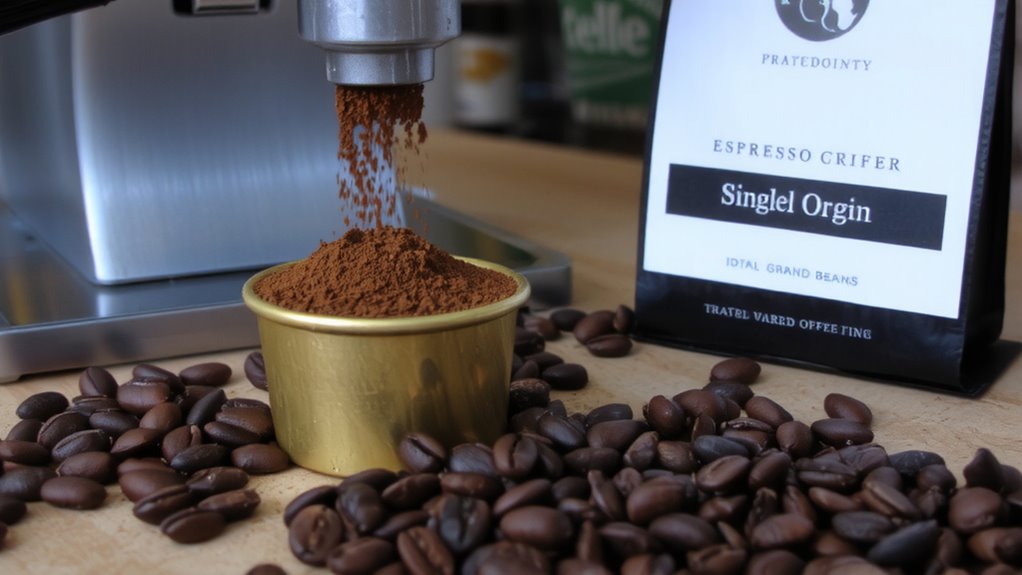
While pulling a shot might seem straightforward, getting the most out of your espresso means paying close attention to extraction. You need consistent water temperature-typically between 195°F and 205°F-to properly dissolve flavors without burning the puck. Too hot, and your shot turns bitter; too cool, and it’s sour. That’s where machine calibration comes in. Regularly checking and adjusting your machine guarantees temperature stability and correct pressure (aim for 9 bars). Machines like the Lelit Bianca or Rocket R58 let you fine-tune these settings, but even basic models need periodic checks. Without proper calibration, your results will vary no matter how good your technique. You’re not just relying on gear-you’re making it work reliably. Track changes, clean components weekly, and use a digital thermometer to verify output. Small tweaks in water temperature and calibration directly impact shot quality, giving you control over every espresso.
Choose Fresh Beans That Enhance Flavor
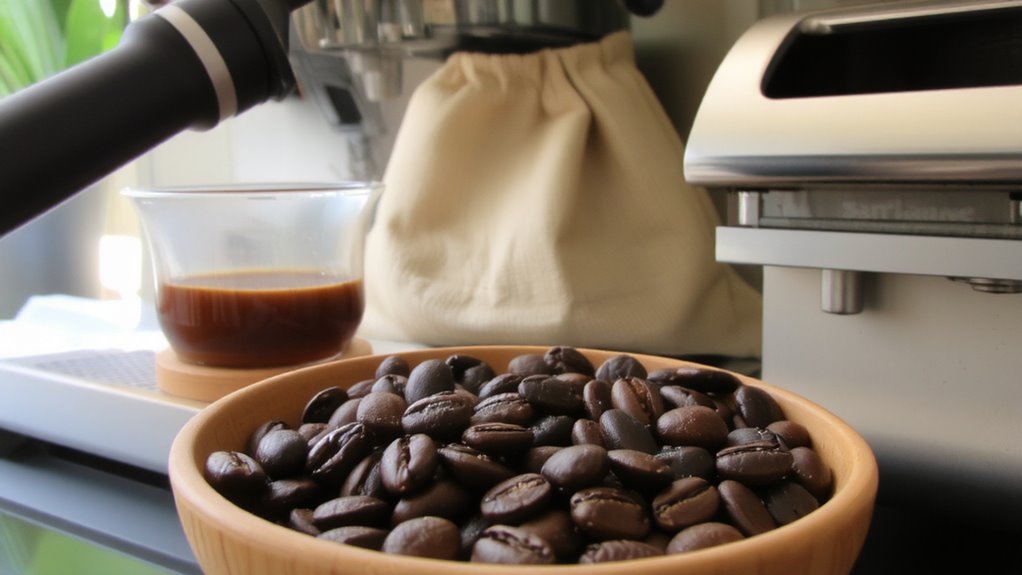
You’ve got your machine dialed in and your water temperature steady, but none of that matters if the beans aren’t up to par. Freshness directly impacts flavor, and stale beans lose aromatic compounds quickly, dulling your espresso. Look for roast dates on packaging-beans are best used within 2–4 weeks post-roast. Proper bean storage is key: keep them in an airtight container away from light, heat, and moisture. Avoid clear canisters on the counter or storing beans in the fridge-both hurt flavor preservation. Vacuum-sealed or one-way valve bags help maintain quality, but transfer promptly to a dark, cool cupboard. Even high-end grinders and machines can’t revive flat beans. Prioritize freshness from reputable roasters who roast to order. Flavor preservation starts the moment beans are roasted, so buy in small batches and grind just before brewing. Your espresso’s brightness and complexity depend on it. A clean roast process using an efficient coffee chaff collector ensures fewer impurities affect bean quality during roasting.
Match Roast and Origin to Your Espresso Style
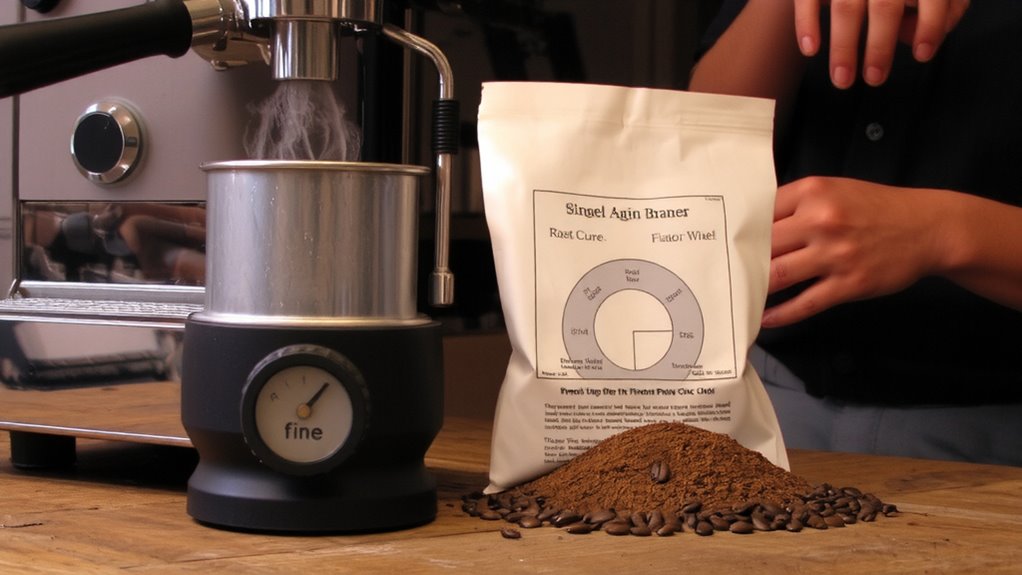
Coffee’s roast level and origin shape your espresso’s character more than most realize. Your choice of bean origin affects acidity, sweetness, and body-Ethiopian beans bring floral, bright notes, while Brazilian ones offer nutty, chocolatey depth. These traits interact directly with your roast profile. Lighter roasts preserve origin characteristics and acidity but may lack body; darker roasts add boldness and bitterness, smoothing out complex notes. If you’re pulling traditional Italian-style shots, a medium-dark roast from a blend like Sumatra and Guatemala gives that heavy, syrupy punch. For brighter, modern espresso, go light roast with a single-origin like Kenya. Matching bean origin to roast profile guarantees balance. Don’t force a delicate Yirgacheffe into a dark roast-it’ll burn out. Choose based on your preferred flavor style and machine capability. It makes extraction more predictable and your shots more consistent.
Control Taste With the Right Grind Size
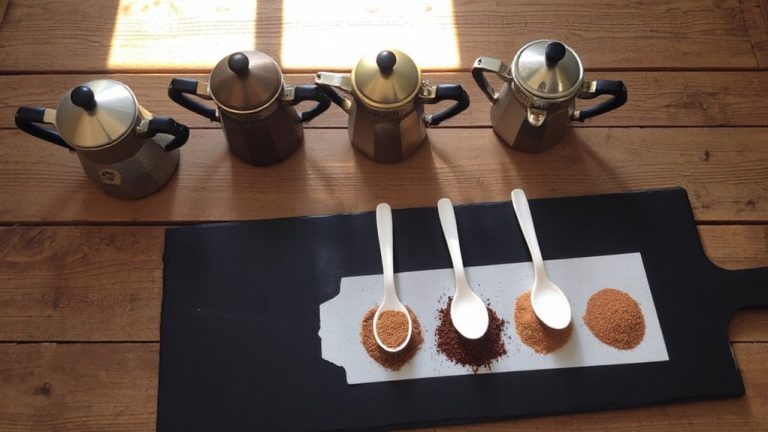
Grind size is one of the most direct levers you have to control espresso flavor, and it works hand in hand with your bean choice. If your grind is too coarse, water flows too quickly, leading to weak, underdeveloped shots. Too fine, and you risk over-extraction with bitter, dry results. The right grind texture guarantees even extraction-aim for something like table salt for most machines. Your grinder’s quality directly affects particle distribution; cheaper blade grinders create inconsistent bits, while burr grinders deliver uniformity. Inconsistent distribution causes some particles to extract too fast, others too slow. For 9-bar home machines, a precise conical burr grinder like the Baratza Encore improves control. Adjusting grind size isn’t about preference-it’s about matching your setup to the beans you’re using. Get this right, and you’ll taste clarity, balance, and the full potential of your coffee.
Dial In Your Espresso Grind for Balance
While extraction time gives you a starting point, dialing in your espresso grind is where precision meets performance, and small changes make a big difference. You’ve got to tweak your grind based on bean density and water temperature to hit balanced shots. Dense beans, like high-altitude Ethiopians, often need a finer grind, while softer beans may require coarser settings. Water temperature shifts extraction speed-higher temps extract faster, possibly demanding a coarser grind. Consistent tamp pressure ensures even extraction and complements precise grind adjustments.
| Bean Type | Grind Suggestion | Temp Consideration |
|---|---|---|
| Light Roast | Finer | Lower density |
| Dark Roast | Coarser | Higher solubility |
| Fresh Crop | Adjust finer | Sensitive to heat |
| Aged Bean | Coarser | Reduced volatility |
| Single Origin | Dial in daily | Varies by region |
Match grind to your setup-consistency is key.
Fix Sour or Bitter Shots in Seconds
A sour shot or a bitter finish doesn’t mean starting over-it means adjusting fast. If your espresso tastes sour, the water temperature might be too low, under-extracting the shot. Try increasing it by 5–10°F; many machines let you tweak this directly. On the other hand, a bitter taste often points to over-extraction, which can come from excessive pump pressure or too fine a grind. Most commercial machines run at 9 bars-ideal for balance-but older or budget models may exceed this, increasing bitterness. If you can’t adjust pump pressure, shorten brew time instead. Check your grind: slightly coarser can reduce bitterness without sacrificing crema. Fresh beans matter, but even good beans go off if the machine settings are wrong. Adjust temperature and grind first-you’ll fix most off-flavors in seconds. Keep track of changes so you can repeat what works. For pod-based systems, choosing the right dark roast K-Cup can also impact extraction quality and flavor balance. Consider trying one of the top-rated best K-Cup dark roast options for a more consistent base.
Keep Every Shot Identical
Even if your machine is dialed in, small inconsistencies can still throw off your espresso-so treat every step like a repeat attritable process. Use beans from the same batch to guarantee bean consistency, since roast date and origin affect extraction. Weigh your dose precisely-most baristas use 18–20 grams-for reliable shot calibration. A quality burr grinder keeps particle size uniform; blade grinders don’t cut it. Tamp evenly with a calibrated tamper to avoid channeling. Track shot time: 25–30 seconds for a double shot is ideal. If it’s too fast, adjust the grind finer; too slow, go coarser. Pre-infusion settings on machines like the Breville Dual Boiler can improve stability. Logging each change helps maintain control. Skipping steps leads to variability, even with great gear. Consistency isn’t automatic-it’s built through repetition, attention, and smart adjustments grounded in observation and data.
On a final note
You get the best espresso by picking fresh, high-quality beans that match your taste-light roasts for brightness, dark for richness. Always grind fresh and adjust the size to fix sour or bitter shots. A finer grind slows extraction, adding body; coarser speeds it, reducing bitterness. Dial in each time for consistency. Machines like the Breville Barista Express make it easier, but precision matters most.