French Press Coffee Storage: Keeping Brewed Coffee Fresh for Up to 24 Hours
Store your French press coffee right after brewing in an airtight container made of glass or stainless steel to block oxygen and odors. Chill it within 30 minutes to slow oxidation and keep it good for up to 24 hours. Never leave it in the press or use a loose lid. Reheat gently on the stovetop to preserve flavor. If it smells sour or tastes flat, it’s done. There’s more to get right if you want the best results every time.
Notable Insights
- Transfer brewed French press coffee immediately to an airtight container to minimize oxidation.
- Use glass or stainless steel containers with secure seals to preserve freshness and prevent odor absorption.
- Refrigerate the coffee within 30 minutes of brewing to maintain flavor for up to 24 hours.
- Avoid microwaving when reheating; use a stovetop or electric warmer for even, gentle heating.
- Discard coffee if it smells sour, musty, or shows any mold-even without visible signs, off tastes indicate spoilage.
Store French Press Coffee Immediately in an Airtight Container
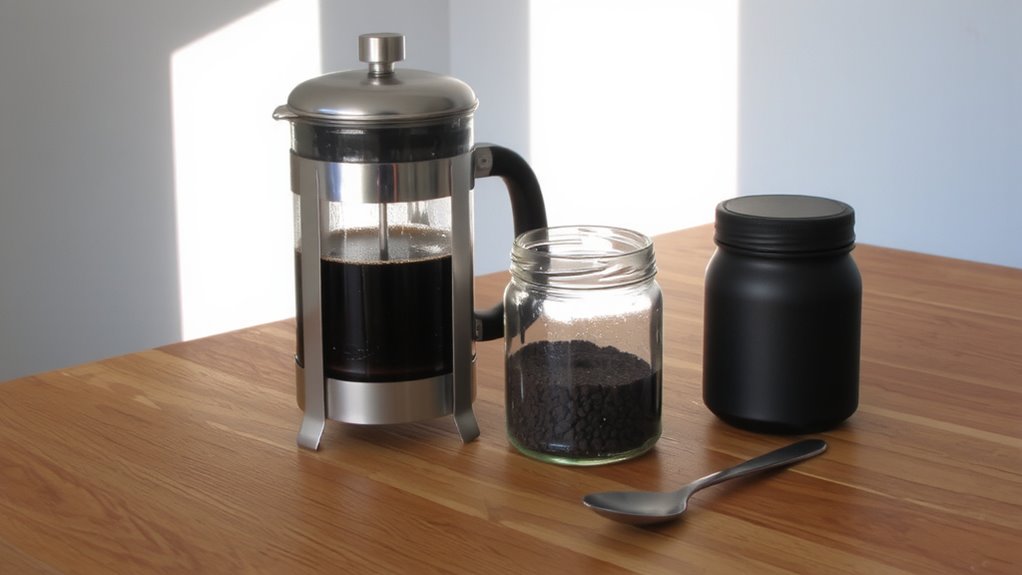
Right after brewing, transfer your French press coffee to an airtight container to preserve freshness and prevent oxidation. The container type matters-glass and stainless steel are top choices. Glass won’t absorb odors and lets you see the brew level, while stainless steel offers better insulation and durability. Always prioritize a container with a secure sealing method. Twist-on lids with rubber gaskets create a tighter seal than snap-on lids, minimizing air exposure. Avoid containers with loose seals or wide mouths, as they let in more oxygen, speeding up flavor degradation. A narrow opening reduces surface area, slowing oxidation. If you’re storing coffee short-term at room temperature before refrigeration, the right combination of container type and sealing method will maintain its quality longer. Use what’s practical and well-built-like a locking-lid mason jar or a thermos with a silicone seal-for the best results. For long-term ground coffee storage, consider a coffee storage container with one-way valve technology to release CO2 while preventing oxygen entry.
Keep It Fresh: Refrigerate Your Brew the Right Way
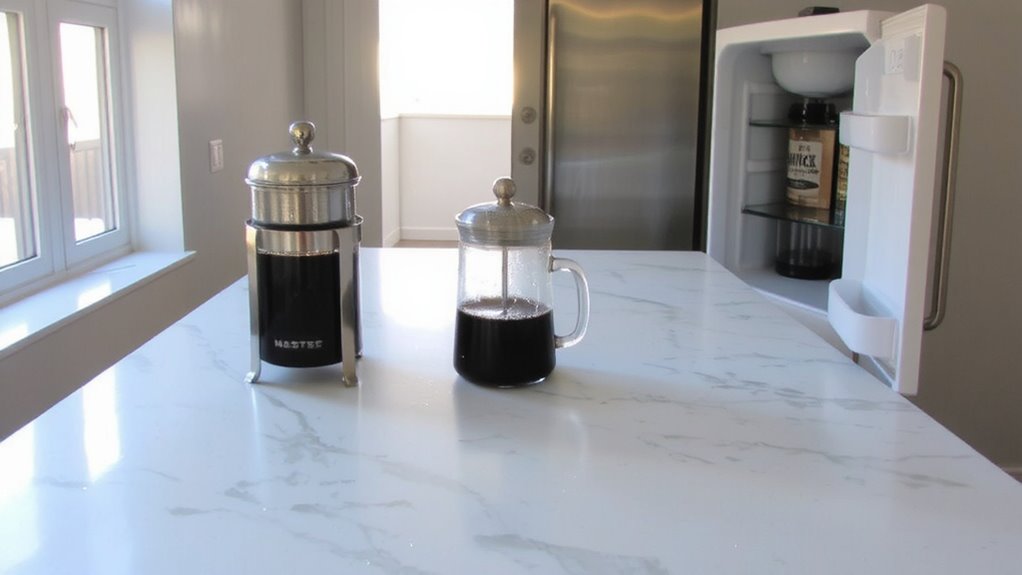
After transferring your French press coffee to an airtight container, refrigerate it promptly to slow flavor loss. This helps minimize slow oxidation, which degrades taste and aroma over time. Keeping your brew cold preserves clarity and body, especially if you plan to use it for cold infusion methods later. Glass or stainless steel containers work best-they don’t retain odors and seal tightly to protect flavor. Avoid leaving coffee at room temperature for more than an hour. The fridge isn’t a fix-all; it slows deterioration, not stops it. For best results, chill it within 30 minutes of brewing. Don’t place the French press itself in the fridge-always decant first. Your coffee will maintain its quality for up to 24 hours when stored this way. This method works well for both hot coffee reuse and cold coffee applications. For optimal long-term freshness of unused beans, consider using one of the best coffee bean storage containers available, such as those made with airtight stainless steel.
Reheat Without Ruining the Flavor
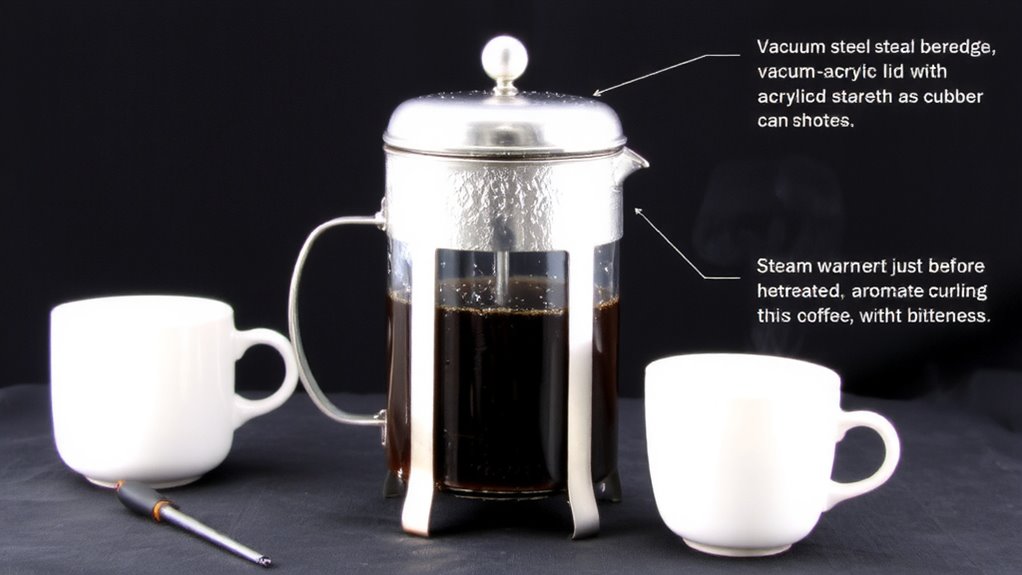
You’ve cooled your French press coffee properly and stored it in an airtight container-now what? Reheating without damaging flavor preservation means controlling coffee temperature carefully. Avoid the microwave if you can-it heats unevenly and often pushes delicate notes into bitterness. Instead, use a stovetop or small electric warmer for more consistent results. The table below compares common reheating methods:
| Method | Temp Control | Flavor Preservation |
|---|---|---|
| Microwave | Low | Poor |
| Stovetop | High | Good |
| Electric Warmer | Medium | Good |
Gentle, even heat works best. A stovetop gently brings chilled coffee back to around 155–165°F, preserving body and aroma. Electric warmers like a gooseneck kettle with temp settings also offer strong results. Microwaving might be fast, but it sacrifices flavor preservation with unpredictable coffee temperature spikes. When reheating, patience supports quality.
How to Tell When French Press Coffee Has Gone Bad
A sour smell or off taste is usually the first sign your French press coffee has gone bad. If you notice an off putting odor-like vinegar, mustiness, or something stale-don’t drink it. That’s a clear signal oxidation and bacteria have started breaking down the oils. Over time, especially if left out too long, the coffee can develop mold growth, particularly around the carafe’s rim or press where moisture collects. Check for fuzzy spots or discoloration-visible mold means discard it immediately. Even if there’s no mold, a flat, rancid taste means it’s past its prime. Reheating won’t fix spoiled flavor. When in doubt, trust your nose and taste. Stale isn’t dangerous, but bad coffee with an off putting odor or mold growth should never be consumed. Fresh brew lasts best within 12–24 hours when stored properly.
Why French Press Coffee Stales Faster Than Other Brews
Because French press coffee retains more of the bean’s natural oils and fine particles, it tends to degrade faster than cleaner brewing methods like drip or pour-over. These suspended solids expose more surface area to the oxidation process, speeding up flavor loss. Your grind size also plays a role-coarser than espresso but still wide-ranging, it increases contact with air over time, accelerating staling. Unlike paper-filter methods that remove most oils, the French press leaves them in, making your coffee richer but less stable. For those seeking optimal flavor, choosing one of the best French press picks can help improve consistency and brewing control.
| Factor | Impact on Freshness |
|---|---|
| Oxidation process | Degrades oils and aromas quickly |
| Grind size | Larger surface area speeds staling |
Store your brew promptly and consume within 12–24 hours for best results.
On a final note
Store your French press coffee right away in an airtight container to slow oxidation. Refrigerate it within 30 minutes for best results-glass jars with tight lids work well. Reheat gently in a microwave or small pot, avoiding boiling. Avoid leaving it out past two hours. It’ll taste best within 12–24 hours. Flavor fades fast due to oils exposed during brewing, so drink it sooner rather than later.