How to Identify and Brew With Geisha Coffee Beans for Maximum Aroma and Sweetness
Look for Geisha beans labeled with “Geisha” or “Gesha,” a specific Panamanian farm, and a light roast date. Use a burr grinder like the Baratza Encore for a medium-fine grind. Brew with a Hario V60 or Kalita Wave using filtered water at 195–205°F and a gooseneck kettle for control. This preserves delicate notes of jasmine, bergamot, and stone fruit while maximizing sweetness. Avoid dark roasts or French presses that mask clarity-precision here makes all the difference if you want to get the most from your cup.
Notable Insights
- Geisha beans originate from Ethiopia’s Gesha forest and offer distinct jasmine, bergamot, and stone fruit notes due to unique genetics.
- Look for “Geisha” or “Gesha” on labels, with specific farm and region details to ensure authenticity and traceability.
- Choose light roast beans from high-altitude Panama farms, where volcanic soil and cool climates enhance sweetness and aroma.
- Use a pour-over method like Hario V60 with a gooseneck kettle to highlight brightness and delicate flavor complexity.
- Brew with filtered water at 195°F–205°F, medium-fine grind, and fresh bloom for optimal extraction of sweetness and aromatic notes.
What Makes Geisha Coffee Unique
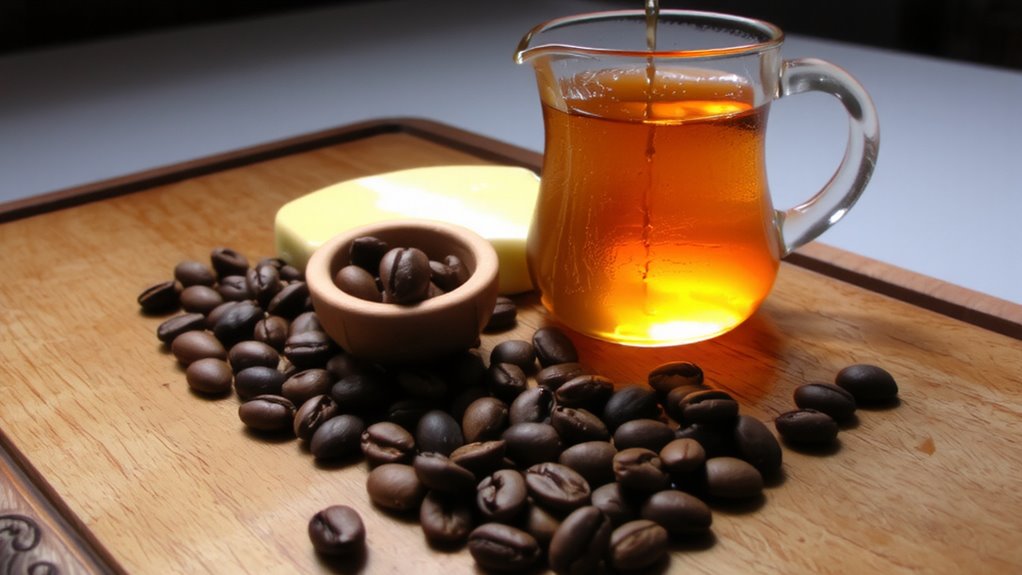
While you might expect all high-end coffee to taste similar, Geisha beans stand apart because of their distinct genetic lineage and elevated sensory traits. Originally from Ethiopia, their genetic lineage traces back to the Gesha forest, giving them a naturally complex flavor architecture. Though they were once overlooked, their cultivation history took a turn in Panama, where farmers realized their potential under specific growing conditions. Unlike many arabica varieties, Geisha excels in high altitudes with slow bean development, which enhances sweetness and aromatic clarity. You’ll notice notes of jasmine, bergamot, and stone fruit-traits consistent across well-processed lots. Because of this, Geisha commands high prices and demands careful brewing. If you’re using a pour-over like a Hario V60 or Kalita Wave, stick to precise water temperature (195–205°F) and medium-fine grind to preserve its delicate profiles. For optimal extraction, match your grind size to your brew method using a coffee grind guide.
How Panama’s Climate Shapes Geisha’s Flavor
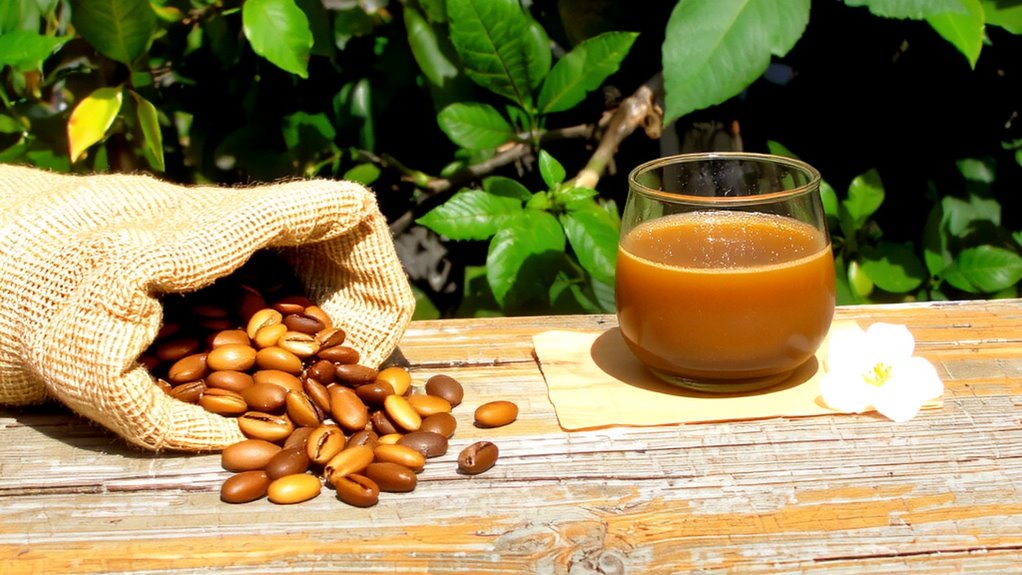
When you’re trying to understand why Panamanian Geisha tastes the way it does, you can’t ignore the role of the country’s highland microclimates-especially in regions like Boquete and Volcán. Cool nights and mild days slow bean development, boosting sugar accumulation and acidity. This temperature variation, paired with steady mist and altitude, strengthens the coffee’s bright, complex profile. The soil composition in these areas, rich in volcanic minerals, supports clean nutrient uptake, which enhances clarity in the cup. You’ll notice how this terroir directly influences floral expression-think jasmine or bergamot-giving Geisha its signature aromatic lift. Consistent rainfall and shaded groves further stabilize bean growth, reducing stress that could dull flavor. Unlike lowland farms, these high-altitude zones offer conditions few other regions can replicate. That’s why Panama-grown Geisha consistently delivers intense, perfumed notes with balanced sweetness-conditions matter, and here, they align perfectly for exceptional coffee.
How to Spot Authentic Geisha Beans
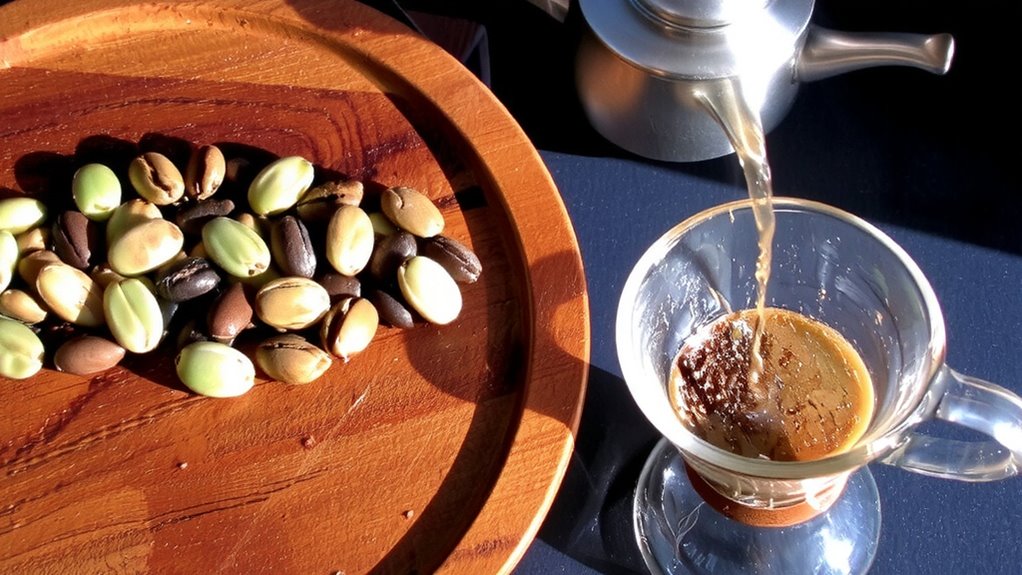
| Feature | Authentic Geisha |
|---|---|
| Labeling | Clearly says “Geisha” or “Gesha” |
| Origin verification | Specific farm and region listed |
| Roast labeling | Light roast, with roast date |
| Price | Higher, reflects quality and rarity |
Don’t skip the roast date-freshness matters. Buy whole bean and grind just before brewing.
Best Brewing Methods for Delicate Geisha
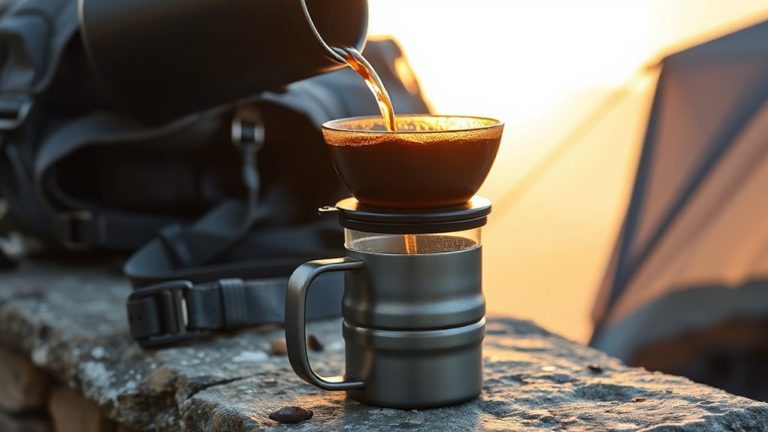
Since Geisha beans highlight delicate floral and tea-like notes, choosing the right brewing method makes all the difference in preserving their nuanced profile. You’ll want methods that support light roasting and enhance floral accentuation without overwhelming the cup. Pour-over, like the Hario V60 or Kalita Wave, gives you control and clarity, bringing out brightness and complexity. The slow, precise water flow extracts cleanly, emphasizing sweetness and aroma. Alternatively, the AeroPress works well for smaller batches, especially with a gentle stir and shorter brew time to avoid bitterness. Immersion methods like the French press can muddle delicate notes, so they’re less ideal. Espresso tends to compress subtle layers unless you use a light pull, which few home machines handle well. Stick to manual pour-over or AeroPress for the most faithful expression. For those seeking clarity and precision, choosing one of the best pour-over coffee makers can significantly elevate your brewing experience.
Perfect Water, Grind, and Temperature for Geisha
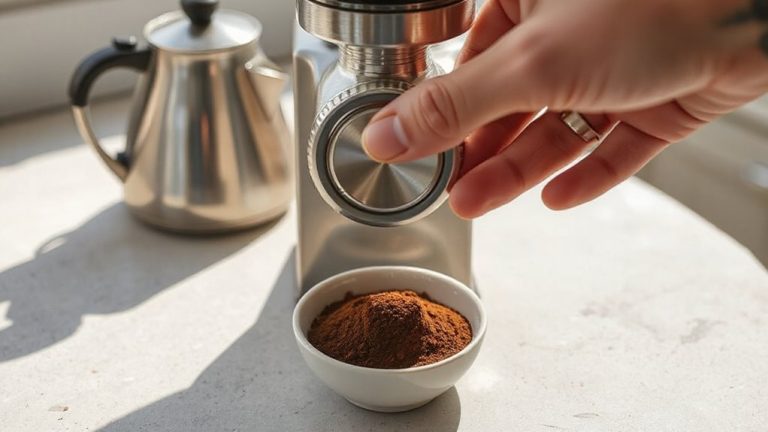
Getting the most out of your Geisha beans means paying close attention to water, grind, and temperature-three factors that make or break the cup. Use filtered water with balanced mineral content to guarantee water purity, since chlorine or excessive minerals dull Geisha’s bright, floral notes. Aim for 150–175 ppm total dissolved solids for best extraction. Your grinder matters-burr grinders like the Baratza Encore or 1Zpresso Q8 offer the grind consistency needed to avoid bitter or sour flavors. Inconsistent grinds lead to uneven extraction, masking sweetness. Brew between 195°F and 205°F; too hot and you scorch delicate aromas, too cool and the coffee tastes flat. A gooseneck kettle with temperature control, such as the Fellow Stagg EKG, helps maintain precision. These details aren’t fussy-they’re foundational for revealing Geisha’s complexity. Get them right, and you’ll taste every layer. For trusted recommendations, check out the Best Geisha Coffee Picks to find high-quality beans worth brewing.
Common Geisha Brewing Mistakes to Avoid
A few common mistakes can easily ruin an otherwise excellent batch of Geisha coffee, so it’s worth paying attention to where most home brewers go wrong. Using water that’s too hot increases overextraction risks, leading to bitter, astringent flavors that mask Geisha’s delicate sweetness. Conversely, brewing too cool results in underdeveloped aromas and flat, sour notes. Grinding incorrectly-too fine or too coarse-disrupts extraction balance; Geisha needs a precise, consistent grind, best achieved with a burr grinder like the Baratza Encore. Overbrewing, whether in a pour-over or French press, also skews results. Stick to recommended times: 2:30–3:30 for V60, 4:00 for Chemex. Pre-wetting filters, using fresh blooms, and pouring steadily improve control. Skip these steps, and you’ll lose clarity and nuance. Pay attention-small fixes prevent big flaws.
How to Taste and Appreciate Geisha’s Full Profile
What makes Geisha coffee stand out on the palate? Its complex, layered profile that rewards careful tasting. To appreciate it fully, brew it just off the boil-around 200°F-using a pour over like the Hario V60 or Kalita Wave. These methods highlight clarity. Once brewed, let it cool slightly. Take a sip and notice the floral notes-often jasmine or bergamot-that float above the cup. Swirl it in your mouth. You’ll catch the citrus brightness, like grapefruit or mandarin, lifting the flavor. Avoid adding sugar; it masks Geisha’s subtleties. Use a white ceramic mug to see color changes as it cools, which signals shifting flavor stages. Retronasal sniffing-breathing out through your nose while sipping-helps detect hidden layers. Tasting multiple brews side by side, such as washed versus honey-processed Geishas, sharpens your ability to distinguish nuances each method reveals.
On a final note
You’ll get the best from Geisha beans by using fresh, precise brewing methods like pour-over with a gooseneck kettle. Stick to 195–205°F water, a medium-fine grind, and filtered water to highlight sweetness and aroma. Avoid over-extraction with uneven pours or old grinders. Compare results using a scale and timer. If flavors seem flat, check roast date-Geisha peaks 7–14 days post-roast. Store in an airtight container, away from light.