Maximizing Aroma Retention When Using Coarse Grind for Camping Coffee
You lose coffee’s bright, complex aroma every minute coarse grounds are exposed to air, so grinding whole beans just before brewing is essential for preserving flavor while camping. Use a portable manual grinder like the Hario Skerton Pro or JavaPresse for consistent, coarse particles. Store beans in an airtight, opaque container like a Nalgene jar or Fellow Atmos to block oxygen, light, and moisture. Keep them in a cool, dry spot-never refrigerate. Choose low-turbulence methods such as French press or AeroPress to retain volatile oils, and always use a fresh, rinsed paper filter when applicable. Cold brew is ideal for longer trips with minimal gear. This approach keeps flavor sharp and aromatic under real-world conditions. Better choices await when you optimize each step.
Notable Insights
- Grind coarse just before brewing to minimize oxidation and preserve volatile aromatic compounds.
- Use a portable manual grinder like the Hario Skerton Pro for consistent, on-demand grinding in the wild.
- Store beans in airtight, opaque containers to shield from oxygen, light, and moisture during transit.
- Choose low-turbulence brewing methods like French press or AeroPress to enhance aroma retention.
- Avoid refrigeration; keep beans dry and cool in stable conditions to protect delicate flavor oils.
Understand Why Coarse Grind Loses Aroma
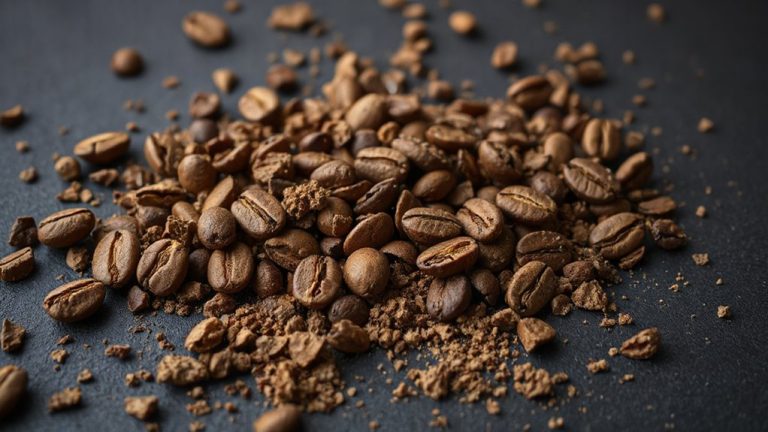
While a coarse grind might seem convenient for backcountry brewing, it actually speeds up aroma loss because the larger particles expose more surface area to air over time. You’re not just losing scent-you’re losing flavor, since volatile compounds responsible for coffee’s bright, complex notes evaporate quickly. These compounds are delicate, and once ground, they degrade fast due to oxidation effects. Unlike finer grinds that slow this process by limiting air penetration, coarse grounds stay exposed longer, accelerating staling. That’s why pre-ground coffee often tastes flat, even if stored in a ziplock or basic container. Oxidation effects aren’t avoidable, but they are manageable. If you’re using a coarse grind, know that time works against you. The longer it sits, the more aroma slips away. For best results, minimize storage time and use airtight packaging when possible. Your morning brew will taste noticeably fresher. A reliable camping coffee maker can help preserve freshness by reducing grind exposure before brewing.
Grind Coarse Coffee Just Before Brewing
Grinding your coarse coffee just before brewing is one of the most effective ways to preserve flavor and aroma in the backcountry. Once you grind, bean freshness drops fast-exposing more surface area to oxygen speeds up staling. That’s why grind timing matters so much. Whole beans lock in aroma; ground coffee loses it within minutes, especially in humid or windy conditions. For camping, carry whole beans and use a portable grinder. Manual grinders like the Hario Skerton Pro or JavaPresse hand grinder offer consistency without batteries. A small grinder pays off in flavor. Wait until brew time to grind coarse-every minute counts. For best results, choose a quality manual grinder that ensures uniform particle size.
| Factor | Whole Beans | Pre-Ground |
|---|---|---|
| Aroma Retention | High | Low |
| Bean Freshness | Preserved | Degrades quickly |
| Grind Timing Control | Yes | No |
| Space & Weight | Slightly more | Less |
Store Beans in Airtight, Opaque Containers
Keep your coffee fresh by storing beans in airtight, opaque containers-it’s a small step that makes a real difference. Exposure to air speeds up bean oxidation, which dulls flavor and degrades aroma fast. Sunlight and heat cause the same damage, so opaque containers block light that degrades coffee quality. Airtight seals also prevent moisture exposure, which can promote mold and ruin dry, stable beans. For camping, use a container like a Nalgene jar or a Fellow Atmos-both resist air and light well. Avoid clear canisters or leaving beans in paper bags-they offer no real protection. Store your container in a cool, dry spot in your pack, not at the bottom where condensation gathers. Even short trips benefit from proper storage. You’ll notice the difference in scent and taste when you brew. Good storage doesn’t fix bad beans, but it preserves what’s already there-no magic, just care. Some of the best options for long-term freshness include containers with one-way valves, like those found in the best coffee grounds containers.
Pick a Brewing Method That Preserves Aroma
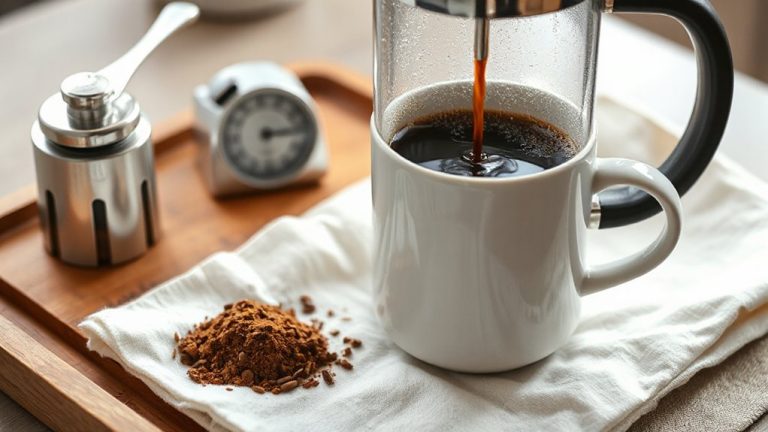
You’ll get the most out of your coffee if you choose a brewing method that locks in aroma instead of letting it escape. Methods with better brew time control and minimal water turbulence help preserve volatile compounds. Full immersion techniques like the French press limit turbulence and let you adjust brew time, boosting aroma retention. Pour-over can work, but high turbulence and fast flow often strip aroma unless you pour carefully. The AeroPress offers precise control and sealed brewing, making it ideal for aroma-focused campers.
| Method | Brew Time Control | Water Turbulence |
|---|---|---|
| French Press | Good | Low |
| Pour-Over | Fair | High |
| AeroPress | Excellent | Low to Moderate |
| Cold Brew | Excellent | Very Low |
| Moka Pot | Poor | High |
Keep Beans Cool, Dark, and Dry While Camping
A good brewing method sets the stage, but fresh beans are what bring out the full character in your cup. To preserve aroma, you need to control bean temperature, light, and humidity. Keep beans in a sealed, opaque container away from sunlight-direct exposure raises bean temperature and degrades oils fast. Store your beans in a cool spot, like inside a backpack or under a tarp, not on a hot tent floor. Avoid clear jars or ziplocks-they offer poor moisture control. Instead, use an airtight opaque canister or vacuum-sealed bag. Even small amounts of moisture dull flavor and accelerate staling. Don’t refrigerate beans; condensation forms when they warm, wrecking moisture control. Humid climates demand extra care-add a food-safe desiccant pack. The goal is stable conditions. Freshness isn’t just roast date-it’s how you protect the beans every step outdoors.
Use a Fresh Paper Filter (and Rinse It First)
Though paper filters might seem like a minor detail, using a fresh one every time makes a noticeable difference in flavor clarity and aroma retention. Old or reused filters can harbor stale oils and off-flavors that taint your brew. Paper’s filter porosity helps trap fine particles while letting essential oils pass-up to a point. But a dry filter can add a papery taste and slow water flow. That’s why you should always rinse it first with hot water. This boosts pre-wet efficiency, removes manufacturing residues, and preheats the brewer. Rinsing also settles the filter into place, reducing channeling. For camping, go with oxygen-bleached papers like Hario or Chemex brand-consistent porosity and minimal flavor impact. Unbleached options exist but often require extra rinsing. It takes 10 seconds and guarantees cleaner, brighter coffee. Don’t skip it.
Choose Gear That Locks in Volatile Coffee Oils
Volatile oils are the invisible engine of your coffee’s aroma, and once released during brewing, they begin to dissipate within seconds. To preserve them, your gear must create a strong material seal that traps vapors during brewing. French presses lack this seal, so aroma escapes easily. Aeropress and vacuum-style brewers do better, thanks to tight-fitting parts that limit airflow. A good material seal isn’t enough if filter quality is poor-paper filters with uniform thickness and low porosity retain fine oils better than metal or cloth. Fine-mesh metal filters, like in some travel percolators, let oils through but may allow sediment and degrade aroma over time. For camping, use a sealed system like the Aeropress with high-quality paper filters. The combination locks in aroma, guarantees clean flavor, and works reliably in changing conditions. It’s a practical balance of seal integrity and filter quality.
On a final note
You’ll keep more aroma with a coarse grind by grinding just before brewing and storing beans in airtight, opaque containers. Use a French press or percolator, which suit coarse grounds and retain oils better than paper-filter methods. If using a paper filter, rinse it first to remove paper taste. Keep beans cool, dark, and dry. A well-sealed container like a Fellow Atmos does more than a ziplock. Freshness hinges on timing and protection.