Fine-Tuning Your French Press Routine With Precision Coarse Grinding
Use a burr grinder like the Baratza Encore or 1Zpresso JX-Pro to get a consistent, coarse grind-think sea salt-for your French press. This prevents bitterness from over-extraction and reduces sediment. Stick to a 1:15 coffee-to-water ratio, 200°F water, and a 4-minute steep. Stir gently, press slowly, and pour right away. If your coffee tastes off, check your grind first-uneven or too-fine particles are usually the culprit. You’ll soon dial in the ideal balance.
Notable Insights
- Use a burr grinder to achieve a consistent coarse grind, similar to sea salt, for balanced French press extraction.
- Adjust your grinder settings to minimize fines and avoid bitter, muddy coffee in your final brew.
- Grind fresh, high-quality beans just before brewing to preserve flavor and ensure optimal extraction.
- Maintain a 1:15 coffee-to-water ratio and steep for exactly 4 minutes to fine-tune strength and clarity.
- Use water between 195°F and 205°F to optimize extraction without over-highlighting grind-related flaws.
Find the Perfect Coarse Grind for French Press
Find the Perfect Coarse Grind for French Press
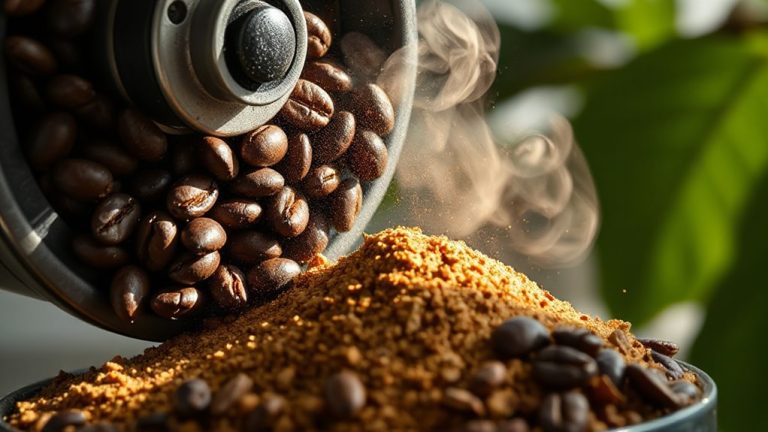
A good coarse grind is your first step to a balanced French press brew. You need even grind consistency to prevent over- or under-extraction-fine particles turn bitter, while overly coarse bits taste weak. Aim for pieces about the size of breadcrumbs or coarse sea salt. This size slows water absorption just enough for a full four-minute steep. Coffee freshness matters just as much; use beans roasted within the past two weeks and grind right before brewing. Pre-ground coffee loses flavor fast, especially with French press, where contact time is long. For best results, measure accurately-start with a 1:15 coffee-to-water ratio. Adjust grind size slightly if the brew tastes flat or gritty. You’ll find your sweet spot with a few tries. Consistency and timing make or break your cup. The ideal grind size plays a critical role in extraction efficiency, and using a burr grinder ensures precision coarse grinding for optimal results.
Choose a Burr Grinder for French Press Coarse Grind
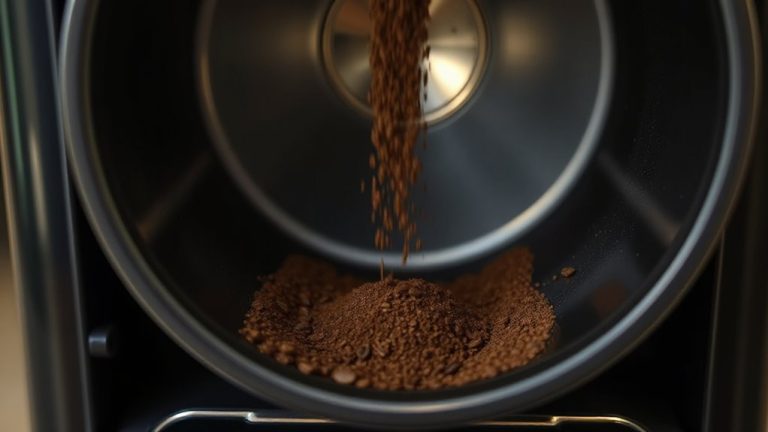
Your grinder makes or breaks the coarse consistency you need for French press. Blade grinders chop unevenly, leading to inconsistent brews, while a burr grinder delivers uniform coarse grounds essential for clean extraction. For French press, you need precise grinder calibration to hit that ideal coarse setting-too fine, and you risk over-extraction; too coarse, and the coffee tastes weak. Look for models with adjustable settings, like the Baratza Encore or 1Zpresso JX-Pro, which offer reliable burr alignment and consistent performance. Proper burr alignment guarantees even grinding and prevents fines from slipping through. Burr grinders may cost more upfront, but they give you control and repeatability. Check that your grinder allows easy adjustments and steady operation. Avoid cheap conical or flat burr units with poor alignment-they compromise grind quality. A well-calibrated burr grinder is a long-term investment in better-tasting coffee. For more insights, explore these expert-recommended grinders for filter coffee.
Fix Bitter or Muddy Coffee Caused by Grind
More often than not, bitter or muddy French press coffee traces back to incorrect grind size. If your beans are ground too fine, they over-extract quickly, especially with high water temperature or extended brew time, leading to harsh flavors. A coarse, even grind-like sea salt-is key. Use a burr grinder to maintain consistency and avoid fines that slip through and cloud your cup. Water temperature around 200°F (just off boil) and a brew time of 4 minutes work best with the right grind. Adjusting these alone won’t fix a bad grind-they just expose it faster. For the most consistent results, consider using a precision burr mill designed specifically for coarse brewing methods like French press.
| Grind Issue | Taste Experience | You Feel… |
|---|---|---|
| Too Fine | Bitter, harsh | Frustrated |
| Just Right | Balanced, smooth | Satisfied |
| Uneven | Muddy, flat | Confused |
Stop Over-Extraction and Sediment in French Press
Often, over-extraction and excess sediment in your French press brew stem from letting coffee steep too long or using grounds that are too fine. To prevent this, control your brew time-aim for exactly 4 minutes. Going beyond that pulls out bitter compounds, especially if your grind isn’t coarse enough. Keep water temperature between 195°F and 205°F; too hot, and you risk scalding the coffee, increasing harshness. Use a thermometer or electric kettle with temperature control for consistency. A coarse, even grind reduces fines that slip through the mesh filter, cutting down on grit at the bottom of your cup. Stir gently after pouring to guarantee even saturation without disturbing sediment. If your coffee still tastes bitter or feels muddy, shorten the brew time slightly or adjust your grinder. Precision in time and temperature makes a real difference.
Brew French Press Coffee Step by Step
A solid brewing routine starts with the right steps in the right order. Start by heating water to the ideal brew temperature-just off the boil, around 200°F. Add coarse-ground coffee to your French press, then pour water evenly over the grounds. Give it a gentle stir, place the lid on, and begin your steep time: four minutes is standard for balanced flavor. After steeping, press the rod slowly and pour immediately to avoid over-extraction.
| Step | Action |
|---|---|
| 1 | Use 1:15 coffee-to-water ratio |
| 2 | Maintain 195–205°F brew temperature |
| 3 | Set 4-minute steep time |
This method works best with a burr grinder and a stainless steel press. Don’t let coffee sit post-brew-serving right away preserves clarity and taste.
On a final note
You’ve got better control over your French press by now. Use a burr grinder for consistent coarse grounds-blade grinders often create uneven particles that lead to bitterness or sludge. Aim for a texture like sea salt. If coffee tastes bitter, your grind might be too fine or brew time too long. Adjust one variable at a time. Cold water filtration and a gentle press help too. Simple, precise steps make a noticeably cleaner cup every time.