The Impact of Grinder Chute Design on Grind Retention and Dose Accuracy
Your grinder’s chute design直接影响 grind retention and dose accuracy. Sharp corners, seams, and plastic materials trap old grounds, causing stale flavors and inconsistent shots. Smooth, polished metal chutes-like on the Compak K3 AVL or Niche Zero-reduce retention and static. Straight or gently curved paths improve flow, while anti-static features boost dose precision. Poor design can lose you 0.5g or more. You’ll see how small details add up in real-world performance.
Notable Insights
- Grind retention in chutes causes stale particles to mix with fresh grounds, leading to uneven extraction and off flavors.
- Poor chute design with sharp corners and gaps traps grams of coffee, increasing retention and dose inaccuracy.
- Smooth, rounded, or tapered chute shapes enhance grounds flow, reducing clogging and improving dose consistency.
- Static buildup in plastic or uncoated metal chutes causes clumping and can result in dose variations up to 0.5 grams.
- Low-retention chutes use polished finishes, anti-static coatings, and tight alignments to improve accuracy and extraction.
Why Grind Retention Ruins Espresso Shots
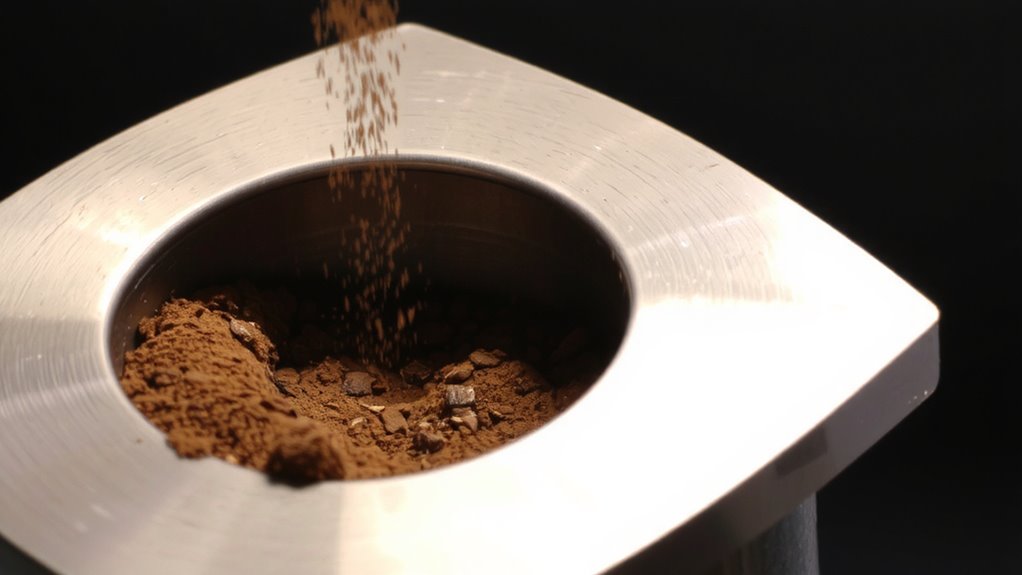
When your grinder holds onto leftover grounds, it’s not just wasting coffee-it’s messing with your shot quality. Old, stale particles mix with fresh grinds, leading to uneven extraction and off flavors. This build-up also causes tamping inconsistency, since clumps or varying densities resist even compression, creating weak spots in the puck. That uneven resistance leads to channeling, often heard as portafilter gurgling during the shot-your red flag for poor flow. Grinders like the Compak K3 AVL or Niche Zero cut retention with short chutes and tight burr alignment, reducing carryover. Lower retention means fresher, more consistent doses, shot after shot. You’ll notice better puck prep, fewer gurgles, and more control over extraction. If your espresso tastes dull or shots stall despite good technique, check your grinder’s retention. It’s a hidden flaw that quietly sabotages quality, and fixing it starts with design that prioritizes clean release over flashy looks or oversized chutes. Among top expert-recommended grinders, models with optimized chute geometry consistently deliver superior dose accuracy and minimal retention.
How Grinder Chute Design Affects Dose Accuracy
You’ve seen how leftover grounds in a grinder’s chute can drag down shot quality, but that’s not the only issue at play-how the chute delivers your dose matters just as much. If the chute doesn’t guide grounds cleanly into the portafilter, your measured dose becomes unreliable. Static buildup can cause clumping or erratic flow, especially in dry environments or with certain burr types, throwing off your dose by up to half a gram. Materials prone to material fatigue, like cheap plastics, may warp over time, altering the chute’s alignment and consistency. Metal chutes resist wear but can increase static unless treated or coated. A well-designed chute minimizes interference, ensuring grounds fall straight and fast. For example, the chute on the Decent EP5 uses smooth contours and anti-static coating to improve dose accuracy. You’ll get better shot-to-shot consistency when your grinder delivers exactly what you dial in-no guesswork, no waste.
Sharp Corners, Seams, and Gaps That Cause Retention
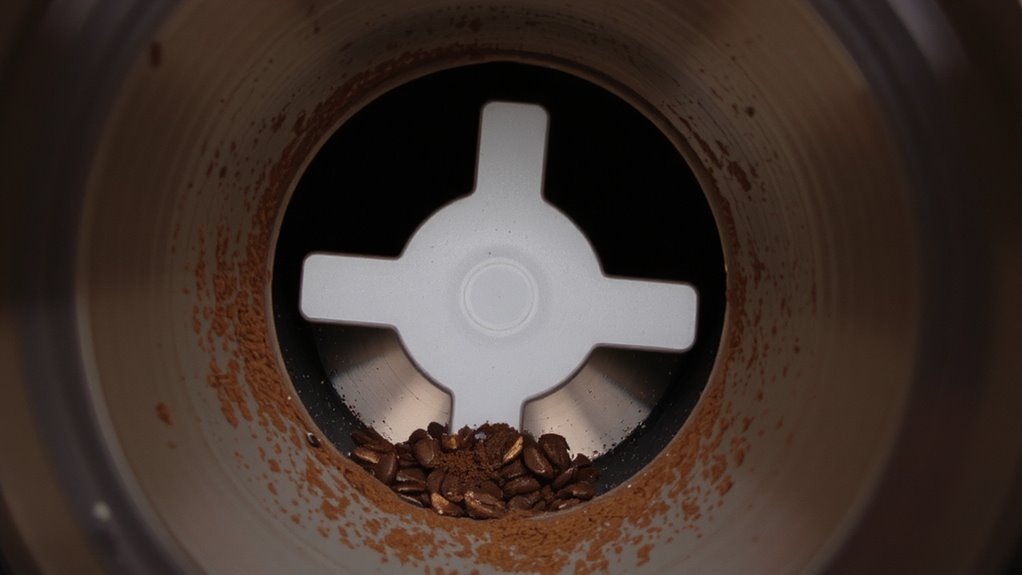
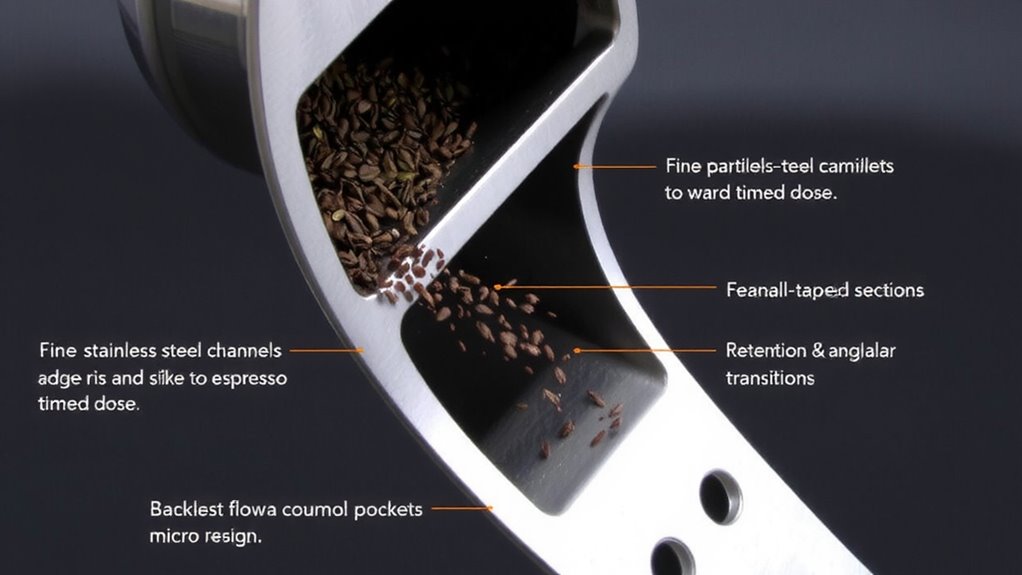
Even small design flaws like sharp corners, seams, or gaps in a grinder’s chute can trap several grams of grounds over time, leading to significant retention issues. You’ll run into edge trapping when grounds cling to abrupt turns or poorly welded joints-especially in budget grinders like the basic Encore models. These pockets don’t just hold back coffee; they stale and taint your next dose. Seams between chute parts can widen with wear, worsening retention. Material porosity also matters: plastic chutes, like those on older Baratza grinders, absorb oils and increase static, making grounds stick more than polished stainless steel. A well-machined metal chute with smooth shifts and tight seams reduces both edge trapping and porosity-related cling. Upgrading to a chute like the V6 EZ-Press or DF600’s design cuts retention dramatically. It’s a simple fix that boosts dose accuracy and flavor purity.
How Chute Shape Affects Grounds Flow
Smooth flow through a grinder’s chute starts with its shape, not just how clean the joints are. When you use a chute designed for aerodynamic flow, grounds move faster and more consistently, reducing the chance of clogs. Sharp angles or narrow sections disrupt this flow, making grounds tumble erratically and increasing retention. A well-rounded, tapered shape helps maintain momentum, especially with fine espresso grinds that easily cling due to static adhesion. You’ll notice less waste and better dose accuracy when static is minimized through smoother internal contours. Materials matter too-antistatic coatings help, but shape plays the bigger role in guiding grounds into the portafilter. Avoid chutes with abrupt drops or flat surfaces where particles can collect. Instead, opt for designs that prioritize unbroken paths from burr to basket. The shape directly affects how reliably your dose lands where it should.
Straight Vs. Curved Chutes: Which Performs Better?
Why do some grinders use straight chutes while others favor a curved design? You’ll find straight chutes on models like the DF64, where they help reduce grind retention by allowing grounds to fall freely with minimal surface contact. They’re simple and effective, especially when paired with a smooth material finish to discourage clinging. But straight chutes can worsen static, leading to more messy buildup unless addressed. Curved chutes, like those on the Niche Zero, guide grounds more gently, often improving static reduction by slowing down the fall and reducing airflow turbulence. The curve can help with dose accuracy over time, but only if designed well. Your choice depends on grind size and bean type-dry beans may benefit more from curved designs. Prioritize material finish either way, since a polished surface cuts static in both styles.
Design Features of Low-Retention Grinder Chutes
If you’re looking to minimize leftover grounds in your grinder, the chute design plays a bigger role than most realize. Low-retention chutes use a smooth material finish to help coffee flow freely, reducing buildup. Textured or rough surfaces trap particles, so polished stainless steel or coated polymers are preferred. Static control is equally important-without it, even well-designed chutes suffer from clingy grounds. Chutes with anti-static additives or grounding strips, like those in the Compak K6 or Niche Zero, reduce charge buildup for cleaner exits. A narrow, direct path prevents gaps where grounds can hide, and rounded edges avoid dead zones. Tapered designs funnel coffee efficiently into the portafilter. You’ll see better dose accuracy and fewer stale remnants affecting flavor. These features matter most if you frequently change beans or dial in doses. Simple tweaks in shape and surface make a noticeable difference in daily performance. For those seeking top-performing options, consider exploring the best grinders for filter coffee to find models that excel in both grind quality and retention control.
How to Measure and Reduce Retention in Your Chute
How much coffee are you actually losing to retention? A simple test: weigh your dose before and after grinding. The difference is retained grinds stuck in the chute. To reduce this, start by checking material compatibility-plastic chutes often create more static than metal, worsening cling. Static control is key; anti-static chutes like those on the DF64 or Niche Zero use conductive materials to dissipate charge, cutting retention. You can also modify your setup: grounding the chute or using a small brush helps. Some baristas tap the grinder lightly to dislodge stuck grounds, but that’s not precise. For best results, choose chutes designed to minimize dead space and match your grinder’s output. Even small improvements in static control and material compatibility add up, giving you more accurate doses and less waste. Measure regularly-it’s the only way to know what’s working. Among the top picks under $1000, the Niche Zero stands out for its precision and low retention design.
On a final note
You’ll get more consistent espresso shots when your grinder chute minimizes retention. Sharp corners and gaps trap grounds, skewing dose accuracy. Curved, seamless chutes like those on the MyLowCostMod or Nuova Simonelli Mythos improve flow. Straight chutes can work but often need frequent brushing. For best results, choose a chute with smooth contours and tight seals, then clean it regularly. It’s a small change that boosts precision.