The Role of Water Quality in Cold Brew: How Mineral Content Changes Taste and Acidity
Your cold brew’s taste hinges on water quality-poor mineral balance leads to flat or sour results. Aim for 75–150 ppm total dissolved solids with moderate calcium and magnesium to extract flavor fully. Bicarbonates around 40–100 ppm smooth out acidity, preventing sharpness. Filtered tap or re-mineralized reverse osmosis water works better than distilled or soft water. Brands like Third Wave Water help you hit these targets consistently. Get the minerals right, and your brew gains clarity, sweetness, and depth-every time. The details that follow show exactly how to test and adjust your water at home.
Notable Insights
- Water makes up over 90% of cold brew, so its mineral content significantly impacts flavor extraction and overall taste.
- Calcium and magnesium enhance extraction of acids and aromatics, improving flavor depth and clarity in cold brew.
- Low mineral content leads to under-extraction, resulting in flat or weak coffee, especially due to cold brewing’s slow process.
- Bicarbonates buffer acidity; levels between 40–100 ppm yield balanced flavor, while too little causes sourness and too much dullness.
- Using filtered or re-mineralized water with 75–150 ppm TDS and balanced minerals optimizes taste and acidity in cold brew.
Why Water Quality Makes or Breaks Cold Brew
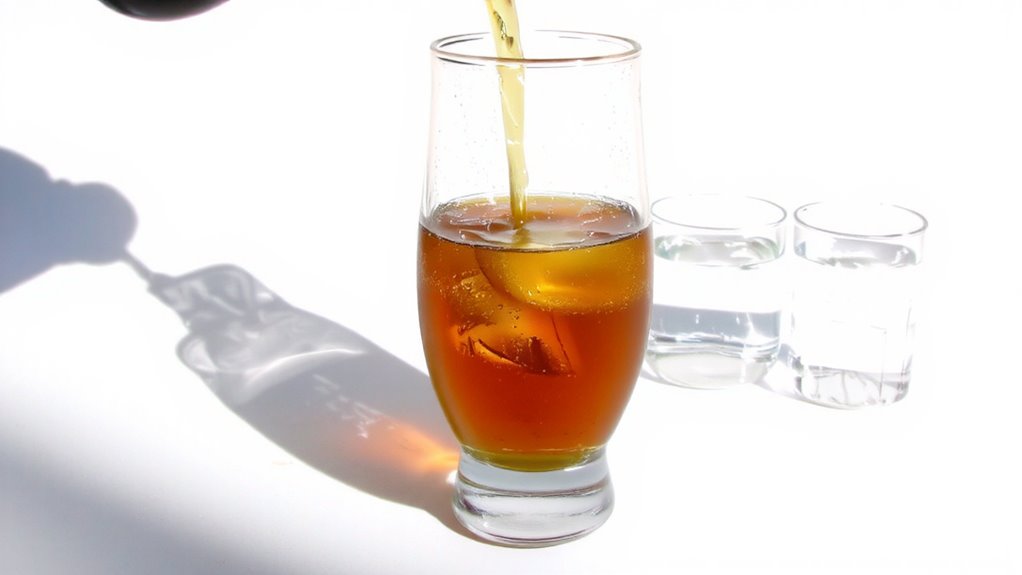
While you might not think much about the water you use, it actually makes up over 90% of your final cold brew, so choosing the right kind matters more than you’d expect. Poor water quality can mute flavors or bring out unwanted bitterness, no matter how good your beans are. Since cold brew relies on cold or room-temperature water, the extraction is slow and depends heavily on consistent brewing time-typically 12 to 24 hours. Unlike hot brewing, you can’t use water temperature to speed things up, so impurities or off-flavors in your water become more pronounced over that long soak. Using filtered tap water is a practical middle ground-better than distilled, which lacks minerals needed for extraction, and more cost-effective than bottled. Always start with clean, balanced water to guarantee your cold brew tastes smooth and true to the bean.
How Calcium and Magnesium Affect Cold Brew Extraction
Since cold brew extraction depends on a slow, steady draw of flavors over many hours, the minerals in your water-especially calcium and magnesium-play a key role in how well the coffee compounds dissolve. You need some minerals to help with ion exchange, pulling out the acids and aromatics that give your brew depth. Too little, and extraction falls flat; too much, and you risk over-extracting bitter notes. Calcium boosts flavor clarity but can encourage buildup in gear over time. Magnesium pulls out brighter compounds, yet high levels may lead to flavor degradation if the brew sits too long. Using filtered water with balanced mineral content-like Third Wave Water or a DIY mix-gives you control. Regular cleaning prevents scale from calcium, while proper ratios keep magnesium from skewing taste. Your grind size and brew time matter, but without the right mineral balance, even premium beans won’t shine.
How Bicarbonates Reduce Sourness in Cold Brew
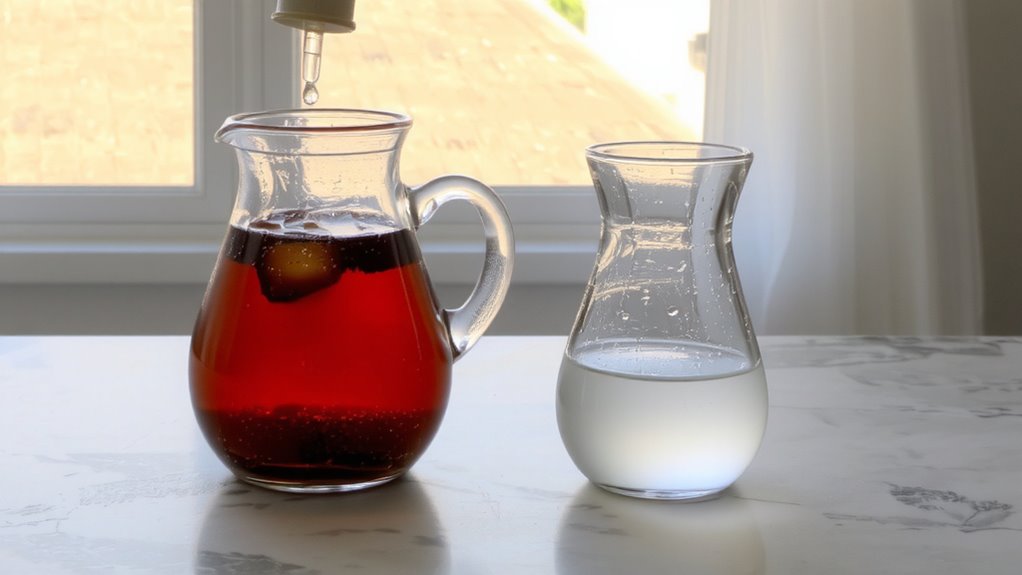
If your cold brew tastes too sharp or sour, the problem might not be your beans or brew time-it could be low bicarbonate levels in your water. Bicarbonates play a key role in alkalinity buffering, helping neutralize acids that develop during brewing. This buffering supports pH stabilization, reducing perceived sourness. Water with too few bicarbonates can’t balance acidity, leading to a brighter, harsher cup. Use a simple test strip or TDS meter to check levels, or try adding a pinch of food-grade sodium bicarbonate to your brew water.
| Bicarbonate Level (ppm) | Effect on Taste | Recommended Action |
|---|---|---|
| 0–40 | Sour, sharp | Add 1/16 tsp baking soda per liter |
| 40–80 | Balanced | No adjustment needed |
| 80–100 | Smooth | Ideal for most beans |
| 100+ | Flat, dull | Dilute with distilled water |
Hard vs. Soft Water: What’s Best for Cold Brew?
You’ve probably noticed how water changes your cold brew’s acidity, especially when bicarbonate levels are off. Water hardness plays a key role-hard water, high in calcium and magnesium, boosts extraction and can make your brew taste bolder, but too much causes bitterness. Soft water, low in minerals, often leads to flat, underwhelming results because it lacks the mineral balance needed to carry flavor. For cold brew, you want a middle ground: moderate hardness (50–100 ppm) with balanced calcium and bicarbonates. This supports smooth extraction without dulling acidity entirely. Distilled or reverse osmosis water isn’t ideal on its own-add a pinch of magnesium sulfate or use a specialty blend like Third Wave Water to restore essential minerals. Aim for consistency, not extremes. Your cold brew performs best when water supports flavor, not fights it.
How to Test and Adjust Your Tap Water for Cold Brew
While your tap water might seem fine at first glance, it can vary widely in mineral content and pH, both of which directly impact cold brew extraction and flavor. To check it, use an affordable pH testing strip or digital meter-aim for a range between 6.5 and 7.5 for balanced results. High or low pH skews taste, bringing out unwanted bitterness or flatness. For mineral content, a simple TDS (total dissolved solids) meter helps; ideal is between 75–150 ppm. If your levels are off, consider water filtration. Basic carbon filters like Brita reduce chlorine but don’t fully adjust minerals. For more control, use a reverse osmosis (RO) system followed by re-mineralizing, or opt for bottled spring water with known values. Test and adjust regularly-it’s the easiest way to improve consistency.
Build Balanced Water for Smoother Cold Brew
What if your water could make or break your cold brew-even before the coffee grounds come into play? You can’t ignore mineral balance-too much hardness causes bitterness, while too little leads to flat, underwhelming results. For smoother cold brew, aim for balanced water: 50–150 ppm total dissolved solids with a mix of calcium, magnesium, and bicarbonates. A simple water filtration system like a Brita pitcher removes chlorine and contaminants, improving clarity and aiding flavor enhancement. Or go further with third-wave water kits like Barista Hustle’s Balanced Salts, which let you build mineral profiles from scratch. These offer precision but require care in measuring. Tap water varies, so test first. Reverse osmosis followed by re-mineralizing gives the most control. Don’t assume your source is ideal-consistent water means consistent cold brew. Adjust, filter, and rebuild for cleaner, sweeter results every time.
On a final note
Your cold brew tastes better with balanced water. Hard water adds body but can over-extract bitterness; soft water may taste flat. Aim for moderate minerals-around 50–100 ppm-using a mix like Third Wave Water or a simple DIY blend of magnesium, calcium, and baking soda. Test with a TDS meter, then adjust. Filtered tap water works if minerals are right. Skip distilled or unfiltered hard water. Consistent water means consistent brews, every time.