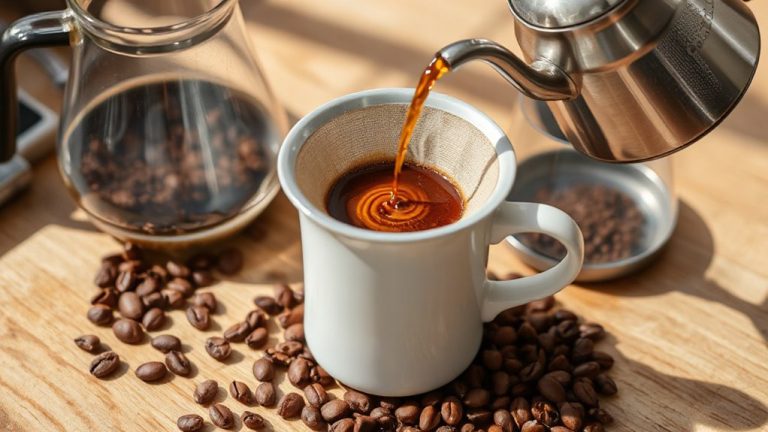
How to Adjust Grind and Dose for a Balanced Long Black With Crema Integrity
Use a fine, even grind-like table salt-for lasting crema, and dose 18–20g depending on your beans. Dark roasts extract easier; lighter ones may need a slightly higher dose. Adjust grind finer if the shot’s too fast or weak, coarser if it’s bitter. Pair with filtered water and a stable 92–96°C brew temp. A burr grinder like the Baratza Encore helps you stay consistent. There’s more to optimizing each variable based on your machine and beans.
Notable Insights
- Use a fine grind like table salt for even extraction and stable crema, adjusting coarser for darker roasts or softer beans.
- Dose 18–20 grams based on bean origin, weighing precisely to maintain balance and crema integrity.
- Adjust grind finer for light roasts (e.g., Ethiopia) and coarser for dark or dense beans (e.g., Indonesia).
- Pair correct dose and grind with 92–96°C water temperature to avoid flat or bitter Long Black shots.
- Use filtered water with balanced minerals and preheat equipment to preserve crema and extraction consistency.
Choose the Right Grind for a Stable Crema
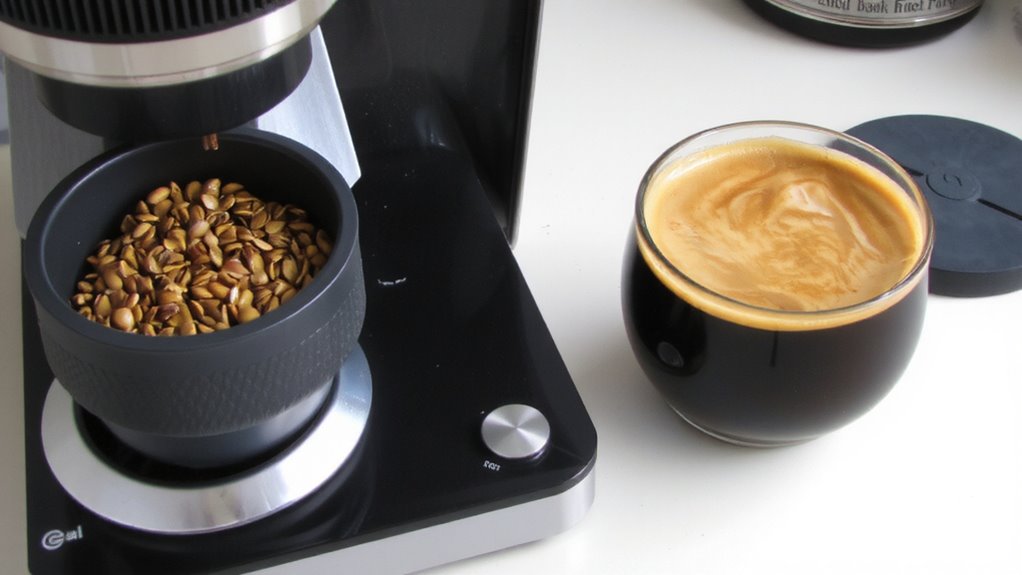
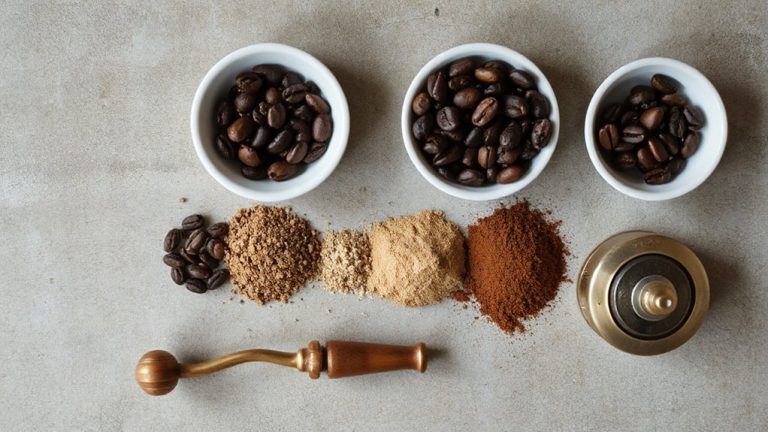
Crema is your espresso’s fingerprint-unique, delicate, and telling. You need the right grind to preserve crema stability in your long black. If your grind is too coarse, the water rushes through, producing weak crema that fades fast. Too fine, and you risk over-extraction, yielding bitter shots with poor crema stability. Aim for a fine, even grind-like table salt-for best results. Grind consistency matters: blades chop unevenly, but burr grinders (like the Baratza Encore or Lelit Bianca) deliver uniform particles, improving extraction and crema. Without consistency, some grounds over-extract while others under-extract, thinning the crema. A stable, honey-colored crema lasting over a minute signals success. Adjust your grinder in small steps, checking crema stability after each. Great crema isn’t just foam-it’s proof of balanced extraction, starting with your grind. For optimal results, consider investing in one of the Best Mill Grinders & Buying Guide.
Use the Correct Dose for a Balanced Long Black
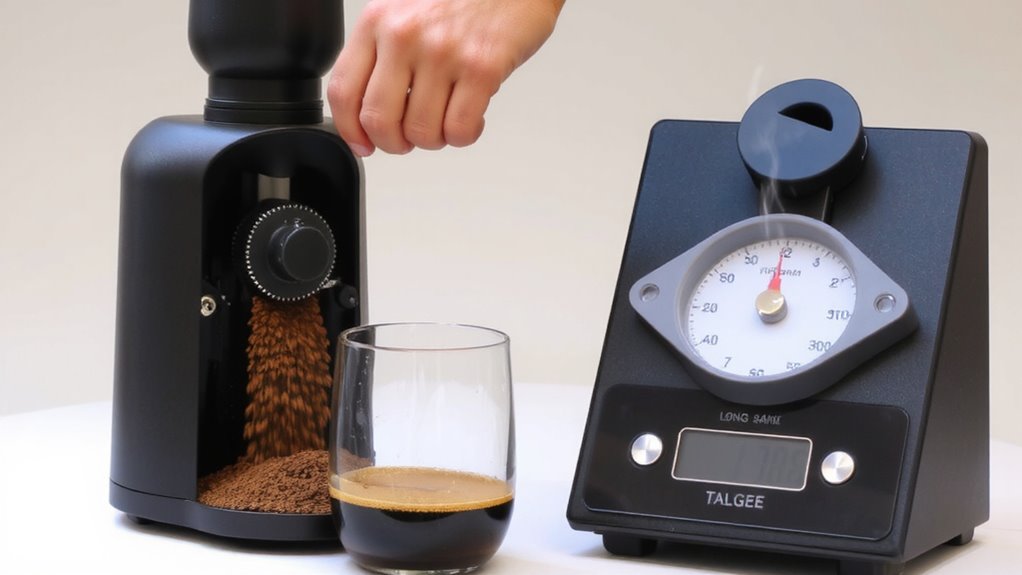
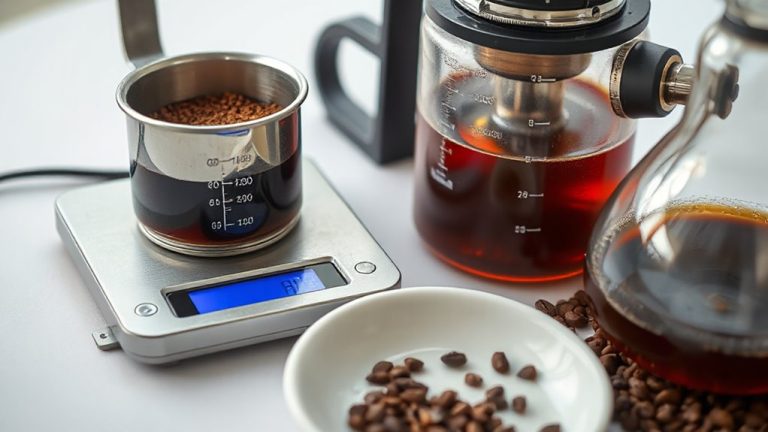
Most specialty cafes use a 1:2 coffee-to-water ratio, meaning you’ll want about 18–20 grams of coffee for a double shot to build a solid base for your long black. Your bean selection plays a big role here-darker roast level beans tend to extract more easily and produce richer crema, while lighter roasts may need slight dose adjustments to avoid under-extraction. If your shot tastes too thin or fades quickly, try increasing the dose by 1–2 grams. A stable dose guarantees consistent extraction, especially when paired with the right grind. Too little coffee and your espresso will run too fast, weakening both flavor and crema. Always weigh your dose; don’t rely on scoops. Freshly ground beans from a calibrated grinder make a noticeable difference. Stick to reputable beans suited for espresso, as their roast level and bean selection are optimized for balance. For precision in grinding, consider using one of the best coffee grinders for espresso.
Fix a Flat or Bitter Long Black
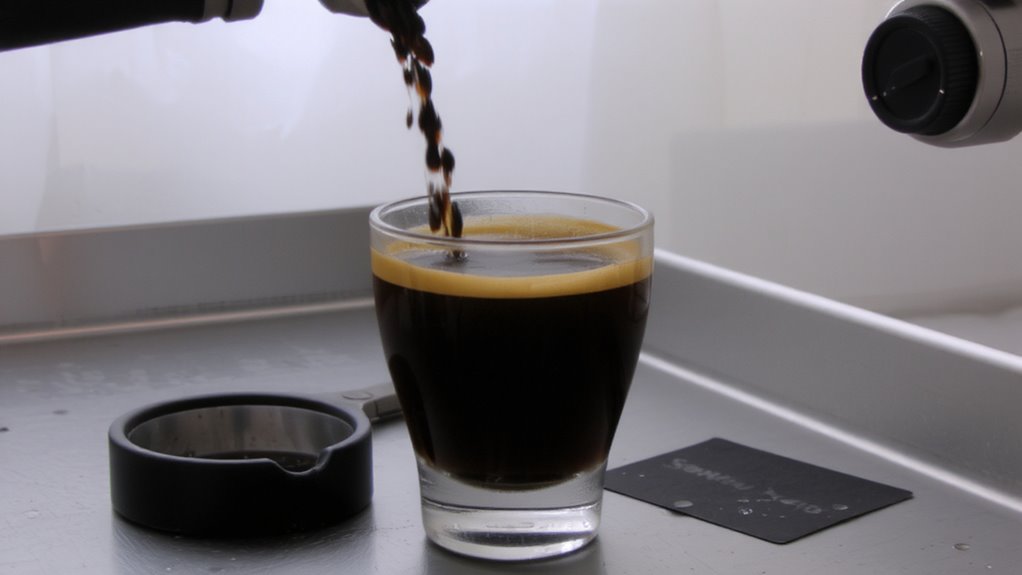
A flat or bitter long black usually comes down to extraction issues, and you can fix it with a few targeted tweaks. If your shot tastes flat, your brew temperature might be too low-aim for 92–96°C for proper extraction. Too hot, and you risk bitterness from over-extracting harsh compounds. Check your machine’s thermostat; cheaper models often fluctuate. Water quality matters just as much. Hard water causes scale and uneven extraction, while soft or distilled water lacks minerals needed for flavor development. Use filtered tap water with balanced mineral content-like Third Wave Water or a quality under-sink filter. These adjustments improve clarity and sweetness without changing grind or dose. Make one change at a time, test results, and recalibrate. A stable brew temperature and clean, balanced water are foundational for any great long black.
Adjust Grind and Dose for Different Beans
You’ve got your water and temperature sorted, which means the foundation is set-now it’s time to fine-tune how your beans respond during extraction. Bean origin and roast level directly impact how you should set your grind and dose. Lighter roasts from Ethiopia need a finer grind to develop sweetness, while dark Sumatran beans may require a coarser setting to avoid bitterness. Always adjust incrementally.
| Bean Origin | Suggested Grind & Dose |
|---|---|
| Ethiopia | Fine grind, 18g dose |
| Colombia | Medium-fine, 19g |
| Brazil | Medium, 20g |
| Indonesia | Coarse, 18g |
| Kenya | Fine, 19g |
Match adjustments to roast level-denser, lighter roasts often extract slower and benefit from more agitation and finer particles.
Get Consistent Long Black Results at Home
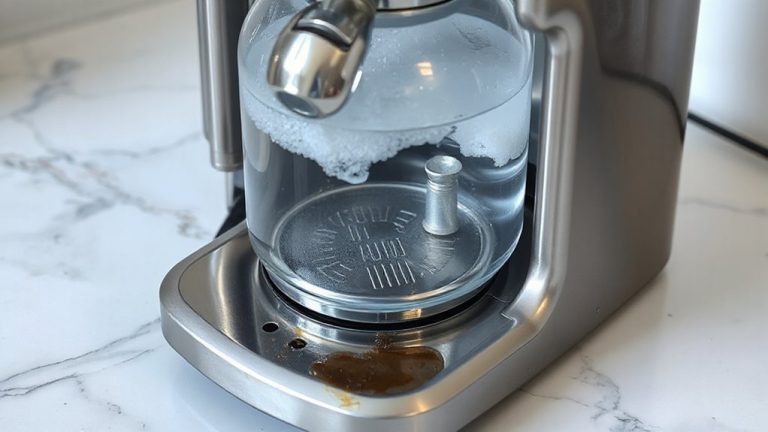
While dialing in your grind and dose matters, consistency in your brewing routine is what actually delivers a reliable long black every time. As a home barista, stick to the same steps: preheat your cup, tamp with even pressure, and time your shot-usually 25–30 seconds for 18–20g in. Small variations add up, so measure beans by weight, not volume. Use fresh, quality beans and store them properly to maintain flavor. Apply basic home barista techniques like wipe the portafilter and purge the group head before pulling a shot. These habits improve shot stability. Don’t overlook machine maintenance tips: clean the group screen weekly, backflush if using a dual boiler, and descale every 1–3 months depending on water hardness. A clean machine pulls even shots and preserves crema integrity, giving you a balanced long black every time. For optimal results, consider upgrading to espresso machine essentials that match your skill level and brewing goals.
On a final note
You’ll get the best long black by fine-tuning grind and dose. Use a fine grind for solid crema, but not so fine it turns bitter. Stick to 18–20g of coffee for a double shot. If it’s flat, go finer; if it’s harsh, coarsen the grind. Fresh beans matter-light roasts need finer settings than dark. Dial in each new batch, and tamp evenly. A good grinder and scale make all the difference.