How to Brew Caturra Coffee for Optimal Brightness and Clarity
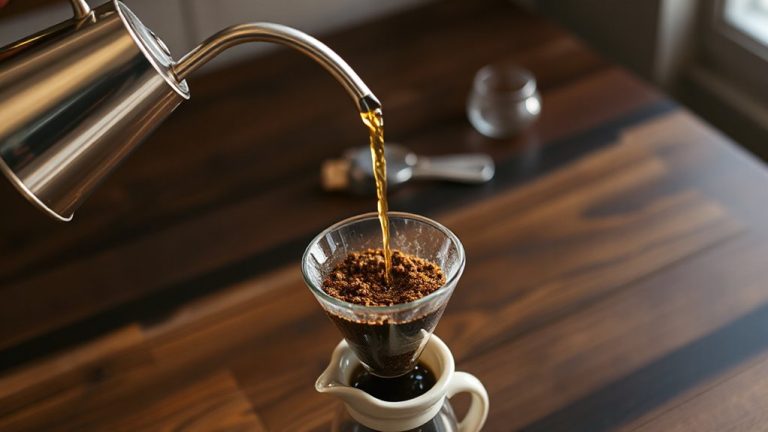
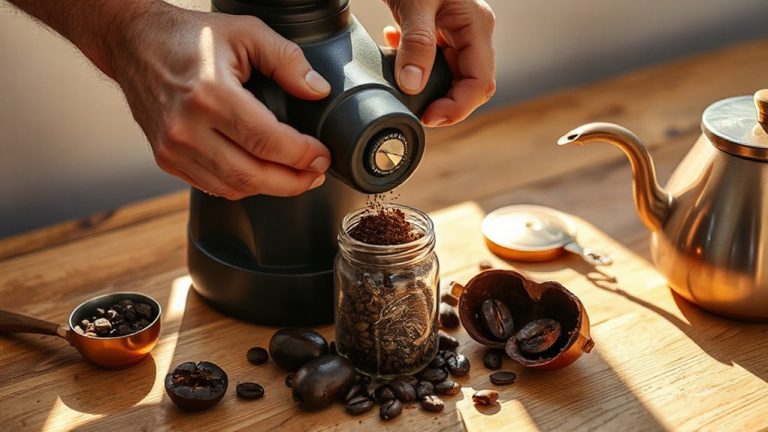
Use freshly roasted Caturra beans, ideally 2–4 weeks post-roast, from high-altitude farms in Colombia or Panama. Grind medium-fine with a burr grinder like a Baratza Encore right before brewing. Heat filtered water to 195–205°F using a gooseneck kettle like the Fellow Stagg EKG. Brew fast with a V60 or Chemex and paper filter to highlight bright citrus and floral notes. Avoid French press or cold brew-they mute clarity. You’ll find small tweaks can noticeably shape the final cup.
Notable Insights
- Choose fresh, light to medium roasted Caturra beans from high-altitude farms, ideally roasted within the past 2–4 weeks.
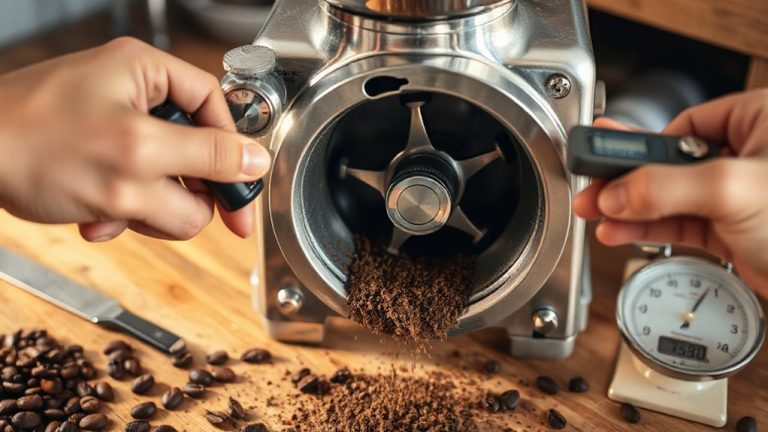
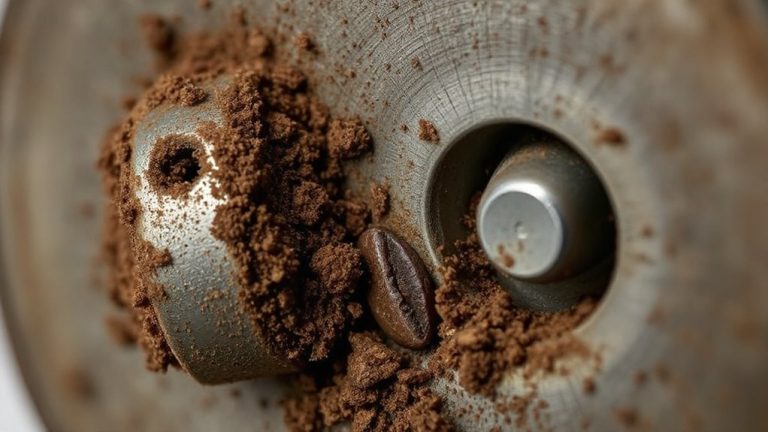
- Grind beans just before brewing to a medium-fine consistency using a conical burr grinder for uniform extraction.
- Heat water to 195–205°F using a gooseneck kettle to optimize extraction and preserve bright, acidic notes.
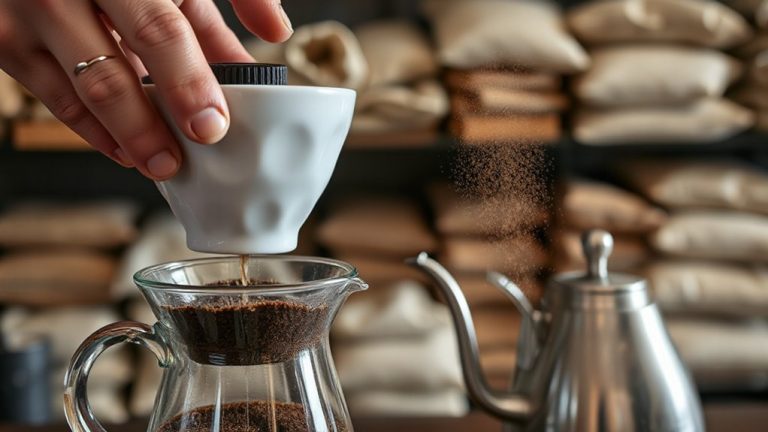
- Use a pour-over method like Hario V60 with a paper filter to enhance clarity and highlight vibrant flavor notes.
- Brew with filtered water (50–75 ppm minerals) and preheat equipment to maintain temperature and prevent off-flavors.
Choose Fresh Caturra Beans for Brightness
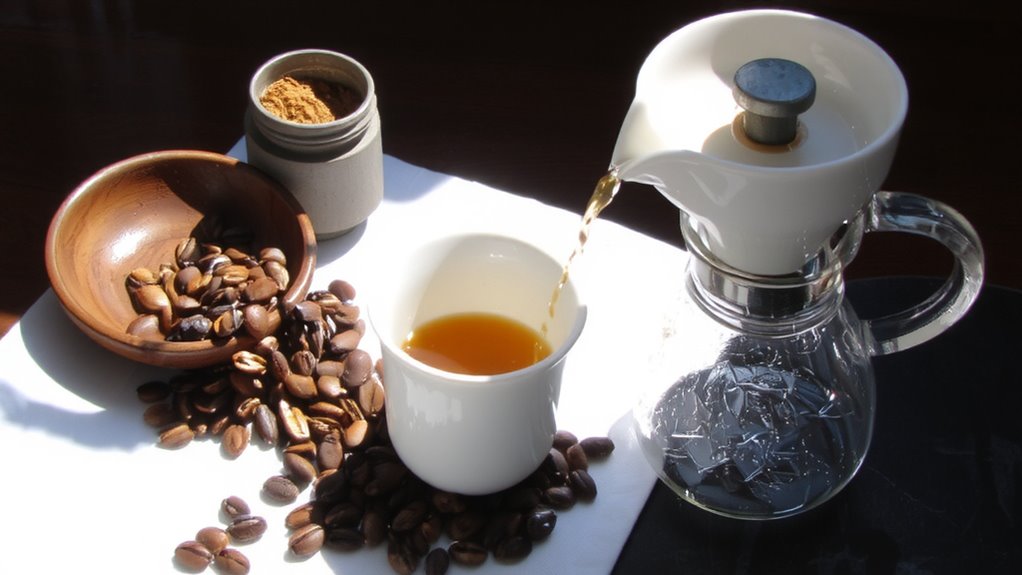
Most specialty coffee experts agree you’ll get the best results with beans roasted within the past two to four weeks, so check the roast date before buying. Freshness preserves the bright, citrusy notes Caturra is known for, especially from regions like Colombia or Panama. Origin sourcing matters-look for single-origin beans with transparent farm details, as these often reflect more care in growing and harvesting. Roast profiling plays a key role too; a light to medium roast enhances acidity and clarity without masking delicate flavors. Avoid beans without roast dates or vague labeling-these might be stale or inconsistently roasted. Opt for reputable roasters who prioritize precision and traceability. When in doubt, choose a recently roasted Caturra from a high-altitude farm with clear sourcing info. This combo gives you the best shot at a vibrant, clean cup. For those seeking exceptional quality, consider trying one of the top-rated Best Colombian Whole Bean Coffee Picks.
Grind for Pour-Over Clarity
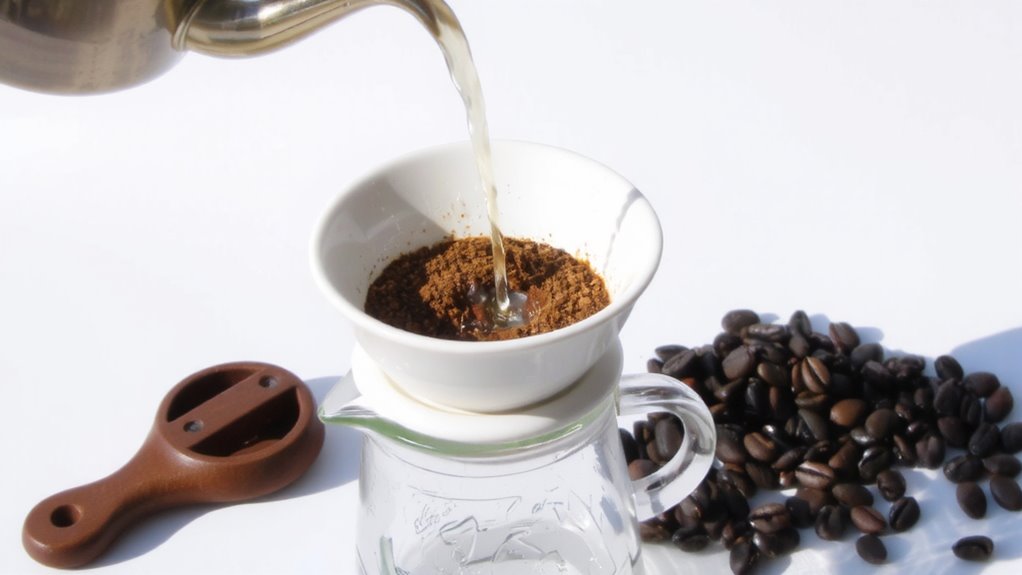
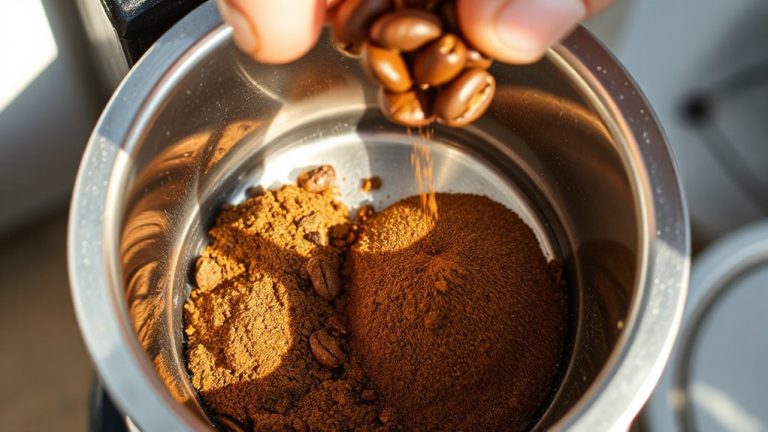
While pour-over brewing highlights the clean, bright qualities of Caturra, getting the grind right is critical to achieving clarity in your cup. You need a medium-fine grind-think table salt-for even extraction and smooth flow. Too fine and your coffee clogs and over-extracts; too coarse and it tastes weak and sour. Grind consistency matters: uneven particles lead to mixed results, with some over-brewing while others under-extract. A burr grinder delivers far better consistency than a blade model. Your filter type also affects grind needs. Paper filters, like Hario or Melitta, slow flow slightly, so a consistent medium-fine grind works best. Metal filters, such as Able Sieve, allow faster flow and may need a slightly coarser setting. Match your grind to your filter for clean, bright, balanced results. For precision and consistency, consider investing in one of the best burr grinders tailored for coffee enthusiasts.
Heat Water to 195–205°F for Acidity
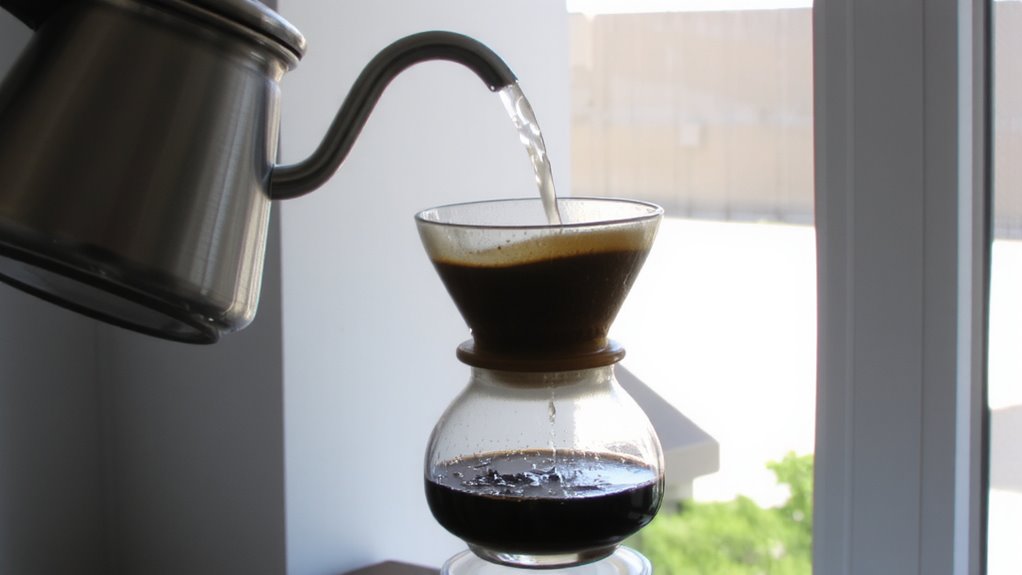
You’ll want your water between 195°F and 205°F to bring out Caturra’s bright acidity without tipping into sourness or bitterness. This water temperature range extracts delicate citrus and floral notes effectively while avoiding under- or over-extraction. Too cool, and the coffee tastes thin or sharp; too hot, and it risks harshness. Use a gooseneck kettle with temperature control for accuracy-models like the Fellow Stagg EKG or Bonavita BV3825 offer reliable readouts and steady pour control. Electric kettles with variable settings make maintaining this range easy, especially when paired with a timer and scale. Your grind and brew method must sync with this heat level-coarser grinds need slightly hotter water, finer ones cooler. Pour control guarantees even saturation, preventing dry spots or channeling. Always preheat your gear to avoid heat loss during brewing. This precision supports clarity and lifts the clean, vibrant character Caturra is known for. Best gooseneck kettles combine precise temperature management with ergonomic design for ideal pour-over performance.
Pick a Method That Boosts Brightness
Because brightness is central to Caturra’s flavor profile, choosing a brewing method that preserves and enhances its lively acidity makes a clear difference in your cup. You’ll want to avoid methods that dull its sharp, citrusy notes. French press, for example, produces a full-bodied brew, but the metal filter lets oils and fines through, which can muddle clarity and mute acidity. It’s not the best choice if brightness is your goal. Instead, go for pour over methods like Hario V60 or Chemex-they highlight clean, vibrant flavors. While cold brew is popular, it inherently reduces acidity due to long steeping times and water temperature, resulting in a smoother but flatter cup. That’s great for lowering bitterness, but it sacrifices the sparkle Caturra is known for. For ideal brightness, stick with fast, hot, paper-filtered brewing-you’ll get the clearest expression of the bean’s bright character.
Brew Just Long Enough to Avoid Bitterness
If you let the brew go too long, you’ll start pulling out harsh, bitter compounds that overshadow Caturra’s delicate citrus and floral notes. Keep brew time precise-aim for 2:30 to 3:00 minutes in pour-overs like the Hario V60. At higher brewing altitude, water boils cooler, slowing extraction; you may need to grind finer or extend time slightly. Poor water quality, like hard or chlorinated tap water, amplifies bitterness and masks clarity, so use filtered water. Below is a quick guide:
| Factor | Impact on Brew Time |
|---|---|
| High brewing altitude | Slightly longer to compensate for lower boil temp |
| Poor water quality | Can increase perceived bitterness, even with correct time |
Don’t over-extract chasing strength-clarity beats boldness with Caturra. A well-timed brew highlights its bright, clean profile without rough edges. Stick to the window, monitor conditions, and adjust only when needed.
Avoid Mistakes That Dull Caturra’s Sparkle
While Caturra’s bright, nuanced profile can shine beautifully when brewed with care, common missteps in preparation often mute its vibrant character. Using water with high hardness is one such mistake-minerals like calcium and magnesium interfere with extraction, leading to flat, dull flavors. Opt for filtered water with balanced mineral content, around 50–75 ppm, to let acidity and clarity come through. Bean age matters just as much: Caturra’s delicate notes fade quickly after roasting. For best results, use beans within 2–4 weeks of roast date. Stale beans, even if stored well, lose their sparkle, resulting in muted highs and muddled body. Grind fresh just before brewing to preserve volatile aromatics. Avoid plastic grinders or containers that retain oils and odors. A conical burr grinder like the Baratza Encore guarantees consistency. These small choices make a real difference in highlighting Caturra’s natural brilliance.
Adjust for Citrus and Berry Highs
What makes Caturra’s citrus and berry notes pop without tipping into sharpness? You’ll want to control temperature and brew time carefully. For pour-over, aim for 195–200°F-just off boil-to extract bright notes without acidity overwhelming the cup. If you prefer a smoother profile, try cold brew: steep medium-coarse grounds for 12–18 hours. It reduces acidity while preserving subtle fruit infusion characteristics. Light roasts showcase these high notes best, so stick with them unless you favor deeper tones. A finer grind enhances clarity, but go too fine and you risk bitterness. Use filtered water to avoid masking delicate flavors. For even more fruit expression, pair your brew with a light fruit infusion, like dried citrus peel or berry slices, but add sparingly-this isn’t flavored coffee, just accent.
On a final note
You’ve got fresh Caturra beans, so stick with a light roast and grind them just before brewing. Use 195–205°F water and a pour-over like the Hario V60 to highlight brightness. Keep brew time under 3 minutes to avoid dullness. Skip paper filters if you want more body, but use them for clarity. Watch your dose-1:16 coffee to water works. Adjust grind first if it tastes sour or bitter.