A Guide to Using Various Types of Filters in Coffee Brewing Methods Explained
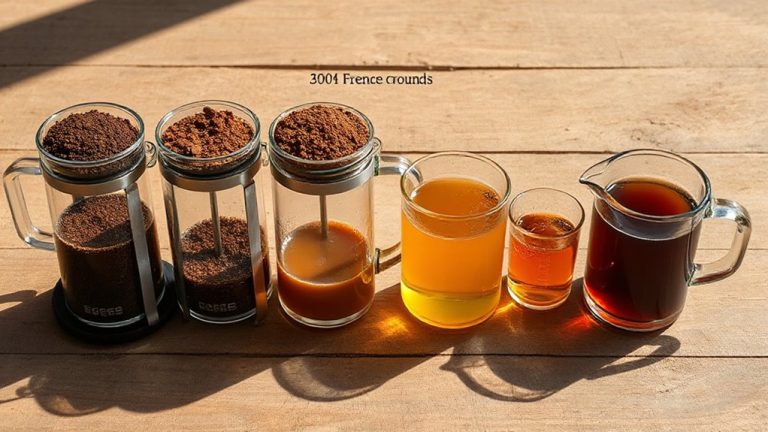
Your filter choice shapes your coffee’s body and clarity. Paper filters, like Hario or Melitta, give clean, bright cups by trapping oils and sediment-ideal for pour over. Metal filters, such as Able Brewing, let oils through for a fuller body, work well with French press, and last years with cleaning. Cloth and nylon offer reusable middle grounds, balancing clarity and texture. Each type affects brew time, flavor, and cleanup-your method and taste decide the best fit. Pick one, and see how it transforms your daily cup.
Notable Insights
- Paper filters produce clean, bright coffee by trapping oils and sediment, ideal for pour over and light roasts.
- Metal filters offer reusability and full body by allowing oils through, best for French press and dark roasts.
- Cloth filters balance clarity and body, requiring regular cleaning to maintain flavor and performance over time.
- Nylon filters provide durability and medium clarity, suited for AeroPress and eco-conscious brewing setups.
- Filter choice impacts brew time, extraction, and taste, so match it to your method and desired flavor profile.
How Coffee Filters Shape Flavor and Clarity
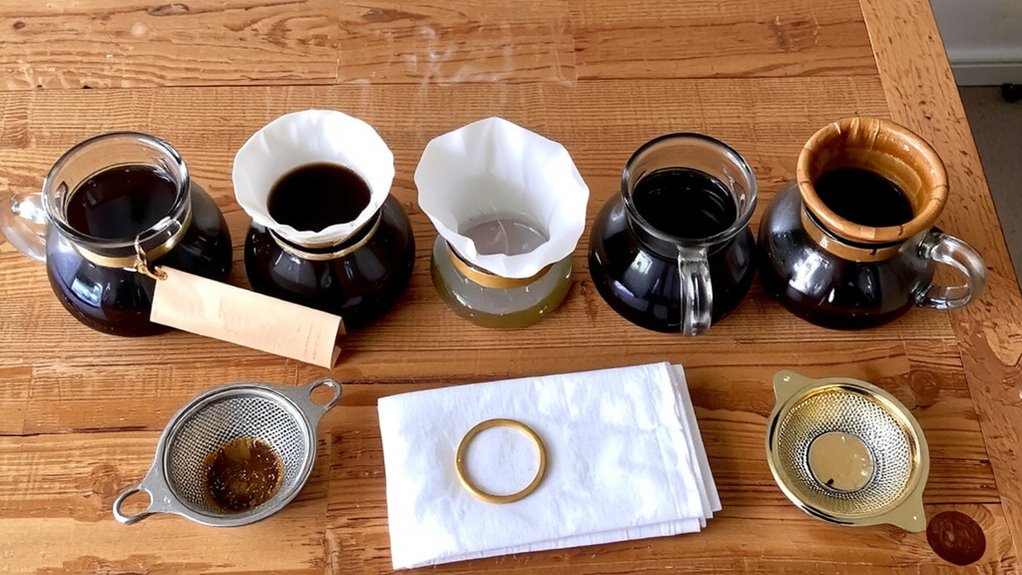
While the coffee bean and grind size often get the spotlight, the filter you use plays a quiet but critical role in shaping your brew’s flavor and clarity. Your filter’s porosity determines how much oil and sediment pass through-paper filters trap more, giving you a cleaner cup, while metal or cloth let more oils through for a fuller body. Filter porosity also affects brew time; finer pores slow water flow, increasing contact time and potentially over-extracting if not adjusted. A slower brew isn’t always better-it depends on your method and grind. If your coffee tastes bitter, a too-slow filter might be extending brew time too much. Conversely, a fast filter with large pores may under-extract, yielding weak coffee. Matching filter type to your brewing style helps control these variables. Choose wisely to balance clarity, flavor, and timing-without guesswork.
Best Coffee Filters for Pour Over, French Press, and Espresso
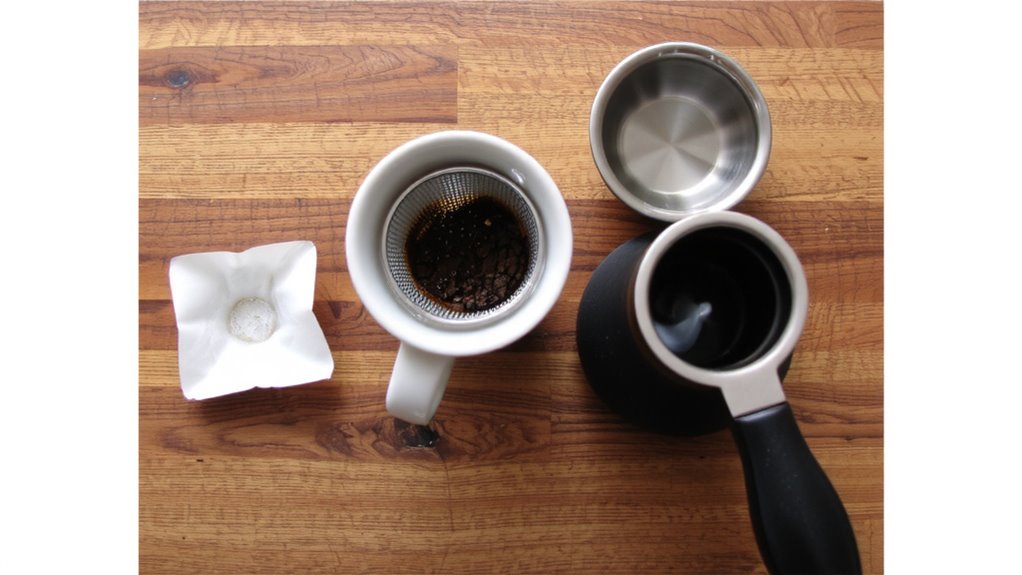
Your pour over, French press, or espresso setup demands the right filter to match its brewing style-using the wrong one can dull flavor or wreck texture. For pour over, go with a bleached or unbleached paper filter like Hario or Melitta; they trap oils and sediment, yielding a clean cup, though filter longevity is limited to one use. Metal filters, such as those from Able Brewing, work for French press and offer better brewing speed and reusability, but let more sediment through. Espresso requires a precise fit-stick with the machine’s standard portafilter basket, typically made of durable stainless steel for long-term filter longevity. These support fast brewing speed under pressure, critical for proper extraction. Don’t improvise; mismatched filters alter flow rate and pressure, harming your shot. Choose wisely based on your brewer’s design, maintenance habits, and desired clarity. For more insights, check out our top selections in the Best Coffee Filter Papers roundup.
Paper vs. Metal Coffee Filters: Oil, Sediment, and Taste Compared
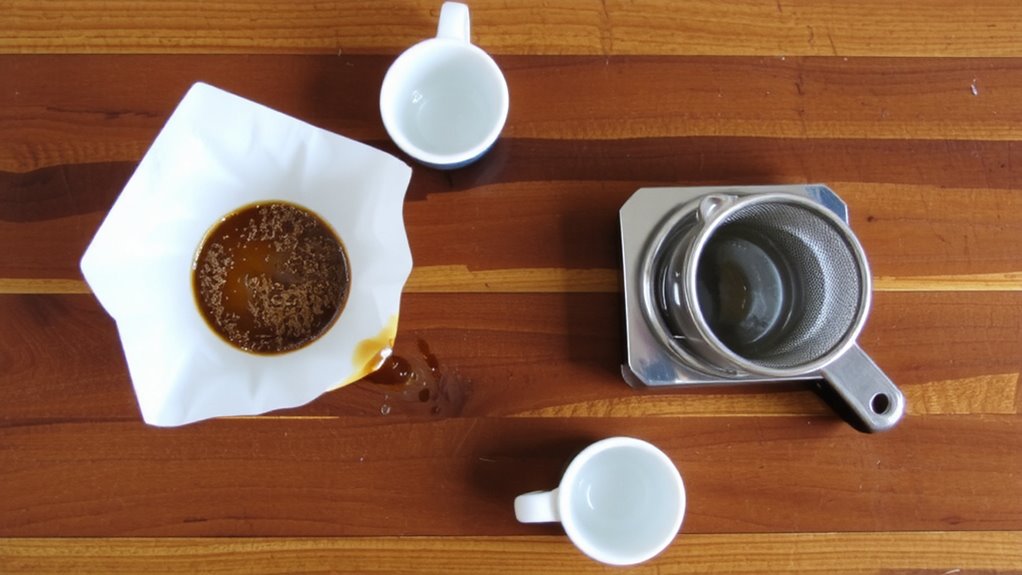
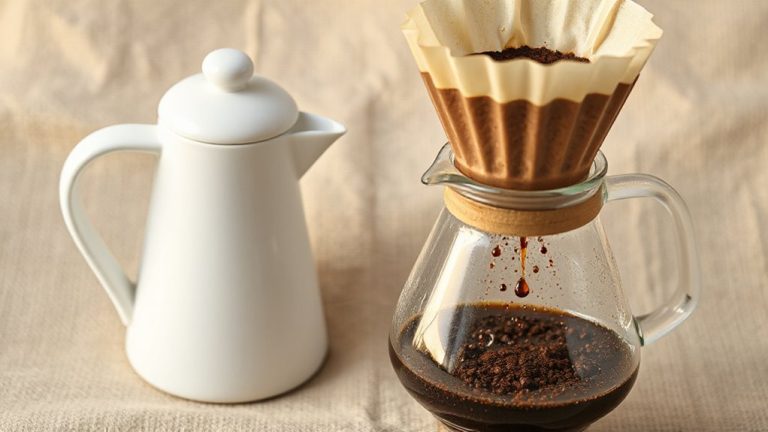
If you’re after a cleaner, lighter cup, paper filters like those from Hario or Melitta will trap most of the coffee oils and all the sediment, giving you a bright, smooth result with no grit at the bottom of your mug. They’re great for highlighting delicate flavors, especially in light-roast pour-overs. But paper filters are less durable-each one’s for single use-and their environmental impact adds up over time. Metal filters, like those from Able or Cafec, let more oils and fine particles through, producing a heavier, fuller-bodied brew. They’ve got high filter durability since you can reuse them for months or even years, cutting down on waste. Still, they need regular cleaning to avoid clogging and stale tastes. Your choice depends on whether you prioritize clarity and convenience or sustainability and body. Both affect flavor and cleanup-pick based on your routine and values. For Aeropress users, metal AeroPress filters offer a sustainable and flavor-rich alternative to paper.
Cloth and Nylon Coffee Filters: Reusable Options Reviewed
Cloth and nylon filters offer a midground between paper and metal, combining reusability with a cleaner cup than metal typically provides. You’ll get more body than with paper, but less sediment than a metal filter. Made from tightly woven cotton or synthetic fabric, cloth options like the Japanese flannel filter require careful rinsing and occasional boiling to avoid residue. Nylon mesh filters, such as the AeroPress reusable disc, are easier to clean and more durable. Both cut down on waste, lowering your environmental impact over time. They’re also cost efficient-after the initial purchase, you’re not buying disposables. Just remember: cleaning matters. If you skip it, your coffee turns bitter. These filters work best when you value cleanliness, sustainability, and long-term savings without fully embracing the metal-filter mouthfeel. Use them with medium-fine grounds for best results.
Pick the Best Coffee Filter for Your Taste Profile
A clean cup, full body, or bold intensity-your preferred coffee profile starts with the filter. Your choice affects how oils, sediments, and compounds from different coffee origins and roast levels make it into your brew. Light roasts from Ethiopia need clarity; a paper filter works best. Dark Sumatran roasts thrive with texture-go metal or cloth. Below is how filter types shape your cup:
| Filter Type | Clarity | Body |
|---|---|---|
| Paper | High | Light |
| Metal | Medium | Full |
| Cloth | High | Medium |
| Nylon (Reusable) | Medium-High | Medium |
| Bamboo | High | Light-Medium |
Paper traps oils, ideal for highlighting delicate notes in light to medium roast levels. Metal allows oils through, boosting mouthfeel-great for bold, dark roast profiles. Reusable options like cloth balance filtration and sustainability. Match the filter to your beans’ origins and roast levels for best results. Your taste, your call.
On a final note
Your filter choice shapes your coffee’s taste and clarity. Paper filters give clean, bright cups but remove oils. Metal ones let oils through for richer flavor but allow some sediment. Cloth or nylon works well for pour over or camp coffee-reusable, but need care. For French press, metal or cloth beat paper. Pick paper for crispness, metal for body, and cloth for eco-friendly repeat use. Match the filter to your brewer and taste.