The Role of Pressure in Determining Crema Consistency: An In-Depth Exploration
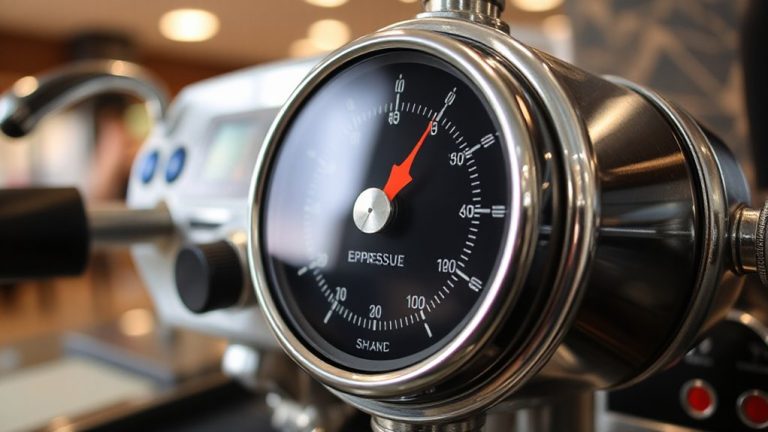
Pressure is key to forming a rich, stable crema. Your espresso machine’s pump, like those in the Gaggia Classic or Rocket Appartamento, pushes water at around 9 bars-enough to extract oils and trap CO₂ without overdoing it. Too little pressure gives weak crema; too much causes bitterness. Even tamping with 30 pounds of force helps water flow evenly. If your crema fades fast or looks spotty, it’s likely a pressure or puck issue-adjustments here lead to better shots. You’ll see how small changes make a real difference.
Notable Insights
- Pressure around 9 bars optimally emulsifies coffee oils and traps gases to form a stable, rich crema.
- Consistent pump pressure ensures even extraction, directly influencing crema texture and longevity.
- Proper tamping creates uniform puck density, allowing pressure to distribute evenly during extraction.
- Pre-infusion systems modulate initial pressure to prevent channeling and enhance crema consistency.
- Machine design, including pump type and pressure stability, critically affects crema formation and shot repeatability.
What Is Crema and Why Pressure Matters
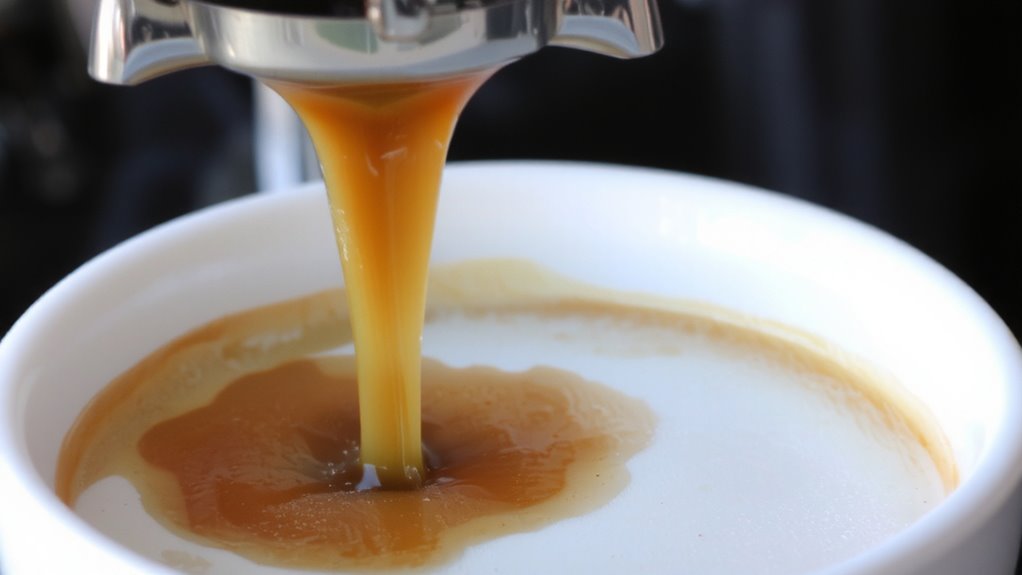
Crema-the golden-brown layer on top of a well-pulled espresso-is your first clue to a shot’s quality. You can see it right away: thick, rich, and clinging to the cup. Its presence signals proper extraction chemistry, where hot water at high pressure pulls oils, gases, and fine particles from finely ground coffee. Crema composition includes trapped CO₂, emulsified lipids, and tiny solids-all formed during brewing. If the crema is thin or fades fast, your grind, dose, or freshness might be off. Dark roasts often produce less crema than medium ones due to oil migration. Fresh beans matter-stale coffee won’t generate good crema. While pressure helps form it, crema alone doesn’t guarantee flavor. Still, combined with balanced taste, it’s a useful, visible indicator of a solid extraction.
How Pump Pressure Creates Crema
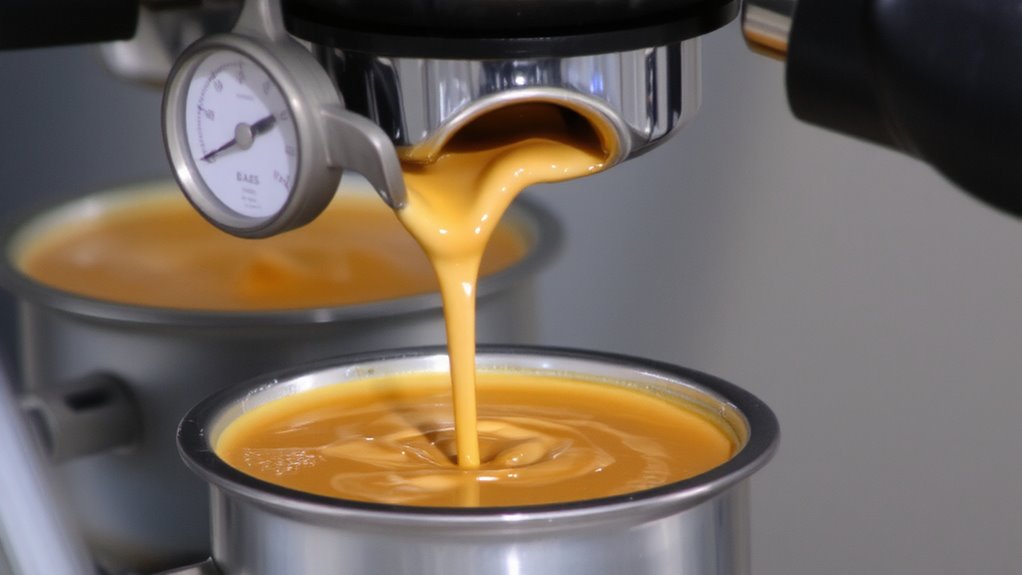
When your espresso machine’s pump pushes water through the coffee puck, it’s the pressure that forces oils and gases out of the grounds and into the liquid. That emulsion creates the creamy foam you see on top-your crema. Proper pump calibration guarantees consistent pressure, usually around 9 bars, so each shot pulls the same way. If the pump’s off, you’ll get under-extraction or channeling, and your crema suffers. Flow restriction from the portafilter and basket also shapes how pressure builds. Tighter restrictions can increase turbulence, helping mix oils into the espresso. But too much restriction strains the pump and causes uneven flow. Machines with adjustable pre-infusion manage pressure ramp-up smoothly, improving crema texture. You’ll want reliable pump calibration and balanced flow restriction to get stable, repeatable results-especially if you change beans or grind often. It’s not just power; it’s control. For those seeking quality beans to enhance crema performance, consider trying Seattle’s Best Coffee from Amazon.
Why 9 Bars Is the Sweet Spot for Espresso
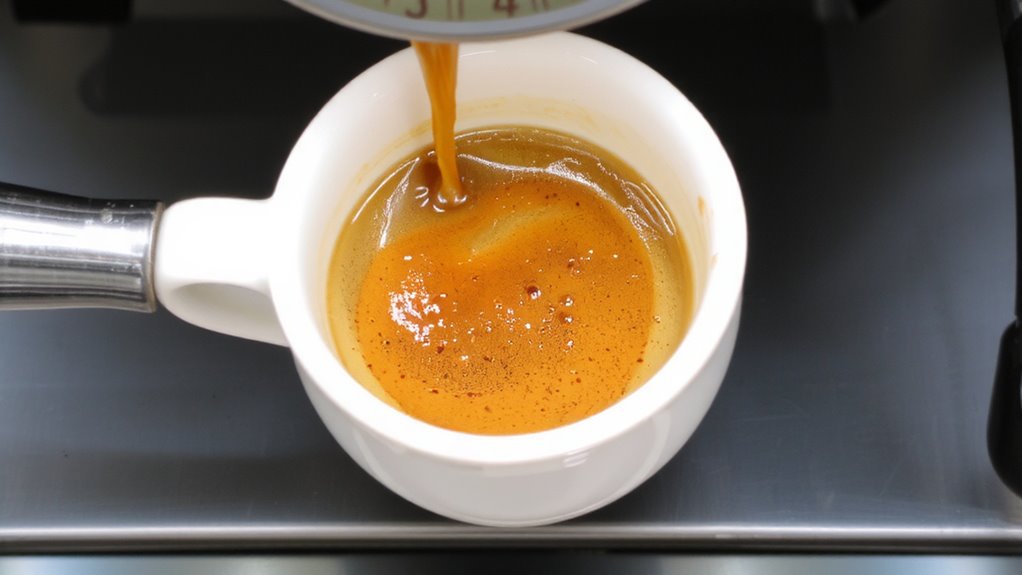
9 bars of pressure didn’t become the standard by accident-it’s the result of decades of refining espresso machines to pull balanced shots consistently. You’ll find this number across most home and commercial machines because it strikes the ideal balance between extraction force and control. The historical evolution of espresso tech shows early models used far less pressure, but proved inconsistent. Higher pressure, like 15 bars, might sound stronger, but doesn’t improve taste-it can actually over-extract and waste energy. At 9 bars, you get peak mechanical efficiency: enough force to emulsify oils and form rich crema, without straining the pump or requiring excessive tamping precision. Machines like the Gaggia Classic or Rocket Espresso Appartamento are built around this principle, offering reliability and repeatable results. For you, that means less guesswork and better espresso day after day. Portable coffee makers designed for outdoor use often rely on manual pressure systems to approach this optimal range, with some models achieving best portable coffee makers for outdoor adventures performance through innovative pump mechanisms.
How Tamping Affects Flow and Crema
Even if you’re using the right pressure and grind size, uneven tamping can throw off your shot by creating channels in the coffee bed where water escapes too quickly. Your tamping technique directly impacts puck density, which determines how evenly water flows through the coffee. If you tamp too lightly or at an angle, pockets of low resistance form, leading to under-extraction and thin crema. A level, consistent tamp with about 30 pounds of pressure helps achieve uniform puck density, promoting even extraction. Tools like calibrated tamper mats or ergonomic tampers can improve accuracy. Poor technique often shows up as soupy or spotty crema. With practice, you’ll notice smoother, golden crema when your tamp is flat and firm. Consistency in tamping technique isn’t just habit-it’s foundational to shot quality. For those looking to upgrade their setup, choosing the right best coffee tamper can make a significant difference in achieving consistent results.
Inside Your Espresso Machine: Pressure Stability Explained
While you can control variables like grind size and tamping pressure, what happens inside your espresso machine’s pump and group head plays an equally critical role in shot consistency. Modern machines use either vibratory or rotary pumps to maintain stable pressure, typically around 9 bar. Pressure dynamics shift during the shot as water meets flow resistance from the compacted coffee bed. A consistent pump and well-designed group head help counter these changes, ensuring even extraction. Entry-level machines may fluctuate, while mid-to-high-end models often include PID controllers or pressure profiling to improve stability. Flow resistance isn’t static-it builds as the puck absorbs water and releases gases. If your machine can’t maintain steady pressure through this phase, crema quality drops. Choosing a machine with reliable pressure dynamics means better control over the entire shot, not just the start. That stability is key to repeatable, rich crema.
When Pressure Goes Wrong: Over- and Under-Extraction
What happens when your shot runs too fast or drags too long? You’re dealing with extraction issues tied to pressure problems. If water channelling occurs, water bypasses dense areas of the puck, creating uneven extraction and weak crema-common with coarse grinds or poor tamping. On the flip side, channel clogging can happen when fines compact too tightly, restricting flow and causing over-extraction. That leads to bitter, harsh shots. Uneven pressure distribution often stems from inconsistent grind size, uneven dosing, or misaligned portafilter use. Machines with unstable pumps or worn seals worsen these flaws. You’ll notice thin, patchy crema with under-extracted shots and dark, dripping crema with over-extracted ones. Fixing it starts with checking grind consistency, ensuring even tamp pressure, and verifying equipment function. Simple changes like adjusting dose or cleaning group heads make a real difference in restoring balance and avoiding extraction extremes.
Balancing Variables for the Perfect Crema
If you’ve ever pulled a shot and ended up with flat, lifeless crema, chances are the issue isn’t just one setting-it’s how your variables interact. Pressure matters, but so do grind size, dose, and bean density. High-density beans need finer grinds and slightly longer times, while soft beans extract faster. Grind retention in your grinder can skew your dose, leading to inconsistency.
| Factor | Impact on Crema |
|---|---|
| Bean Density | Harder beans resist extraction, needing higher pressure or finer grind |
| Grind Retention | Leftover grounds cause uneven dosing, affecting pressure stability |
Balancing these guarantees even saturation and stable pressure. Use a precise grinder with low retention, like the Niche Zero, and adjust grind first before tweaking pressure. Your machine’s stability-like that of the Decent EP5-helps maintain control. Small, deliberate changes beat random tweaks.
On a final note
You now know pressure shapes crema, and 9 bars is ideal for most machines. Too little pressure gives weak, thin crema; too much causes bitterness. Tamping evenly and using stable gear-like a Lelit or Rancilio-helps maintain flow. Remember, pressure alone won’t fix poor grind or dosing. Balance all variables, check your machine’s pump, and adjust grind size before assuming hardware issues.