Why You Should Inspect Burrs Every 500 Hours of Grinding
You should inspect your burrs every 500 hours because wear starts affecting grind quality around then, especially for espresso. Dull or misaligned burrs create inconsistent particles-leading to sour, bitter, or flat shots-even if your dose and yield are correct. Models like the Baratza Encore or Gaggia Classic typically show wear by this point. Cleaning won’t fix lost sharpness, and resharpening isn’t always reliable. Checking them helps you catch issues early, so you know when to replace or resharpen. The signs to watch? Spot them now, and you’ll avoid guessing why your shots went off.
Notable Insights
- Burr efficiency begins to decline around 500 hours, leading to inconsistent grinds and poor espresso extraction.
- Worn burrs produce uneven particle sizes, causing channeling and unbalanced espresso flavors.
- Dull burrs increase fines and boulders, harming puck preparation and shot consistency.
- Regular 500-hour inspections catch misalignment or wear early, maintaining grind quality and machine performance.
- Frequent grind adjustments after 500 hours often signal burr wear requiring inspection or replacement.
Why Burr Wear Ruins Your Espresso
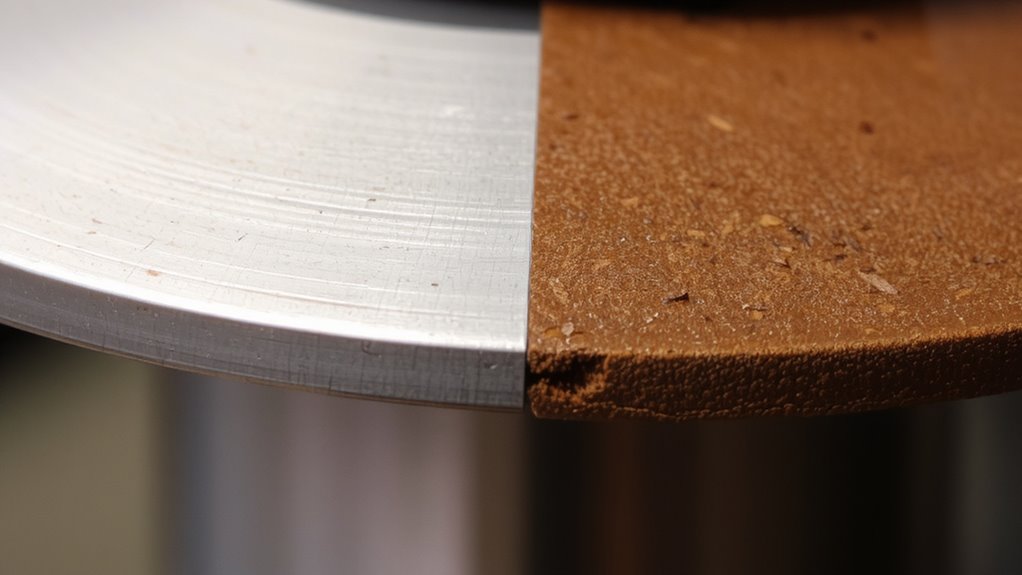
You might not notice it right away, but worn burrs can wreck your espresso more than you think. As burrs wear down, their ability to slice coffee evenly fades, hurting grind consistency. Poor consistency means uneven extraction-some particles over-extract while others under-extract, leading to bitter or sour shots. Over time, burr alignment also shifts, creating gaps that let coffee slip through unevenly. You’ll see more fines mixed with boulders, even if you haven’t changed your settings. This hurts puck prep and blocks flow or causes channeling. Unlike sharp, aligned burrs that produce uniform grounds, worn ones can’t maintain precision, especially with fine espresso grinds. You’ll struggle to hit target brew times or get balanced flavor. Even high-end grinders like the Compak K11 or Forté lose accuracy when burrs degrade. The result isn’t subtle-it’s underdeveloped shots, lost sweetness, and wasted beans.
Why You Should Check Burrs Every 500 Hours
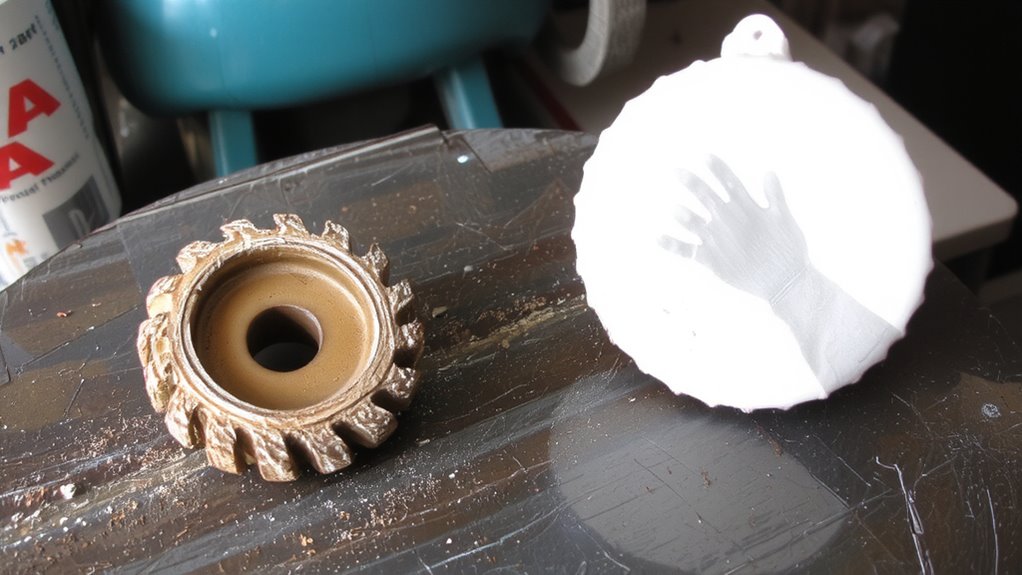
A good rule of thumb is checking your burrs every 500 hours of grinding-especially if you’re serious about espresso quality. At that point, burr efficiency starts declining, even if you don’t notice it yet. Dull or worn burrs struggle to cut coffee evenly, which directly affects grinding consistency. Inconsistent grounds lead to uneven extraction, sour notes, or bitterness in your shot. You might also find yourself adjusting the grind setting more often, a sign the burrs aren’t performing like they used to. While some high-end steel burrs last longer, most retail grinders-like those in the Baratza Encore or Gaggia Classic-show wear around this mark. Checking them helps you stay ahead of flavor drift and maintain repeatable results. It’s not about fixing what’s broken; it’s about preserving performance. Replacing burrs at regular intervals costs money, sure, but the payoff in grinding consistency and burr efficiency is clear: better, more stable espresso day after day. For baristas, choosing the right grinder from the start can delay wear and improve longevity, making Best Coffee Grinders for Baristas a key resource when selecting durable equipment.
Signs of Burr Wear That Hurt Espresso Quality
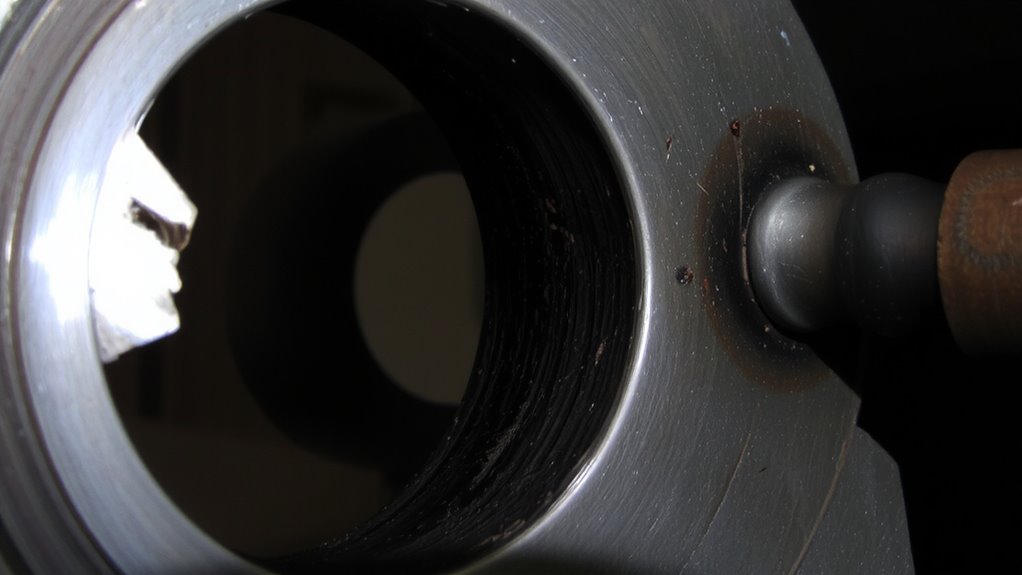
Worn burrs don’t always announce themselves with obvious cues, but their impact on espresso quality becomes clear over time. You’ll notice uneven extraction, with shots pulling too fast or tasting flat. One key sign is blade misalignment-when burrs aren’t spinning evenly, they grind inconsistently, leading to both boulders and fines in your dose. That imbalance kills shot stability. You might also detect aroma degradation; stale or muted fragrance in freshly ground beans suggests dulling burrs aren’t cutting cleanly but tearing, generating heat and oxidizing oils. This dullness reduces complexity in the cup. Sour or harsh flavors, even with correct dose and yield, often trace back to burr wear. If weekly cleaning and calibration don’t restore performance, it’s not just buildup-your burrs are losing edge. These signs mean it’s time to inspect or replace them. Consistent grinds mean consistent espresso-and that starts with sharp, aligned burrs. Choosing the best espresso grinder can delay burr wear and maintain grind consistency over time.
How to Check Your Burrs at Home
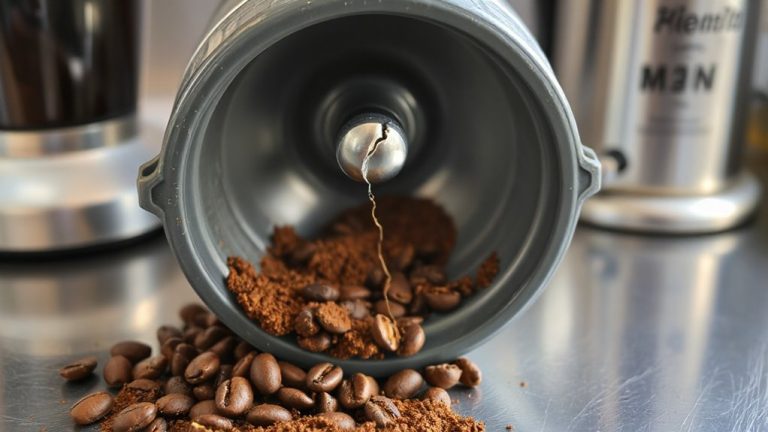
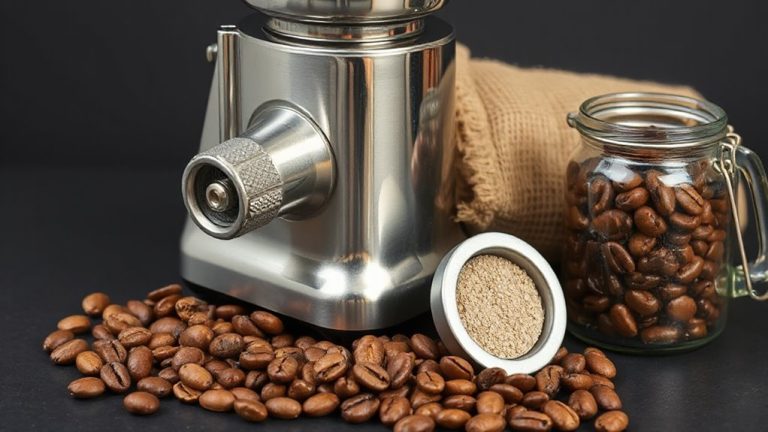
How do you know when it’s really time to inspect your burrs? Every 500 hours of grinding is a solid rule, but you can check at home without special tools. First, clean the grinder thoroughly-old grounds and static electricity can skew your assessment. Remove the burrs and examine the edges; if they look rounded or uneven, wear is likely. Check for burr alignment by placing the burrs face-down on a flat surface. If they wobble or don’t sit flush, misalignment could be affecting your grind. Also, look for uneven wear patterns-dark spots or grooves mean inconsistent contact. While some minor static buildup is normal, excessive static electricity after grinding often signals dullness. Don’t forget to verify both the inner and outer edges of stepped burrs, like those in the Compak K10 or Mazzer Mini. A quick visual and alignment check takes minutes but keeps your espresso quality consistent. Upgrading to one of the top-rated grinder machines can significantly improve grind consistency and extend burr life.
Resharpen or Replace: What to Do With Worn Burrs
Most home baristas will face this choice after a few years: resharpen or replace? It depends on the burr material and how much you value grind consistency. If you have stainless steel burrs, resharpening might restore performance, especially with high-end grinders like the Baratza Virtuoso. But it’s a one-time fix, and results vary. Harder burr materials like titanium-coated or ceramic often aren’t worth sharpening-ceramic especially, since they’re brittle and can crack. Replacement guarantees uniform grind consistency, which directly affects extraction and flavor. For most users, buying new burrs is simpler and more reliable. Manufacturers like Eureka and Mazzer offer direct replacements that fit specific models. While resharpening saves money short-term, worn burrs degrade grind quality no matter what. If your espresso tastes off or coffee brews unevenly, fresh burrs are the practical fix. After 500 hours, replacement usually makes the most sense.
On a final note
You should inspect your grinder’s burrs every 500 hours to maintain espresso quality. Worn burrs cause uneven grounds, leading to weak or bitter shots. Check for flat spots, rounding edges, or shiny metal. If you see these, it’s time to decide: resharpening works for mild wear but replacement-like Baratza’s OEM parts or OEM-equivalent upgrades-often makes more sense for heavy use. Clean burrs regularly, track grind hours, and stick to a consistent schedule. This simple habit keeps your coffee tasting fresh and your machine running efficiently.