Dialing in Espresso on a Semi-Automatic Machine: A Barista’s Step-by-Step Process
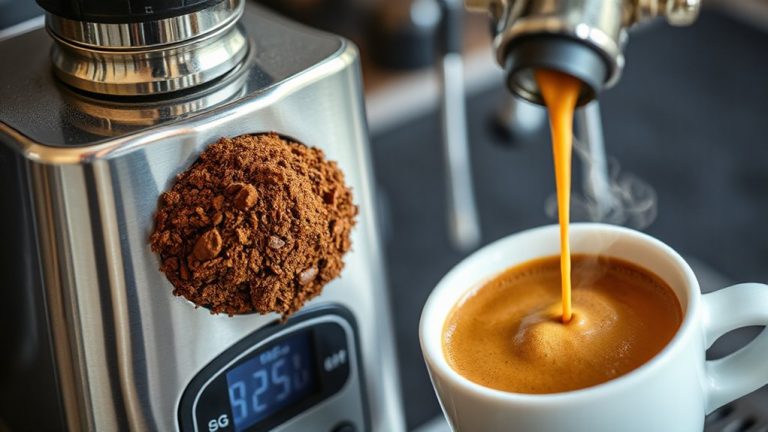
Start by dosing 18–20g of freshly ground coffee with a burr grinder set to medium-fine, like table salt. Lock in your portafilter and pull a shot aiming for a 1:2 ratio-36g out in 25–30 seconds. If it’s sour, go finer; if bitter, go coarser. Check crema and taste each shot. Adjust for humidity and water hardness, and track changes. Small tweaks make big differences-keep refining, and you’ll dial in smoother, more balanced espresso every time.
Notable Insights
- Start with a consistent dose of 18–20g and a medium-fine grind to establish a reliable baseline for espresso extraction.
- Aim for a 1:2 brew ratio with a 25–30 second extraction time to achieve balanced flavor and optimal strength.
- Evaluate crema, aroma, and taste to determine if the shot is under-extracted, over-extracted, or well-balanced.
- Adjust grind size finer for sour shots or coarser for bitter shots, then retest to refine extraction.
- Account for environmental factors like humidity and water hardness, and log all changes for consistency.
What “Dialing In” Really Means
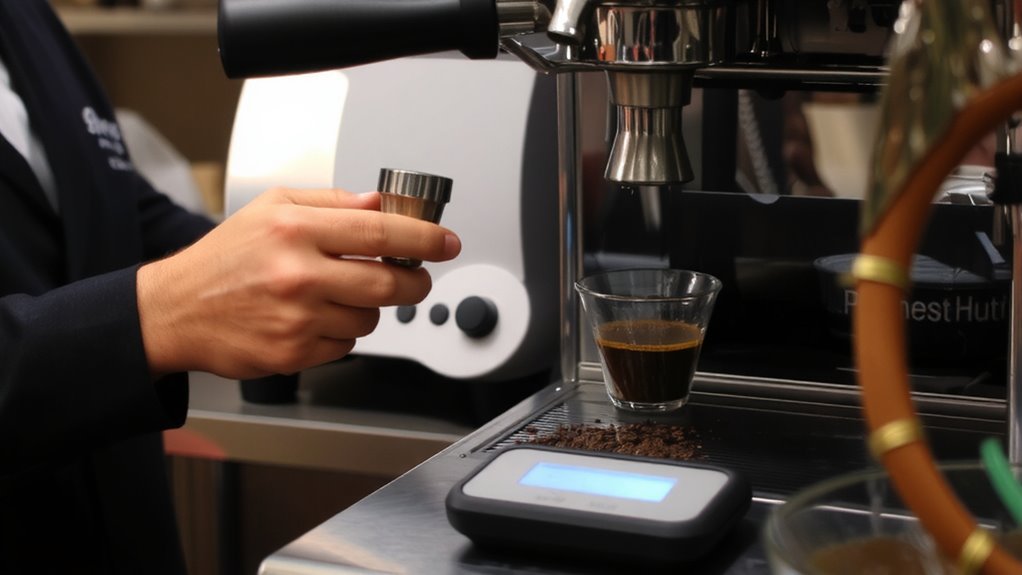
Think of “dialing in” espresso like tuning a radio-your machine, grind, and beans are the dials, and the goal is a clear signal: balanced, tasty shots. You’re adjusting variables to match the espresso origin and roast profile to your equipment. Machine calibration plays a key role; if your brew pressure or temperature is off, no grind change will fix it. Say you’re using a Lelit or Gaggia-you’ll need to make certain portafilter baskets are clean and group heads are evenly heated. Freshness matters, but so does consistency. A well-calibrated machine gives you a stable starting point. Then, small grind tweaks bring out clarity or body, depending on the beans. You’re not chasing perfection-you’re finding what works given your setup, beans, and time. It’s practical, iterative, and necessary for repeatable shots. Choosing the right best espresso beans can significantly influence how easily you achieve a balanced shot.
Start With Dose and a Baseline Grind
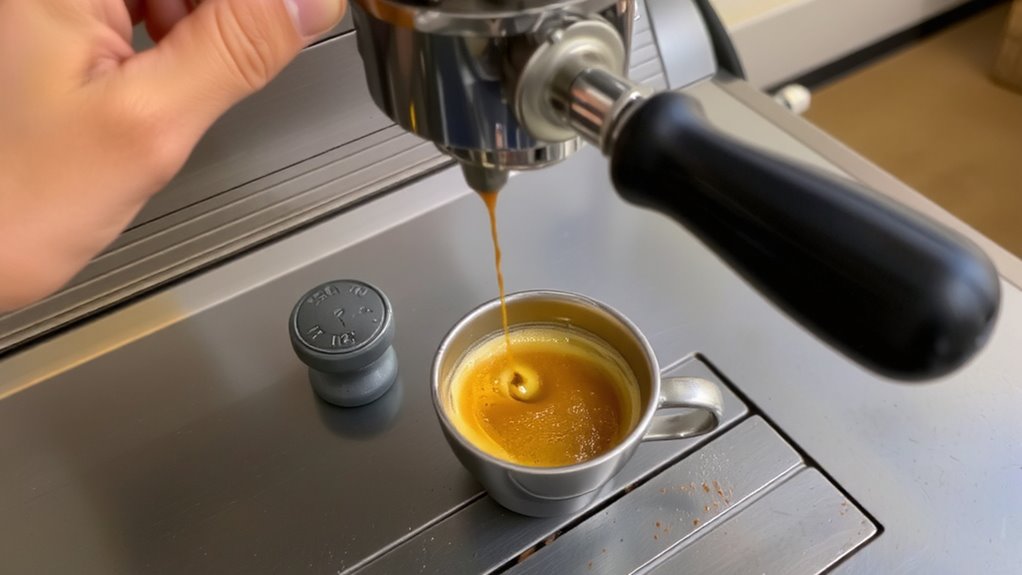
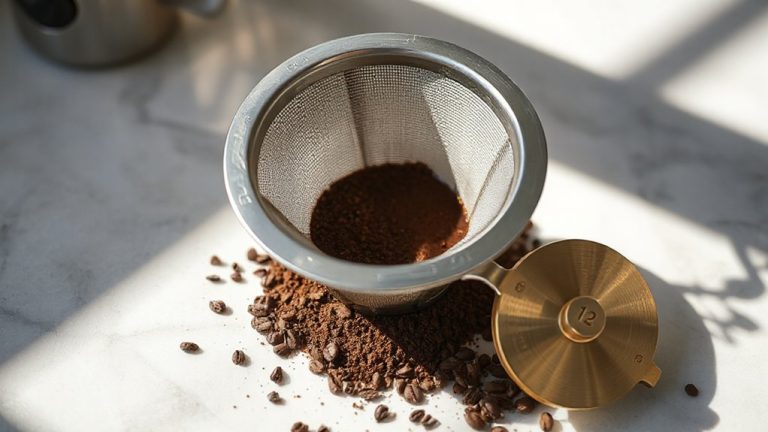
Start with a consistent dose-usually 18 to 20 grams for a double shot-depending on your portafilter basket size. This foundation guarantees your shots are repeatable and adjustments make sense. Use freshly ground beans, ideally within a few days of roasting, to maximize bean freshness and flavor clarity. Stale beans dull extraction, making dialing in harder. Next, set your grinder to a medium-fine setting as a baseline-like table salt-for espresso. This starting texture helps avoid extreme pulls while you fine-tune. Proper grinder calibration is key; even small inconsistencies in grind size affect extraction. Blade grinders aren’t precise enough-use a burr grinder for uniform particles. Your machine and environment will influence results, so expect some trial and error. Stick with one variable at a time, starting here. A stable dose and grind lay the groundwork for everything that follows. For consistent results without breaking the bank, consider one of the best espresso grinders under $500, such as the Baratza Encore ESP.
Set Your Shot Ratio and Time
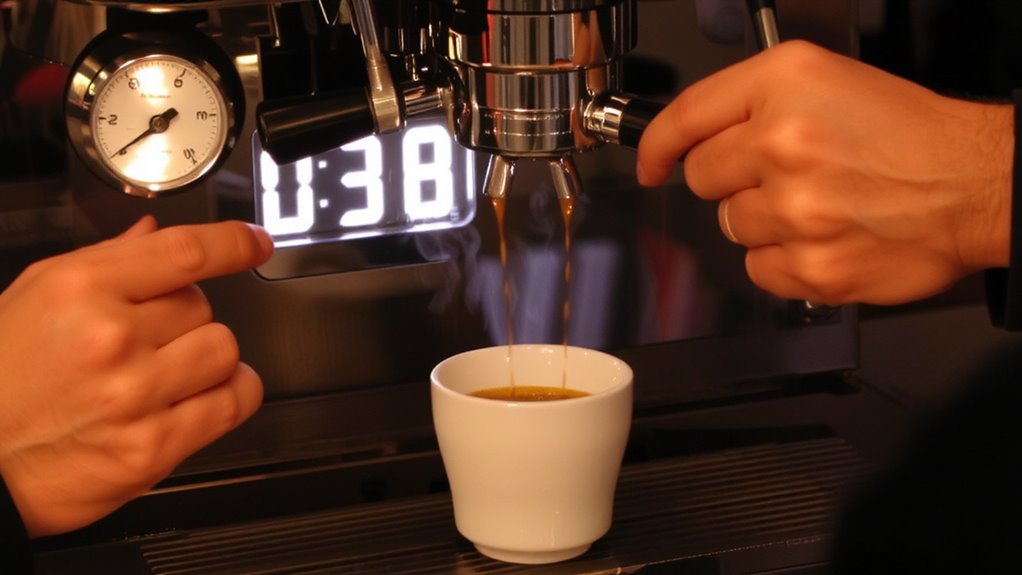
Once you’ve locked in your dose and grind, it’s time to define your shot ratio and target time-this is where precision begins to matter. A typical shot ratio for espresso is 1:2, meaning 18 grams of coffee yields about 36 grams of espresso. But you might go 1:1.5 for a ristretto or 1:2.5 for a lungo, depending on the beans and machine. Pair this with an extraction time between 25 and 30 seconds, which balances sweetness, acidity, and body. Too fast (under 20 seconds) and your shot tastes sour; too slow (over 35 seconds) and it risks bitterness. These targets depend on your grinder-like a Baratza Vario or Lelit PL9-an espresso machine with stable pressure, and fresh, evenly ground beans. Adjusting grind fineness later fine-tunes extraction time and shot ratio output. For consistent results, investing in one of the best espresso grinders can significantly improve shot quality and control.
Pull a Test Shot and Taste It
How does your espresso actually taste? Pull a test shot now that you’ve set your ratio and time. Look first at the crema appearance-it should be rich, caramel-colored, with a fine, uniform texture. Thin, pale, or patchy crema can hint at under-extraction. Next, take in the shot aroma; it should be fragrant, with notes of chocolate, nuts, or fruit, depending on the bean. A weak or sour smell suggests issues. Then taste: sip slowly, letting the liquid spread across your palate. Is it balanced, or overly sharp and thin? Bitter and harsh? Don’t swallow immediately-note how the flavor evolves. Use all these clues-crema appearance, shot aroma, and taste-to judge your shot’s extraction before deciding whether to adjust grind, dose, or time. This step isn’t optional-it’s essential for dialing in correctly.
Fix Sour or Bitter Espresso Fast
If your espresso tastes sour, it’s likely under-extracted, meaning the water pulled too few compounds from the coffee grounds, often because the grind is too coarse or the shot ran too fast. First, check your bean freshness-stale beans won’t extract well, no matter the grind. Try a finer grind to slow the flow and boost extraction. If it’s bitter, you’re probably over-extracting, often due to too fine a grind or a slow shot. Widen the grind size to reduce bitterness. Always check water hardness-soft water can under-extract, while hard water may extract too much, skewing flavor. Adjust based on taste and time: aim for a 25–30 second shot. These quick tweaks fix most off-flavors. Always change one variable at a time, starting with grind size. That way, you’ll know exactly what fixed it.
Adjust for Humidity and Temperature
While your grinder and espresso machine play major roles, you can’t ignore the air around you-humidity and temperature both impact how coffee flows and tastes. Changes in bean density due to humidity mean your usual grind setting might pull too fast or too slow. In high humidity, beans absorb moisture and grind finer; in dry air, they’re brittle and produce more fines. Temperature swings affect extraction stability, especially if your machine lacks PID control. Water hardness also alters how heat transfers and how scale builds up, influencing machine performance over time.
| Condition | Grind Adjustment | Dose Tip |
|---|---|---|
| High Humidity | Coarser | Keep dose stable |
| Low Humidity | Finer | Slight increase |
| High Temp | Slight coarser | Monitor flow |
| Low Temp | Finer | Check for sourness |
Keep Every Shot Consistent
Consistency starts with control-your grinder, scale, and machine all have to play their part, every single time. To keep every shot consistent, you need repeatable dose, grind size, and tamping pressure. Use a scale to measure both input (coffee dose) and output (shot volume). A standard shot volume-like 1:2 or 1:3-is only reliable if your variables stay stable. Your grinder is the most critical tool; even small fluctuations in particle size affect extraction. Check bean age, too: beans 3–14 days post-roast typically yield the most balanced shots. Older beans lose CO₂, leading to flat, under-extracted flavors. Clean your machine regularly-residual oils and old grounds mess with temperature and flow. Pre-infusion time, water temp, and pump pressure also matter. Track adjustments in a log. That way, if a shot fails, you can trace what changed-and fix it fast.
On a final note
You’ve dialed in when your espresso tastes balanced-neither sour nor bitter. Stick with a consistent dose, adjust grind fine or coarse as needed, and always check shot time. Humidity changes mean you’ll tweak daily. Use a scale and timer for accuracy. Machines like the Lelit or Rocket need this routine just like any other. It’s not magic-just small, smart steps that add up to better coffee every time.