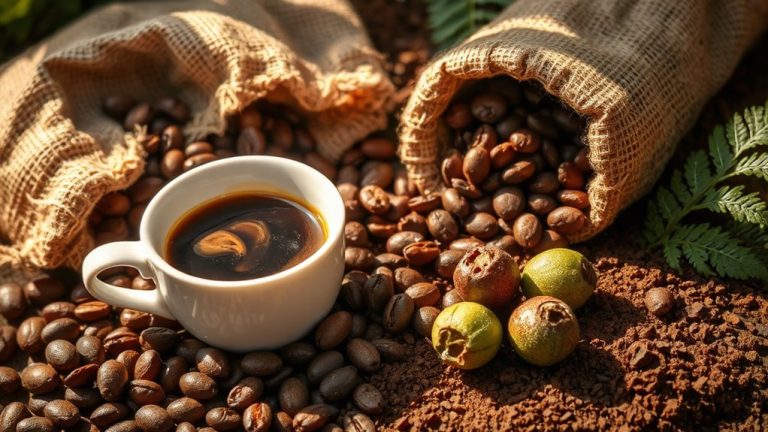
Best Espresso Grinders Under $500 for Café-Worthy Shots at Home
You want precise, consistent grinds for café-quality espresso at home under $500. Choose a grinder with 40mm+ burrs, fine timer control, and low retention. The SHARDOR 64mm delivers 100 settings and 0.1-second accuracy, while the Breville Smart Grinder Pro offers Dosing IQ for repeatable doses. Tuni G1 and AMZCHEF provide solid build and 48 settings. Manual options like Handground suit travel. Each balances performance, price, and practicality-your next pick depends on setup and routine.
We are supported by our audience. When you purchase through links on our site, we may earn an affiliate commission, at no extra cost for you. Learn more. Last update on 17th June 2026 / Images from Amazon Product Advertising API.
Notable Insights
- SHARDOR CG018 delivers 51 grind settings and 0.1-second timer precision for consistent espresso with minimal waste.
- Breville Smart Grinder Pro offers 60 grind settings, Dosing IQ, and a portafilter cradle for repeatable café-quality shots.
- Tuni G1 features 48 grind settings, 0.5-second timer increments, and low retention for precise, clean espresso dosing.
- SHARDOR 64mm grinder provides 100 grind settings and 0.1-second timer accuracy with flat burrs for high-end espresso performance.
- Anti-static technology and 40mm+ stainless steel burrs in top models ensure uniform grinding and optimal flavor extraction.
SHARDOR Conical Burr Coffee Grinder

If you’re looking for an espresso grinder under $500 that balances precision and convenience without leaning on premium branding, the SHARDOR CG018 stands out-especially if you value repeatable dose timing. I use its 0.1-second timer to hit consistent shots, and the 51 grind settings let me fine-tune for espresso or go coarse for French press. The 40mm conical burrs grind evenly, and anti-static tech keeps mess low. It fits my portafilter directly, saving time. At under 6.2 pounds, it’s compact but solid. Sure, it’s not as quiet as pricier models, but for the price, the SHARDOR delivers reliable performance anyone can count on.
Best For: Home baristas seeking a precise, budget-friendly conical burr grinder with excellent dose consistency and versatility for both espresso and coarser brew methods.
Pros:
- 51 grind settings and 0.1-second precision timer enable highly repeatable, customized dosing
- 40mm stainless steel conical burrs deliver consistent grind quality from fine espresso to coarse French press
- Compact design with portafilter cradle, anti-static technology, and easy cleaning enhance usability and reduce mess
Cons:
- Noisier than higher-end grinders, which may be noticeable in quiet kitchens
- Plastic build feels less premium compared to metal-housed competitors
- Limited customer service information available outside of online support channels
Breville Smart Grinder Pro for Coffee
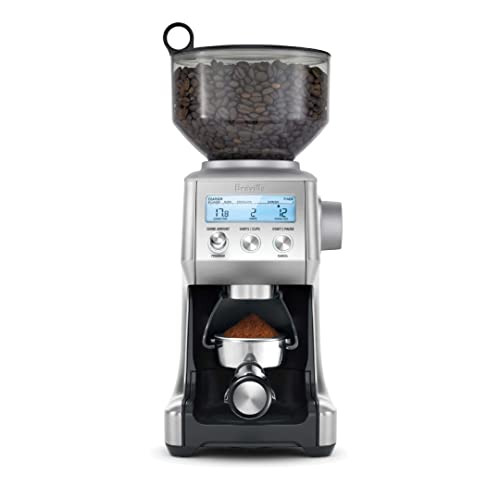
The Breville Smart Grinder Pro stands out in the under-$500 category for home baristas who want precision and consistency without stepping up to commercial gear. I use its 60 grind settings to dial in espresso, French press, or filter coffee with ease. The conical burrs deliver even grounds, and Dosing IQ lets me adjust grind time in 0.2-second increments for exact dose control. I appreciate the LCD screen-it shows settings clearly-and the portafilter cradle fits both 54mm and 58mm baskets. It grinds directly into containers or filters, reducing mess. At 165 watts, it’s powerful but not overly loud. With a 2-year warranty and included cleaning tools, it’s a reliable pick for daily use.
Best For: Home baristas seeking precision, consistency, and versatility in grinding for multiple brewing methods without investing in commercial equipment.
Pros:
- 60 precise grind settings with Dosing IQ for accurate dose control in 0.2-second increments
- Conical burr grinder ensures consistent, even grounds for espresso, French press, filter, and more
- LCD display and programmable timer enhance usability and reproducibility
Cons:
- Relatively loud compared to some premium grinders despite moderate 165-watt operation
- Plastic components in the bean hopper and grinding chamber may feel less durable over time
- Lacks built-in scale for weight-based grinding, relying on time-based dosing only
Onical Burr Coffee Grinder (Stainless Steel)
I’ve found the Onical Burr Coffee Grinder (Stainless Steel) works best for home brewers who want consistent espresso grounds without spending top dollar. Its 40mm stainless steel conical burrs deliver even grinds while reducing heat, and the 25 settings let you fine-tune for espresso, pour-over, or French press. The touchscreen lets you pick 1–12 cups with accurate portion control, so you’re not guessing. A fast motor and anti-static tech mean quick, clean grinding. At under 3 pounds and compact in size, it fits small kitchens. Released in late 2025 by LOSRSWA, it’s ranked #22 in burr grinders (ASIN: B0FXWMF93R), showing solid buyer confidence.
Best For: Home brewers seeking a compact, affordable burr grinder with precise settings for espresso, pour-over, and other brewing methods.
Pros:
- 25 precise grind settings and 40mm stainless steel conical burrs ensure consistent, low-heat grinding for various brewing styles
- Smart touchscreen interface with 1–12 cup portion control eliminates guesswork and enhances convenience
- Compact design, anti-static technology, and quick-release parts make it space-efficient, clean, and easy to maintain
Cons:
- Released in late 2025, so long-term durability and user feedback are still limited
- Ranked #43,971 in Home & Kitchen, indicating moderate market presence compared to top-tier models
- No mention of noise level, which could be a concern for light sleepers or small households
Tuni G1 Conical Burr Coffee Grinder

You’re not overpaying for precision when the Tuni G1 delivers 48 grind settings and 0.5-second timing control under $500, making it a standout for espresso beginners and home baristas who want repeatable, fine-tuned grinds without stepping into high-end price territory. I use its 40mm conical burrs and slow 450 RPM grind to limit heat, which helps preserve flavor. The LED touchscreen and timer let me dial in shots or switch to drip with ease. It fits small spaces at just over 7 inches wide, and the anti-fingerprint steel stays clean. I appreciate the included dosing cup and portafilter holder-setups for both espresso and filter brewing work smoothly. Low retention and built-in cleaning tools mean fresh grinds every time, with minimal mess.
Best For: Home baristas and espresso beginners seeking precision grinding with consistent results and convenient features under $500.
Pros:
- 48 grind settings and 0.5-second timer increments offer exceptional grind control for both espresso and filter brewing
- Compact design with anti-fingerprint stainless steel finish saves counter space and resists smudges
- Low 450 RPM grinding speed and conical burrs preserve flavor by reducing heat and static buildup
Cons:
- Limited bean hopper capacity at 250g may require frequent refilling for larger brewing sessions
- Maximum 40-second grind time may be insufficient for high-volume or commercial use
- Available only in 120V, limiting usability in regions with different voltage standards
Fellow Opus Conical Burr Coffee Grinder

Stepping into the sweet spot between performance and price, the Fellow Opus Conical Burr Coffee Grinder stands out as a top pick for home baristas who want espresso-quality grounds without crossing the $500 line. I use its 40 mm stainless steel burrs and 6Nm motor daily-they crush beans evenly across 41+ settings, handling everything from French press to AeroPress. The direct drop-down design cuts grind retention, while anti-static tech keeps my counter tidy. Its matte black, modern build fits any kitchen, and the 2-year warranty (plus 1 with registration) gives peace of mind. At under $500, it’s a smarter long-term choice than entry-tier grinders.
Best For: Home baristas seeking a high-performance, affordable burr grinder for a wide range of brewing methods including espresso, pour-over, and French press.
Pros:
- Delivers consistent grind quality across 41+ settings with durable 40 mm stainless steel conical burrs
- Low grind retention and anti-static technology keep counters clean and preserve coffee freshness
- Stylish, compact design with a 2-year warranty (3 years with registration) for added peace of mind
Cons:
- Limited to 120V, making it less suitable for international use without adapters
- Volumetric dosing may lack precision compared to weight-based dosing for espresso enthusiasts
- No built-in timer or programmable grinding, requiring manual operation
Mini Manual Coffee Grinder 40 Settings

One standout option under $500 for travelers and minimalists who prioritize precision is the CEVING Mini Manual Coffee Grinder with 40 adjustable settings. I’ve used it on trips and it delivers consistent grinds thanks to its conical ceramic burrs, which also reduce heat. The external adjustment ring makes it easy to switch between espresso, pour-over, or French press. Weighing just 325g, it’s light enough for backpacking, camping, or office use. It holds 30g of beans-enough for one or two cups. Cleaning’s simple with the included brush, but don’t use water. It’s built for portability, not heavy daily use, so if you’re brewing for a family, stick with an electric grinder.
Best For: Travelers, minimalists, and coffee enthusiasts who value portability and grind precision in a manual grinder for personal use.
Pros:
- Offers 40 precise grind settings with an external adjustment ring for versatile brewing methods
- Compact, lightweight design at 325g makes it ideal for travel, camping, and outdoor use
- Conical ceramic burrs provide consistent, low-heat grinding to preserve coffee flavor
Cons:
- Limited 30g bean capacity, suitable only for individual or light use
- Not designed for heavy daily or family-sized brewing needs
- Requires careful cleaning-cannot be washed with water to avoid flavor contamination
Conical Burr Coffee Grinder – 35 Settings
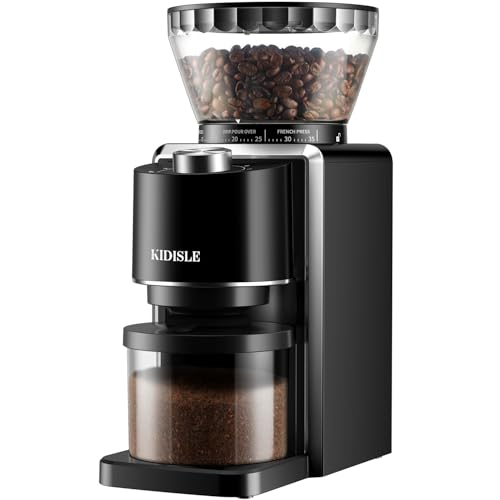
The KIDISLE CG9406 Conical Burr Coffee Grinder stands out for home baristas who want consistent espresso results without breaking the bank. I’ve found its 35 settings give me precise control, from fine for espresso to coarse for French press. The conical burrs crush beans evenly, which helps avoid bitter or weak coffee. It’s compact, fits on small counters, and the clear containers let me see how much I have left. I like that it’s easy to clean-parts come off quickly. It handles 2–12 cups, so it works for single shots or groups. At under $500, it’s a solid pick for those stepping up from blade grinders.
Best For: Home baristas seeking an affordable, compact conical burr grinder with precise settings for espresso, drip, and French press.
Pros:
- 35 precision grind settings offer excellent control for various brewing methods
- Conical burrs provide uniform grinding, enhancing flavor extraction and consistency
- Compact design with removable, easy-to-clean parts and transparent containers for monitoring
Cons:
- Limited capacity for large batches despite 2–12 cup range
- Plastic construction may feel less durable over time given 1-pound weight
- Only available in black with Art Deco style, limiting aesthetic options
AMZCHEF Burr Coffee Grinder with 48 Settings
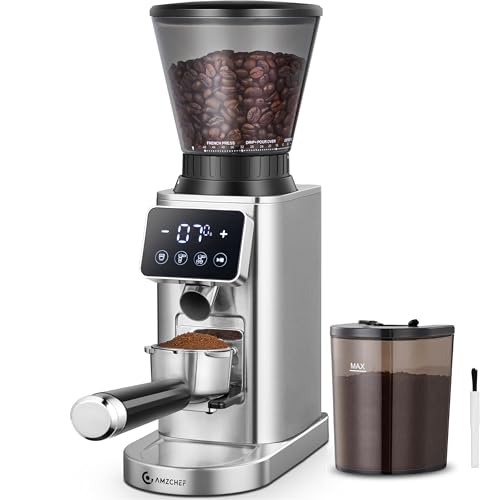
If you’re after consistent espresso on a budget, the AMZCHEF Burr Coffee Grinder with 48 Settings delivers precision without the high price tag. I use its 40mm stainless steel conical burr daily-it grinds evenly at 450rpm, reducing heat and static. The 48 settings give me full control, dialing in fine shots for my portafilter. It fits 50mm baskets and includes a light-blocking grounds container to keep beans fresh. The digital timer lets me dose by seconds or shots, adjustable in 0.5-second increments. Yes, it’s a bit bulky and the first few grinds left residue, but now it runs clean. For under $200, it outperforms many pricier grinders I’ve tried.
Best For: Budget-conscious espresso enthusiasts seeking precise, consistent grinds with minimal heat and static buildup.
Pros:
- Offers 48 precise grind settings for versatile brewing methods, especially fine-tuned espresso shots
- Features a 40mm stainless steel conical burr and low 450rpm speed to preserve bean oils and ensure uniform grinds
- Includes a light-blocking grounds container and digital timer with 0.5-second increments for accurate dosing
Cons:
- Somewhat bulky design may not suit smaller kitchens or tight countertop spaces
- Initial use produces residual coffee powder that requires cleaning before optimal performance
- Limited to 50mm portafilters, which may not fit all espresso machines without adapters
SHARDOR Conical Burr Coffee Grinder

You’ll want a grinder that balances precision and value if you’re building a home espresso setup without breaking the bank, and the SHARDOR Conical Burr Coffee Grinder delivers just that. I use its 48 grind settings to dial in espresso, drip, or French press with consistency. Low-speed grinding reduces heat, so my coffee keeps its flavor and oils. The anti-static burrs cut down mess by preventing grounds from clinging. A precise 1-second timer, up to 40 seconds, gives repeatable results. The touchscreen is simple, and the 9.7 oz stainless hopper locks securely. At under 5.4 pounds and 13.8 inches tall, it fits most counters. It’s made for home use, runs on 120V, and comes in a sleek silver finish. The model CG203S (ASIN: B0CKYZLK9B) launched December 9, 2023.
Best For: Home coffee enthusiasts seeking an affordable, precise conical burr grinder for espresso, drip, and French press with consistent performance and modern design.
Pros:
- 48 precise grind settings and 1-second timer increments ensure consistent, repeatable results across brewing methods
- Anti-static conical burrs reduce mess by minimizing grounds clinging to the chamber
- Compact, sleek stainless steel build with a secure hopper lock fits neatly on most kitchen counters
Cons:
- Limited bean hopper capacity at 9.7 oz may require refilling for larger batches
- Touchscreen interface may be less durable over time compared to physical buttons
- Only available in 120V, limiting use outside of North America without adapters
SHARDOR 64mm Burr Coffee Grinder (Black)

Coffee lovers who want precision without breaking the bank will find the SHARDOR 64mm Burr Coffee Grinder (Black) a solid pick under $500, especially if consistency and build quality matter. I’ve used it for espresso and pour-over, and the 64mm flat burrs deliver even grounds with little heat buildup. The 100 settings let me fine-tune for any brew, while the LED timer offers 0.1-second accuracy. Its all-metal chamber feels durable, and the 260-watt motor runs efficiently. Cleaning’s easy-parts like the burr and hopper remove quickly, and the anti-static feature cuts down mess. Just note: the single-dose hopper isn’t included.
Best For: Coffee enthusiasts seeking a durable, high-performance grinder under $500 with precise grind settings and consistent results across multiple brewing methods.
Pros:
- 64mm flat burrs and 100 grind settings ensure uniform grinding with minimal heat for optimal flavor
- All-metal grinding chamber and 260-watt motor provide durability and efficient performance
- LED timer with 0.1-second accuracy and removable parts make dosing precise and maintenance easy
Cons:
- Single-dose hopper is sold separately, adding to the overall cost
- At 8.82 pounds, it may be heavier than some counter-top setups prefer
- Limited color options, currently only available in black
Factors to Consider When Choosing an Espresso Grinder Under 500
You’ll want a grinder with precise grind size adjustment because even small changes affect your espresso’s taste and extraction. Flat or conical burrs made from durable steel give consistent results, and a reliable timer helps you hit the same dose every time-just don’t count on cheap mechanisms to last. Clean it regularly, watch the bean hopper size if you pull multiple shots, and remember: a bigger name doesn’t always beat a well-built mid-range model like the SHARDOR 64mm.
Grind Size Precision
While achieving a perfect espresso shot depends on several factors, getting the grind size right is one of the most critical-and often overlooked-aspects of the process. You need particles between 200–300 microns, fine and consistent, so your espresso extracts evenly under high pressure. Look for grinders with 40mm or larger conical burrs-they crush beans more uniformly than cheaper models. High-end options give you 50+ settings, letting you tweak the grind in tiny steps, even one notch at a time. That kind of control matters when dialing in daily. Low RPMs, around 450, mean less heat, so your beans’ oils stay intact, boosting flavor. Anti-static tech helps too, reducing clumps and retention so grounds distribute evenly in the portafilter. Grinders like the Baratza Sette 270 or Niche Zero deliver this precision under $500, making them strong picks for repeatable, café-quality shots.
Burr Type Quality
Since not all burrs deliver the same results, choosing the right type matters for pulling balanced espresso shots. You want high-quality conical or flat burrs made from stainless steel-they crush beans evenly, giving consistent particles for better extraction. Look for burrs 40mm or larger; the extra surface area spreads the load, reducing heat and improving uniformity. Models like the Baratza Vario or Anfim Q10 Pro use precision burrs with fine adjustments, helping you nail espresso’s tight grind range. Grinders running at around 450 RPM reduce friction, preserving flavor and aroma. Lower speed also means fewer burnt notes. Some grinders include anti-static tech-like in the Eureka Mignon Special-isolating charge to minimize clumping and guarantee clean, accurate dosing. That means less waste and more shots dialed in right the first time. Skip plastic or cheap alloy burrs; they wear fast and scatter inconsistent grinds.
Timer Accuracy
When pulling espresso, even small timing errors can throw off your dose and ruin extraction, so a grinder’s timer accuracy matters more than most realize. You’ll want a model with at least 0.1-second adjustment increments-this precision lets you dial in shots consistently, especially with varying bean types. Cheaper timers often jump in 1-second steps, which can overshoot or undershoot your dose by 0.2–0.5 grams, leading to uneven extraction. Higher-end grinders under $500, like the Niche Zero or TIMEMORE Ghost, offer digital timers with ±0.05-second consistency, reducing shot variation. Low-speed motors pair well with accurate timing, minimizing heat and static for cleaner grinds. Finer timer control means better calibration for light roasts or dense beans that need exact grind times. Don’t overlook this-consistent timing directly translates to more repeatable, café-quality shots at home.
Ease Of Cleaning
You just pulled a great shot thanks to precise timer control, but consistent performance doesn’t stop at grind time-it extends to how well you can keep your grinder clean. Look for models with removable burrs, hoppers, and grounds containers so you can reach all parts easily. Grinders with anti-static tech, like the Fellow Ode, reduce cling, cutting down on leftover mess. Built-in tools-such as integrated brushes or blower nozzles-help clear fine dust from tight spaces. A direct-to-portafilter setup with a detachable cradle cuts retention, so fewer old grounds stick around to muddle your next shot. Low-retention chambers and smooth interiors make wipe-downs quicker and more effective. These features save time and keep flavors clean, especially if you brew daily. Avoid designs that trap grinds or need special tools-simplicity wins. Prioritize easy disassembly and smart engineering that keeps buildup in check.
Bean Hopper Capacity
Most espresso grinders under $500 come with bean hoppers ranging from 8 to 18 ounces, giving you enough capacity for several shots before needing a refill-handy if you’re brewing for more than just yourself. If you’re making coffee for a household or office, go for a larger hopper; it cuts down on daily refills. Models like the Baratza Vario-W feature 18-ounce hoppers with airtight, light-resistant designs that keep beans fresh longer. Transparent hoppers let you see when levels are low, so you’re never caught off guard. For personal use or travel, compact grinders with hoppers under 8 ounces-like the 4-ounce Fellow Ode Gen 2-save space but need frequent refilling. Removable hoppers make cleaning easier and reduce old oils and stale residue that can mess with flavor. Pick the capacity that matches your routine: more beans for shared brewing, less for solo mornings.
Build And Durability
A grinder’s hopper size sets the stage for convenience, but what really determines long-term satisfaction is how well the machine holds up to daily use. You’ll want stainless steel or commercial-grade plastic parts-cheap plastic cracks and wears down fast. Metal burrs, especially high-quality stainless steel ones, stay sharp longer and handle daily grinding without overheating. Look for a heavy base and solid housing; they cut vibration and keep the grinder stable, reducing stress on internal parts. Anti-static tech isn’t just about less mess-it prevents coffee buildup that can harm performance over time. Choose models that disassemble easily, like the Baratza Vario or Niche Zero, so you can clean without tools. That routine upkeep keeps your grinder running smoothly and extends its life. Durability isn’t just about materials-it’s how well every part works together, day after day.
Frequently Asked Questions
How Often Should I Clean My Espresso Grinder?
You should clean your espresso grinder every 2 to 4 weeks if you’re using it daily. Residual oils turn rancid and mess with flavor fast. Wipe the burrs and hopper monthly with dry brushes, and deep clean with Grinder Wax or Puro Espresso tablets every few months. Machines like the Baratza Encore or Eureka Mignon need this routine to stay accurate. Skipping it clogs the burrs and skews dose. Make cleaning part of your maintenance-your shots taste better and the motor lasts longer.
Can I Use Pre-Ground Coffee in These Grinders?
No, you can’t use pre-ground coffee in these grinders-they’re designed to grind whole beans, not process already-ground coffee. Doing so clogs the burrs, ruins consistency, and stresses the motor. Espresso demands fresh grinding for ideal flavor and extraction. If you’re using pre-ground, skip the grinder and dose directly into the portafilter. But for real quality, grind fresh per shot. Machines like the Baratza Encore or 1ZPresso JX-Pro won’t help if you’re bypassing their core function. Fresh beans make the difference.
Do These Grinders Work for Decaf Coffee Beans?
Yes, you can grind decaf coffee beans in these grinders-there’s no technical restriction. Decaf beans behave like regular beans during grinding, so your grinder won’t struggle. Just keep the hopper and burrs clean, since oily or stale decaf can cause buildup. If you switch between decaf and regular often, a quick brush-out prevents flavor carryover. Models like the Baratza Encore or Fellow Omar SHP handle decaf just as well as caffeinated beans, giving you consistent results without hassle.
Are the Burrs Replaceable on These Models?
Yes, you can replace the burrs on most of these models, which helps maintain grind quality over time. Machines like the Eureka Mignon Silenzio and Baratza Sette 270 let you swap burrs easily when they wear out. Not all do-some entry-level grinders use sealed units. Check the manufacturer’s specs before buying. Replacing burrs isn’t costly and extends the grinder’s life, so it’s a smart long-term perk to look for.
Will Static Affect the Grind Retention in These Grinders?
Yes, static can affect grind retention in these grinders, especially in dry climates or low-humidity environments. You’ll see more cling and mess if the grinder generates static, leading to inconsistent dosing and wasted coffee. Models like the Baratza Encore ESP and Fellow Ode Gen 2 use anti-static tech or coated burrs to reduce this. You’ll get cleaner exits and better shot consistency if you pick a model designed to combat static.