Best Organic Decaf Coffee That Tastes Like the Real Thing
You get a rich, authentic coffee experience with organic decaf beans roasted for flavor and decaffeinated using the chemical-free Swiss Water Process. Try Kicking Horse Decaf Dark Roast for bold chocolate and hazelnut notes, or Mayorga’s Cuban-style dark roast with sweet smokiness. Whole bean options like Cameron’s or Organic Coffee Co. preserve freshness. These hold up well in drip, French press, or espresso. You’ll notice the difference in depth and clarity-especially when brewed fresh. There’s more to reflect upon if you want it just right.
We are supported by our audience. When you purchase through links on our site, we may earn an affiliate commission, at no extra cost for you. Learn more. Last update on 10th July 2026 / Images from Amazon Product Advertising API.
Notable Insights
- Swiss Water Process decaffeination preserves rich flavor while removing 99.9% of caffeine without chemicals.
- Medium to dark roasts like Kicking Horse and Mayorga offer bold, full-bodied taste profiles similar to regular coffee.
- 100% Arabica beans from organic, shade-grown sources enhance flavor complexity and authenticity.
- Brands like Allegro and Copper Moon use chemical-free methods and high-quality sourcing for real coffee taste.
- Organic certifications ensure no synthetic additives, supporting clean flavor and sustainable, ethical production.
Allegro Coffee Decaf Organic Italian Roast

If you’re after a decaf that doesn’t sacrifice depth or strength, Allegro Coffee Decaf Organic Italian Roast is built for coffee lovers who still want a rich, full-bodied experience without the caffeine. I use it in my espresso machine or drip brewer, and it delivers every time-bittersweet notes, a velvety texture, and a bold finish. The beans are organically grown and Fair Trade Certified from farms across the Americas, so I know sourcing is ethical. It’s a medium-dark roast, so it’s not as smoky as French or espresso roasts, but still robust. If you skip caffeine but crave flavor, this one’s a reliable go-to.
Best For: Coffee lovers who want a rich, full-bodied decaf experience with ethical sourcing and bold flavor without caffeine.
Pros:
- Rich, bittersweet flavor with a velvety texture and bold, aromatic finish
- Organically grown and Fair Trade Certified beans from the Americas
- Versatile for both espresso and drip brewing methods
Cons:
- Medium-dark roast may lack the smokiness preferred by fans of darker roasts
- Decaf process may slightly alter flavor intensity compared to regular coffee
- Packaging may vary, which could affect freshness if not stored properly
Kicking Horse Decaf Dark Roast Coffee

Kicking Horse Decaf Dark Roast Coffee stands out for those who want a rich, full-bodied decaf that doesn’t sacrifice flavor or ethics. I’ve found it delivers deep chocolate and roasted hazelnut notes with a smooth, mellow finish, thanks to the Swiss Water Process. It’s 100% organic, Fairtrade, and Kosher certified, sourced from high-elevation, shade-grown Arabica beans. The small-batch roasting in the Canadian Rockies guarantees no additives or artificial flavors. I use a medium-fine grind for French Press or pour over, but it works well for drip and espresso too-just mind your brew time to avoid bitterness.
Best For: Coffee lovers who want a rich, ethically sourced decaf with bold dark roast flavor without the caffeine.
Pros:
- Deep, complex flavor with notes of chocolate and roasted hazelnuts, enhanced by Swiss Water Process decaffeination
- Certified Organic, Fairtrade, and Kosher, reflecting strong ethical and sustainable sourcing standards
- Versatile medium-fine grind suitable for multiple brewing methods including French Press, pour over, drip, and espresso
Cons:
- Dark roast may become bitter if over-extracted, requiring careful brew time management
- Limited roast customization since it’s only available as a dark roast
- Premium pricing due to certifications and small-batch roasting may not suit budget-focused buyers
Newman’s Special Blend Decaf Coffee 10oz

Newman’s Special Blend Decaf Coffee 10oz stands out as a top pick for decaf drinkers who want rich flavor without caffeine and value ethical sourcing. I’ve found it delivers a full-bodied, medium roast taste thanks to its mix of Central American and Indonesian beans-bold but smooth, with no bitter aftertaste. It’s USDA Organic and Kosher certified, so you know it meets strict standards. Every purchase supports Newman’s Own Foundation, which has given over $600 million to charity. If you use a drip brewer or French press, this ground coffee works well. It’s not ultra-premium single-origin, but for consistent flavor and purpose, it’s a solid, no-frills choice.
Best For: Decaf coffee drinkers who want a rich, full-bodied flavor and support charitable causes through their purchases.
Pros:
- Rich, balanced flavor from a blend of Central and South American beans with smooth finish
- USDA Certified Organic and Orthodox Union Kosher certified
- Every purchase supports Newman’s Own Foundation, which has donated over $600 million to charity
Cons:
- Not a single-origin coffee, so it may lack the nuanced flavor notes some specialty coffee lovers seek
- Only available in ground form, limiting brewing method flexibility for those who prefer whole bean
- Medium roast may not satisfy those looking for a darker, bolder decaf option
Allegro Coffee Decaf Organic French Roast Ground Coffee, 12 oz (Pack of 1)

I reach for Allegro Coffee Decaf Organic French Roast when I want a bold, dark roast without the caffeine but still expect depth and intensity in every cup. It’s a specialty ground coffee made from seasonally sourced Latin American beans, roasted dark for a syrupy, rich body. The decaf process happens at the Swiss Water Plant in Vancouver, BC-organic, chemical-free, and reliable. I taste smoky sweetness with molasses and a hint of black pepper. It’s smooth, heavy, and works well in drip brewers or French presses. If you like strong decaf with character, this delivers.
Best For: Coffee lovers who crave a bold, dark roast with intense flavor and depth but prefer a decaffeinated, organic option.
Pros:
- Made with organically certified beans and decaffeinated using a chemical-free Swiss Water Process
- Rich, smoky flavor with complex notes of molasses and black pepper, ideal for dark roast enthusiasts
- Versatile grind suits drip machines and French presses for a smooth, heavy-bodied cup
Cons:
- Aggressively dark roast may overpower subtle flavor nuances for some palates
- Decaf process removes caffeine but may slightly reduce overall aroma intensity
- Single 12 oz pack offers limited quantity for frequent drinkers
Cameron’s Organic Decaf French Roast (4 lb)
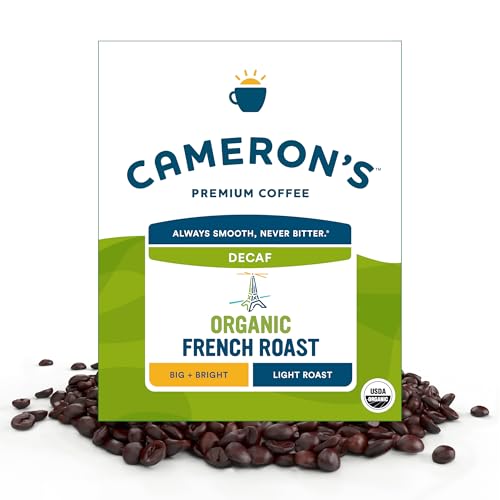
If you’re after a no-nonsense decaf that doesn’t sacrifice depth or roast integrity, Cameron’s Organic Decaf French Roast (4 lb) fits the bill. I’ve found it delivers a dark, rich cup without the bitterness that plagues some over-roasted beans. The small-batch roasting guarantees consistency, and the organic certification means you’re getting clean, specialty-grade Arabica from the top 10% of global harvests. Since it’s decaf and sustainably processed, it’s a solid pick for daily use without compromising flavor or ethics. At 4 pounds, the bulk bag saves money and waste, ideal for home brewers who hate running out. Just grind fresh, store properly, and you’ll get a smooth, full-bodied brew every time-no tricks needed.
Best For: Home coffee brewers seeking a high-quality, organic decaf with rich, dark roast flavor and sustainable sourcing.
Pros:
- Delivers a smooth, full-bodied flavor without the bitterness of over-roasted beans
- Organic certified and sourced from the top 10% of specialty-grade Arabica beans
- Large 4-pound bag reduces packaging waste and offers cost-effective bulk savings
Cons:
- Whole bean format requires a grinder for optimal freshness
- French roast profile may be too bold for those preferring lighter decaf options
- Limited availability in some regional markets due to specialty distribution
365 Decaf Ground Coffee 24oz

This 24oz decaf ground coffee works best for people who want a clean, chemical-free decaf option without sacrificing flavor or quality. I choose this Buzz Free Decaf from 365 because it uses the Swiss Water process, which removes caffeine naturally-no harsh solvents. Sourced from small-holder co-ops in Latin America, the beans support sustainable farming and deliver a full-bodied, hearty taste. It’s medium roast balances smoothness and depth, ideal for daily brewing. Kosher certified and sold in a 24oz bag, it’s cost-effective and consistent. Just grind fresh if you want richer flavor, though the pre-ground version works fine for drip machines or French press.
Best For: People seeking a clean, chemical-free decaf coffee with rich flavor and sustainably sourced beans.
Pros:
- Decaffeinated using the natural Swiss Water process, free of harsh solvents
- Sourced from sustainable small-holder co-ops in Latin America, supporting ethical farming
- Full-bodied, hearty flavor with a balanced medium roast, ideal for daily brewing
Cons:
- Pre-ground format may lose freshness faster compared to whole beans
- Medium roast might not satisfy those preferring bold or dark roast intensity
- Limited origin variety, with no detailed tasting notes beyond “hearty” and “full-bodied”
Copper Moon Organic Decaf Coffee (2 lb)

Copper Moon Organic Decaf Coffee (2 lb) stands out for drinkers who want a clean, flavorful cup without caffeine and aren’t willing to compromise on ethical sourcing or quality. I prefer it because it uses 100% Arabica beans grown in volcanic soils across 17 countries, ensuring rich flavor and sustainability. The Swiss Water Process removes 99.9% of caffeine without chemicals, preserving taste. You’ll notice notes of light chocolate, citrus, and caramel-balanced and smooth. It’s gluten-free, kosher, and non-GMO. Since it’s whole bean, you’ll need to grind it fresh, which actually helps maintain flavor. I recommend grinding right before brewing for the best results, whether you use a drip machine, pour-over, or French press.
Best For: Coffee lovers seeking a high-quality, chemical-free decaf option with rich flavor, ethical sourcing, and USDA organic certification.
Pros:
- USDA Certified Organic 100% Arabica beans sustainably sourced from small farms in 17 countries
- Swiss Water Decaffeination Process removes 99.9% of caffeine without chemicals while preserving full flavor
- Complex flavor profile with notes of light chocolate, citrus, caramel, and floral undertones; smooth and balanced
Cons:
- Whole bean format requires immediate grinding for freshness, which may be inconvenient for some users
- Higher price point compared to conventional decaf coffees due to organic and artisanal production
- Flavor nuances may be less pronounced if not brewed properly or with stale grind
Organic Coffee Co. Gorilla Decaf Whole Bean (32oz)

When you’re looking for a decaf that doesn’t sacrifice flavor or ethical sourcing, Organic Coffee Co. delivers with their Gorilla Decaf Whole Bean. I’ve tried it across multiple brewers-drip, French press, even moka pot-and it holds up every time. Roasted light-medium, it brings creamy milk chocolate and a hint of brown spice, not bitterness. The beans are USDA Organic, decaf via natural water process, so no chemicals touch your cup. Sourced with direct trade practices and roasted in the USA, it’s a solid pick if you care about sustainability. The 32oz bag lasts a while, especially if you grind fresh per brew. It’s not flashy, but it’s reliable, clean, and consistently smooth-ideal for daily drinking without caffeine.
Best For: Coffee lovers seeking a smooth, flavorful decaf with ethical sourcing and USDA Organic certification for daily, non-caffeinated enjoyment.
Pros:
- Rich flavor profile with creamy milk chocolate and brown spice notes, thanks to a well-executed medium-light roast
- Naturally decaffeinated using the chemical-free water process, preserving taste and purity
- Sustainably sourced through direct trade, USDA Organic certified, and roasted in the USA for quality and transparency
Cons:
- Larger 32oz bag may not be ideal for those who prefer smaller, fresher batches
- Flavor may be too mild for those seeking bold or dark roast intensity
- Whole bean format requires grinding equipment, potentially inconvenient for some users
Mayorga Decaf Coffee 2lb Organic Dark Roast

If you’re after a bold, full-bodied decaf that doesn’t sacrifice flavor, Mayorga’s 2lb Organic Dark Roast is a strong pick-especially if you value clean ingredients and ethical sourcing. I like that it’s 100% Arabica, sourced from small farms in Peru, Honduras, or Nicaragua, and decaffeinated using the Swiss Water Process-no chemicals, just pure water, removing 99.9% of caffeine while keeping flavor intact. The Cuban-style dark roast delivers notes of vanilla, sweet smokiness, and a bold finish with low acidity, ideal for espresso or French press. Roasted in small batches in the USA using a slow Latin method, it guarantees even development. It’s shade-grown, certified organic, and sourced through direct trade, supporting farmer well-being. Mayorga, a Latino-owned company since 1997, prioritizes real sustainability over trends. You’re paying for traceability and care, not hype.
Best For: Those seeking a flavorful, chemical-free decaf coffee with bold dark roast characteristics and a commitment to organic, ethically sourced beans.
Pros:
- Uses the Swiss Water Process for 99.9% caffeine-free, chemical-free decaffeination while preserving rich flavor
- Sustainably sourced through direct trade with small farms, supporting farmer well-being and environmental stewardship
- Crafted with a Cuban-style dark roast profile offering vanilla notes, sweet smokiness, and low acidity-ideal for espresso or French press
Cons:
- Limited origin transparency-beans sourced from Peru, Honduras, or Nicaragua without specific farm or region details
- Whole bean only, requiring a grinder for freshness, which may be inconvenient for some users
- Larger 2lb bag size may not be ideal for those who prefer to buy smaller quantities to ensure peak freshness
Whole Foods Organic Decaf Dark Roast

For anyone who wants a straightforward, no-fuss decaf dark roast without sacrificing quality or ethics, Whole Foods’ 365 Organic Decaf Dark Roast is a solid go-to. I grab this 12-ounce pre-ground bag when I want convenience without compromise. It’s a Dark French Roast, so expect smoky, slightly sweet notes with balanced depth-nothing too sharp or bitter. The beans are organic and decaffeinated responsibly, sourced under Fair Trade USA or Rainforest Alliance standards. Whole Foods bans junk like hydrogenated fats and artificial sweeteners across all products, so you’re not ingesting hidden nasties. They’re even part of the Sustainable Coffee Challenge, which tells me they’re serious about long-term impact. If you use a drip machine or French press, this grind works perfectly. It won’t wow espresso lovers needing intense crema, but for daily, ethical sipping, it’s dependable and clean.
Best For: Ethically conscious coffee drinkers seeking a convenient, high-quality decaf dark roast without artificial additives or sourcing concerns.
Pros:
- Organic, responsibly decaffeinated beans with rich, smoky-sweet flavor and balanced depth
- Ethically sourced under Fair Trade USA or Rainforest Alliance standards
- Part of Whole Foods’ Sustainable Coffee Challenge commitment and free from 300+ banned ingredients
Cons:
- Pre-ground format may not suit all brewing methods, especially espresso
- Flavor profile lacks the intensity preferred by bold espresso enthusiasts
- Limited grind versatility for those who prefer custom grinding at home
Factors to Consider When Choosing Organic Decaf Coffee
You’ll want to check for certifications like USDA Organic and Fair Trade to guarantee your coffee meets strict farming and labor standards. Think about how the beans are decaffeinated-methods like the Swiss Water Process avoid chemicals and preserve flavor better than solvent-based ones. Your taste and brewing method also matter, so consider origin, roast level, and whether the flavor profile matches your morning routine.
Certifications To Look For
When shopping for organic decaf coffee, checking the certifications on the label gives you clear insight into how the beans were grown and processed. Look for USDA Certified Organic to confirm the coffee was grown without synthetic pesticides or fertilizers and meets federal organic standards. Fair Trade certification guarantees farmers earn fair wages and work under ethical conditions, which supports long-term sustainability. Choose Rainforest Alliance certified coffee if you prioritize environmental protection and biodiversity, as it meets strict social and ecological criteria. If dietary compliance matters, pick Kosher certified coffee, which follows religious production rules. For peace of mind about genetic modification, go with Non-GMO Project verified beans-these are third-party tested and confirmed free of GMOs. Each label reflects different priorities, so match them to your values and needs when making a choice.
Decaffeination Methods Compared
While flavor and caffeine content often top your list when choosing coffee, the method used to decaffeinate beans plays a crucial role in both taste and quality-especially with organic options. You’ll want to stick with water-based methods like the Swiss Water Process, which removes 99.9% of caffeine using only water and carbon filtration-no chemicals needed. This method relies on solubility and osmosis, preserving more of the coffee’s original flavor. Chemical solvents like methylene chloride or ethyl acetate can also remove caffeine effectively, but only naturally derived ethyl acetate is allowed in certified organic coffee. Methylene chloride, while safe when regulated, isn’t permitted in organic certification. The indirect solvent method involves steaming beans, soaking them in solvent, then re-steaming to remove residue. For purity and taste, go with Swiss Water or certified water-processed decaf-your best bet for clean, flavorful, organic coffee.
Flavor Profile Preferences
What kind of flavor are you after in your morning cup? Organic decaf coffees deliver a wide range of tastes, from bittersweet and velvety to smoky and sweet, often with notes of molasses, caramel, or brown spice. Your choice of roast level shapes the result-medium roasts highlight nuanced flavors like citrus and floral hints, while dark roasts bring out deep tones of chocolate, hazelnut, and roasted spice. Decaf beans processed with methods like Swiss Water Process retain nearly all original flavor, so you don’t lose aromatic depth. Look for labels listing specific tasting notes; they’re more helpful than vague promises. If you like bold, lasting aftertastes, go for a full-bodied blend. Prefer smooth and mellow? Choose a lighter roast. Match the profile to your usual preferences-decaf doesn’t mean settling for less flavor.
Origin And Sourcing Ethics
You’ve already considered how roast level and tasting notes shape your ideal cup, but the story behind your organic decaf matters just as much. Choose beans sourced from small-holder cooperatives or farms that use direct trade, so you know growers earn fair wages and build long-term stability. Look for high-elevation, shade-grown coffee-it protects biodiversity and supports healthier ecosystems. Third-party certifications like Fair Trade USA or Fairtrade International back ethical labor and environmental standards with verified oversight. Brands investing in healthcare, education, or community projects in coffee-growing regions add meaningful impact. Prioritize organic and regenerative farming practices, which avoid synthetic pesticides, improve soil health, and conserve water. These methods aren’t just better for the planet-they often produce more resilient crops and better-quality beans. When you check sourcing details, you support transparent supply chains and long-term sustainability without sacrificing quality.
Roast Level Impact
Since roast level directly shapes flavor, body, and aromatic intensity, it’s a key factor when selecting organic decaf coffee. If you prefer bold, smoky notes with a rich mouthfeel, go for a dark roast-its longer roast time deepens body and adds syrupy texture, though it may dull delicate origin flavors. For a more balanced cup with hints of chocolate, fruit, or florals, choose a medium roast; it keeps acidity in check while preserving the bean’s natural complexity. Light roasts highlight bright, crisp aromatics and nuanced layers but can taste underdeveloped if not carefully processed. Keep in mind that darker roasts often mask lower-quality beans, so always look for specialty-grade decaf, regardless of roast. Brands like Lifeboost or Purity Coffee roast their decaf beans precisely to match origin characteristics, giving you flavor clarity without compromise.
Brewing Method Compatibility
When matching your organic decaf coffee to your brewing method, grind size plays a critical role in extraction and flavor. For French Press, drip, and pour over, use a medium-fine grind to balance clarity and body without over-extracting. Espresso demands a fine grind-this builds pressure and pulls a rich, concentrated shot with a full finish. If you’re making cold brew or using a French Press, go coarse to limit sediment and avoid bitterness. Whole bean lets you grind fresh, match your gear, and keep flavors sharp; pre-ground sacrifices some aroma over time, so check the grind before buying. Blenders like Baratza offer consistency across methods, while budget grinders may produce uneven particles, affecting taste. Always align the grind to your brewer: mismatched size dulls complexity, no matter how good the beans. You’ll get the most from your decaf when the grind and machine work as a team.
Frequently Asked Questions
Is Decaf Coffee Completely Caffeine-Free?
No, decaf coffee isn’t completely caffeine-free. You’re still getting about 2–5 mg per 8-ounce cup, compared to 80–100 mg in regular coffee. The decaffeination process removes most caffeine but not all. Methods like Swiss Water or CO2 tend to preserve flavor better while reliably reducing caffeine. If you’re highly sensitive, even that small amount might affect you. Check labels for processing methods and always expect trace levels-true zero caffeine doesn’t exist in decaf brew.
How Is Organic Decaf Coffee Processed?
You’ll typically see organic decaf coffee processed using the Swiss Water or CO₂ methods, both certified for organic production. You avoid harsh chemicals since these techniques rely on water or compressed carbon dioxide to remove caffeine. Swiss Water uses solubility and activated charcoal; CO₂ acts as a solvent under high pressure. Both preserve flavor better than older chemical solvents like methylene chloride, though they can cost more. Always check labels for “solvent-free” or Process Certification to confirm the method used.
Does Decaf Taste Different Than Regular Coffee?
Yeah, decaf usually tastes a bit different than regular coffee-most people notice it’s slightly less bold or complex. That’s because removing caffeine can strip some flavor compounds, especially with older methods. But newer processes like Swiss Water or CO2 retain more taste. If you pick a high-quality bean and fresh roast, the difference fades. You’ll still get rich aroma and body, just without the buzz. Taste it blind-you might not even tell.
Can I Brew Decaf Coffee With a French Press?
Yes, you can brew decaf coffee with a French press-just like regular coffee. Use coarsely ground beans, pour hot (not boiling) water, and steep for 4 minutes. Stir before pressing. Decaf behaves the same way during brewing, so the process doesn’t change. Just pick a high-quality decaf like Swiss Water-processed beans to avoid chemical residues and guarantee rich flavor. Taste depends more on freshness and grind than caffeine content.
Is Organic Decaf Coffee Safe for Pregnant Women?
Yes, organic decaf coffee is generally safe for pregnant women when consumed in moderation. You’re getting the same health benefits as regular coffee, minus most of the caffeine, which is key during pregnancy. Stick to Swiss Water Process decaf-it’s chemical-free and removes caffeine without solvents. Brands like Purity Coffee and Lifeboost use this method. Limit intake to 1–2 cups daily to stay under recommended caffeine limits. Always check labels for certification and processing details to be sure.