Best Portable Espresso Makers Cyclists Actually Use on the Go
You’ll want a compact, durable espresso maker that fits in your pack and handles rough rides. Cyclists often choose the WACACO Nanopresso for its 18 bar manual pressure and lightweight build, or the LumoShine for quick battery-powered shots with USB-C charging. Electric models like the Leozora offer crema-rich espresso with minimal effort, while manual ones save weight and work without batteries. Each has trade-offs in power, prep time, and cleanup. The best pick depends on your ride length, water access, and how much effort you’re willing to put in-your ideal setup is just a few details away.
We are supported by our audience. When you purchase through links on our site, we may earn an affiliate commission, at no extra cost for you. Learn more. Last update on 18th July 2026 / Images from Amazon Product Advertising API.
Notable Insights
- Lightweight models like the Minipresso GR (0.79 lbs) and Zcyge (1.5 lbs) offer easy packability for long bike tours.
- Battery-powered makers with USB-C charging, such as Leozora and LumoShine, enable on-the-go power via bike hubs or power banks.
- Manual options like Nanopresso require no electricity, use preheated water, and deliver 18-bar pressure for true espresso anywhere.
- Compact, thermos-sized designs with leak-proof seals fit securely in frame bags and withstand trail vibrations during rides.
- Quick-disassembly and hand-rinse cleaning are essential, as none are dishwasher safe and drying is critical to prevent mold.
LumoShine Portable Espresso Machine for Camping

If you’re a cyclist who values a quick, reliable espresso on long rides or remote trails, the LumoShine Portable Espresso Machine (model DY-KF-JN-2) is one of the best choices for on-the-go brewing. I use it on bikepacking trips where space and weight matter-it’s light at 1.76 pounds and fits easily in a pack. It brews in 20 seconds with hot water or 3 minutes with cold, powered by a 7500 mAh battery that gets me 5–25 shots per charge. I load ground coffee into the removable filter basket, add water, and press start. It works with power banks, so I recharge via my bike USB hub. It’s not waterproof, so I avoid rinsing the unit-just flush with water and clean the basket separately. While it doesn’t match home machines in crema, it delivers solid espresso in the wild. I’ve used it in rain, wind, and dust with no issues-just keep the motor dry. Compared to bulkier rivals, it’s compact and intuitive.
Best For: Cyclists and outdoor enthusiasts who want a lightweight, portable espresso solution for use on bikepacking trips, camping, or remote adventures.
Pros:
- Lightweight and compact design (1.76 lbs) fits easily in a backpack for on-the-go use
- Brews espresso in 20 seconds with hot water and supports power bank charging for off-grid convenience
- Compatible with both ground coffee and capsules, offering flexible brewing options
Cons:
- Not waterproof-requires careful handling to avoid water exposure to the main unit
- Lower shot yield with cold water (only 5 cups per charge) increases recharge frequency
- Crema quality doesn’t match that of larger, home-based espresso machines
Portable Espresso Maker 3-in-1 with USB-C
You’ll get the most out of the Portable Espresso Maker 3-in-1 with USB-C if your routine involves moving between outdoor adventures and everyday productivity, especially when you’re cycling long distances and need a reliable caffeine fix. It’s compact, at just under 2 pounds, and fits easily in a backpack with a padded case included. The 7800mAh battery charges via USB-C or car adapter, giving 5–6 shots from cold water or over 300 using pre-heated water. It hits 20 BAR pressure, heats to 92°C in 3 minutes, and works with ground coffee or capsules. It’s tough, BPA-free, and works at elevations up to 10,000 feet, making it ideal for real-world conditions.
Best For: Outdoor enthusiasts and mobile professionals who need a reliable, portable espresso maker that delivers strong coffee on the go, especially during cycling trips or high-altitude adventures.
Pros:
- Compact, lightweight design with rugged build and padded carrying case for easy transport
- 7800mAh battery supports USB-C and car charging, offering 5–6 brews from cold water or over 300 with pre-heated water
- 20 BAR pressure and 92°C heating delivers quality espresso with ground coffee or capsules in 3–4 minutes
Cons:
- Not dishwasher safe, requiring manual cleaning after each use
- Limited 50ml water capacity per brew, necessitating multiple cycles for larger servings
- One-button operation may lack customization for advanced coffee preferences
Zcyge Portable Coffee Maker for Travel
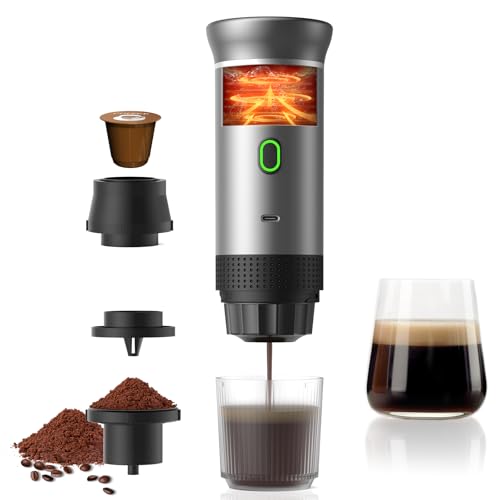
The Zcyge Portable Coffee Maker stands out for cyclists who value speed, simplicity, and consistent espresso on remote rides. I use it with ground coffee, Nespresso Vertuo, or DG pods-no hassle. Its 20-bar pressure pulls rich, crema-filled shots, and the 7500mAh battery gives me 3–5 cups per charge. It heats water in 5 minutes and recharges via USB-C or 12V/24V car ports. At just 1.5 lbs and barely larger than a thermos, it slips into my pack. I clean it fast with quick disassembly, though I hand-wash it. It’s not dishwasher-safe, but for reliable, on-trail espresso, it’s my go-to.
Best For: Cyclists and outdoor enthusiasts who want reliable, high-quality espresso on the go without sacrificing portability or ease of use.
Pros:
- 20-bar pressure delivers rich, crema-filled espresso shots
- 7500mAh battery provides 3–5 cups per charge and supports USB-C and car charging
- Ultra-portable design at 1.5 lbs with compatibility for ground coffee, NS capsules, and DG pods
Cons:
- Not dishwasher safe, requiring hand washing after use
- Battery is nonstandard and not easily replaceable
- Smaller water capacity limits brewing to a few cups per session
Leozora Portable Espresso Maker 20Bar

I rely on the Leozora Portable Espresso Maker 20Bar when I need real espresso on long rides or remote trails, and its 20-bar pressure system delivers consistent results that beat manual piston models. It heats water to 199°F, pulling rich shots with crema in just 2–3 minutes using ground coffee or Nespresso/DG capsules. The 7500mAh USB-C battery gives me 6–8 shots per charge-lightweight and airline-safe. Stainless steel construction resists wear, while the leak-proof cap prevents messes. I use it camping, biking, or during blackouts. It’s IPX4 splash-resistant, not dishwasher safe, and takes minimal setup to clean.
Best For: Outdoor enthusiasts, travelers, and coffee lovers who want barista-quality espresso anywhere without sacrificing performance or portability.
Pros:
- 20-bar pressure and 199°F heating deliver rich, crema-topped espresso in 2–3 minutes
- 7500mAh USB-C battery provides 6–8 shots per charge and is airline-safe for travel
- Durable stainless steel build with IPX4 splash resistance ideal for camping, hiking, and emergencies
Cons:
- Not dishwasher safe, requiring manual cleaning after use
- Limited to 40mL per shot, which may not satisfy larger coffee drinkers
- Compatibility with capsules may lead to ongoing supply costs
WACACO Minipresso GR Portable Espresso Machine

When I’m out on long rides and need a reliable caffeine fix without hauling bulky gear, the WACACO Minipresso GR stands out for cyclists who value simplicity and portability. It’s manual, so no batteries or power-just 8 bar of pressure from a pump action. I add 8 g of ground coffee and 70 ml of hot water, then extract about 50 ml of real espresso in minutes. At 360 g and under 18 cm long, it fits in most bike bags. I always preheat the water since it doesn’t heat on its own. After use, I rinse parts and dry the tank-no dishwasher. It’s durable, easy to clean, and works with any coffee.
Best For: Cyclists and outdoor enthusiasts who want a lightweight, portable espresso solution that fits in a bike bag and operates without electricity.
Pros:
- Manually operated with 8 bar pressure, delivering authentic espresso without batteries or power
- Compact and lightweight (360 g, 175 mm long), easily fits in bike bags for travel and outdoor use
- Compatible with any ground coffee and includes built-in cup and scoop for convenience
Cons:
- Requires preheated water as it does not have a built-in heater, adding prep time
- Small capacity (50 ml espresso per shot) may not satisfy larger coffee cravings
- Not dishwasher safe-requires hand rinsing and careful drying to maintain longevity
WACACO Nanopresso Portable Espresso Machine (18 Bar)

A compact and dependable choice for cyclists who want real espresso on long rides, the WACACO Nanopresso delivers 18 bar of manual pressure without needing batteries or electricity. I use it on multi-day tours where power isn’t an option, and it consistently pulls strong shots with just elbow grease. At 12 ounces, it’s light and fits in my bike bag. I load 7g of ground coffee and 80ml of water, then pump the piston-no hassle. It’s not dishwasher safe, so I rinse it by hand. The kit includes a cup, scoop, and brush, which helps me maintain it on the go.
Best For: Cyclists and outdoor enthusiasts who want to make real espresso on the go without relying on electricity or batteries.
Pros:
- Delivers 18 bar of manual pressure for authentic espresso shots
- Lightweight and compact design ideal for travel and bike tours
- Complete kit includes cup, scoop, and cleaning brush for on-the-go use
Cons:
- Requires manual effort to pressurize and extract espresso
- Not dishwasher safe, necessitating hand cleaning
- Limited water capacity (80ml) restricts shot size and convenience
Portable 3-in-1 Battery-Operated Espresso Maker
Who hasn’t wanted a real espresso after a long morning ride, especially when you’re miles from the nearest café? I’ve found the KEJECTOR KF-JN-02 delivers just that. Weighing only 1.51 lbs and running on a 7500mAh battery, this 3-in-1 machine uses 20-bar pressure to brew solid espresso in 3–4 minutes with cold water-or 20 seconds if you preload hot water. It works with ground coffee or NS capsules, fits in a backpack, and charges via USB-C. I clean it by hand after each use. It’s not dishwasher safe, but the quick disassembly makes maintenance easy. Cold water limits me to four shots per charge, but with hot water, I’ve pulled over 50. It’s efficient, reliable, and ideal for long rides where quality coffee matters.
Best For: Outdoor enthusiasts and travelers who want barista-quality espresso on the go without relying on electrical outlets.
Pros:
- Compact, lightweight design makes it easy to carry for camping, hiking, or travel
- 20-bar pressure ensures authentic espresso extraction with ground coffee or NS capsules
- Long-lasting 7500mAh battery provides up to 50+ cups with hot water and USB-C charging flexibility
Cons:
- Limited to 4 espresso shots per charge when using cold water
- Not compatible with Nespresso Vertuo capsules, reducing capsule options
- Requires hand washing as it is not dishwasher safe
CERA+ Portable Espresso Maker Pro

The CERA+ Portable Espresso Maker Pro is built for cyclists who demand pro-level espresso without the bulk, and its 730-gram frame slips neatly into a bike bag without weighing you down. I use it on long rides and it delivers 20-bar pressure and 92°C water in 3–4 minutes-perfect for thick crema. The 18–20 g stainless steel basket handles fine grinds well, and the built-in 3×3500 mAh battery gives me 3–4 shots per charge, no outlet needed. USB-C charging is fast, and it works anywhere-no app or Bluetooth. It’s not dishwasher safe, but cleanup is quick. For on-the-go reliability and real espresso quality, this is one of the best choices I’ve found.
Best For: Cyclists and outdoor enthusiasts who want pro-level espresso on the go without sacrificing portability or performance.
Pros:
- Delivers 20-bar pressure and precise 92°C brewing temperature for rich crema and professional-quality espresso
- Ultra-portable 730 g design with 3×3500 mAh battery for 3–4 shots per charge, ideal for off-grid adventures
- Fast USB-C charging and fully automatic operation with no need for apps, Bluetooth, or external power
Cons:
- Not dishwasher safe, requiring manual cleaning after each use
- Limited battery life for extended group outings-only 3–4 shots per charge
- Higher price point compared to manual portable coffee makers with similar capacity
Factors to Consider When Choosing Portable Espresso Makers for Cyclists
You’ll want a lightweight, compact espresso maker that won’t weigh you down on long rides-models like the Wacaco Minipresso are popular for good reason. Battery life and brewing speed matter if you’re refueling mid-ride, and you need something that can handle bumps without breaking. Don’t overlook how easy it is to clean, especially when you’re out with no sink nearby.
Portability And Weight
A compact size and light build matter most when you’re carrying your espresso maker on every ride. Models under 7 inches tall and 3.5 inches wide fit snugly in frame bags or panniers without taking up precious space. You want something lightweight-ideally between 1.5 and 2 pounds-so it won’t weigh you down on long tours or steep climbs. Stainless steel and food-grade ABS plastic give you durability without adding bulk, standing up to trail vibrations and rough handling. Look for non-slip surfaces and leak-proof seals to keep your brew secure during rest stops on uneven ground. Most top picks, like the Handpresso Auto or Wacaco Minipresso, are designed for quick teardown and easy cleaning. You can rinse parts with little water and reassemble fast, even in remote spots. Every ounce counts when you’re on the move-choose gear that’s built to travel light and last.
Battery Life Span
Don’t let your morning espresso slow you down or cut your ride short-battery life plays a key role when your maker doubles as a power-dependent appliance on the trail. Most portable models pack 7500 to 7800 mAh batteries, giving you 3 to 5 shots per charge with cold water. But here’s the trick: using pre-heated water boosts efficiency, letting you brew more shots from the same charge. That’s because self-heating drains power fast-starting with hot water reduces that load. USB-C charging keeps you flexible; plug into a power bank, car adapter, or laptop when outlets are off the map. Units like the Wacaco Minipresso or Handpresso Wild HV work well off-grid, but their battery life hinges on how you use them. Plan smart: warm your water first, and you’ll stretch each charge further. It’s not just about capacity-it’s how you manage it.
Brewing Time Efficiency
While waiting for your espresso shouldn’t eat into precious ride time, brewing speed varies widely across portable models. If your device heats its own water, expect 3 to 5 minutes to reach ideal temps (90–95°C), like in the Wacaco Minipresso GR. But if you bring pre-heated water from home or a thermos, you can cut brewing down to just 20 seconds. That’s a game-changer when you’ve only got a short break. Manual models, such as the Handpresso Wild Hybrid, skip electric heating entirely-no wait, but you’ll pump for 30–60 seconds to build pressure. No battery means reliability, but it’s work. For fast stops and quick caffeine, pre-heating pairs best with fast machines. If you don’t mind effort over time, manual options save minutes by cutting electronics out. Choose based on your pace and priorities.
Durability In Transit
Your espresso maker’s ability to survive life on two wheels starts with what it’s made of. You need rugged materials like stainless steel or high-grade, food-safe plastic to handle bumps and vibrations. Look for a sealed, leak-proof design with secure twist-lock parts-these keep water and coffee from spilling and protect internals when tossed in a bike bag. Keep weight down: aim for under 2 pounds so it won’t drag you down on long rides. Shock absorption helps, whether through a padded case or a rubberized exterior that cushions drops. A non-slip or textured grip keeps the unit steady when you’re pumping over rough terrain or setting it on uneven ground. These features matter most when you’re riding hard or dealing with sudden stops. Don’t overlook durability-your gear should last longer than a single weekend trip.
Ease Of Cleaning
A durable build keeps your portable espresso maker functioning on the road, but how easy it is to clean determines whether it stays functional over time. You should pick a model with removable parts like filter baskets and water tanks-they come apart fast and let you scrub off grime after each use. Avoid units with sealed insides; those trap coffee residue and can’t be cleaned thoroughly. Go for non-absorbent, BPA-free materials like stainless steel or food-grade plastic-they resist stains and bacteria. After brewing, flush the system with water to clear out oils and prevent clogs. Look for designs that dry quickly, especially if you’re riding long distances without access to clean water or towels. The Wacaco Nanopresso and Handpresso Wild Hybrid both offer simple disassembly and quick drying, making them practical picks. Cleanability isn’t just about convenience-it keeps your machine working and your coffee tasting fresh.
Frequently Asked Questions
Can I Use Ground Coffee in All Portable Espresso Makers?
No, you can’t use ground coffee in all portable espresso makers-some, like the Wacaco Minipresso, work best with finely ground coffee, while others, like the Handpresso Wild Hybrid, let you use both grounds and pods. Check your model’s requirements. Finer grinds mimic traditional espresso but can clog some devices. Coarser grinds flow easier but may weaken flavor. Always match your grind size to the device’s design for best results and fewer clogs.
How Do I Clean a Portable Espresso Machine While Traveling?
You clean a portable espresso machine by rinsing parts right after use-disassemble the portafilter, brew chamber, and seal, then flush with hot water. Use a small brush to scrub coffee residue. For deep cleaning, mix water and a few drops of food-safe soap or use Quick Clean tablets. Rinse thoroughly. Always air-dry components before storing. Avoid submerging the main unit if it’s not waterproof. Wipe seals weekly to prevent mold.
Are Portable Espresso Makers Allowed on Airplanes?
Yes, you can bring portable espresso makers on planes, but it depends on the type. Manual ones like the Handpresso or Wacaco Minipresso usually fly in carry-ons since they’re battery-powered and contain no liquids. Avoid packing them with water inside. Check airline rules-some restrict pressurized canisters. Always empty, clean, and pack it dry. For peace of mind, disassemble and carry it in a clear bag.
Do I Need Filters for Portable Espresso Machines?
You don’t need paper filters for most portable espresso machines-they use built-in metal filters or sealed pods. Manual models like the Wacaco Minipresso or Nanopresso rely on finely ground coffee packed directly into a reusable filter basket. Some, like the Handpresso, include washable stainless steel filters. Just grind fine, tamp lightly, and go. Clean it after each use to avoid clogs and stale taste. No filters to buy, but you do need consistent grind quality for best results.
Can I Make Milk-Based Drinks With These Devices?
You can make milk-based drinks with these devices, but they don’t froth milk like electric machines. You’ll need a separate mini frother or a manual pump-style frother-many cyclists carry the Airscape or Klickfoam. Some portable espresso makers, like the Wacaco Nanopresso or Minipresso, work well with warm milk poured over espresso. Just don’t expect café-style microfoam; results are simpler, but good enough for lattes on trails or commutes.