Top-Rated Starbucks Reserve Coffee Beans Coffee Lovers Crave
You’ll crave Starbucks Reserve Papua New Guinea Dark Roast for its bold, floral depth and pungent mango-papaya aroma, grown from rare 1927 seedlings at high elevation. It’s roasted past 400°F to enhance flavor and tested for purity. Whole bean guarantees freshness, best when ground just before brewing. While supply varies, its terroir-driven taste stands out over standard blends-ideal if you prefer complex, limited-run profiles with clear origin integrity. Choices like this reveal how single-origin beans elevate your daily brew.
We are supported by our audience. When you purchase through links on our site, we may earn an affiliate commission, at no extra cost for you. Learn more. Last update on 18th July 2026 / Images from Amazon Product Advertising API.
Notable Insights
- Starbucks Reserve Papua New Guinea Dark Roast features rare beans with sweet, floral notes and a pungent mango-papaya aroma.
- Grown from Jamaican Blue Mountain seedlings at high altitudes, these beans offer a distinctive, terroir-driven flavor profile.
- Dark roasted past 400°F to enhance richness and ensure purity through strict mold and mycotoxin testing.
- Single-origin sourcing from volcanic, high-elevation farms delivers complex acidity and layered taste cherished by coffee enthusiasts.
- Limited availability and whole bean format preserve freshness, appealing to connoisseurs seeking premium, small-batch coffee.
Copper Moon Organic Dark Roast Coffee 2lb

If you’re someone who values both flavor and ethics in your daily brew, the Copper Moon Organic Dark Roast Coffee 2lb is a strong choice-especially if you grind at home and prioritize sustainably sourced, specialty-grade beans. I prefer it because the whole beans stay fresh longer, and grinding right before brewing boosts aroma and taste. It’s dark roasted in small batches, delivering a smooth, bold profile with a hint of caramel. Sourced from family farms across 17 countries, it supports fair labor and environmental care. Kosher and allergen-free, it’s a practical pick for conscious drinkers who want quality without compromise.
Best For: Coffee lovers who prioritize sustainability, rich flavor, and fresh whole-bean quality in their daily dark roast.
Pros:
- Smooth, bold flavor with caramel hints, achieved through small-batch dark roasting
- Sourced from organic, family-owned farms across 17 countries, supporting fair labor and environmental practices
- Whole bean format preserves freshness and is allergen-free, Kosher certified
Cons:
- Larger 2lb size may not be ideal for those who consume coffee slowly or prefer variety
- Requires home grinding for optimal freshness, which may be inconvenient for some
- Dark roast may be too bold or intense for those who prefer milder coffee profiles
Amazon Fresh, Colombia Whole Bean Coffee Medium Roast, 32 Oz
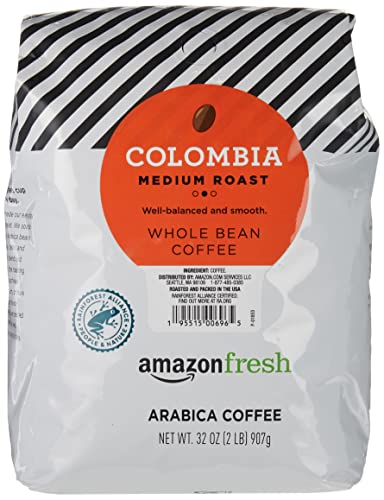
I choose Amazon Fresh Colombia Whole Bean Coffee, Medium Roast, when I need a reliable, no-frills option that delivers consistent flavor without the premium price tag. I grab this 32-ounce bag because it’s 100% Arabica beans from Colombia, roasted in the U.S.A. for freshness. The medium roast gives me balanced flavor-full-bodied but smooth, no sharp bitterness. I grind it fresh each morning and get the best results with a drip brewer or French press. It’s not flashy like some specialty roasts, but it’s dependable. If you want solid taste without overpaying, this is a smart pick.
Best For: Budget-conscious coffee drinkers who want a consistent, smooth medium roast from 100% Arabica beans without paying premium prices.
Pros:
- Made from 100% Arabica beans sourced from Colombia for authentic flavor
- Medium roast delivers a balanced, full-bodied taste with a smooth finish
- Large 32-ounce bag offers excellent value and reduces shopping frequency
Cons:
- Lacks the nuanced flavor notes found in specialty or single-origin artisan roasts
- Whole beans require grinding equipment for optimal freshness
- Packaging and branding are generic, with minimal sustainability claims
Starbucks Medium Roast Coffee Variety Pack

The Starbucks Medium Roast Coffee Variety Pack stands out for home brewers who want reliable, café-quality coffee without the guesswork. It includes three 12-ounce bags: Breakfast Blend, House Blend, and Pike Place Roast-all made from premium Arabica beans. Breakfast Blend is light with hints of brown sugar and citrus, while House Blend offers toffee and cocoa notes. Pike Place delivers rich praline and cocoa depth. I use them for both hot and iced coffee. They work well in drip brewers, French press, or pour-over. Each batch stays fresh and consistent, just like in Starbucks stores. Nestlé uses the trademark under license. © 2025 Starbucks.
Best For: Home brewers seeking consistent, café-quality medium roast coffee with versatile brewing options and reliable flavor profiles.
Pros:
- Features three popular Starbucks blends made from premium Arabica beans for a balanced, smooth taste
- Suitable for multiple brewing methods including drip, French press, and pour-over, ideal for both hot and iced coffee
- Maintains freshness and consistent quality, matching the same standards used in Starbucks cafés
Cons:
- Slightly higher price point compared to generic coffee brands, which may not suit budget-conscious buyers
- Limited roast variety within the pack, as all blends are medium roast, offering less range for dark roast lovers
- Packaging may be excessive for environmentally conscious consumers due to multi-bag configuration
Papua New Guinea Dark Roast Coffee

What makes Starbucks Reserve Papua New Guinea Dark Roast stand out for coffee lovers who value origin and roast integrity? I trace its roots to original Jamaican Blue Mountain seedlings planted in 1927, grown in ideal high-altitude conditions that build complexity. The beans develop a pungent mango-papaya aroma and deliver a clean, full-bodied cup with sweet, floral notes. Dark roasting past 400°F enhances intrinsic flavors and eliminates contaminants, while whole beans preserve freshness. Each batch undergoes strict lab testing for mold and mycotoxins, ensuring safety and quality. You get a rich, authentic taste rooted in terroir and backed by rigorous standards-ideal if you prioritize purity and origin accuracy in your brew.
Best For: Coffee enthusiasts who value origin authenticity, meticulous quality control, and a rich, terroir-driven dark roast experience.
Pros:
- Sourced from rare Jamaican Blue Mountain seedlings with a distinct, complex flavor profile shaped by ideal high-altitude growing conditions
- Dark roasted past 400°F to enhance intrinsic sweetness and floral notes while ensuring contaminant-free, safe consumption
- Backed by rigorous lab testing for mycotoxins and mold, with whole bean format preserving maximum freshness and flavor integrity
Cons:
- Limited origin scalability may affect long-term availability and consistency of supply
- Pronounced floral and fruity notes may not appeal to those preferring traditional, earthy dark roast profiles
- Premium sourcing and testing processes likely result in a higher price point compared to standard dark roasts
Starbucks Christmas Blonde Roast 2025 Whole Bean

Though it’s not the strongest brew you’ll find, if you’re drawn to delicate, aromatic coffees with a seasonal touch, Starbucks Christmas Blonde Roast 2025 Whole Bean fits best during holiday mornings or quiet afternoons. I prefer it light-roasted to preserve its spiced citrus and fig compote notes, with hints of spiced orange and herbal depth. The blend uses 100% Arabica beans-Ethiopian and Asia/Pacific-for balanced, smooth flavor. It’s lighter in body, so don’t expect bold intensity. The 16-ounce resealable bag keeps beans fresh, and the traceability code lets me check sourcing-ethically partnered farms. Limited holiday release, so I grab it early.
Best For: Holiday coffee lovers who enjoy light-bodied, aromatic brews with nuanced seasonal flavors like spiced citrus and fig.
Pros:
- Features 100% Arabica beans with a balanced blend of Ethiopian and Asia/Pacific origins for smooth, complex flavor
- Light roast preserves delicate notes of spiced citrus, fig compote, and herbal depth, ideal for seasonal enjoyment
- Ethically sourced with a traceability code and comes in a resealable 16-ounce bag to maintain freshness
Cons:
- Light body and mild flavor may disappoint those seeking bold, intense coffee
- Limited seasonal availability makes it harder to purchase outside the holiday period
- Higher price point typical of specialty and ethically sourced blends, which may not suit all budgets
Factors to Consider When Choosing Starbucks Reserve Coffee Beans
When you’re picking Starbucks Reserve coffee beans, start by checking the roast level-light roasts highlight origin flavors, while dark roasts bring out deeper, bolder notes. Think about where the beans come from and how their origin affects taste, since single-origin Reserve beans often have more complexity than blends. Match the flavor profile and freshness, guaranteed by packaged-with-a-valve bags, to your brewing method, like using a medium roast for pour-over or a dark roast for espresso.
Roast Level Selection
If you’re aiming for bright, vibrant flavors with a crisp mouthfeel, go for a light roast-Starbucks Reserve beans roasted between 356°F and 401°F keep more of their natural acidity and origin character intact. You’ll notice higher acidity and a lighter body, plus slightly more caffeine since they spend less time exposed to heat. If you prefer balance, try a medium roast heated to 410°F–428°F; it tones down the sharpness while preserving some origin flavor and adds a fuller mouthfeel. But if you want bold, intense notes with a heavier body and surface oils, choose a dark roast above 428°F, even beyond 446°F. These bring pronounced bitterness and low acidity, with a smoother finish. Just keep in mind: darker roasts lose some caffeine and original bean character. Pick based on your taste preference-brightness, balance, or boldness-and match it to your usual brewing method for best results.
Origin And Sourcing
Since coffee’s flavor starts long before roasting, where the beans are grown plays a decisive role in what ends up in your cup. You’ll find Starbucks Reserve beans sourced from high-elevation farms in regions like Colombia, Ethiopia, and Sumatra, where cool temperatures and volcanic soils boost acidity and complexity. Single-origin options give you a clear taste of a specific terroir, making flavors more distinct and traceable. When you choose these beans, you’re also supporting ethical sourcing-Starbucks uses transparent supply chains that guarantee fair labor, environmental care, and community investment. Their commitment includes traceability from farm to roaster, which means better accountability and quality control. If sustainability matters to you, look for Reserve lots with origin details and certification markers. Knowing where your beans come from isn’t just about taste-it’s about making informed choices that reflect both flavor preferences and values.
Flavor Profile Complexity
Though flavor might seem like a matter of personal taste, it’s actually shaped by measurable factors you can control when choosing Starbucks Reserve coffee beans. You’ll want to think about how elevation, soil, and climate affect flavor complexity-beans from high-altitude volcanic farms develop slower, creating richer, more layered profiles. Look for single-origin options, as their unique terroir often brings out distinct fruity, floral, or spicy notes you won’t find in blends. The processing method matters too: washed beans tend to be clean and bright, while natural or honey-processed ones add sweetness and depth. Roast level plays a key role-lighter roasts preserve the bean’s original complexity, while dark roasts can mask it with bitterness. Choose medium to light roasts if you want to taste the full range of flavors the bean has to offer.
Freshness And Packaging
Freshness shapes what you taste in every cup, just as much as the roast or origin did. You’ll want whole bean Reserve coffee because it stays fresh longer than pre-ground-less surface area means slower staling from oxygen and moisture. Always check for resealable bags with one-way valves; they let CO₂ escape without letting oxygen in, preserving flavor. Light roasts need this even more, as their delicate aromatic compounds fade quickly without airtight protection. Avoid clear or flimsy packaging-choose opaque, moisture-resistant bags to block light, heat, and humidity, which degrade quality. Each bag of Starbucks Reserve lists a roast date; aim to brew within 7–14 days for peak flavor. Don’t stockpile. Store your bag in a cool, dark place, and keep it sealed tightly after each use. Grinding just before brewing locks in freshness.
Brewing Method Match
How do you brew your morning coffee? Your method shapes the best bean choice. If you use a pour-over or drip, pick light roast beans-they highlight delicate flavors and aromatic notes. For automatic drip or French press, go with medium roast; it balances body and acidity well. Love espresso? Choose dark roast for bold, rich shots with thick crema. Always buy whole bean-ground loses freshness fast. Grind just before brewing to match your method’s needs. Use a fine grind for espresso’s quick extraction, but go coarse for French press or cold brew to avoid over-extracting bitter notes. A consistent grind size matters, so invest in a decent burr grinder. Match your roast and grind to your gear, and you’ll get the most from your Starbucks Reserve beans-every time.
Frequently Asked Questions
What Is the Caffeine Content per Serving?
You’re getting about 260–330 mg of caffeine per 8-ounce serving from most Starbucks Reserve coffees, depending on roast and origin. Lighter roasts usually have slightly more caffeine than darker ones. That’s higher than many standard brews due to stronger beans and concentrated extraction methods. If you’re sensitive, consider splitting servings or choosing lower-caffeine options like decaf espresso, which has 7–10 mg per shot. Always check the label when possible.
Are These Beans Ethically Sourced?
Yes, you can verify these beans are ethically sourced through Starbucks’ Coffee and Farmer Equity (C.A.F.E.) Practices, which set strict standards for sustainability and fair labor. They’re third-party verified by organizations like SCS Global Services. If you prioritize ethics, look for C.A.F.E. or Fair Trade labels. While not perfect, this system offers more transparency than most. For stricter guarantees, consider direct-trade brands like Intelligentsia or Counter Culture. Always check sourcing claims on the packaging or website.
Can I Use These in an Espresso Machine?
You can use these beans in an espresso machine, but grind them fine and adjust the dose for best results. These beans aren’t roasted specifically for espresso, so they might lack the concentrated sweetness or crema of traditional espresso roasts. For a stronger shot, try pulling a short ristretto. If you prefer darker, bolder shots, consider a dedicated espresso roast instead. Always fresh-grind for ideal extraction.
Do Any Contain Allergens or Additives?
No, Starbucks Reserve coffee beans don’t contain allergens or additives. You’re getting pure, roasted coffee-nothing added. They’re processed in facilities that handle other allergens, though, so cross-contamination is possible if you’re highly sensitive. Always check the packaging for the most accurate info. If you have severe allergies, contact Starbucks directly. These beans work well in espresso machines, but always grind fresh and calibrate your dose for best results.
How Long Do the Beans Stay Fresh?
They stay fresh about 2–4 weeks after roasting if you store them right. Keep them in an airtight container at room temperature, away from light, heat, and moisture. Avoid the fridge or freezer-they cause condensation and ruin flavor. Buy whole beans and grind just before brewing for best results. Larger batches lose peak flavor faster, so only buy what you’ll use within three weeks. Freshness declines, not safety.