How to Extend Burr Life by Avoiding Oily, Flavored, or Sugar-Laden Beans
Oily beans gunk up burrs fast, especially dark roasts. Flavored coffees leave sticky residue that dulls edges over time. Sugar-coated beans melt into a gummy mess that clogs grinders and strains motors. Stick to dry, light roasts like Ethiopian Yirgacheffe or Colombian Supremo-they stay matte, not shiny, and grind cleaner. Clean your grinder monthly with isopropyl alcohol to remove buildup. Choose fresh, plain beans to protect performance and extend burr life longer than you think.
Notable Insights
- Choose light to medium roasts with a matte finish to minimize oil buildup in the burr chamber.
- Avoid oily beans, as excess surface oil traps particles and accelerates residue accumulation.
- Refrain from grinding flavored coffees to prevent sticky residue from dulling burr edges.
- Never grind sugar-coated beans, as melted sugar creates gummy clogs and damages internal parts.
- Clean burrs monthly with 90%+ isopropyl alcohol to dissolve residues without harming metal components.
Why Oily Beans Ruin Your Burr Grinder
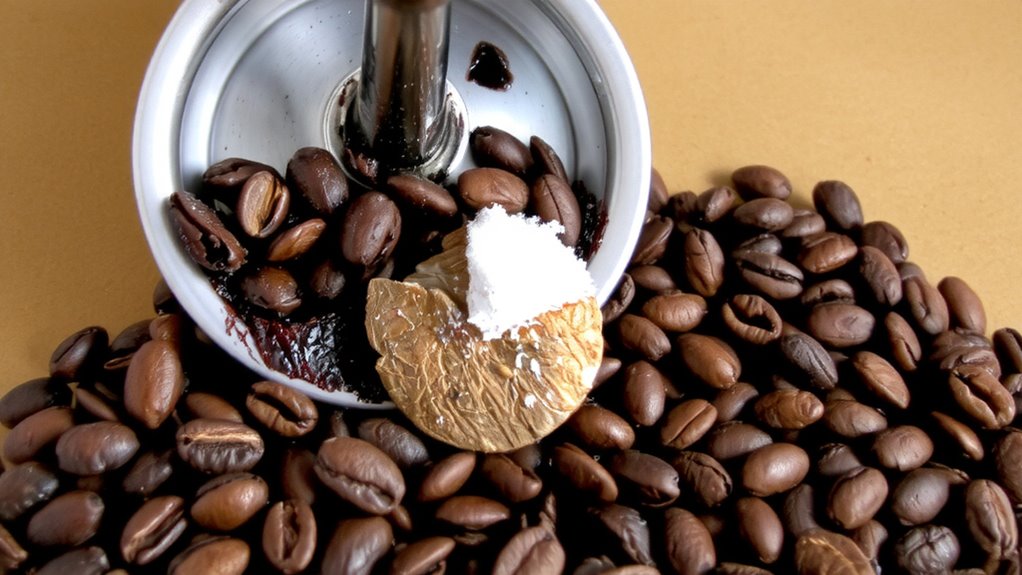
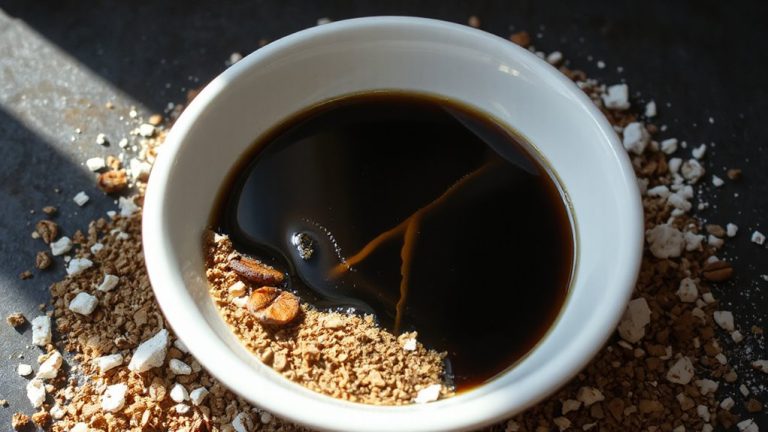
Even if you’re chasing a rich, full-bodied espresso, oily beans can quickly compromise your grinder’s performance. Those shiny, dark-roasted beans may seem appealing, but their surface oil leads to rapid oil buildup in your burr chamber. This gunk clings to the burrs, trapping coffee particles and reducing grinding efficiency. Over time, the residue turns rancid, causing flavor degradation in your coffee-your espresso might taste stale or off, even with fresh beans. Unlike lighter roasts, which are drier and less prone to this issue, oily beans clog grinders faster, especially in conical and flat burr models like Baratza Encore or Fellow Ode. Cleaning becomes more frequent and less effective. To protect your gear and preserve taste, choose drier, medium-roast beans. You’ll extend burr life, maintain consistency, and avoid unnecessary maintenance headaches. It’s a small change that makes a real difference. For optimal results, consider investing in one of the best mill grinders designed to handle delicate roast profiles with precision.
Flavored Coffee Leaves a Gummy Mess in Your Grinder
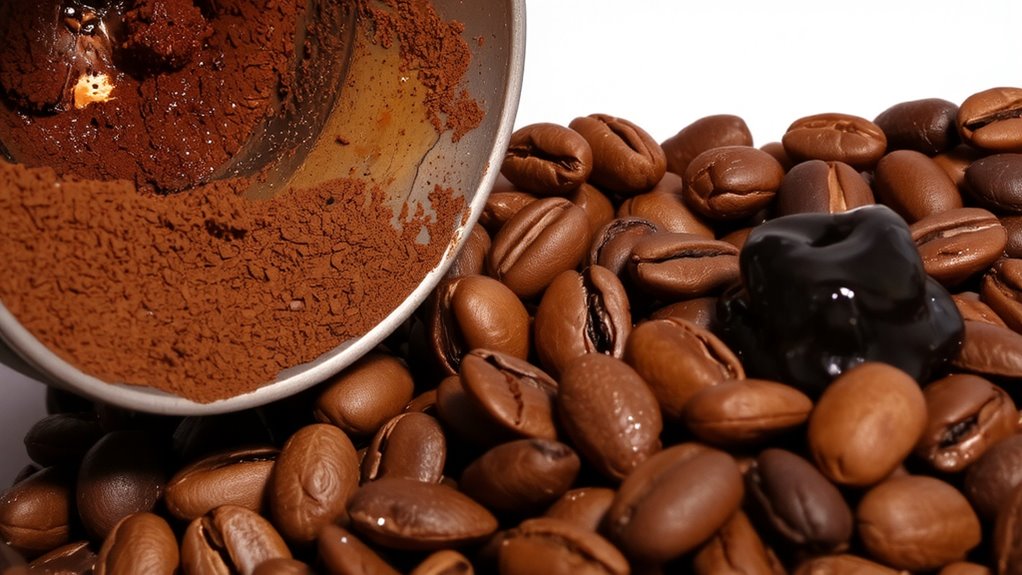
Flavored coffee might seem like a convenient way to enjoy variety, but it often leaves behind a sticky, gummy residue that coats your grinder’s burrs and chute. This flavor residue builds up over time, turning into a gummy buildup that traps coffee oils and fine particles. Unlike plain beans, flavored varieties use synthetic or natural additives sprayed onto the surface, which don’t fully evaporate during roasting. When ground, these compounds smear across metal parts, dulling edges and disrupting consistent grind size. You’ll notice clumping grounds and uneven extraction in your brew. Cleaning helps-brushing weekly and using grinder tablets can reduce residue-but it won’t stop long-term wear. If you use flavored beans often, expect to disassemble and deep-clean more frequently. For longer burr life, stick to high-quality, unflavored beans and use flavored syrups after brewing instead. Choosing the right best grinder machines can also significantly reduce wear from challenging beans.
Sugar-Coated Beans Clog Your Grinder
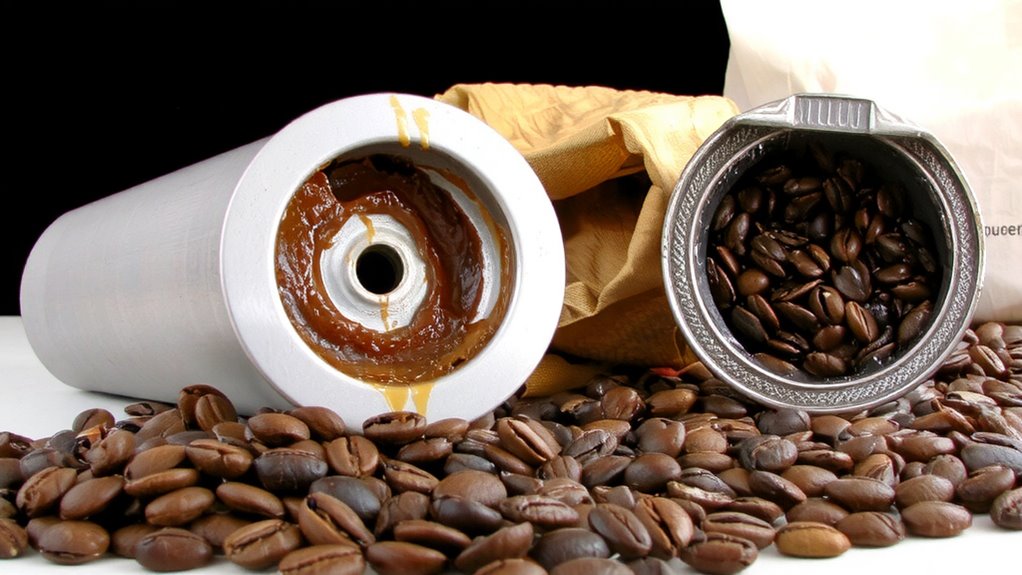
While they might look festive, sugar-coated coffee beans can quickly turn into a grinder’s worst enemy. That sweet bean coating melts during grinding, sticking to your burrs and internal parts. What starts as a thin layer soon leads to serious flavor buildup, slowing your grinder’s performance. Unlike oily or flavored beans, sugar-coated ones create a sticky residue that’s harder to clean and more likely to clump. Over time, this gummy mess clogs the mechanism, reducing grind consistency and increasing strain on the motor. You’ll notice uneven grounds and slower output-clear signs of blockage. Cleaning becomes more frequent and less effective, shortening your grinder’s lifespan. Most manufacturers don’t recommend grinding such beans for these reasons. If you do, expect more maintenance and potential damage. For consistent results and longer burr life, skip the candy-coated beans altogether. Stick to plain, dry-roasted beans to keep your grinder running cleanly and reliably.
Protect Burr Life With Light, Dry Roasts
Since light, dry roasts produce less oil and residue during grinding, they’re easier on your burrs and help extend their lifespan. Light roasts don’t char the bean’s surface, so they release less natural oil during roasting-this means less buildup on your grinder’s burrs over time. Dry beans, especially those stored properly and roasted with low moisture content, grind more cleanly and reduce clogging. Compared to dark, oily roasts that gunk up mechanisms, light roasts maintain structural integrity and produce less fines clumping. If you use a flat or conical burr grinder, this difference matters daily. Coffee like Ethiopian Yirgacheffe or Colombian Supremo, when roasted light, stays dry and free of excess oil. You’ll notice smoother operation and fewer maintenance needs. For best results, choose fresh, dry beans with a matte finish-avoid any shiny surface, a sign of oil. Stick to light roasts, and your burrs will stay sharper longer.
Remove Sticky Residue and Restore Your Grinder
You’ve chosen light, dry roasts to protect your burrs, and that helps delay buildup-but over time, even the cleanest beans leave behind sticky coffee residue that dulls performance. Regular cleaning methods are essential to restore grind quality and prevent long-term damage. A well-maintained cleaning brush can significantly improve the efficiency of your routine by effectively removing stubborn particles. Here’s how different approaches stack up:
| Method | Effectiveness & Notes |
|---|---|
| Brush only | Quick but limited-removes loose grounds, not oils |
| Rice grinding | Risky-ineffective and may damage burrs |
| Vacuum cleaning | Great for crumbs; pair with deeper cleaning |
| IPA (Isopropyl alcohol) | Best for sticky residue; lets you scrub safely |
Follow these maintenance tips: clean monthly if you brew daily, disassemble carefully, and avoid water. Using 90%+ isopropyl alcohol dissolves gunk without harming metal. Let parts dry fully before reassembling. This practical routine keeps your grinder running true, ensuring consistent flavor and protecting your investment.
Switch to Fresh Beans for Cleaner, Longer-Lasting Burrs
Fresh beans make a noticeable difference in both flavor and grinder maintenance. When you use freshly roasted coffee, the oils are less likely to turn rancid or sticky, which reduces buildup on your burrs. Stale beans often develop uneven moisture levels, harming bean freshness and leading to inconsistent grinding. This degrades grind consistency and forces your grinder to work harder, increasing wear. Oily or old beans can gunk up burrs, requiring more frequent cleaning and risking corrosion over time. By choosing beans roasted within the past 2–4 weeks and storing them properly in airtight containers away from light, you maintain peak freshness. This not only improves extraction but keeps internal components cleaner. Brands like Fellow and Baratza recommend regular use of fresh beans to extend burr life. You’ll get better shots and reduce long-term maintenance-simple, effective, and practical for any serious coffee routine.
On a final note
You can extend your burr grinder’s life by avoiding oily, flavored, or sugar-coated beans. Oily beans clog burrs over time, especially dark roasts like French or espresso blends. Flavored beans leave gummy residue that dulls edges. Sugar-coated beans clump and jam mechanisms. Stick to fresh, light, dry roasts-they grind cleaner. Clean your grinder monthly with a brush or rice flour. Switching beans is easier than replacing parts.