What Makes Kasese Coffee a High-Elevation Experiment in Recovery
You’re tasting high-elevation rigor and hard-won recovery with every cup of Kasese coffee. Grown above 1,500 meters in Uganda’s volcanic red soil, these dense Arabica beans develop slowly in cool, thin air, delivering bright acidity and complex flavors. Decades of conflict disrupted farming, but now cooperatives use solar dryers, washed processing, and agroforestry to restore both land and livelihoods. Sustainable practices like composting and shade management rebuild soil, while farmers regain market access through shared tools and training-proof that quality and resilience can grow together under the right conditions. There’s more to uncover about how this revival shapes your morning brew.
Notable Insights
- Grown above 1,500 meters, Kasese coffee benefits from high-elevation density and bright, complex flavors.
- Decades of conflict disrupted farming, leaving abandoned plots and broken supply chains behind.
- Recovery efforts introduced solar dryers, washed processing, and cooperative-led quality control.
- Volcanic soil, cool climate, and shade-grown agroforestry support sustainable, high-quality Arabica production.
- Farmer training in pruning, fermentation, and erosion control revived coffee as a tool of economic recovery.
What Is Kasese Coffee: and Why Elevation Matters?
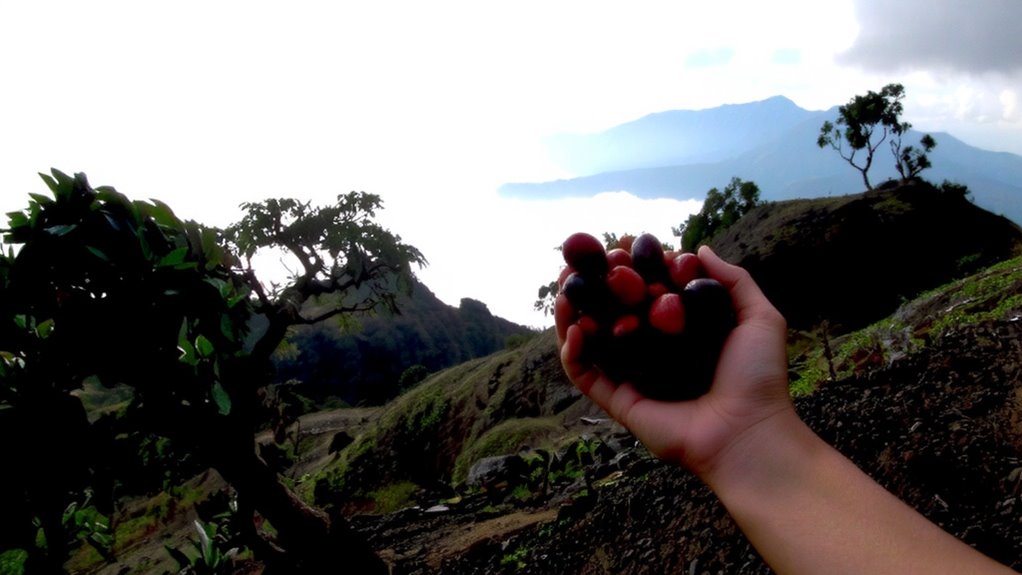
While you might not have heard of it yet, Kasese coffee comes from a high-elevation region in western Uganda where altitude plays a crucial role in shaping its flavor. Grown above 1,500 meters, the cool temperatures and thin air slow bean development, boosting density and bean quality. This elevation impact means harder, more flavorful beans that handle roasting well. You’ll notice brighter acidity and complex notes-common in high-grown Arabica. For best results, use a burr grinder and pour-over or drip brewer to highlight its clean profile. Avoid dark roasts; they can mask the delicate flavors. Compared to lowland coffees, Kasese offers better consistency and clarity, though it demands careful storage to preserve freshness. If you value nuanced taste and origin transparency, this bean’s a smart choice. Proper gear and technique make the difference-don’t let the quality go to waste.
How Conflict Changed Kasese’s Coffee Farms
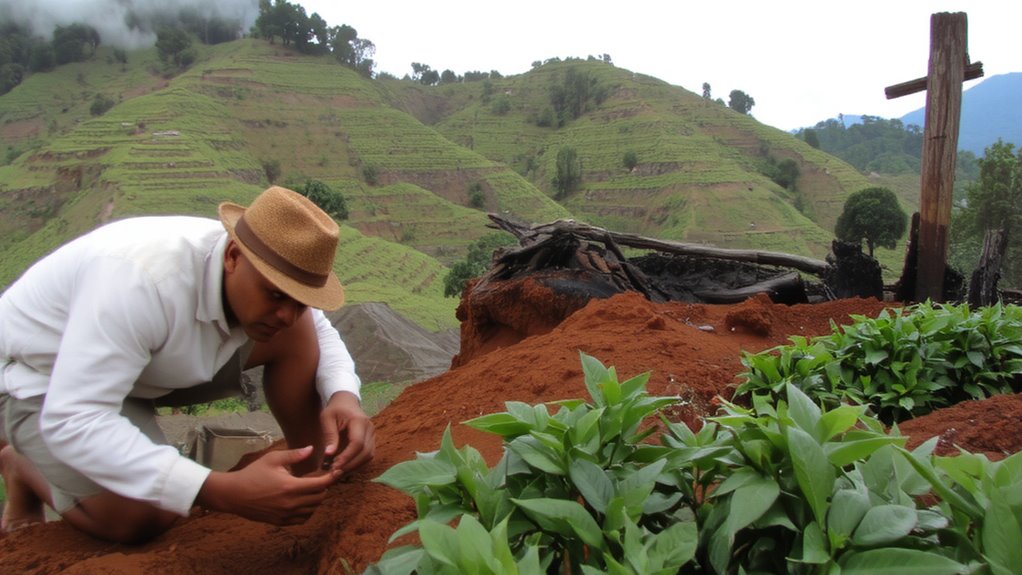
Because of a decade-long conflict in western Uganda, coffee farming in Kasese took a serious hit, disrupting supply chains and stalling investment in quality. You’ve seen how elevation shapes flavor, but war reshaped lives and land. Now, post war healing is woven into every bean, as farmers rebuild with care and precision. Community resilience drives new processing methods and better harvesting techniques, increasing consistency and cup quality.
| Before Conflict | After Recovery |
|---|---|
| Unreliable processing | Solar dryers, washed lots |
| Low market access | Cooperative exports |
| Abandoned farms | Revitalized family plots |
| Poor quality control | Training in fermentation |
You’re not just buying coffee-you’re supporting a quiet, steady return to dignity, one well-grown bean at a time.
The Soil and Climate Behind Kasese’s Beans
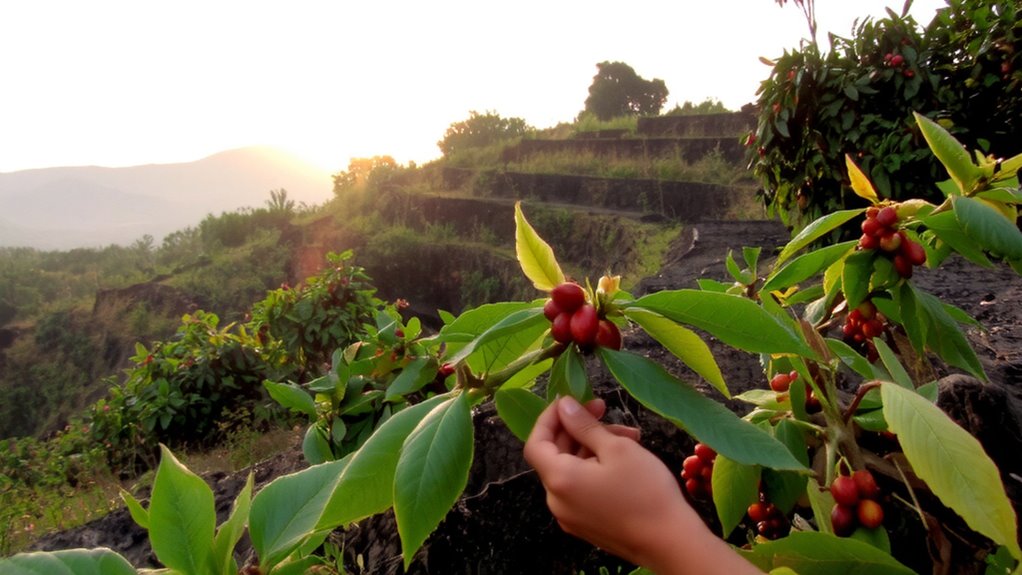
Kasese’s beans start with red volcanic soil and steep mountain slopes, giving coffee the mineral-rich foundation it needs to thrive. You’re working with soil packed with volcanic minerals that boost plant resilience and bean density-key for clean, bright flavors. These slopes drain well, reducing root rot risk, which matters if you farm at 1,500 to 2,000 meters. There, alpine rainfall delivers consistent moisture without waterlogging crops, averaging 1,200–1,800 mm yearly. The climate’s cool nights slow cherry development, improving sugar accumulation and acidity balance. You’ll find Arabica varieties like SL14 and Catimor performing well here, thanks to this mix of elevation, drainage, and nutrient supply. Unlike lowland farms, high-elevation plots here require shade management and erosion control but offer better bean quality. If you’re roasting, expect higher density beans-adjust charge temps and extend development times slightly. This terroir doesn’t guarantee success, but it sets the stage for specialty-grade potential when managed right.
How Farmers Are Reviving Land and Livelihoods
You’re seeing real change in Kasese as farmers rebuild both soil health and incomes through smart, low-cost regeneration methods. By planting cover crops and using compost instead of synthetic fertilizers, they’re restoring degraded land while cutting input costs. Agroforestry-integrating banana and legume trees with coffee plants-stabilizes slopes and boosts biodiversity. These sustainable practices improve yields over time without harming the ecosystem. Farmers work in cooperatives, sharing tools and knowledge, which strengthens community empowerment. Training programs teach pruning, erosion control, and organic management, helping growers adapt to climate shifts. With better farm management, households earn more from smaller plots, reducing pressure to clear forests. Unlike high-tech interventions, these methods are accessible and scalable for smallholders. The focus stays practical: use what’s available, test what works, and keep the land productive for the long term. This isn’t a quick fix-it’s steady rebuilding.
Innovative Farming in Kasese’s Highlands
While the terrain is steep and rainfall unpredictable, farmers in the highlands are adapting with simple but effective farming upgrades that make a real difference in coffee quality and resilience. You’re likely to see terrace farming shaping the hillsides-these stepped plots slow erosion, retain moisture, and create stable growing zones. It’s labor-intensive at first, but long-term, it boosts yield stability. Crop diversification is another key move: alongside coffee, farmers grow bananas, beans, and maize. This mix reduces risk if one crop fails and improves soil health. Bananas, for example, provide shade and wind protection, which coffee plants benefit from. These practices don’t require expensive tools or imported tech, making them practical for smallholders. While not a fix-all, terrace farming and crop diversification together build a more resilient system. You’ll notice better bean density and flavor consistency-qualities that start in the field, not the roaster.
How Kasese Coffee Travels From Farm to Roaster
Once the coffee’s grown using smart, low-cost methods on those steep slopes, it still has a journey to reach your cup. After harvest, farmers hand-sort cherries, then depulp, ferment, and wash them at local micro-wet mills. Each step protects bean quality, since even small defects can affect extraction. Once dried, the parchment coffee goes to central warehouses for hulling, grading, and lab testing. You’ll often see screens 17–18, indicating larger, denser beans typical of high elevations. From there, green beans ship in vacuum-packed GrainPro bags to prevent moisture and preserve freshness. Roasters then tailor their roasting technique based on these beans’ density and moisture-slower ramps help develop sweetness without scorching. Light to medium profiles are common, highlighting the tea-like clarity and bright acidity Kasese beans are known for. You’ll notice how precise time-temperature control improves consistency across batches.
Why Buying Kasese Coffee Supports Regeneration
Because the farms in Kasese grow coffee at high altitudes using shade-integrated agroforestry, buying these beans supports land restoration and stable incomes for smallholders. You’re not just getting a quality bean-you’re investing in regeneration. The trees on these farms prevent soil erosion, improve biodiversity, and capture carbon, all while creating a natural canopy that slows coffee maturation for denser, tastier beans. This method aligns with sustainable trade practices that guarantee farmers receive fair compensation. When you choose Kasese coffee, you fuel community empowerment by supporting local decision-making and reinvestment in farming infrastructure. Unlike conventional supply chains that cut out smallholders, this model keeps value in the region. You also encourage long-term environmental recovery in an area once scarred by deforestation. It’s a practical way to back ethical sourcing while enjoying a high-elevation brew that’s both flavorful and forward-thinking. Every purchase helps maintain momentum.
On a final note
You get brighter, denser beans when high elevation meets careful farming, and Kasese delivers that. Washed or natural process, expect clean acidity and notes of citrus or stone fruit. Use a burr grinder and pour-over or drip brewer to highlight its clarity. Avoid overheating-brew just off the boil. Buying these beans supports real recovery, but judge the cup first. Quality speaks louder than origin, and Kasese proves both can be strong.