Creating Low-Acidity Cold Brew Using Dark Roasts and Coarse Grind
Use dark roast beans from low-acidity origins like Brazil or Sumatra and grind them coarse-similar to French press-to reduce acid extraction. Steep in cold, filtered water at a 1:8 ratio for 12–16 hours. This method yields a smoother, stomach-friendly cold brew with less bitterness and irritation. Avoid fine grinds or long steeping past 18 hours to prevent sourness. Your next step reveals even better results.
Notable Insights
- Use dark roast beans like French or Vienna roast to reduce acidity through breakdown of chlorogenic acids during roasting.
- Choose low-acid coffee origins such as Brazil, Sumatra, or Guatemala for naturally smoother flavor profiles.
- Grind beans coarsely to slow extraction and minimize acidic and bitter compounds during cold steeping.
- Steep coffee in filtered water at a 1:8 ratio for 12–16 hours to avoid over-extraction and sourness.
- Store cold brew in an airtight container in the refrigerator for up to two weeks to maintain freshness.
Why Low-Acidity Cold Brew Is Easier on Your Stomach
While hot coffee often brings out higher acidity due to the extraction process, cold brew stands out because the slow steeping in room-temperature or cold water pulls fewer acidic compounds from the beans. You’ll notice this difference if you have digestive sensitivity-many with such issues find cold brew improves stomach comfort. That’s because lower acidity means less irritation for your gut lining, reducing chances of heartburn or acid reflux. Cold brew isn’t completely acid-free, but its pH level typically runs higher (less acidic) than hot-brewed coffee. If you use a coarse grind and steep for 12–16 hours, you maximize smoothness without over-extracting bitter notes. For the best results, choose beans labeled for cold brew and use filtered water. It’s a simple swap that supports better stomach comfort, especially if you’re sensitive to traditional coffee. Top cold brew coffee picks are specifically roasted and ground to enhance these low-acid, smooth characteristics.
How Dark Roasts Naturally Lower Coffee Acidity
You’ve already seen how cold brew’s method cuts down on acidity, making it gentler on sensitive stomachs. Now consider how roast level plays a key role. Dark roasts naturally reduce acidity because longer roasting breaks down more of the coffee’s natural compounds, especially chlorogenic acids that contribute to sourness. As beans roast darker, these compounds degrade, resulting in a less acidic profile. This doesn’t mean all dark roasts are the same-look for beans labeled full city, Vienna, or French roast for best results. While some flavor complexity diminishes, the trade-off is smoother, stomach-friendly coffee. High heat during roasting also caramelizes sugars, adding subtle sweetness that masks bitterness without increasing acid. Choosing the right roast level matters just as much as brewing method. Stick to reputable roasters who specify roast degrees so you know exactly what you’re using.
Why Coarse Grind Prevents Acidic, Bitter Cold Brew
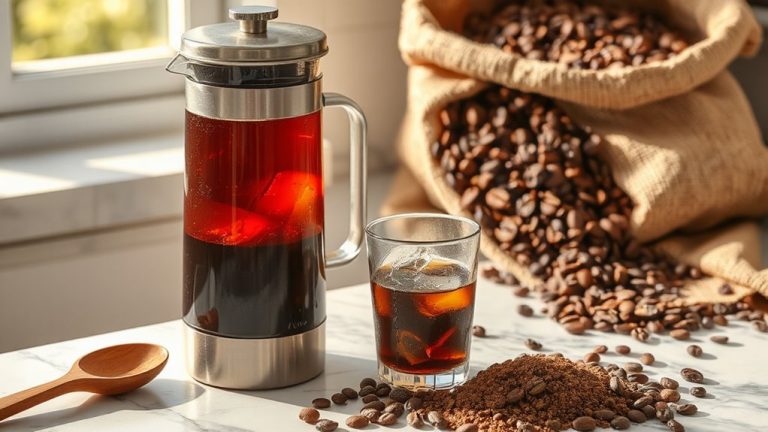
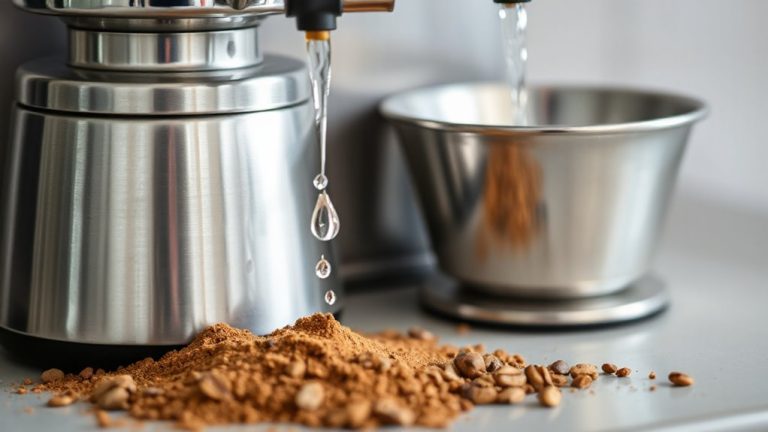
Since cold brew steeps rather than brews with heat, using a coarse grind keeps the extraction slow and steady, which helps minimize acidic and bitter notes. Your grind size directly affects extraction time-too fine, and you pull out harsh compounds too quickly, even in cold water. A coarse grind, like what you’d use for a French press, slows down the process, allowing only the smooth, sweet, and low-acid compounds to dissolve over time. This means fewer bitter oils and acids end up in your cup. With cold brew, you’re steeping grounds for 12–24 hours, so a finer grind would over-extract, increasing bitterness. Sticking with coarse prevents that imbalance. If you grind too fine, even dark roasts can taste sharp. Use a burr grinder to guarantee consistency-blade grinders create uneven particles that hurt control. Match your grind size to your extraction time for the best results. Commercial systems like commercial cold brew coffee makers are designed to optimize this slow extraction process for consistent, smooth results at scale.
Best Coffee Beans for Smooth, Low-Acid Cold Brew
A dark or medium-dark roast from regions like Brazil, Sumatra, or Guatemala is your best bet for smooth, low-acid cold brew. These bean origins naturally have lower acidity and rich, earthy tones that shine in cold brew. Choosing the right roast level is key-darker roasts reduce acidity but can add bitterness if overdone. Stick to medium-dark for balance. Freshness matters, but avoid beans roasted within the last 48 hours due to degassing. Here’s a quick guide:
| Bean Origin | Roast Level | Flavor Notes |
|---|---|---|
| Brazil | Medium-Dark | Nutty, chocolate, smooth |
| Sumatra | Dark | Earthy, spicy, full body |
| Guatemala | Medium-Dark | Cocoa, mild fruit, rounded |
| Ethiopia | Medium | Bright, floral - higher acid |
| Colombia | Medium | Balanced, caramel - moderate acid |
How to Brew Low-Acid Cold Brew at Home
While you can brew cold brew with any method, using a coarse grind and cold, filtered water over an extended steeping time-typically 12 to 16 hours-helps extract smooth, low-acid coffee without pulling out harsh bitter compounds. Good water quality matters; tap water with high mineral content or chlorine can introduce off-flavors and increase perceived acidity, so filtered or bottled water is a smart choice. Use a ratio of 1:8 coffee to water, stirring gently after adding grounds to guarantee even saturation. Steep time affects strength and acidity-under 12 hours may yield weak results, while over 16 can increase sediment and bitterness. Use a French press, mason jar, or dedicated cold brew maker, but strain carefully through a fine-mesh sieve or paper filter to remove fines. This method gives consistent, low-acid results with minimal effort. For even better convenience and filtration, consider using one of the best at-home cold brew makers available, which are designed to optimize cold brew extraction.
What Makes Low-Acid Cold Brew Turn Sour?
What could make your smooth, low-acid cold brew turn sour despite following the recipe to the letter? Often, it’s about fermentation time and water mineral content. Letting grounds soak too long encourages unwanted acidity, especially past 18 hours. Meanwhile, your water isn’t neutral-its mineral profile shapes flavor directly.
| Factor | Effect on Cold Brew |
|---|---|
| Long fermentation time (>18 hrs) | Increases sourness due to over-extraction |
| High carbonate water | Buffers acidity but can create flat taste |
| High magnesium water | Boosts bright, acidic notes even in dark roasts |
| Using distilled water | May strip flavor, leading to hollow or sour perception |
You’re not just brewing-you’re balancing chemistry. Stick to 12–18 hours and use filtered tap water (moderate minerals) for stable, smooth results. Cold brew shouldn’t taste sour; adjust these variables and you’ll keep it clean and balanced every time.
How to Store Cold Brew Without Losing Smoothness
If you’ve gone through the trouble of brewing smooth, low-acid cold brew, storing it properly guarantees that quality lasts. To maximize shelf life, transfer your brew to an airtight container-glass jars or stainless steel bottles work best. Exposure to air speeds up oxidation prevention failure, which dulls flavor and adds bitterness. Keep it refrigerated; cold temperatures slow degradation and preserve smoothness for up to two weeks. Avoid leaving it at room temperature for long, even during serving. If you dilute your concentrate, store the undiluted version instead-this extends longevity. Plastic containers can absorb odors and allow slight air seepage, reducing effectiveness. For frequent drinkers, divide large batches into smaller bottles to limit oxygen exposure each time you pour. Proper storage isn’t just about freshness-it’s about protecting your effort. A good seal and cold environment are key for oxidation prevention and peak taste.
On a final note
You’ll get smoother, low-acid cold brew by using dark roast beans like Sumatra or French roast and grinding them coarse-this reduces over-extraction and bitterness. Steep for 12–16 hours in cold water, then strain. Avoid fine grinds or light roasts, which increase acidity. Store your concentrate in a sealed container in the fridge for up to two weeks.