Troubleshooting Weak Espresso: Causes From Under-Dosing to Poor Tamping
You’re pulling weak espresso because under-dosing-like using less than 18g in a double basket-lets water rush through too fast. A coarse grind does the same; adjust finer if your shot finishes under 20 seconds. Uneven distribution or clumps cause channeling, so use a WDT or the Stockfleth twist. Tamp evenly with 30 pounds of pressure using a level tamper. Fix dose, grind, and tamp first-then consider water or pressure. Master these, and you’ll get better shots fast.
Notable Insights
- Use fresh beans within 2–4 weeks of roast to preserve flavor and prevent flat, weak espresso.
- Dose 18–20 grams for a double shot to ensure proper resistance and extraction.
- Set water temperature between 90–96°C to avoid under-extraction and sour, weak shots.
- Grind finer if shots pull under 20 seconds to slow flow and improve extraction.
- Distribute grounds evenly and tamp consistently to prevent channeling and ensure puck stability.
Why Espresso Turns Weak
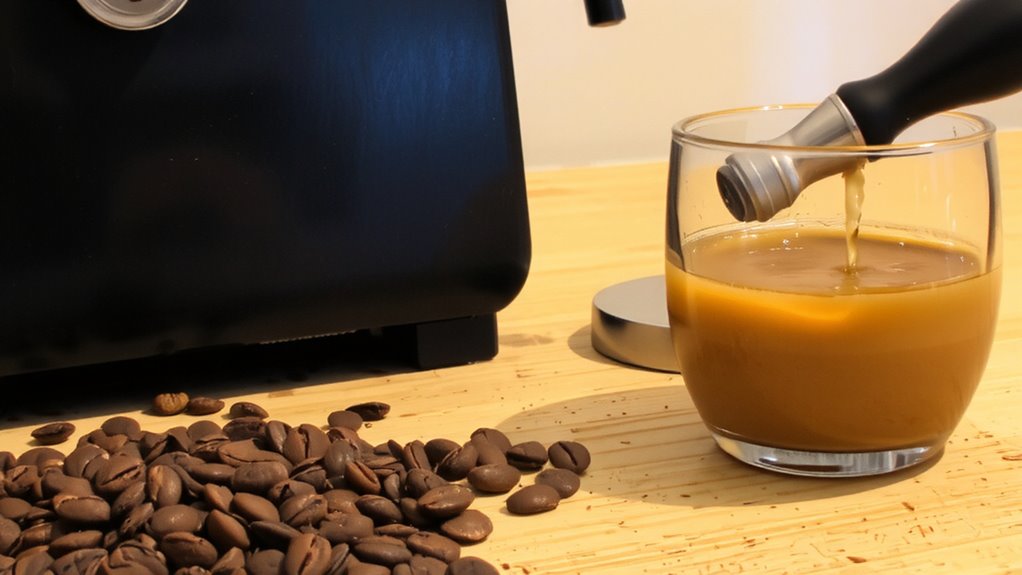
While you might expect a strong shot every time, weak espresso often comes down to a few fixable issues with your setup or process. Old or stale beans lose volatile compounds, so even a perfect extraction can taste flat. For best results, use beans within 2–4 weeks of roast-check the bag for a roast date, not just a “best by” label. Water temperature matters just as much: most machines run at 90–96°C, but if yours dips below 90°C, you’ll under-extract, leading to sour, weak shots. Machines like the Breville Barista Express let you adjust this; others may need descaling or calibration. If your espresso lacks body and sweetness, don’t blame your grind first-check bean freshness and water temperature. These two factors shape extraction before the portafilter even locks in. Fix them, and your shots will improve fast. Regular maintenance with a Breville-approved descaler helps maintain optimal brewing temperature and machine performance.
Under-Dosing: Too Little Coffee, Too Fast Extraction
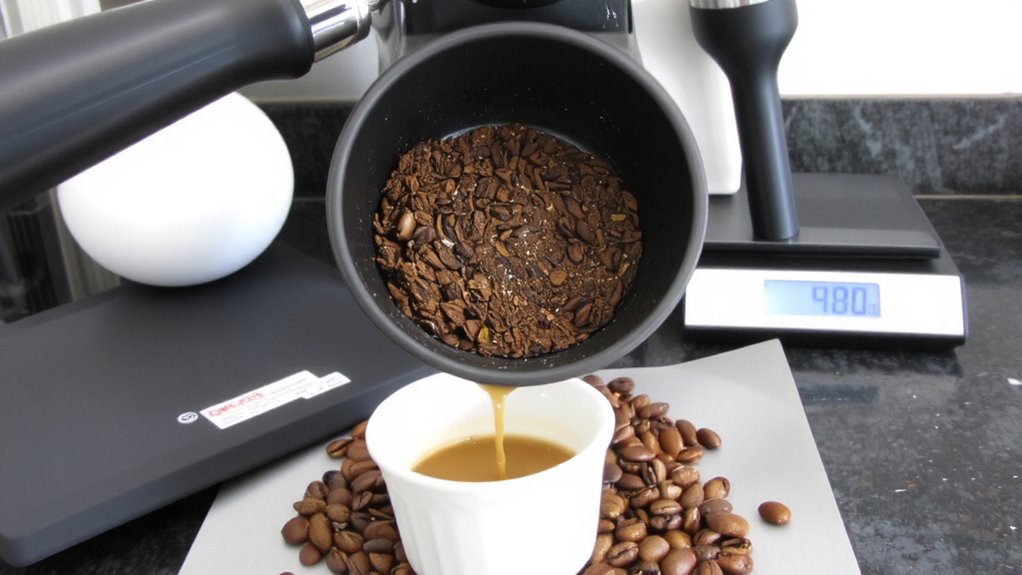
You’ve checked your beans and made sure your machine runs at the right temperature-now it’s time to look at how much coffee you’re using. If your dose is too low, you’re likely dealing with an insufficient dose, which leads to weak espresso. Without enough coffee in the basket, water moves too easily through, creating a fast flow and under-extracted shots. Most standard recipes use 18–20 grams for a double shot-if you’re using markedly less, that’s probably the issue. Even with proper tamping and fresh beans, too little coffee won’t slow water enough for proper extraction. A fast flow means the water spends too little time in contact with grounds, pulling fewer flavors. Adjust by increasing your dose within the basket’s capacity. Most third-wave roasters and baristas agree: consistent dosing is essential. Try measuring your next dose with a scale-it’s the simplest way to confirm you’re on track. Using a high-precision coffee scale ensures accurate and repeatable dosing for optimal extraction.
Right Grind Size: Fixing Coarse Coffee That Runs Too Fast
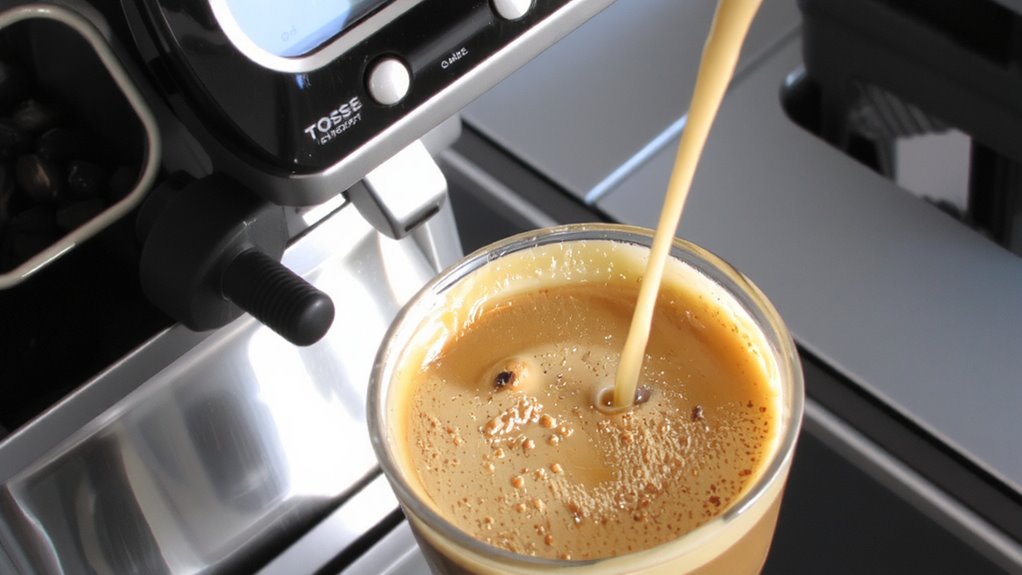
If your espresso shots are rushing through the portafilter in under 20 seconds, the grind’s probably too coarse. When the particle size is too large, water flows too easily, extracting too little and leaving you with weak, thin coffee. You need finer particles to slow the flow and boost flavor. Adjust your grinder-one small step finer can make a real difference. But don’t just tweak the setting; guarantee your grinder delivers even grind consistency. Inconsistent particle size leads to uneven extraction, even if the average grind looks right. Blade grinders, for example, often fail here, while quality burr grinders like the Baratza Encore or Lelit Bianca offer better control. A consistent, fine particle size helps build proper resistance in the puck. That means fuller flavor, better crema, and shots hitting the 25–30 second sweet spot. Small changes, precise results. For those seeking versatility, a grinder suitable for both espresso and pour-over can streamline your brewing setup without sacrificing performance.
Even Distribution: Stop Channeling Before You Tamp
Channeling starts long before you press the brew button-it begins the moment uneven coffee grounds settle in the portafilter. Without even distribution, water finds weak paths, ruining flow control and causing weak shots. Proper puck hydration depends on consistent density, so coffee must be evenly spread before tamping. Tools like the Leveler or Weiss Distribution Technique (WDT) help eliminate clumps and gaps. Good distribution guarantees water moves uniformly through the puck, extracting flavor evenly.
| Method | Benefit |
|---|---|
| WDT with a needle | Breaks up clumps, improves consistency |
| Stockfleth twist | Quick, tool-free, effective for many grinders |
| Leveler tool | Guarantees flat surface, enhances puck hydration |
| Finger leveling | Accessible, but less consistent |
Fix distribution now-don’t wait until tamping-to gain real flow control and balanced extraction.
Tamping: Pressure, Leveling, and Puck Stability
While even distribution sets the foundation, how you tamp directly affects puck stability and shot consistency. You need even pressure across the puck to prevent channeling-uneven tamping leads to weak, spritzing shots. Aim for 30 pounds of pressure, but focus more on tamp consistency than hitting an exact number every time. A level tamper with a flat base, like the Calibrated or Pullman Chisel, helps maintain that consistency. Wobble tampers can introduce tilt, ruining puck integrity. Use a distribution tool like the OCD or Stockfleth’s method to pre-level the grounds, then tamp straight down. Pressure accuracy matters less than repeating the same force and angle each time. A solid steel tamper with a non-slip base gives better feedback than plastic knockoffs. Keep your wrist locked, forearm steady, and body aligned over the portafilter. Small mistakes add up-practice matters more than brute force.
Adjust Water and Pressure Only After Dialing In Basics
You’ve got your grind size set, your distribution dialed in, and your tamp is consistent-now it’s time to think about what happens when the machine kicks in. Only after nailing the basics should you tweak water or pressure. Water hardness affects extraction and machine longevity-use filtered water or test strips to stay in the 50–100 ppm range. Pressure profiling can fine-tune flavor, but it’s overkill unless your shot already runs close to ideal. Machines like the Decent EP5 let you adjust pressure mid-shot, while most home units run at a fixed 9 bars.
| Factor | Stable Baseline | When to Adjust |
|---|---|---|
| Water Hardness | Soft to moderate | Scaling or poor extraction |
| Pressure | 9 bars fixed | Under-developed shots |
| Brew Temp | 92–96°C | Bitter or sour shots |
| Pressure Profiling | Flat profile | Seeking complexity |
| Preinfusion | 5–10 sec | Uneven puck saturation |
Dial In Fast: Dose, Grind, and Tamp for Balanced Espresso
If you want to pull a balanced espresso shot quickly, start by locking in your dose, grind size, and tamp-these three factors form the foundation of every great shot. Use 18–20 grams for a double shot; this dose offers consistency across most machines. Grind fresh and adjust finely if your shot timing is too fast, or coarsely if too slow-aim for 25–30 seconds for 36 grams of output. That timing helps guarantee peak extraction without over- or under-shooting. Your flow rate should start slow, about 1–2 drops per second, then ease into a steady, honey-like stream. If flow’s too fast, the espresso tastes weak; too slow, and it risks bitterness. Tamp evenly with 30 pounds of pressure to prevent channeling. A level, consistent tamp keeps flow uniform. These steps let you dial in fast and reproduce results, whether you’re using a Lelit or a Rocket.
On a final note
You’ll fix weak espresso by checking dose, grind, and tamp first. Use 18–20g for a double shot, grind fine enough to slow extraction, and distribute evenly to prevent channels. Tamp level with steady pressure-aim for consistency, not strength. If shots run too fast (under 25 seconds), adjust grind finer. Only tweak machine settings like pressure or water after nailing the basics. That’s how you build reliable, balanced shots.