Enhancing French Press Coffee Aroma Through Specific Pre-Wetting Techniques Using Filtered Water
You lose coffee aroma when skipping the pre-wet step with filtered water just off the boil. Metal or plastic parts absorb oils, and old residues mute flavors. Wetting grounds for 30 seconds at 200°F triggers even degassing, releasing floral and fruity notes. Use double the water weight of coffee, around 1:15 ratio, with coarse, sea salt–like grounds. Brita or AquaBarista water beats tap. If your brew’s flat, tweak grind or time next-there’s more to fine-tune.
Notable Insights
- Pre-wet the French press with filtered water at 200°F to flush impurities and preserve delicate coffee aromas.
- Use a 30-second bloom with twice the coffee’s weight in water for even degassing and optimal scent release.
- Filtered water free of chlorine and excess minerals enhances aromatic clarity and extraction balance.
- Avoid water above 205°F to prevent scalding grounds and degrading volatile aromatic compounds like esters and aldehydes.
- Pair coarse, sea salt–like grinds with a 1:15 coffee-to-water ratio for consistent bloom and maximal fragrance retention.
Why French Press Coffee Loses Aroma (and Why Pre-Wetting Fixes It)
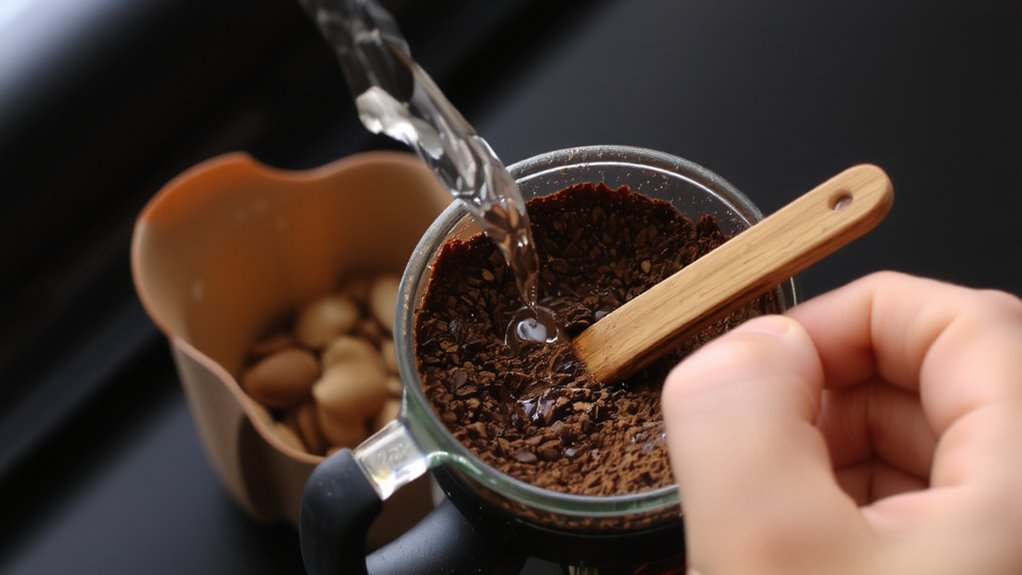
Why does your French press coffee sometimes smell flat, even when you’re using fresh beans? The issue often starts before brewing. Paper filters aren’t the only thing missing-your French press’s metal or plastic parts can contribute to aroma loss through material absorption, trapping volatile oils. Meanwhile, coffee oxidation begins the moment grounds hit air, degrading scent compounds fast. When you skip pre-wetting the filter or don’t rinse the carafe, residual elements from past brews linger, dulling the aroma. Pre-wetting helps by flushing out impurities and cooling the chamber just enough to slow oxidation during bloom. Use filtered water at about 200°F for a 30-second bloom phase. This simple step stabilizes aroma development, counteracts material absorption, and limits early oxidation. It’s not magic-just practical chemistry. For best results, do this every time, especially with porous presses.
How Hot Water Unlocks Hidden Coffee Smells
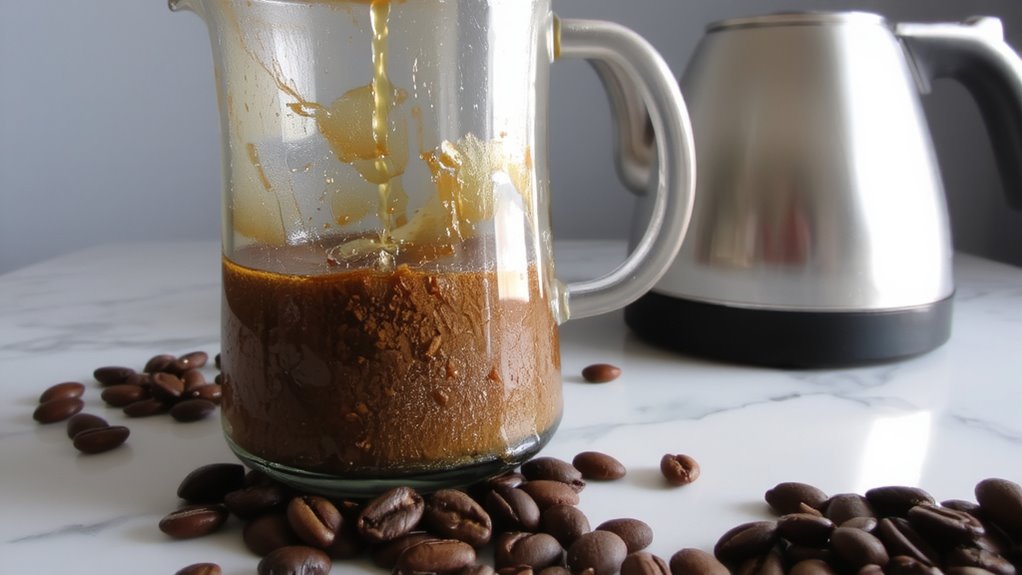
You’ve already seen how pre-wetting helps preserve the delicate scents in your French press brew by cutting down on oxidation and cleaning out stale residues. Now, let’s talk about how hot water reveals hidden coffee smells through basic coffee chemistry. When you add hot water-just off the boil, around 200°F-it rapidly expands the coffee grounds, forcing out trapped gases. This process releases aromatic compounds that were locked inside the dry beans. These compounds, like aldehydes and esters, are responsible for the bright, floral, and fruity notes you sense immediately after pouring. Without sufficient heat, extraction is incomplete, and those subtle smells never reach your nose. Too hot, though-above 205°F-and you risk scalding the grounds, which damages delicate aromatics. Using filtered water guarantees impurities don’t interfere. The right temperature and clean water maximize the release of these volatile compounds, giving you a fuller, more expressive aroma. Choosing the right French press coffee maker can also influence how effectively these aromatic compounds are retained during brewing.
The 30-Second Pre-Wet for Richer Scent
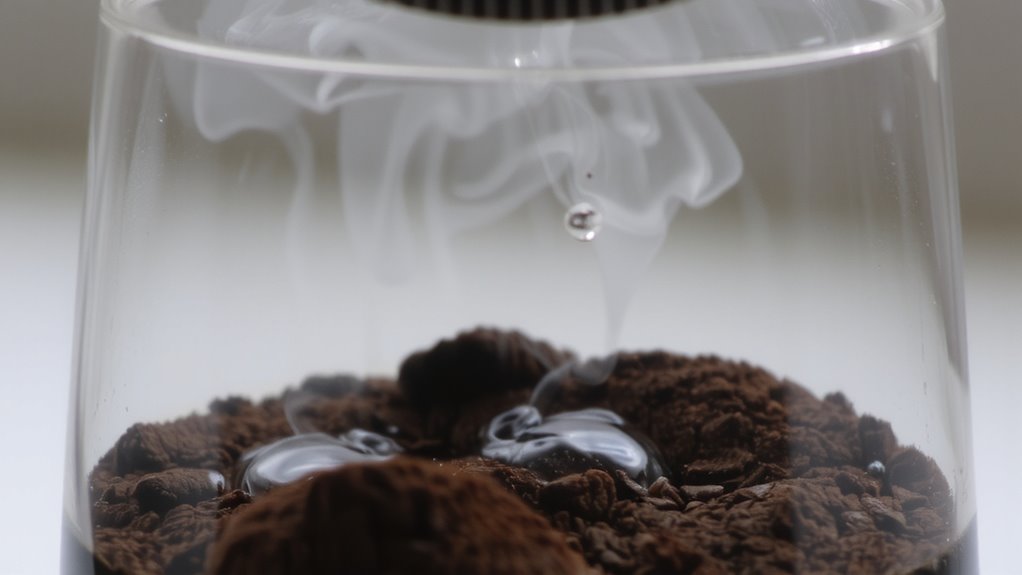
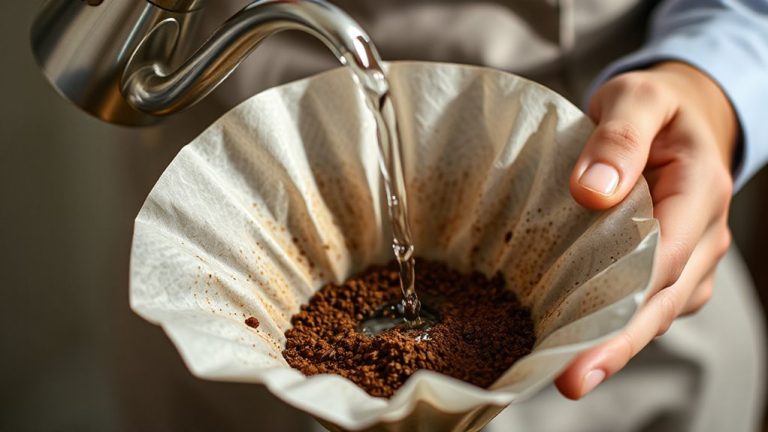
A 30-second pre-wet isn’t just a rinse-it’s a key step to boost your French press coffee’s scent. You saturate the grounds with filtered water just off the boil, letting them bloom evenly. This short pause helps trap volatile compounds, supporting aroma preservation by minimizing premature evaporation. It also promotes even scent diffusion, releasing layered notes you’d otherwise miss. Don’t skip the wait-those 30 seconds let gases escape, ensuring a smoother, more aromatic brew. Use a timer to stay consistent. Too short, and CO₂ lingers, disrupting extraction; too long, and heat drops, dulling fragrance. Unlike longer pre-wets, this method balances speed and sensory payoff. It works best with coarse grounds and a standard 1:15 coffee-to-water ratio. While immersion brewing already captures scent well, this tweak sharpens clarity. You won’t need special gear-just your press and a kettle. For daily brewing, it’s one of the simplest ways to elevate fragrance without complexity. Consider starting with one of the best French press models to ensure optimal brewing conditions.
Why Your Water Matters in the Pre-Wet Step
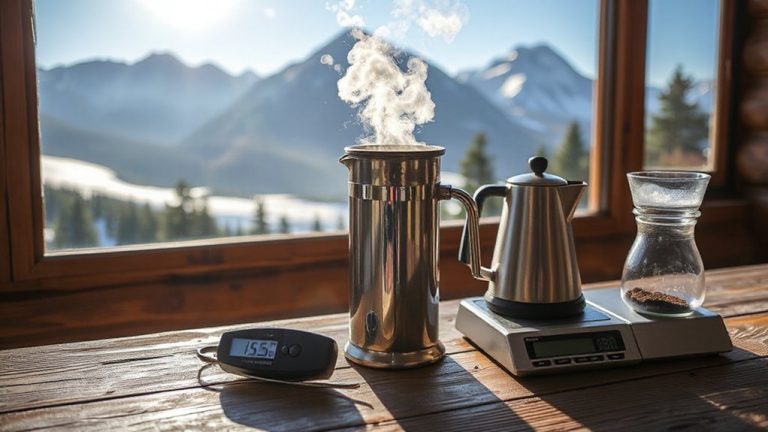
Though it might seem minor, the water you use in the pre-wet step directly shapes the aroma and taste of your French press coffee. Tap water with high chlorine or mineral content can mute delicate scent notes, while filtered water improves clarity. Your water’s mineral balance is critical-too soft and it under-extracts, too hard and it over-extracts, both distorting aroma. Aim for balanced water, like that from a Brita pitcher or third-wave water brand (e.g., AquaBarista), which supports even blooming. Water temperature also matters: use water just off the boil-around 200°F-to avoid scalding the grounds or failing to release trapped CO₂. Below 195°F, you risk incomplete degassing; above 205°F, bitter notes emerge. You don’t need lab gear, just a gooseneck kettle with a thermometer for consistency. The right water and heat set the stage for richer, more nuanced coffee. For optimal flavor, consider using best water for coffee machines to maintain consistent mineral content and purity.
3 Pre-Wet Mistakes That Kill Aroma
What if the secret to accessing better aroma starts before you even begin the main brew? You might not realize it, but common pre-wet mistakes can ruin the coffee’s fragrance before extraction kicks in. Overfilling vessel is one such error-adding too much water floods the grounds too quickly, causing uneven saturation and lost volatile compounds. This dilutes the aromatic potential right from the start. Another issue is skipping bloom altogether. Without that initial 30–45 second pause, gases escape chaotically during main pour, disrupting even extraction and muting scent. The bloom stabilizes the bed and primes aroma release. Use just enough filtered water-about twice the weight of the coffee-to wet the grounds evenly. Keep the vessel level and monitor water spread. Avoid rushing. These small, correctable habits make a measurable difference in fragrance clarity.
Still Flat? Adjusting Grind, Water, and Time After Pre-Wetting
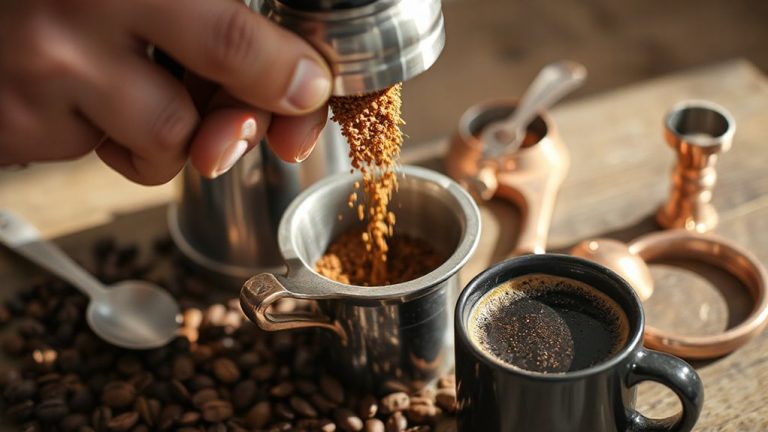
Why does your French press coffee still taste flat after a proper pre-wet? It might be time to tweak your grind, water, or brew time. If your coffee origin has delicate floral or fruity notes, a coarse grind may under-extract, leaving flavor behind. Try a slightly finer grind-like sea salt-but don’t go too fine, or sediment will cloud your cup. Water temperature matters: use filtered water heated to about 200°F (93°C). Too hot, and you risk bitterness; too cool, and the brew lacks depth. Adjust brew time in 30-second increments-ideal is usually 4 minutes. Your brewing vessel can also impact results; a double-walled French press retains heat better than single-walled ones. If flavor remains dull, check if your beans are stale or the coffee origin doesn’t suit immersion brewing. Small changes make a real difference.
On a final note
You lose aroma when grounds bloom unevenly, but a proper pre-wet fixes that. Use filtered water at about 200°F, saturate all coffee evenly, and wait 30 seconds before adding the rest. Skip tap water-it adds off-notes. Grind size matters too; too fine mutes scent, too coarse weakens flavor. Rinse your filter if using paper, though most French presses don’t need it. Adjust grind or brew time if scent still falls flat.