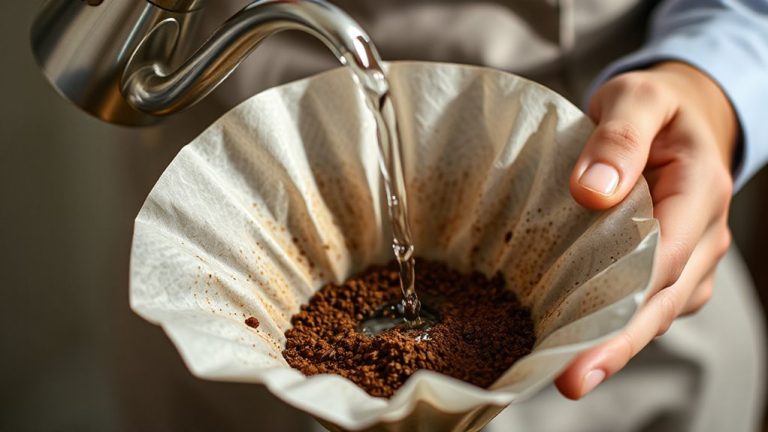
Water Filtration Systems That Enhance Coffee Flavor Profiles
Your coffee’s flavor depends heavily on water quality, so choose a filtration system that removes chlorine and balances minerals. A carbon filter like Brita or Tero improves taste by cutting impurities while keeping useful calcium and magnesium. For better control, especially with espresso, consider re-mineralized reverse osmosis water-systems like Third Wave Water add precise minerals back. Tap goes flat or bitter; filtered, it enhances sweetness and clarity. There’s more to optimizing your brew than just the filter choice.
Notable Insights
- Chlorine in tap water dulls coffee flavor, so filtration systems with activated carbon effectively improve taste by removing contaminants.
- Balanced levels of calcium and magnesium (50–100 ppm each) enhance extraction, sweetness, and complexity in brewed coffee.
- Carbon filters retain beneficial minerals while removing chlorine, making them ideal for most home brewing methods.
- Reverse osmosis systems require re-mineralization to avoid flat, sour coffee and restore optimal extraction properties.
- Match filtration to brew method: espresso needs re-mineralizing filters, while pour-over benefits from balanced mineral retention.
Why Bad Water Ruins Great Coffee
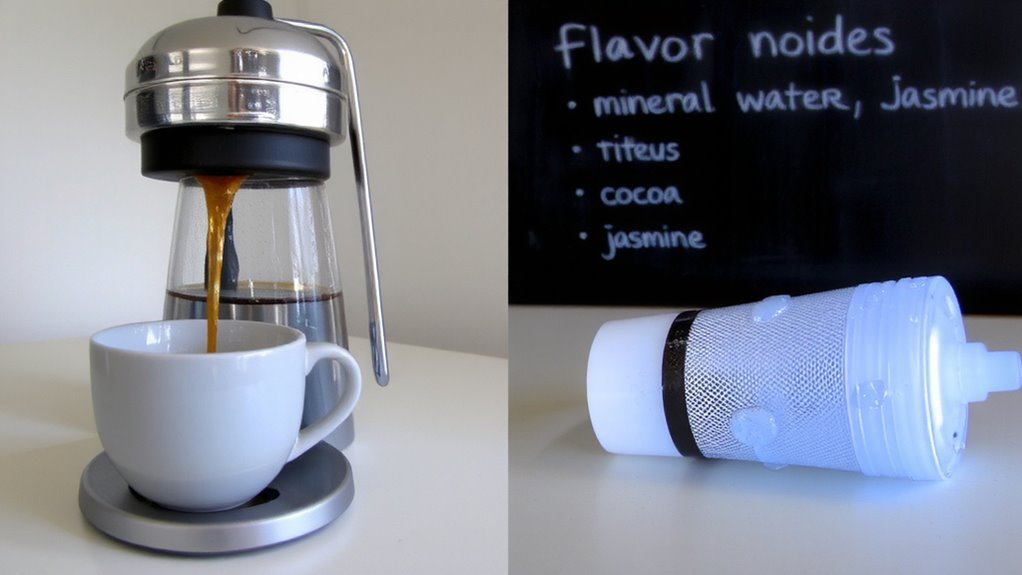
Water isn’t just a backdrop-it’s a key player in your coffee’s taste. If your tap water has a chlorine taste, it’ll seep into your brew, dulling nuanced flavors and leaving an off-putting aftertaste. Municipal supplies often use chlorine for disinfection, but it doesn’t belong in your morning cup. You’re better off filtering it out. Hard water is another culprit-high in dissolved minerals like calcium and magnesium, it can cause scale buildup in machines and uneven extraction. While some minerals help flavor, too much leads to bitter, chalky results and costly equipment damage. Using a simple activated carbon filter, like Brita or Tero, removes chlorine and improves clarity. For hard water areas, consider a reverse osmosis (RO) system paired with remineralization to strike balance. Filtering isn’t a luxury-it’s essential for protecting your gear and letting quality beans shine. Your coffee’s only as good as the water you start with. Expert recommendations often highlight best coffee brewing water for achieving optimal flavor extraction and consistency.
How Calcium and Magnesium Improve Extraction
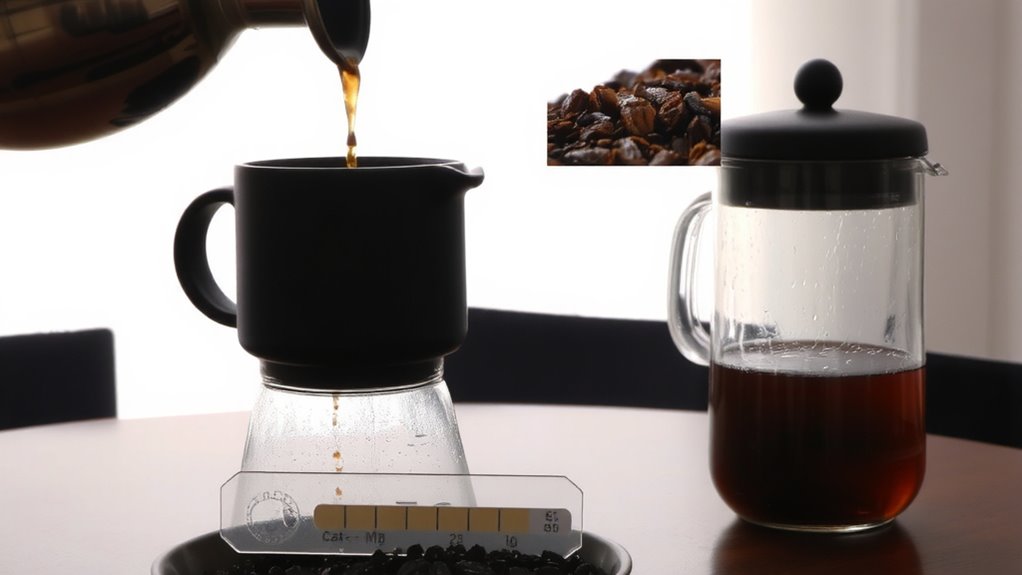
While you might think minerals in water are just about hardness, the truth is calcium and magnesium play a direct role in pulling flavor from coffee grounds during extraction. These minerals boost extraction efficiency by binding to coffee’s soluble compounds, helping you pull out more sweetness and complexity. Without enough calcium or magnesium, your coffee can taste flat or underdeveloped-even with perfect brew time and grind. But too much leads to over-extraction and bitterness, so mineral balance is key. Ideal levels-around 50–100 ppm each-support full flavor without scaling equipment. Brands like Third Wave Water offer mineral additive packs to fine-tune your water. You don’t need lab-grade precision, but ignoring mineral content means missing a major lever in flavor control. Balancing calcium and magnesium is one of the easiest upgrades to elevate your brew. For those seeking optimal mineral composition, best water for coffee machines can make a significant difference in taste and machine performance.
Carbon Filter or Reverse Osmosis: What’s Best?
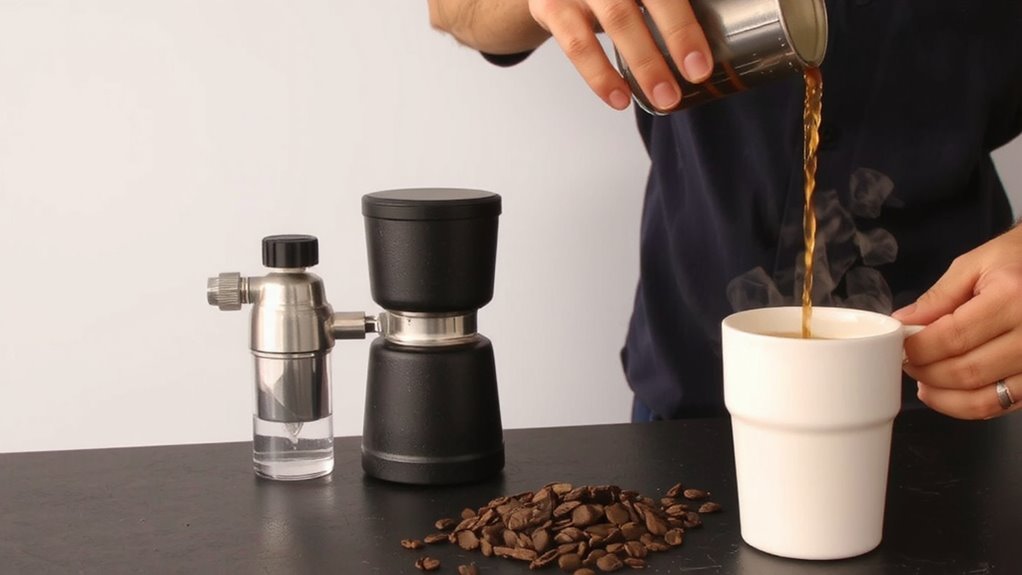
You’ve probably already considered how calcium and magnesium affect your brew, but what about the water you start with? Carbon filters, like those in Brita or under-sink systems, remove chlorine and sediment, improving taste without stripping all minerals. This helps maintain taste consistency and supports equipment longevity by reducing scale. Reverse osmosis (RO) goes further, removing nearly all impurities-including minerals-giving you a blank slate. While that boosts control, it can lead to flat or sour coffee if not re-mineralized. RO also demands more maintenance and may reduce water pressure. For most home baristas, a solid carbon filter strikes the right balance-clean water, stable flavor, and longer-lasting machines-without extra complexity. Best espresso machine water filters are designed specifically to balance filtration efficiency and mineral retention for optimal espresso extraction.
Why Your Filter Needs Re-mineralization
Though pure water might sound ideal, stripping out all minerals during filtration can backfire by leaving your coffee tasting flat or overly acidic. Your filter needs re-mineralization because minerals like calcium and magnesium play a key role in extracting flavor compounds from coffee grounds. Without them, you lose depth and sweetness. Re-mineralization restores mineral balance, helping achieve consistent flavor stability from brew to brew. Filters like reverse osmosis or distillation remove nearly everything, so adding back controlled amounts of minerals-through cartridges like Third Wave Water or in-line remineralizers-is practical and effective. It’s not about adding hardness randomly; it’s about precision. Getting the mineral profile right means brighter acidity, fuller body, and aromatic clarity. Skip this step, and even high-end beans won’t shine. Re-mineralization isn’t optional if you want your coffee to taste complete.
Match Your Water Filter to Your Brew Method
Since your brew method affects how water interacts with coffee grounds, choosing the right filter matters more than you might think. Your water’s mineral content impacts brew temperature stability and extraction efficiency, both of which rely on consistent grind consistency.
| Brew Method | Ideal Water Profile | Filter Recommendation |
|---|---|---|
| Pour-over | Balanced minerals | Carbon + remineralization |
| French Press | Medium hardness | Standard carbon filter |
| Espresso | High mineral demand | Dual-stage re-mineralizing |
| Cold Brew | Low mineral need | Basic filtration |
| AeroPress | Flexible | Portable fine filter |
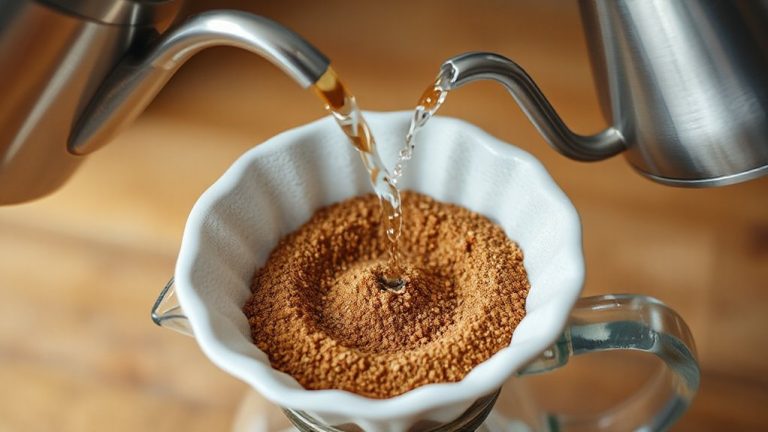
A pour-over needs stable brew temperature and even extraction, so a filter that retains calcium and magnesium helps. Espresso machines scale easily, so use filters designed to balance hardness. For cold brew, simpler filters work since long steeping is forgiving. Always match your filter to your brewer’s demands-your coffee’s clarity and flavor depend on it.
On a final note
Your water choice directly shapes your coffee’s flavor. Soft, filtered water with balanced minerals like calcium and magnesium improves extraction, making coffee taste fuller and cleaner. Skip overly aggressive methods like reverse osmosis unless you re-mineralize. Carbon filters, like Brita or TAPP, often work fine for most brewers. Match your system to your brew method-espresso needs more precision than drip. Always maintain your filter to avoid off-tastes.