Optimizing Pour Over Techniques for Various Coffee Beans: A Step-by-Step Guide
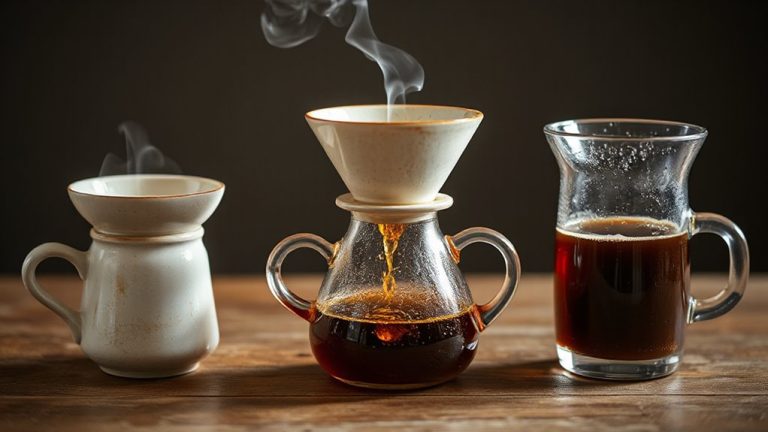
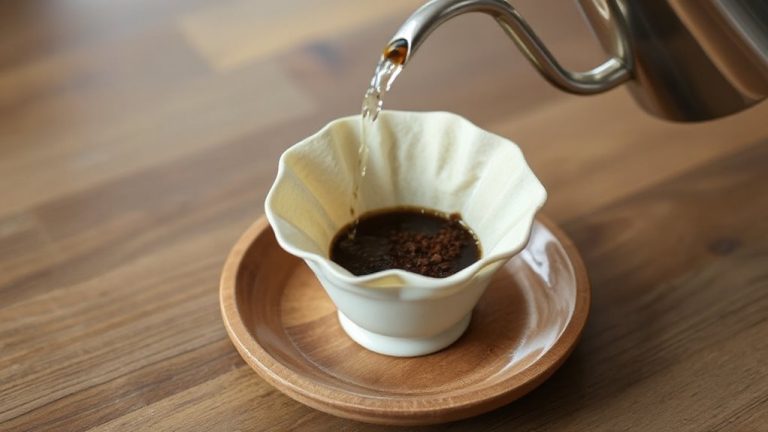
Use a burr grinder like the Baratza Encore for consistent grind size-finer for light roasts, coarser for dark. Set water temperature between 190°F and 205°F depending on roast, using a gooseneck kettle like the Fellow Stagg EKG for control. Bloom beans 30–45 seconds for light, 15–25 for dark, using twice the water weight of coffee. Adjust brew time from 2:00 to 3:30 minutes based on roast and origin. African beans shine with faster flows, Latin with balance, Indonesian with slower pours-each reveals more when tuned right.
Notable Insights
- Adjust grind size based on roast: finer for light roasts, coarser for dark to optimize extraction and flavor balance.
- Use precise water temperatures-200–205°F for light, 195–200°F for medium, and 190–195°F for dark roasts.
- Bloom light roasts for 30–45 seconds and dark roasts for 15–25 seconds to manage CO2 and ensure even extraction.
- Tailor brew time: aim for 2:30–3:30 minutes for light roasts, 2:00–2:30 minutes for dark roasts to avoid imbalance.
- Match pour technique to origin: use slow spirals for African beans, balanced pours for Latin American, and slower saturation for Indonesian coffees.
Choose the Right Grind Size for Your Roast
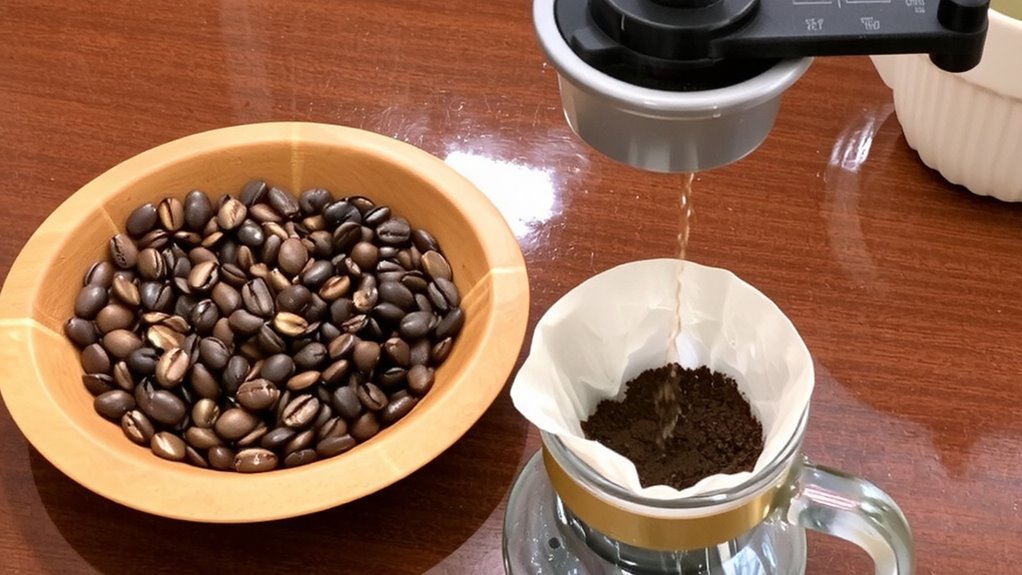
Grind size isn’t just a detail-it’s a deciding factor in how your pour over tastes. Light roasts need a finer grind to extract fully, while dark roasts do better coarser to avoid bitterness. Getting the right setting on your grinder matters, but so does grind consistency. Blades or low-end grinders create uneven particle sizes, leading to over- and under-extraction. For true particle uniformity, use a burr grinder-models like the Baratza Encore or Fellow Ode deliver reliable results. Uneven grinds disrupt flow and flavor, even if the average size seems right. You’ll get cleaner, more balanced coffee when every particle is close in size. Adjust based on roast: finer for dense, hard beans (light roast), coarser for porous, fragile ones (dark roast). Your grind choice shapes extraction, so prioritize consistency. With better particle uniformity, your pour over won’t just taste smoother-it’ll be more predictable, batch after batch. For top performance, consider one of the best burr grinders based on expert testing and user feedback.
Set Water Temperature for Light, Medium, or Dark Beans
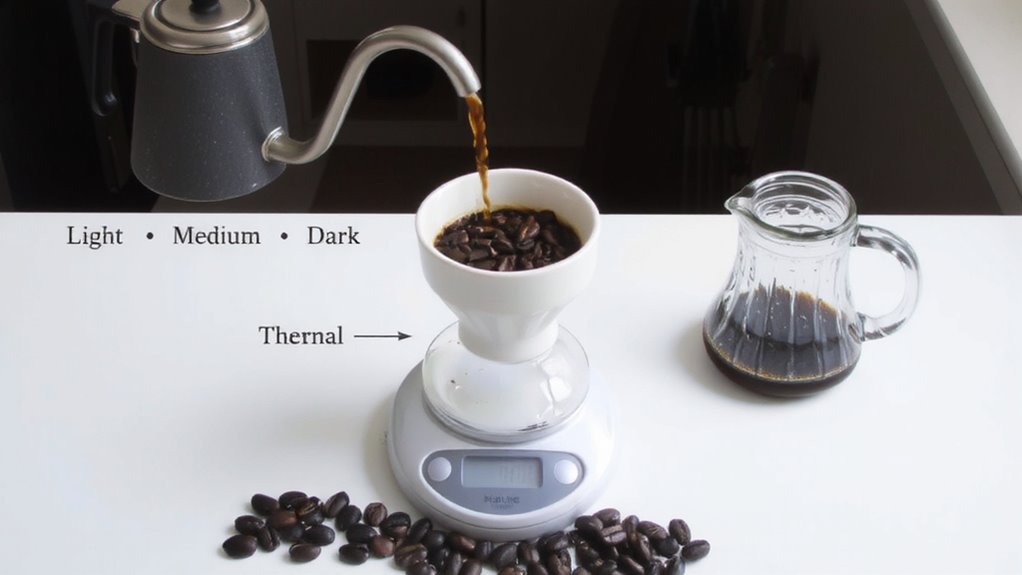
One key to accessing the best flavor in your pour over is using the right water temperature for the roast level you’re brewing. For light roasts, aim for 200–205°F-they’re denser and need hotter water to extract fully. Medium roasts do well at 195–200°F, balancing sweetness and acidity. Dark roasts are more soluble, so use 190–195°F to avoid bitterness. Water chemistry plays a role too-hard water can over-extract, while soft water may under-extract, so consider a balanced mineral content like Third Wave Water. Roast age matters: fresher beans retain CO2, needing slightly hotter water, while older beans lose gases and extract more easily. Always use a gooseneck kettle with temperature control, like the Fellow Stagg EKG, for accuracy. Adjusting temp per roast guarantees clarity, body, and sweetness match your beans’ profile. For optimal results, maintain the Perfect Coffee Brewing Temperature to ensure even extraction and highlight the unique characteristics of each roast.
Perfect Your Bloom for Each Roast Level
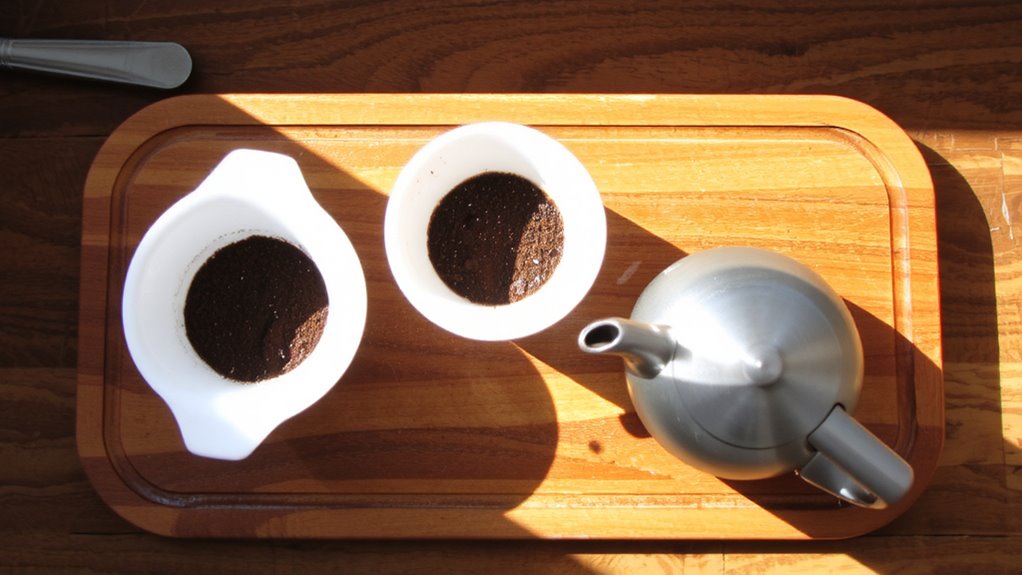
After setting your water temperature to match the roast level, the next step is to focus on the bloom-the initial wetting of the coffee grounds that releases trapped carbon dioxide. You’ll want to pour just enough hot water to saturate the grounds evenly-about twice the weight of the coffee. Lighter roasts, which are typically denser and retain more gas, need a longer bloom time (30–45 seconds), especially if the roast age is under 7 days. Darker roasts degas faster, so a 15–25 second bloom is usually enough. Coffee freshness matters: beans roasted within the past two weeks respond best. Stale coffee, or beans past 21 days roast age, may show weak bubbling, meaning less gas is present and blooming has less impact. Even then, don’t skip it-bloom guarantees even extraction. For best results, use a gooseneck kettle to control your pour and achieve manual brewing precision.
Adjust Brew Time to Match Roast and Origin
Since lighter roasts tend to be denser and more acidic, they usually need a longer brew time-between 2:30 and 3:30 minutes-to extract fully and balance their flavor. You’ll want to use consistent water agitation during pours to help break up the crust and improve extraction. For darker roasts, shorten your brew time to 2:00–2:30 minutes to avoid over-extracting bitter compounds. These beans are less dense and extract faster. Fine-tune your flow control by pouring slowly and steadily-especially in pulses-to regulate contact time. A gooseneck kettle gives you better precision than a regular spout. Ethiopian or Kenyan beans often respond well to longer times, while Sumatran or French roasts need less. Adjusting brew time based on roast and origin helps you match the coffee’s structure. It’s not just about time-you’re managing extraction through flow and agitation.
Brew the Best Pour Over for African, Latin, and Indonesian Beans
African beans-like those from Ethiopia or Kenya-shine when brewed with a longer, more controlled pour over. Their high bean density means they need more time and slightly hotter water-around 205°F-to extract fully. Use a medium-fine grind and pour in slow, steady spirals to highlight bright flavor notes like citrus, berry, or floral tones. For Latin American beans, which have medium density, aim for balanced extraction with a 2:1 water-to-coffee ratio and a 2:30-minute brew time. You’ll bring out flavor notes like chocolate, nut, or caramel without over-extracting. Indonesian beans, such as Sumatran, are dense and oily, so use slightly cooler water (200°F) and a coarser grind to avoid bitterness. Their earthy, spicy flavor notes come through best with a shorter bloom and slower pours.
On a final note
You’ve now tailored your pour over to match bean type and roast. Use a medium-fine grind for African beans, slightly coarser for Indonesians. Keep water around 200°F-cooler for dark roasts, hotter for light. Bloom for 30 seconds, then adjust total brew time between 2:30 and 3:30. A gooseneck kettle and scale help, but consistency matters most. Small tweaks improve clarity and balance.