The Impact of Different Temperatures on Drip Coffee Extraction and Flavor Profile
You want your drip coffee brewed between 195°F and 205°F for balanced extraction. Too low, below 195°F, and your coffee tastes sour and thin-acids dominate, sugars stay locked in the grounds. Too high, above 205°F, and it turns bitter as heat destroys delicate aromas, especially in light roasts. Match the temp to your roast: lighter beans need 200°F–203°F, dark roasts do better at 195°F–198°F. Your machine’s consistency matters-many budget models fail here. Getting this right sharpens flavor clarity and sweetness in every cup. There’s more to fine-tuning your setup for cleaner, richer results.
Notable Insights
- Brewing between 195°F and 205°F optimizes extraction, balancing acidity, sweetness, and body for a well-rounded flavor.
- Water below 195°F causes under-extraction, yielding sour, weak coffee with thin body and muted aroma.
- Temperatures above 205°F lead to over-extraction, producing bitter, astringent coffee with degraded delicate flavors.
- Light roasts extract best at 200°F–203°F due to their dense structure, revealing bright, nuanced notes like citrus and berry.
- Dark roasts should brew at 195°F–198°F to avoid burnt, ashy flavors and preserve smoother, chocolatey characteristics.
What’s the Ideal Brew Temperature for Coffee?
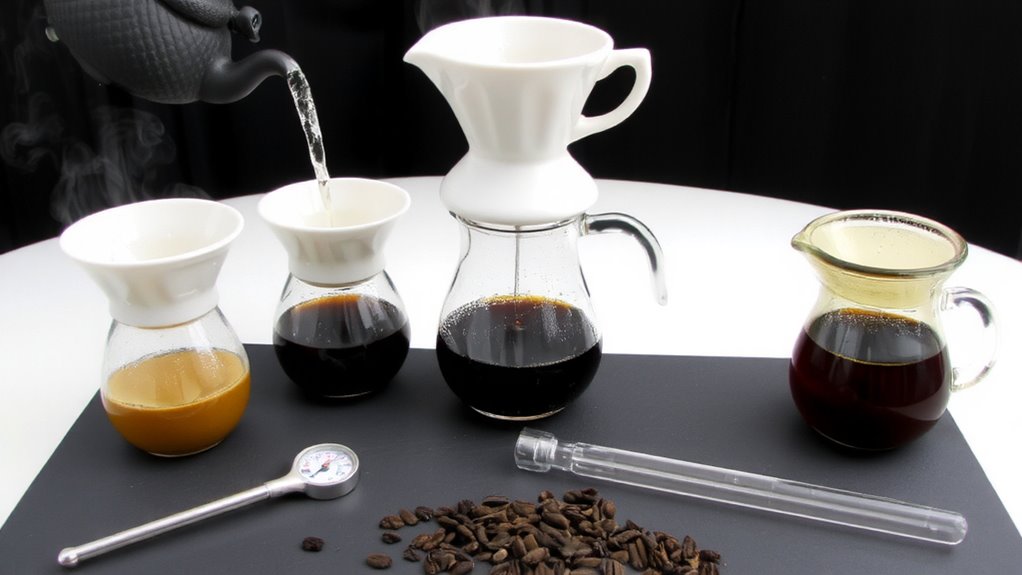
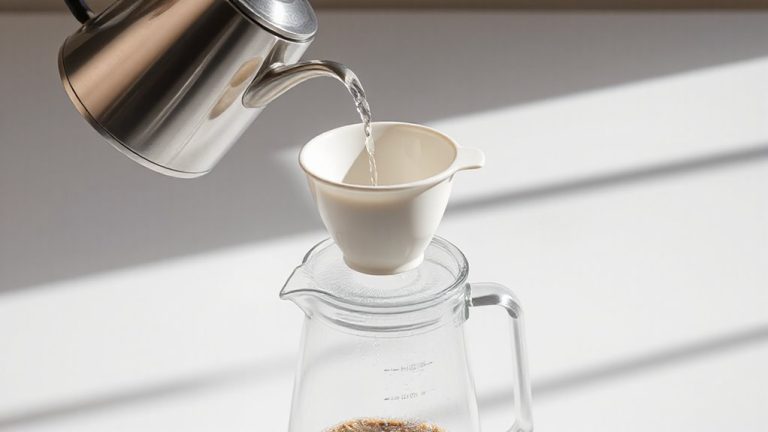
Why do most experts recommend brewing between 195°F and 205°F? Because that range optimizes water solubility, pulling the right balance of flavors without scalding the grounds. If you go hotter, you risk bitterness; cooler, and extraction stalls. Your grind consistency plays a key role-uniform particles guarantee even extraction under this heat. A burr grinder gives you that control; blade grinders often don’t. Standard drip machines usually hit this temp range, but cheaper models sometimes fall short. If yours brews below 195°F, consider upgrading. Gooseneck kettles with temperature control, like the Fellow Stagg, give precision for pour-over. Just don’t obsess over hitting 203°F exactly-stability matters more. Keep water quality in check too; bad water ruins even perfectly heated brews. Stick to the range, pair it with consistent grind size, and you’ll get clean, balanced coffee every time. For optimal results, aim for the perfect coffee brewing temperature.
Too Cold? Under-Extraction and Sour Coffee
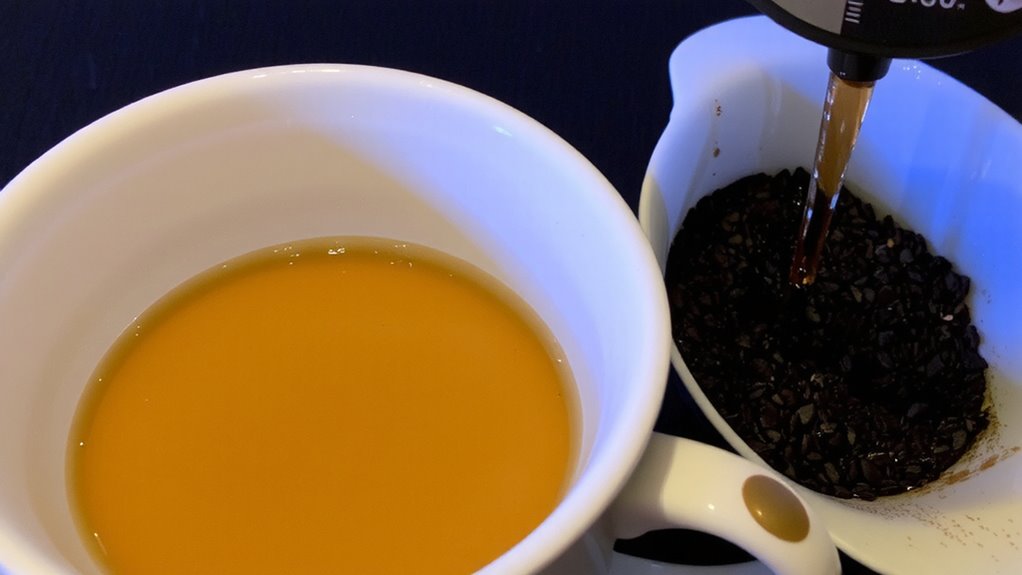
Ever pulled a lukewarm cup that tastes sharp and flat? Chances are, your brew water was too cold. When water temps dip below 195°F, extraction falls short, leaving acids under-neutralized and sugars unextracted. You’re left with sour flavors-a bright, unpleasant tang-and a weak body that feels thin and watery on the palate. Under-extracted coffee lacks balance and depth, no matter how good the beans. Most drip machines default to 195–205°F, but cheaper models may not sustain heat evenly. If your coffee tastes off, check your machine’s specs or use a thermometer. Better yet, switch to a gooseneck kettle and a manual pour-over setup for precise control. While French presses are more forgiving, they still need water near 200°F for ideal results. Don’t let low temps ruin your brew-heat matters. A gooseneck kettle with precise temperature control ensures optimal extraction for balanced, flavorful coffee.
Too Hot? Bitterness and Over-Extraction
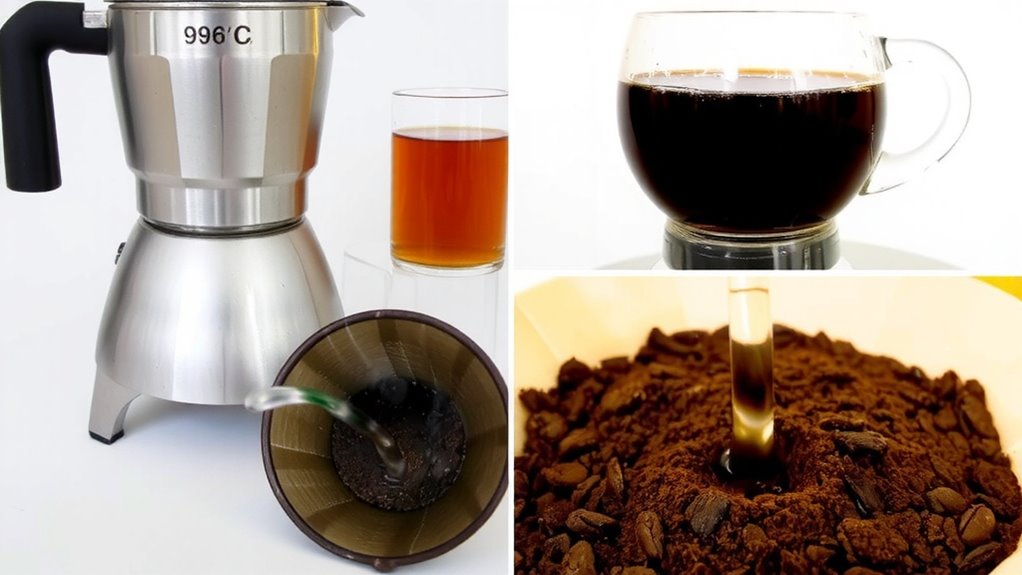
Brewing with water too close to boiling can be just as risky as using water that’s too cool. When you go above 205°F, you’re pushing into dangerous territory-this intense heat pulls out too many compounds too fast, leading to over-extraction. You’ll taste it immediately: harsh, bitter notes dominate, overwhelming any natural sweetness or balance. This isn’t just bitterness-it’s heat damage, where delicate aromatics break down and roast characteristics turn astringent. Flavor degradation accelerates at high temps, especially with longer brew cycles common in drip machines. Light roasts are especially vulnerable, losing nuanced layers to scalding water. Even medium roasts can suffer, tasting flat or burnt. If your machine doesn’t let you adjust temperature, consider a gooseneck kettle to pre-cool water to 195–205°F. Smart control prevents damage and preserves quality-consistency starts with temp.
How Temperature Affects Coffee’s Flavor Notes
What if the key to accessing brighter acids or deeper sweetness in your morning cup comes down to just a few degrees? When you brew too cool-say below 195°F-you’ll likely pull muted notes, lacking aroma intensity and flavor clarity. Acids come through flat, sugars stay locked in the grounds. But crank it past 205°F, and heat starts extracting too aggressively, muddying the cup. For most light to medium roasts, sticking between 195°F and 203°F gives you balanced flavor clarity: you’ll taste distinct citrus, berry, or chocolate notes instead of a vague “coffee” taste. Aroma intensity also peaks in this window-your nose picks up floral or spicy top notes more easily. Use a gooseneck kettle with a thermometer or a temperature-controlled brewer like the Fellow Stagg EKG to stay precise. Small adjustments here don’t fix bad beans, but they do help you taste what’s actually in them.
Match Brew Temp to Roast Level for Better Balance
You’ve seen how staying within the 195°F to 203°F range sharpens flavor clarity and brings out the best in your beans, but that sweet spot shifts depending on roast level. For light roasts, aim for 200°F–203°F. Their dense structure needs higher heat to extract fully, especially with a finer grind size and standard brew time. Without enough heat, they taste sour and thin. Medium roasts do best around 198°F–201°F-plenty of brightness without tipping into harshness. Go too hot, and bitterness creeps in. With dark roasts, drop to 195°F–198°F. Their open cell structure extracts easily, and lower temps help avoid burnt, ashy notes. Use a slightly coarser grind size and maybe shorten brew time to keep it clean. Matching temp to roast isn’t just detail work-it’s how you balance sweetness, acidity, and body in every cup.
On a final note
You’ll get the best drip coffee by brewing between 195°F and 205°F. Water that’s too cool under-extracts, leaving sour, weak flavors; too hot, and you’ll pull out bitter compounds. Light roasts often need the higher end for full sweetness, while dark roasts do better just below to avoid harshness. Your brewer’s thermostat matters-consider a model like the Technivorm Moccamaster for consistency. Adjust temp by taste, not guesswork.