The Role of Water Filtration in Achieving Perfect Pour Over Infusions for Optimal Flavor Profiles
Your pour over tastes best when you start with clean, balanced water. Tap water often contains chlorine or uneven minerals that mute flavor or cause bitterness. A good filter-like a Brita, ZeroWater pitcher, or reverse osmosis system-removes impurities and stabilizes mineral content. Aim for 150 ppm total dissolved solids to extract sweetness and clarity without sourness or harshness. Getting the water right sets the foundation for a perfect cup, and there’s more to fine-tuning it just for your coffee.
Notable Insights
- Water filtration removes chlorine and impurities that cause off-flavors and mute coffee’s natural taste.
- Filtered water with balanced minerals enhances extraction, improving sweetness and clarity in pour over coffee.
- Using water with 120–150 ppm TDS optimizes flavor balance and prevents under- or over-extraction.
- Carbon and reverse osmosis filters provide clean water, but mineral adjustment may be needed for ideal brewing.
- Consistent water quality through filtration ensures repeatable, high-quality pour over infusions with vibrant flavor profiles.
Why Water Quality Makes or Breaks Pour Over Coffee
Water is the unsung hero of your pour over-it makes up over 98% of your cup, so its quality directly shapes flavor. You can’t ignore water sourcing; tap water varies widely, often containing chlorine or sediments that mute taste. For best results, use filtered or bottled spring water. It offers a clean base and balances mineral content needed for proper extraction. Water with optimal mineral composition enhances clarity and sweetness in the cup. Brewing temperature plays a key role, too-aim for 195°F to 205°F. Too cool, and you under-extract, leaving your coffee sour; too hot, and it turns bitter. An electric kettle with temperature control, like the Fellow Stagg EKG, gives you precision. Distilled water isn’t ideal on its own-it lacks minerals, leading to flat coffee-so avoid it unless blended. Always match your water to your beans. Good water doesn’t guarantee greatness, but poor water guarantees mediocrity.
How Minerals and Impurities Affect Coffee Extraction
Ever wonder why your pour over tastes dull or overly sharp despite using fresh beans and the right technique? It’s likely your water. Water hardness and mineral balance play a vital role in extraction. Too many minerals-especially calcium and magnesium-can over-extract, making coffee bitter. Soft water, often low in minerals, under-extracts, leading to flat, sour flavors. Chlorine and other impurities add off-notes. Most tap water varies, making results inconsistent. A basic carbon filter removes chlorine but won’t adjust mineral content. For better control, consider third-wave water products that rebalance minerals specifically for coffee. Testing your water’s hardness gives clues: below 50 ppm may lack extraction power; above 150 ppm risks harshness. Consistent mineral balance means sweeter, clearer cups-every time. For precise brewing insights, consider measuring your coffee’s dissolved solids using a coffee refractometer.
The Ideal Water Profile for Balanced Pour Over
Some baristas swear by a specific mineral range to get the cleanest, most balanced pour over. You’ll want water with 150 ppm total dissolved solids (TDS), including balanced calcium and bicarbonate, to support proper extraction without overdoing acidity or bitterness. Too little mineral content makes coffee taste flat, while too much creates harsh notes. Your water temperature should stay between 195°F and 205°F-any lower and extraction suffers, any higher risks scalding the grounds. Grind consistency matters just as much; uneven particles lead to uneven brewing, with some over-extracting and others under-extracting. Use a burr grinder for uniform granules. When your water profile, grind consistency, and water temperature work together, flavors emerge clearly-sweet, bright, and well-rounded-without needing guesswork or adjustments.
Best Water Filters for Pour Over Enthusiasts
A good brew starts with clean, balanced water, and that means choosing the right filter matters just as much as the beans or brewer. For pour over enthusiasts, countertop filters like Brita Pitchers or TAPP Water offer convenience and improved taste with basic carbon filtration, but they lack precision. Reverse osmosis (RO) systems, such as APEC’s RO-90, remove nearly all impurities, giving you a blank slate-ideal if you’re adjusting minerals yourself. However, they require more space and higher filter maintenance. For most home brewers, the Clearly Filtered Pitcher or ZeroWater system strikes a smart middle ground, reducing chlorine and heavy metals while preserving some minerals for better taste consistency. If you value reliability and ease, go for pitcher filters with rated contaminant removal. Just remember-regular filter maintenance guarantees long-term taste consistency and protects your gear.
DIY Brew Water: Mix Your Perfect Pour Over Formula
What if your tap water could be fine-tuned for brighter clarity and balanced extraction? You can achieve that by crafting DIY brew water with custom blends. Start with purified water to remove impurities, then add precise mineral mixes-like calcium, magnesium, and bicarbonate-to support flavor tuning. Popular recipes include Third Wave Water and the Barista Hustle method, which target ideal TDS (120–150 ppm) and hardness levels. Magnesium boosts brightness; sodium, if too high, dulls flavor. Use a digital scale and pH meter for consistency. While pre-made packets offer convenience, mixing your own gives greater control and cost savings over time. Custom blends let you adapt water profiles to different beans-brighter profiles for light roasts, balanced ones for mediums. It’s a simple step with measurable impact: better clarity, sweetness, and body in every pour over.
Coffee Water Mistakes That Ruin Your Brew (And How to Fix Them)
Ever wonder why your pour over tastes flat or overly bitter, even when you nail the grind and pour? You might be overlooking water temperature and grind consistency. If your water’s too hot-above 205°F-it extracts too fast, pulling out harsh compounds. Too cool-below 195°F-and your coffee tastes weak. Aim for 195–205°F for balanced extraction. Inconsistent grind size causes uneven extraction; fines over-extract while coarse bits under-extract, muddying flavor. Use a quality burr grinder to guarantee uniform particles. Hard tap water adds unwanted minerals that mute flavors, while overly soft water lacks minerals needed for proper extraction. Filtered water with balanced mineral content fixes both issues. Don’t let poor water choices ruin your effort. Control temperature, refine grind consistency, and use filtered water-small changes that deliver cleaner, brighter, more expressive coffee every time.
How to Test TDS, Hardness, and pH for Better Coffee
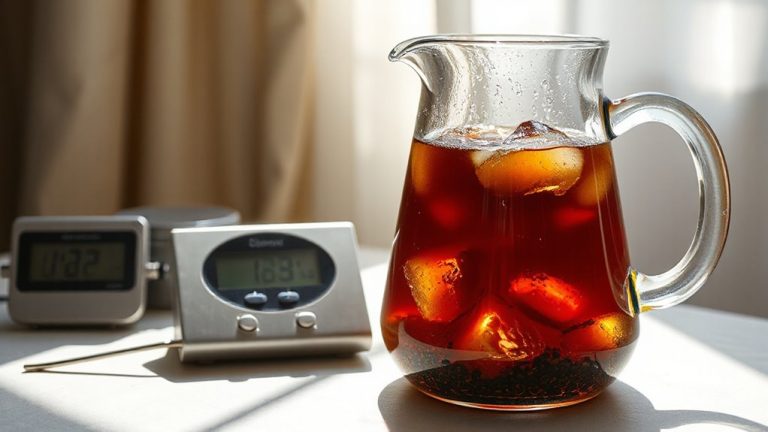
While your coffee gear and grind settings matter, the truth is your water’s makeup plays a quiet yet critical role in how your pour over tastes-so if you’re chasing better brews, testing its TDS, hardness, and pH is a smart next step. Use a TDS meter ($20–$50) to check mineral content, test strips for hardness and pH, or lab kits for precision. Good water sourcing guarantees consistency, especially if your tap water varies. Balance matters: too soft, and your coffee tastes flat; too hard, and you risk scale and bitterness. Always match your water profile to your preferred brewing temperature-higher temps extract more, so adjust minerals accordingly. For consistent results, consider starting with best water for coffee machines that are pre-formulated to meet ideal brewing standards.
| Test | Tool | Ideal Range |
|---|---|---|
| TDS | Digital meter | 75–250 ppm |
| Hardness | Test strips | 50–175 ppm |
| pH | Strip or pen | 6.5–7.5 |
On a final note
You can’t brew great pour over coffee without good water. Tap water often has off-flavors or unbalanced minerals that hurt extraction. Use a quality filter like Brita or TDS meter to control hardness and pH. For best results, try Third Wave Water or mix your own. Test water regularly, adjust as needed. Clean, balanced water gives consistent, flavorful coffee-every time.