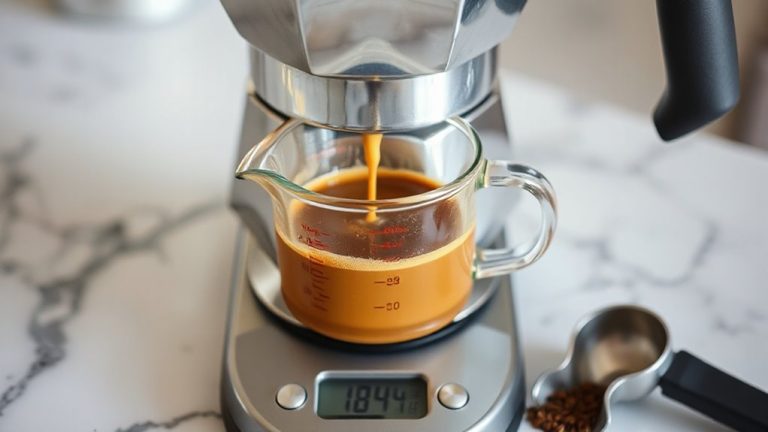
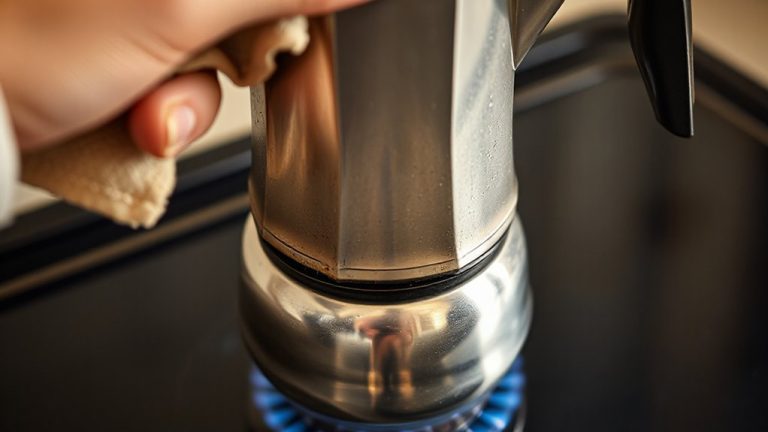
Container Material Influence on Final Taste Profile When Brewing Turkish Coffee With Electric Heaters
Your electric heater’s uneven heat can easily scorch coffee or create off-flavors, so your cezve material matters. Copper heats evenly and transfers quickly, giving clean, aromatic results despite the stove’s flaws. Brass offers similar performance but needs polishing. Stainless steel is durable and neutral, while aluminum risks metallic notes and bitterness over time. Choose based on your taste priorities-complexity, consistency, or ease. The right choice makes all the difference in your cup’s final profile.
Notable Insights
- Copper cezves provide even heating on electric burners, preserving nuanced flavors and enhancing aroma development.
- Stainless steel cezves offer neutral taste profiles and consistent results due to non-reactive, durable construction.
- Brass cezves heat quickly and evenly, reducing scorch risk and supporting clean extraction on electric heaters.
- Aluminum cezves may impart metallic notes and increase bitterness due to oxidation and reactivity with coffee acids.
- Electric heaters’ uneven heat amplifies material-related flaws, making high-conductivity cezves like copper ideal for flavor integrity.
Why Electric Heaters Alter Turkish Coffee Flavor
Why does your Turkish coffee sometimes taste off when made on an electric heater? The answer lies in how evenly heat is delivered. Electric coil or halogen burners often provide inconsistent heat distribution compared to gas flames. This affects thermal conductivity-the speed at which heat moves through your cezve’s material. Uneven heating can cause localized overheating, accelerating flavor oxidation, especially in lighter roasts. That means your coffee degrades faster, losing nuanced notes and gaining a stale or bitter edge. Stainless steel or thick-bottomed cezves may help, but even then, the slow response of electric surfaces hampers control. You can’t fine-tune the temperature as precisely, increasing scorch risk. For best results, use medium-low settings and stay attentive. While electric heaters work in a pinch, their thermal behavior demands adjustments. Choosing the right cezve material helps compensate-but won’t fully replace the responsiveness of gas.
How Copper Cezves Shape Turkish Coffee Aroma and Heat Response
Copper cezves have long been the go-to choice for traditional Turkish coffee makers, and for good reason. You benefit from copper’s excellent thermal conductivity, giving you fast, even heating-especially on electric heaters. This lets you control foam and aroma development more precisely. However, copper has higher metal reactivity, so these cezves are usually lined with tin or stainless steel to avoid off-flavors. Unlined versions can impart a metallic taste and aren’t safe for regular use.
| Feature | Benefit |
|---|---|
| High thermal conductivity | Even, quick heat response |
| Smooth inner finish | Improves foam stability |
| Tin lining | Reduces metal reactivity |
| Traditional shape | Enhances aroma trapping |
| Handcrafted design | Better heat retention |
While copper responds faster than stainless steel, it requires more care. Always check the lining for wear to keep your coffee safe and flavorful.
Brass vs. Stainless Steel: Which Is Better for Turkish Coffee?
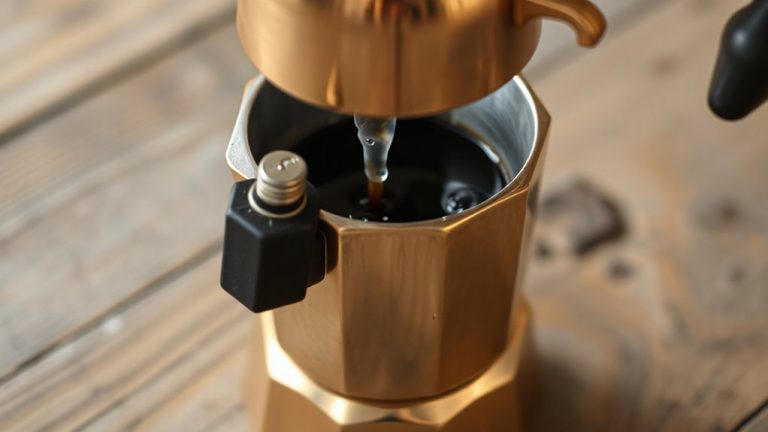
While copper may be the classic choice, brass and stainless steel cezves offer practical benefits worth considering for your Turkish coffee routine. Brass heats quickly and provides even heat distribution, helping you control foam and prevent scorching-ideal if you’re using an electric heater that responds slowly. It also has decent flavor retention, meaning your coffee tastes clean and consistent over time. But brass can tarnish, so it requires occasional polishing. Stainless steel, on the other hand, is low-maintenance and durable, with good heat distribution when layered in bonded cookware like tri-ply designs. While pure stainless may heat less evenly, it preserves flavor retention well and won’t react with coffee. If convenience and longevity matter most, stainless wins. But if you value responsiveness and traditional performance, brass is a solid middle ground. Choose based on your heating setup and cleaning tolerance.
Does Aluminum Affect Turkish Coffee Bitterness and Body?
If you’re using an aluminum cezve, you might notice a sharper edge to your coffee’s bitterness and a slightly thinner body compared to other materials. That’s often due to aluminum oxidation, which can subtly interfere with flavor development during brewing. Over time, repeated heating and exposure to air accelerate this oxidation, especially if the cezve isn’t seasoned or cleaned properly. You may also experience minor flavor leaching, where trace metallic notes seep into the brew, affecting the smoothness Turkish coffee is known for. While not harmful in small amounts, this can dull aromatic complexity. Uncoated aluminum reacts more with acidic components in coffee, making these effects more pronounced than in stainless steel or brass. If you keep using aluminum, frequent cleaning and avoiding scratches help reduce these effects. Yet, the material inherently carries more risk of altering taste than more inert options. For those seeking consistently balanced results, choosing a model made from best electric Turkish coffee makers material can make a significant difference.
Choose Your Cezve Material Based on Turkish Coffee Taste Goals
You’ve seen how aluminum can influence bitterness and body, often adding a metallic edge that dulls the subtleties of Turkish coffee. If you want a clean, bright cup, copper or stainless steel cezves are better-they conduct heat evenly and don’t interfere with flavor. Copper’s traditional and supports rich flavor pairing with spices like cardamom, enhancing complexity without overpowering. Stainless steel is durable and neutral, ideal if you prefer consistency across brews. For those honoring brewing tradition, brass or silver-plated cezves offer authenticity but require more care. Consider your taste goals: do you want purity, warmth, or ritual? Each material shapes the experience. Match your choice to your preferred roast and serving style. A good cezve isn’t just about looks-it’s a functional tool that affects extraction, foam, and final taste. Pick wisely, based on what you want to taste.
On a final note
Your cezve material affects heat control and flavor in Turkish coffee. Copper heats quickly and evenly, boosting aroma but needing care. Brass is durable and conducts well, though it may require polishing. Stainless steel is low-maintenance and consistent but heats slower. Aluminum heats fast but can add bitterness if overheated. Pick copper for precision, stainless steel for ease, or brass for balance. Match your choice to your stove and taste-small changes make a real difference in the cup.