Selecting Between Different Materials to Maximize Aroma Release in Pour Over Coffee Brewing Processes
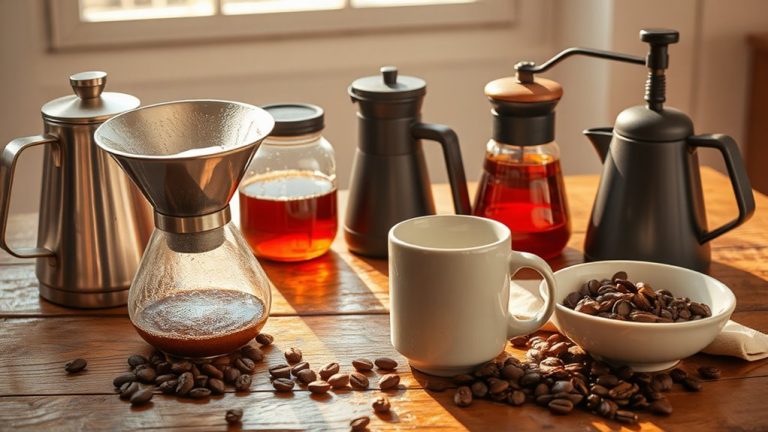
Choose glass or ceramic brewers to maximize aroma in pour over coffee. Glass preserves delicate notes like citrus and floral without absorbing odors, while ceramic retains heat well, supporting steady release of volatile compounds. Avoid low-quality plastic, which can leach chemicals and mute aromas. Stainless steel is durable but may introduce metallic taints. Match your brewer’s material to your flavor goals-clarity with glass, stability with ceramic. You’ll find more details on pairing materials with specific brew styles just ahead.
Notable Insights
- Ceramic brewers offer superior heat retention, promoting consistent extraction and stable release of volatile aromatic compounds.
- Glass brewers preserve delicate floral and citrus notes due to their non-reactive surface and allow visual control of brewing variables.
- High-grade plastics like Tritan minimize chemical leaching but may absorb odors if not cleaned properly, risking aroma contamination.
- Stainless steel brewers provide durability and even heat distribution but may impart metallic notes that mute subtle aroma profiles.
- Match brewer material to shape: use ceramic or glass with tapered cones to enhance vapor rise and aromatic clarity in pour over brewing.
How Brewer Material Shapes Pour Over Aroma
Although you might not think a coffee maker’s material affects aroma, it actually plays a direct role in how volatile compounds reach your nose during brewing. Materials like ceramic retain heat better than plastic or metal, giving a more stable extraction and sharper aroma release. A stable temperature supports consistent grind consistency, which directly impacts aroma intensity-uneven grinds lead to off-notes. Brewer geometry also matters; tapered cones, like in the Hario V60, promote even flow, guiding vapors upward where you can smell them. Wider brewers, such as the Kalita Wave, slow down extraction and may mute volatile compounds slightly. Plastic versions are lightweight and cheaper but can absorb oils over time, dulling aroma. Stainless steel cools too fast, hurting delicate notes. For best results, match your material choice with precise grind consistency and a geometry that supports even blooms and steady pours. The best pour-over coffee drippers balance material, shape, and heat retention to optimize aromatic expression.
Glass Brewers and Aroma: Clarity and Volatility
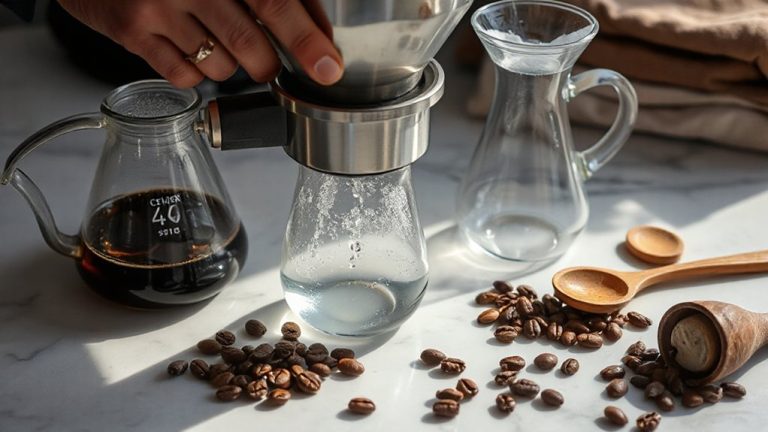
When you’re after bright, clean aromas in your pour over, glass brewers like the Hario V60 or Bonavita 8-cup offer a neutral, non-reactive surface that won’t retain odors or alter scent compounds over time. The glass transparency lets you monitor brew progress visually, helping you spot bloom and flow issues that affect aroma extraction. Because glass doesn’t absorb oils or residues, volatile compounds-like floral or citrus notes-are released more purely. However, glass cools faster than other materials, which can shorten the aromatic window if you’re not careful. Siphon coffee makers, known for their precise temperature control, enhance aromatic expression by maintaining optimal brewing heat throughout the process.
| Feature | Impact on Aroma |
|---|---|
| Non-porous surface | Preserves volatile compounds |
| Glass transparency | Aids in timing and observation |
| Thin walls | Faster cooling, less stability |
| Light weight | Portable but less insulation |
| Easy cleaning | No scent carryover between brews |
Ceramic’s Heat Retention for Stable Aroma Release
Since heat stability plays a key role in how aroma unfolds during brewing, ceramic pour over brewers like the Fellow Stagg X or Kalita Wave 185 help maintain a steady temperature throughout the extraction. Ceramic’s excellent thermal stability reduces rapid heat loss, allowing more consistent aroma release from your coffee grounds. You’ll notice this especially with longer brews, where even temperature keeps volatile compounds evolving smoothly. Unlike glass or plastic, ceramic has low material porosity, meaning it doesn’t absorb odors or residues, preserving flavor clarity over time. It’s also less prone to thermal shock than glass, though heavier and slower to heat up. If you prioritize stable extraction and repeatable aroma profiles, ceramic’s weight and insulation work in your favor. Just preheat it well-its density means it holds temperature better once warmed. For daily use with delicate or aromatic beans, ceramic delivers reliable performance. Top picks like the Fellow Stagg X offer optimized design for enhanced heat retention and brewing precision.
Does Plastic Change Pour Over Coffee’s Aroma?
How could something as simple as your brewer’s material affect the aroma of your pour over? With plastic brewers, it can. Over time, lower-quality plastics may contribute to chemical leaching, especially when exposed to hot water repeatedly. This doesn’t always happen, but repeated use or poor manufacturing increases the risk. These leached compounds can lead to off-notes and flavor degradation, muting the bright, complex aromas you’re after. Even high-grade plastics like Tritan resist this better, but they’re not immune to odor absorption if not cleaned well. Plastic is lightweight and affordable-great for travel or budget setups-but it lacks the thermal stability of ceramic or glass. That fluctuating temperature can further dull aroma release. If you use plastic, hand-wash it gently and replace it if it clouds or smells stale. For consistent aroma, glass or ceramic remains a safer bet.
How Metal Impacts Aroma in Pour Over Brewing
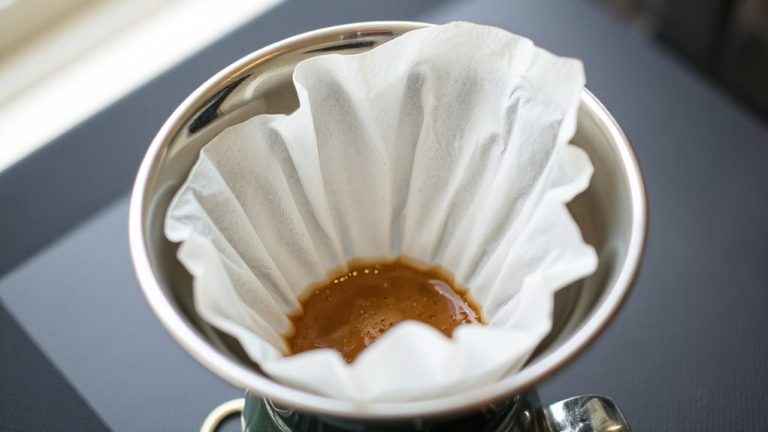
Plastic may leave you wrestling with off-flavors and inconsistent heat, but metal brewers bring their own set of trade-offs when it comes to pour over aroma. Metal porosity isn’t an issue with modern stainless steel filters-you won’t absorb oils like with plastic-but the material can still impact what you smell. Some users report metallic off notes, especially with cheaper alloys or if the brewer isn’t properly passivated. These off notes can mute delicate floral or fruity aromas, dulling the coffee’s complexity. While metal holds heat well, promoting even extraction, that thermal stability doesn’t guarantee better aroma release if the material subtly alters the scent profile. Pour-over cones like the Hario V60 metal or Kalita stainless steel are durable and easy to clean, but you might sacrifice some aromatic purity. If you prefer bright, nuanced coffees, this is worth considering. Not everyone detects metallic off notes, so personal sensitivity matters when choosing your brewer.
Match Your Brew Method to the Best Aroma-Friendly Material
What if your brewer’s material was dulling the very aromas you’re chasing? Your choice directly affects aroma release, and matching it to your brew method matters. Glass and glazed ceramic hold heat well and don’t absorb oils, making them ideal for highlighting delicate floral or fruity notes. Their smooth surfaces won’t interfere with your coffee’s natural scent, especially when paired with soft water chemistry. Stainless steel cools too fast and can mute aromas, though it’s durable. Plastic is lightweight and cheaper but may retain old odors, skewing aroma over time. Brewer design also plays a role-wider brewers like the Hario V60 boost turbulence and aroma dispersion, while narrower ones like the Kalita Wave offer more control. Adjust your material choice based on your water chemistry and desired clarity. For the most aromatic pour over, start with ceramic and tweak from there.
On a final note
Your brewer material affects aroma release in measurable ways. Glass heats quickly but cools fast, risking uneven extraction. Ceramic holds heat well, promoting stable aroma development-ideal for longer brews. Plastic is lightweight and affordable but may absorb oils over time, dulling scent. Metal cools rapidly unless double-walled, potentially muting volatile aromatics. For consistent, expressive aroma, ceramic’s balance of heat retention and neutrality makes it a reliable choice, especially with pour over’s precision demands. Match material to your brewing rhythm.