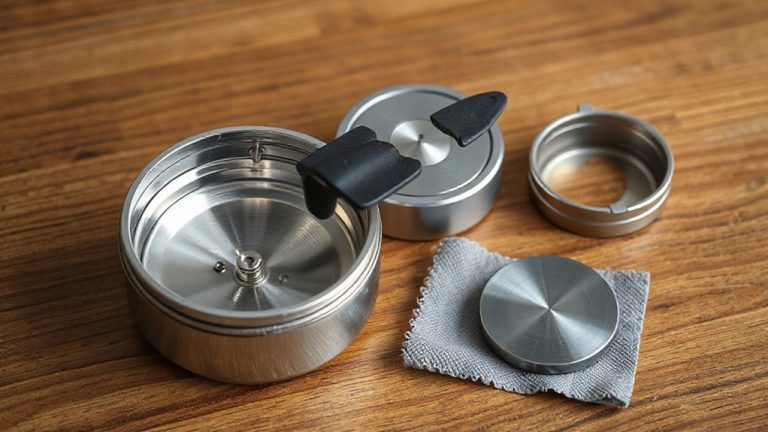
How to Use a Paper Filter in a Metal Filter Pour Over Brewer
Place a paper filter inside your metal pour over basket to get a cleaner cup with less sediment. Use the right size-like a #2 for Hario V60 or #4 for Chemex-so it fits snugly and doesn’t leak. Rinse the paper first to remove any taste and preheat the brewer. Make sure the filter lies flat to avoid clogs and guarantee even flow. If your coffee tastes off or drips too slow, adjust your grind or check the fit-there’s more to get right for consistent results.
Notable Insights
- Place a correctly sized paper filter inside the metal brew basket for a secure, gap-free fit.
- Choose the right shape and size (e.g., #2 cone for V60) to match your pour over brewer.
- Rinse the paper filter with hot water to remove paper taste and preheat the brewer.
- Dampen the filter lightly to help it adhere and prevent shifting during brewing.
- Use a medium-coarse grind to avoid clogs and ensure optimal flow and flavor extraction.
Install a Paper Filter in Your Metal Brew Basket
While your metal filter works fine on its own, slipping a paper filter into the basket can give you a cleaner cup by catching extra fines and oils. Choose a paper filter that matches your brewer’s shape-most metal baskets fit standard #2 or #4 size papers. The paper texture matters: finer textures trap more sediment but may slow flow, risking over-extraction if you don’t adjust grind size. A proper filter fit guarantees the paper stays in place and prevents grounds from bypassing. If the edges curl or gap, tuck them gently to seal against the metal. Rinsing the paper first removes loose fibers and preheats the brewer, improving extraction. Note that combining materials may alter flow rate, so monitor brew time. You’ll likely taste a brighter, lighter body compared to metal alone. This hybrid method gives you more control without replacing your existing setup. Just match the paper to your basket’s dimensions for reliable results. For more precision in your pour over routine, consider using one of the best coffee drippers recommended for consistent brew quality.
Pick the Right Size Paper for Your Pour Over
Most pour over brewers require a specific paper filter size to fit properly, so you’ll want to match the filter to your brewer’s design. Get the wrong size, and it won’t seal right-causing leaks or uneven brewing. Check your brewer’s manual or manufacturer site for the correct number, like a #2 for Hario V60 or a #4 for Chemex. Filter shape matters just as much as size; a cone-shaped brewer won’t work with a flat-bottom filter. Always make certain the paper conforms snugly to the metal basket. Material quality affects performance-thicker papers reduce sediment and resist tearing when wet, while thinner ones may require careful handling. Brands like Hario, Melitta, and Able offer reliable options tailored to specific brewers. Using the correct size and shape improves contact between filter and basket, boosting consistency. Don’t guess-verify compatibility to avoid messy spills or weak coffee.
Get a Cleaner, Brighter Cup With Less Sediment
A paper filter in your metal pour over brewer can give you a noticeably cleaner cup with less sediment than using the metal filter alone. The paper traps fine particles and oils that a metal filter allows through, resulting in a brighter, more nuanced flavor. This clarity lets you better assess factors like water chemistry, since impurities or mineral imbalances won’t be masked by sediment or excess oils. Fresh beans show more of their character-bright acids, floral notes, sweetness-when brewed cleanly. Bean freshness matters even more here because any stale or oxidized flavors become more obvious without the masking effect of a metal filter. Just know that paper filters absorb some oils, which some drinkers prefer but others find a bit too restrained. Still, if you want clarity and less grit in your cup, paper’s a simple upgrade that works. For best results, use a coarse coffee grind to prevent over-extraction and ensure optimal flow through the filter.
Avoid Clogs: Secure the Paper Properly
Your paper filter’s fit matters-if it’s not seated right, you’ll likely face clogs or overflow during brewing. Proper filter alignment prevents shifting when pouring, which keeps water flowing evenly. If the filter lifts or folds, grounds can sneak under it, blocking drainage. Make sure the paper lies flat against the metal filter’s base and sides. A little moisture helps with paper adhesion-lightly dampen the filter before adding coffee to help it stick. This reduces slippage and maintains consistent contact. Some users find folded-edge filters like Hario #02 or Able Kone Paper work better in metal baskets due to their shape. Avoid crumpling or double-layering unless required by your brewer’s design. When the paper is secure, water travels through the coffee bed as intended, not around it. A stable filter means fewer interruptions and a smoother brew from start to finish.
Fix Flow and Taste Issues Fast
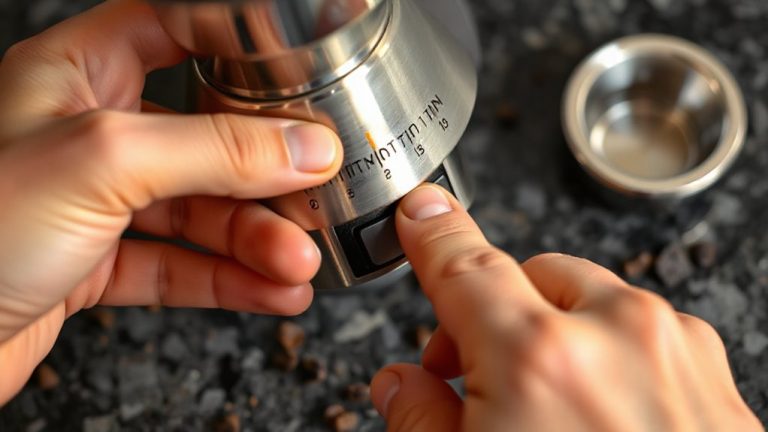
If you’re noticing slow drips or bitter flavors, start by checking your grind size-too fine a grind often causes clogs and over-extraction, especially in setups like the Able Kone or Hario V60 with metal filters. Adjusting to a medium-coarse grind can improve flow and shorten brew time, which should ideally stay between 2:30 and 3:30 minutes. If your coffee tastes weak or sour, your water temperature might be too low-aim for 195°F to 205°F for proper extraction. Paper filters help, especially if your metal filter lets sludge through, but they can slow flow if not seated right. Make sure the paper lies flat against the metal mesh with no gaps. Rinsing the paper first removes paper taste and preheats the brewer, stabilizing water temperature. Small tweaks in grind, brew time, and heat make a big difference-adjust one at a time and test. For consistent results, consider using one of the best grinders for filter coffee.
On a final note
Use a paper filter in your metal pour over basket when you want a cleaner cup with less sediment and improved clarity. It’s simple: just pick the right size-like a #2 for a Kalita Wave or #4 for a large Chemex-style brewer-fit it snugly, and guarantee the edges are sealed to prevent bypass. Paper filters trap finer particles and oils, which can reduce bitterness but slightly mellow body. They clog less than metal if you grind correctly and pour steadily. Replace the paper after each brew. While it adds minimal cost and waste, you gain consistency, especially with medium to light roasts. It’s a practical fix for off-flavors or uneven extraction.