A Deep Dive Into the Sweet, Wine-Like Profile of Java Arabica Coffee Beans
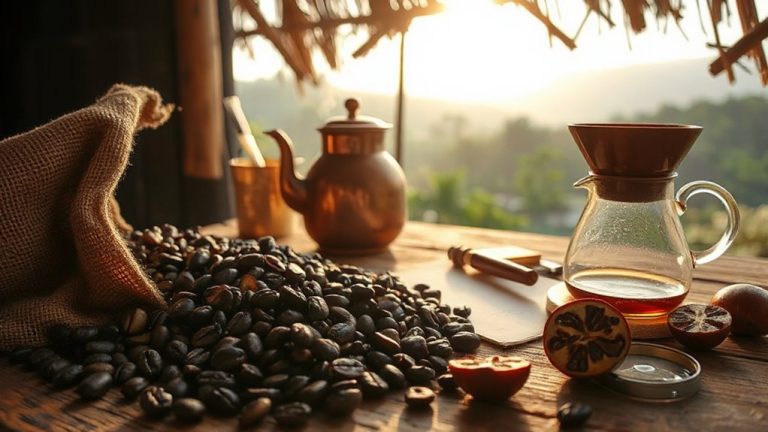
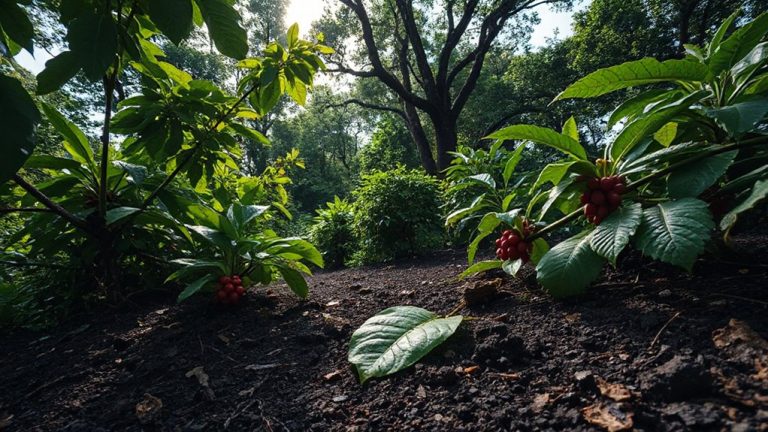
You get a sweet, wine-like cup from Java Arabica because high-altitude farms grow dense beans with bright acidity, while volcanic soil adds minerals that boost sugar development. Natural or honey processing with extended drying enhances berry and wine notes through controlled fermentation. For the clearest flavor, use a medium roast and brew with a gooseneck kettle in a Hario V60-this method highlights the nuanced, fruity complexity you’re after. The right conditions reveal layers worth exploring.
Notable Insights
- High-altitude growing conditions in Java produce dense, slowly maturing Arabica beans with bright acidity and enhanced flavor complexity.
- Volcanic soils in regions like Ijen enrich Java Arabica with minerals that boost sugar development, yielding a syrupy body and subtle fruitiness.
- Natural processing methods, involving 10–15 days of drying with pulp intact, intensify wine-like and berry notes through extended fermentation.
- Natural fermentation during drying promotes yeast activity that creates complex esters, delivering flavors such as blueberry, raisin, and port wine.
- Medium roasting and pour-over brewing preserve acidity and sweetness, optimally expressing the wine-like, floral, and fruity traits of Java Arabica.
Why Java Arabica Tastes Like Wine
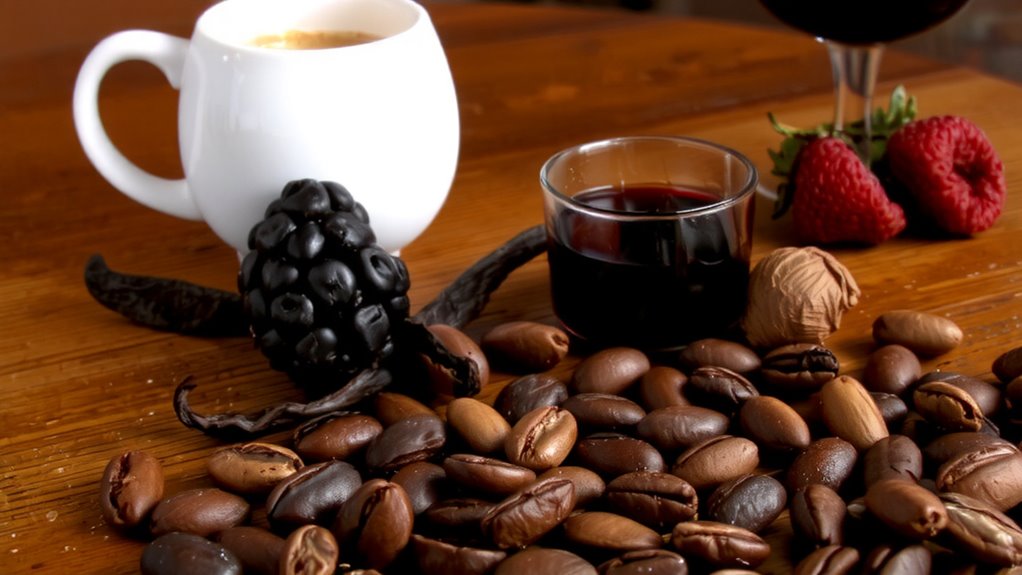
What if the secret to your coffee’s wine-like taste isn’t marketing hype but altitude and soil? You’ll notice it the first time you brew high-grown Java Arabica-there’s a brightness, almost like white wine, shaped by cool mountain air and slow bean development. This extended maturation boosts sugar complexity, giving rise to a floral aroma often compared to jasmine or bergamot. When brewed right-say, with a pour-over or precision electric kettle-you’ll catch a clean citrus finish, like grapefruit or lime, that lingers just enough. Light to medium roasts preserve these delicate notes better than dark roasts, which can overpower them. If you’re chasing that wine-like profile, skip inexpensive pre-ground bags; fresh, whole beans from high elevations are key. Quality matters, and so does grind consistency.
How Volcanic Soil Boosts Sweetness and Depth
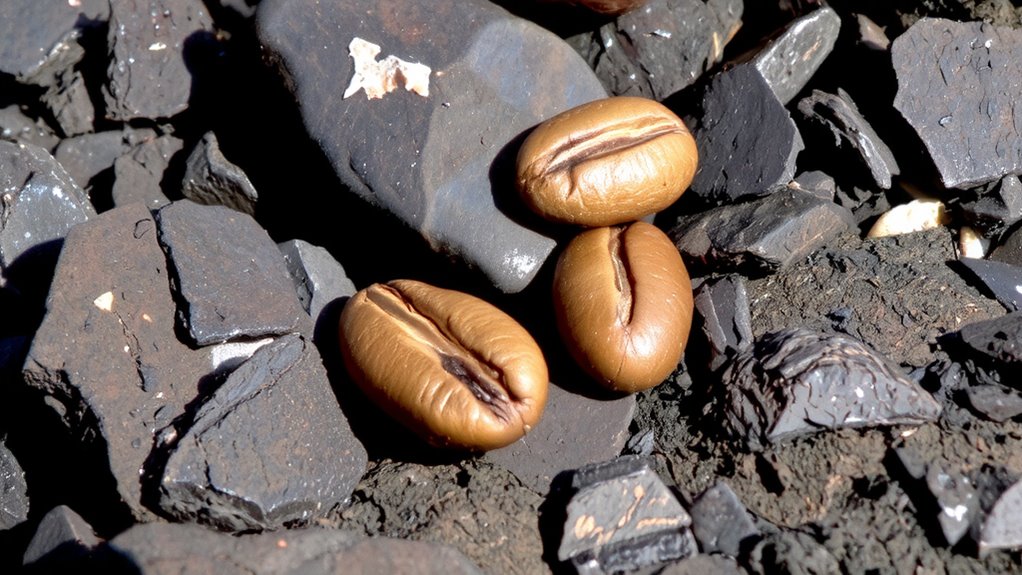
While elevation shapes acidity, it’s the volcanic soil that gives Java Arabica its signature sweetness and depth. You’ll notice this in the cup as a smooth, syrupy body and subtle fruity tones. That’s because volcanic soil composition is packed with mineral richness-like potassium and magnesium-that coffee roots absorb easily. These minerals don’t just support plant health; they influence sugar development in the beans during growth. Regions like Ijen and Dieng, built on ancient volcanic fields, produce beans with deeper, more layered profiles than those grown in less fertile ground. Compared to sedimentary soils, volcanic types drain well but retain enough moisture to support steady nutrient uptake. If you’re sourcing beans, check the origin details-volcanic terroir is a reliable indicator of complexity. For roasting, go for medium to highlight sweetness without overwhelming the bean’s natural balance.
High Altitude and Cool Climate: Keys to Bright Acidity
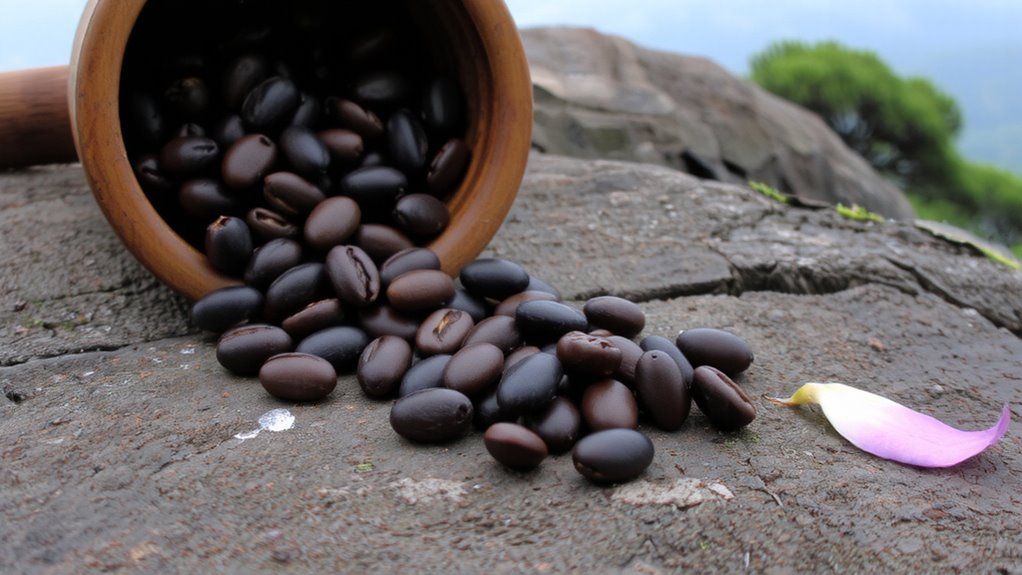
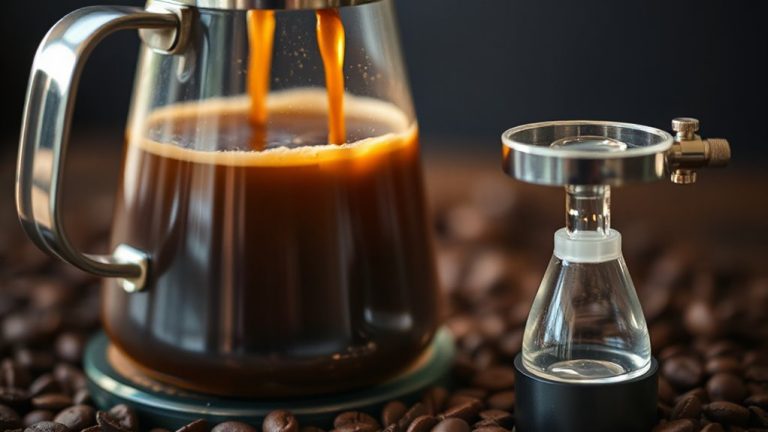
When you brew Java Arabica grown at high altitudes, you’ll notice a brighter, cleaner acidity that cuts through the cup-especially when the beans come from regions above 1,200 meters. The cool temperatures slow bean development, leading to denser seeds and better flavor preservation. This slower maturation helps build complex acids, giving the coffee its lively, crisp character. High-elevation farms also benefit from strong microclimate influence-shifts in temperature between day and night help lock in sugars and acids. You’ll find consistent results using a gooseneck kettle and medium grind to highlight this brightness without over-extraction. While lower-altitude beans can taste flat, high-grown lots deliver clarity, especially in pour-over or Chemex brewing. The trade-off is lower yield and greater farming difficulty, but the payoff is a more structured, vibrant cup worth the extra cost. For precision in pour-over brewing, consider using a gooseneck electric kettle designed to control water flow.
How Processing Brings Out Berry and Wine Notes
You’ve seen how high altitude sharpens the acidity of Java Arabica, but once the cherries are picked, the real flavor transformation begins with processing. The method you choose shapes whether those berry and wine notes shine. Natural processing, where beans dry inside the cherry, often uses wild yeast during fermentation, enhancing fruity complexity. Extended drying times-usually 10–15 days-allow subtle flavor development, but demand precise climate control to avoid spoilage. Washed processing gives cleaner profiles, while honey-processed beans sit in between.
| Method | Drying Time | Flavor Influence |
|---|---|---|
| Natural | 10–15 days | Berry, wine, wild yeast |
| Washed | 3–5 days | Bright, clean, less fruit |
| Honey (Wet-hull) | 6–8 days | Sweet, mild wine notes |
Extended drying demands attention-but rewards with depth.
Natural Fermentation’s Role in Flavor Complexity
If you want deeper fruit and wine tones in your cup, natural fermentation during processing plays a key role. When coffee cherries are left intact after harvest and dried before hulking, the prolonged contact between bean and pulp allows natural yeast activity to develop. This yeast activity slowly breaks down mucilage, driving sugar conversion over days or even weeks. The result? More complex esters and organic acids that translate to richer, wine-like flavors in the brew. Unlike washed processing, where fermentation is shorter and more controlled, natural fermentation is less predictable but capable of yielding more intense sweetness and depth. You’ll often notice blueberry, raisin, or port-wine notes in these beans. However, it’s riskier-over-fermentation can lead to off-flavors. For best results, monitor temperature and humidity closely during drying. This method thrives in stable, dry climates.
Roasting Java Arabica for Brightness and Sweetness
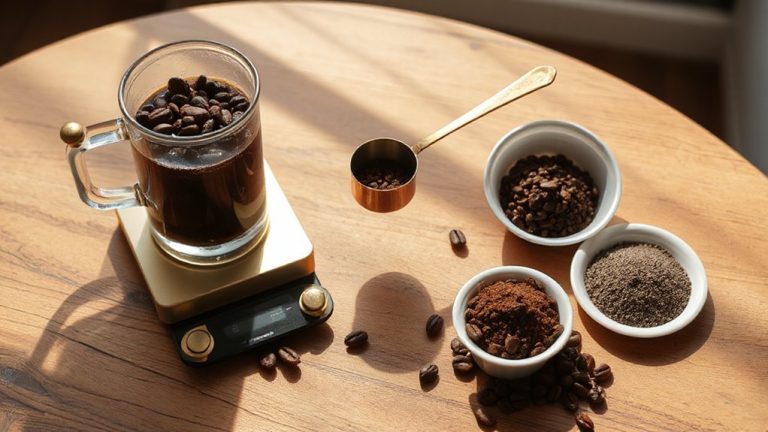
Natural fermentation shapes the raw flavor potential of Java Arabica, but roasting determines how much of that sweetness and brightness actually makes it into your cup. To preserve these delicate traits, you need roast precision and an understanding of bean density. Java beans are dense, meaning they retain heat longer and can handle a slightly longer roast-but push too far, and you’ll mute the bright, wine-like edges. A medium roast usually hits the sweet spot, lifting acidity while revealing caramelized sugar notes. Use a roaster with even heat control, like the Hottop or Poppery II, for consistent results. For the most accurate roast profiling, pairing your roaster with a scale that offers best coffee scales for perfect brewing ensures batch-to-batch consistency.
| Roast Level | Brightness | Sweetness |
|---|---|---|
| Light | High | Medium |
| Medium | Medium-High | High |
| Dark | Low | Low |
Tasting the Wine-Like Notes in Java Arabica
What makes certain coffees mimic the profile of a bright pinot noir? With Java Arabica, it’s the high-altitude growing conditions and careful processing that develop its wine-like acidity and layered complexity. When you brew it using a pour-over like the Hario V60 or Chemex, you’ll notice the floral aroma first-think jasmine or bergamot-followed by a smooth, bright acidity reminiscent of red berries. As it cools, those nutty undertones, like roasted almonds or hazelnut, begin to emerge, adding depth without overpowering the cup. A medium grind size and water just off the boil (around 200°F) help balance these elements. Compared to darker roasts, which mute acidity, a light to medium roast preserves the bean’s natural brightness. If you’re chasing those wine-like notes, avoid French press-it’s too harsh here. Instead, stick with precision brewers that highlight clarity and subtle flavor shifts. For optimal results, consider using one of the best pour-over coffee makers designed to enhance delicate flavor profiles.
On a final note
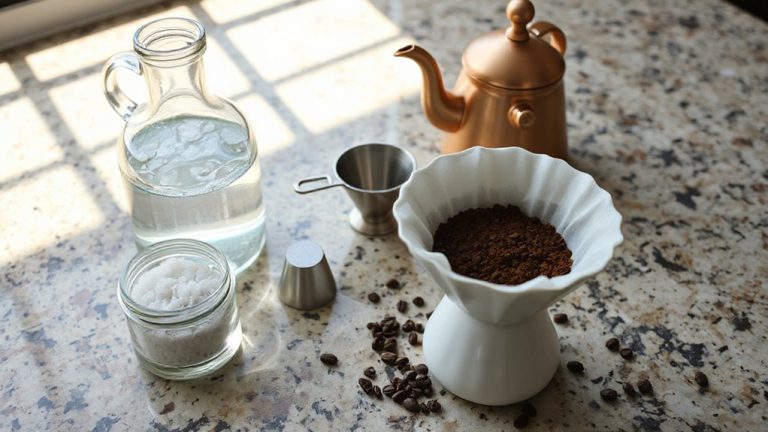
You’ll get the best wine-like flavors from Java Arabica when you brew it just off medium roast-too dark, and you lose the bright berry notes. Use a pour-over or Aeropress to highlight its acidity and sweetness. Freshly grind your beans and stick to filtered water for cleaner taste. Volcanic soil and high-altitude growing give it depth, but proper brewing makes those notes shine.