Enhance Your Cold Brew Process Through Controlled Steeping Time, Temperature, and Consistency for Richer Taste Profiles
Steep your cold brew for 12 to 16 hours-any longer and it turns bitter as oxygen dulls the bright notes. Use water between 40–60°F for a smooth, less acidic result. Grind your beans evenly with a burr grinder; too fine causes harshness, too coarse gives weak flavor. Try a 1:5 ratio for light roasts, 1:3 for darker ones. Stick to glass or stainless steel containers, and track your variables-each small tweak sharpens the outcome. Master these steps, and you’ll uncover even finer adjustments that refine your brew further.
Notable Insights
- Steep cold brew for 12 to 16 hours to achieve balanced extraction and avoid weak or bitter flavors.
- Use water between 40–60°F (4–15°C) to slow extraction and preserve sweetness and clarity in the brew.
- Grind coffee uniformly with a burr grinder to ensure consistent extraction and reduce over-extraction risks.
- Adjust coffee-to-water ratios by roast type-1:5 for light roasts, 1:3 for dark roasts-for optimal strength and flavor.
- Brew in glass or stainless steel containers and record variables to maintain consistency and troubleshoot flavor issues.
Why Steeping Time Makes or Breaks Cold Brew
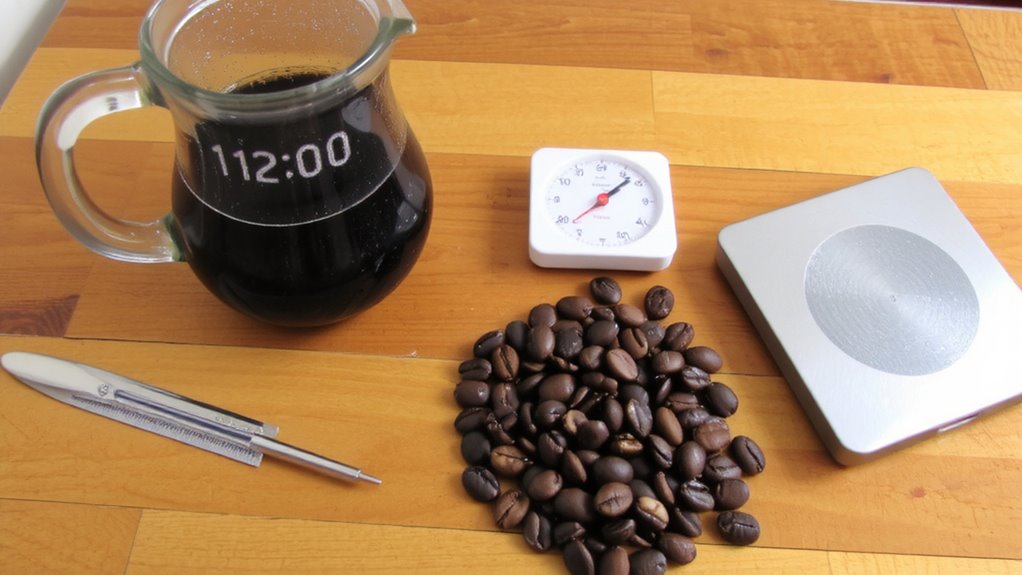
How long should you let your coffee steep? Too short, and your cold brew tastes weak; too long, and it grows bitter. Most experts agree 12 to 16 hours strikes the best balance-long enough to extract flavor, not so long that you invite problems. You’re not just drawing out oils and caffeine; you’re also increasing oxygen exposure the longer the grounds soak. That extra contact can dull the bright notes in fresh beans, so timing matters. If you’re using freshly roasted beans with high bean freshness, aim closer to 12 hours. Older beans may need more time, but risk flat, stale flavors due to oxidation. Use an airtight container to reduce oxygen exposure during steeping. Whether you use a French press, mason jar, or dedicated cold brew maker, consistency in time and setup improves results. Stick to a routine, and you’ll get a smoother, more predictable cup every time. A well-designed cold brew coffee steepers system can further optimize extraction and minimize sediment in your final brew.
How Water Temperature Changes Cold Brew Flavor
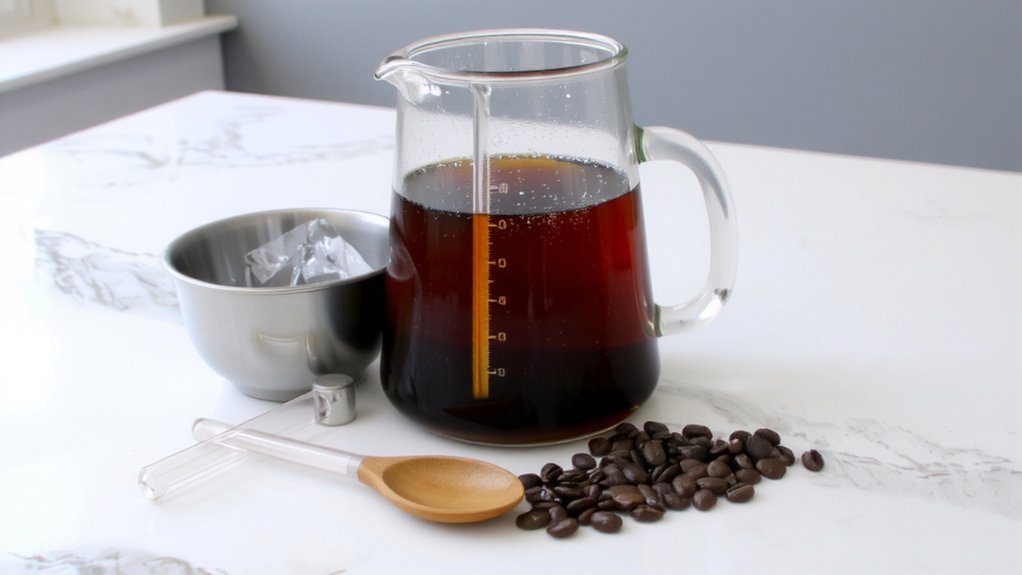
You’ve got your steep time dialed-somewhere between 12 and 16 hours, depending on bean age and desired strength-but that’s not the only variable shaping your cold brew. Water temperature plays a key role in flavor, even in cold brewing. Using cold or room-temperature water slows extraction, giving a smoother, less acidic concentrate. Warmer water increases water density slightly and speeds up extraction, risking over-extraction if not monitored. That disrupts the extraction balance, pulling out bitter compounds often avoided in cold brew. For consistent results, stick to refrigerated or cool tap water-around 40–60°F (4–15°C). Room-temperature brews can work in a pinch but may require shorter steep times. Avoid warm water unless you’re experimenting intentionally. Keeping temps low preserves sweetness and clarity, helping you achieve that clean, rich profile cold brew is known for. Portable brewing gear like a best portable coffee maker can maintain optimal steeping conditions even during outdoor adventures.
Why Grind Size Controls Smoothness and Bitterness
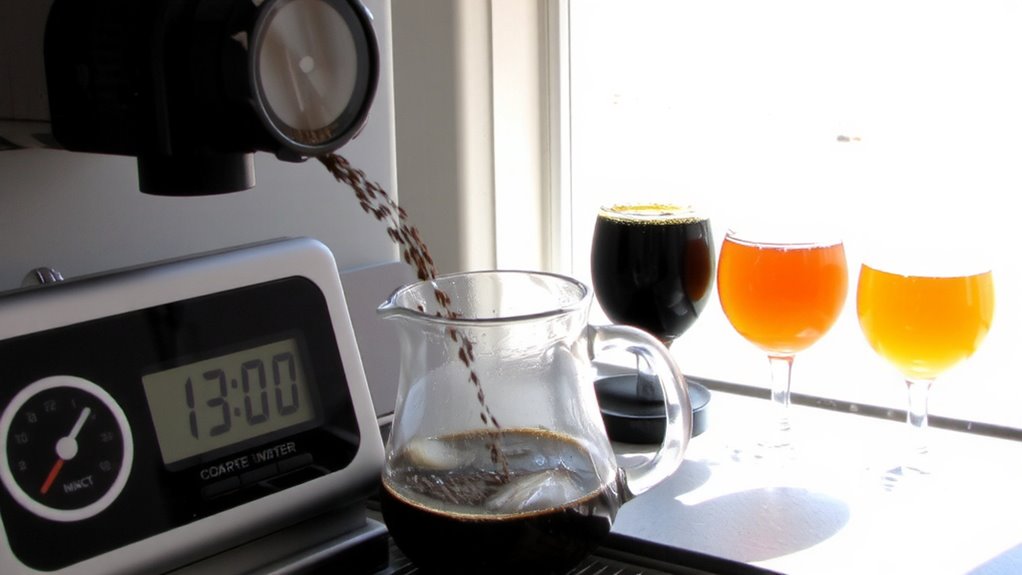
Grind size isn’t just a detail-it’s a deciding factor in how smooth or bitter your cold brew turns out. Too fine, and you’ll over-extract, pulling out harsh compounds; too coarse, and your brew lacks depth. Grind uniformity guarantees consistent extraction, preventing some particles from turning bitter while others stay underdeveloped. Uneven grounds also increase particle oxidation, degrading flavor faster during steeping. A high-quality burr grinder ensures precise, consistent particle size essential for balanced cold brew. Choose a burr grinder for better uniformity-blades create erratic particles. Keep beans fresh and grind right before steeping to minimize oxidation. Your grind directly shapes smoothness and bitterness, so treat it like a control knob, not an afterthought.
Dialing in Your Ideal Cold Brew Ratio
What if your cold brew’s strength and smoothness came down to just two numbers? Your ideal ratio-beans to water-shapes the entire profile. Start with 1:4 for a concentrate or 1:8 for ready-to-drink, adjusting based on bean origin and your brewing vessel. Lighter roast beans from Ethiopia might shine at 1:5, offering floral notes without harshness, while a full-bodied Sumatran works better at 1:3 to enhance richness. Glass jars, stainless steel dispensers, or DIY setups all work, but consistent mixing matters-stir well after adding water. Too strong? Dilute later, not during brewing. Too weak? Increase grounds, not steep time. Your brewing vessel’s shape affects saturation, so go for wide, shallow containers when possible. Dial gradually, record each change, and taste after chilling-flavor shifts when cold. This is how you fine-tune reliably, cup after cup.
Fixing Common Cold Brew Taste Problems
Why does your cold brew sometimes taste flat, bitter, or strangely dull? You might be overlooking your brew vessel material or filtration method. Glass or stainless steel keeps flavors neutral, while plastic can retain old odors and subtly alter taste over time. If your brew tastes off, switch to a non-reactive vessel. Your filtration method also matters. Paper filters often produce cleaner, brighter cold brew but can clog and slow draining. Mesh filters allow more oils through, adding body but possibly leaving sediment. A fine-mesh metal filter gives control and durability, while a paper filter offers ease and clarity. If your cold brew tastes bitter, you could be over-extracting-reduce steep time. If it’s weak, check grind size and water quality. Adjust one variable at a time, and note what changes. Practical tweaks to gear and process fix most flaws.
How to Repeat Your Best Cold Brew Every Time
Once you’ve sorted out flavor issues from gear or process, the next step is consistency-making that great batch again without guesswork. To do that, lock in your variables: use the same grind size, coffee-to-water ratio, steeping time, and temperature every time. Your brew vessel material matters-glass won’t absorb flavors or odors like plastic can, so it’s more reliable long-term. If you’re using stainless steel, guarantee it’s food-grade to avoid metallic taints. Your filtration method also impacts reproducibility. A paper filter gives a cleaner brew but slows drainage; a metal mesh filter lets more oils through, adding body but possibly sediment. Whichever you prefer, stick with it. Record each batch’s specs, especially steep time and water temp. That way, when you nail the flavor, you’ll know exactly how to repeat it-no luck required.
On a final note
You now control the key factors: time, temperature, grind, and ratio. Stick to a consistent routine-12–16 hours steeping, cold filtered water, medium-coarse grind (like coarse sand), and a 1:8 coffee-to-water ratio. Use a simple mason jar or dedicated cold brew maker. Adjust only one variable at a time. That way, you’ll replicate your best batch precisely, every time.