Understanding How Different Grind Sizes Affect Espresso Crema Texture and Flavor Complexity
You need the right grind size for good crema and balanced flavor. A finer grind slows water, boosting crema thickness and extraction, but too fine causes bitterness and channeling. Go too coarse, and your shot runs fast, yielding thin crema and sour taste. Adjust gradually using a quality burr grinder-models like the Breville Barista Express help maintain consistency. Fresh beans, proper dose, and clean water matter too. Get it right, and you’ll pull shots with rich texture and clarity-there’s more to fine-tuning that can refine your results even further.
Notable Insights
- A finer grind increases extraction pressure, resulting in thicker, more stable crema due to slower water flow and better CO₂ retention.
- Overly fine grinds cause over-extraction, leading to bitter flavors despite producing rich-looking crema.
- Coarser grinds reduce resistance, causing under-extraction with sour, weak espresso and thin, pale crema.
- Uniform grind size from a burr grinder ensures even extraction, enhancing both crema texture and flavor balance.
- Proper “dialing in” adjusts grind size to achieve a 25–30 second extraction, optimizing crema and taste.
Define Espresso Crema and Grind’s Role
Crema-the golden-brown layer topping a well-pulled espresso shot-is your first clue to a good brew. It forms during extraction when high pressure forces hot water through finely ground coffee, trapping gases and oils into a rich, stable foam. Proper crema formation signals fresh beans and correct technique. One key factor? Grind consistency. If your particles vary in size, some over-extract while others under-extract, disrupting flow and weakening crema. A quality burr grinder delivers even granules, promoting balanced extraction and a uniform layer of crema. Blade grinders, in contrast, often create uneven grounds, hurting both flavor and texture. For reliable results, aim for consistency over extreme fineness. Your machine and beans matter, but without consistent particles, crema won’t stand a chance. Adjust your grind only after dialing in fresh beans and clean equipment. Investing in one of the best coffee grinders under $500 can significantly improve grind uniformity and overall espresso quality, especially those featuring high-quality burr grinder mechanisms.
Use a Finer Grind for Thicker Crema
While crema quality depends on several factors, adjusting your grind size is one of the most effective ways to increase its thickness. When you use a finer grind, the coffee particles pack more tightly in the portafilter, slowing water flow and increasing extraction pressure. This boosts crema density, giving you a richer, more stable layer of golden foam. A finer setting also helps trap more carbon dioxide, which is essential for forming that dense, long-lasting crema. You’ll notice improved texture and a slight enhancement in flavor balance, as more compounds dissolve evenly during extraction. Just make sure your machine-like a Breville Barista Express or Lelit Bianca-can maintain consistent pressure. Too fine can cause issues, but properly dialed in, a finer grind sharpens both crema density and the overall sensory profile, contributing to a more satisfying shot. Home roasters often achieve better crema consistency by using freshly roasted beans from a manual coffee roaster.
Avoid Bitter Shots From Too Fine a Grind
One common mistake when chasing thick crema is going too fine with your grind setting, which can lead to over-extraction and bitter shots. When the grind is too fine, water pressure struggles to move evenly through the puck, increasing the risk of grind channeling-where water finds weak paths, extracting some areas too much while under-extracting others. This imbalance produces harsh, astringent flavors even if the crema looks rich.
Here’s what happens at different grind settings:
| Grind Size | Effect on Extraction |
|---|---|
| Too fine | Bitter taste, slow flow, high channeling risk |
| Ideal | Balanced flavor, steady 25–30 sec pull time |
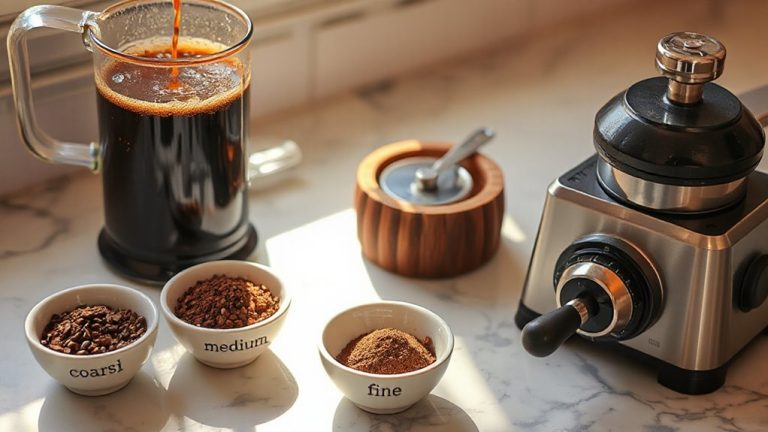
Dialing in the right grind takes trial and adjustment. Use a consistent espresso machine like the Breville Barista Express or Rocket Appartamento to control water pressure and monitor results. Aim for a grind that allows full extraction without forcing the pump. Achieving the ideal grind size for espresso ensures optimal resistance and even extraction for balanced flavor and crema.
Prevent Under-Extraction With a Coarser Grind
Going too fine isn’t the only issue-going too coarse can be just as problematic, leading to weak, sour shots from under-extraction. When your grind is too coarse, water pressure moves through the puck too quickly, failing to extract enough flavor. You’ll notice a thin crema and sharp, acidic taste-signs the coffee didn’t have enough resistance. Fresh bean freshness makes this worse; highly active CO2 in recently roasted beans can create channeling if the grind doesn’t slow water flow. To fix this, adjust your grinder to a slightly finer setting, increasing surface area for better extraction. But don’t overcorrect-aim for balance. Machines with stable water pressure, like those with vibratory or rotary pumps, help maintain consistency. Always tweak gradually and pull test shots. A properly tuned grind improves crema texture and deepens flavor without tipping into bitterness or sourness.
Dial in the Ideal Espresso Grind Size
How do you know when your grind is just right? You’ll see a steady 25–30 second extraction with a rich, honey-thick pour and a crema that’s brown with just a touch of gold. If it’s too fast or thin, go finer; too slow or bitter, go coarser. Always test in small steps after changing the setting. Remember, grind age matters-stale grounds absorb moisture and extract unevenly, hurting flavor. Freshly ground is best. Also, bean temperature affects consistency. Cold beans, straight from the fridge, can cause static and clumping, throwing off dosing. Let them warm slightly before grinding. Machines like the EK43 or Niche Zero handle fine adjustments well. Track your settings, but stay flexible-humidity and roast age shift results. Adjust gradually, not all at once. It’s not magic; it’s method.
Adjust for Machine and Dose Variables
Your espresso machine and dose size play a bigger role than you might think in pulling a balanced shot. Even with the perfect grind, poor machine calibration can throw everything off-uneven heating or pressure fluctuations lead to inconsistent extraction. Machines like the Lelit PL41TEM or Rocket R58 require regular checks to maintain stable performance. Dose consistency is equally critical; varying your coffee dose by even half a gram disrupts the shot’s balance. Use a precise scale and the same portafilter basket to maintain uniformity. If your machine lacks built-in temperature control, consider preheating longer or using blind baskets for stability. Always dial in your grind after adjusting dose or machine settings, not before. These variables shape extraction just as much as grind size, so treat them with equal attention for reliable, high-quality espresso.
Fix Common Crema Problems From Grind Mistakes
While grind size might seem like a small detail, it directly shapes the quality of your espresso’s crema-too fine and you risk over-extraction with dark, blotchy crema, too coarse and the shot runs too fast, leaving you with thin, pale foam that dissipates quickly. You can fix most crema issues by adjusting your grind in small increments. If your crema is thin or bubbly, try a finer grind; if it’s dark or bitter, go coarser. Don’t overlook grind age oxidation-older grounds lose CO₂, weakening crema formation. Use freshly ground coffee for best results. Water quality minerals also matter; soft or distilled water lacks the minerals needed for proper extraction and crema stability, while overly hard water can clog machines. Aim for balanced mineral content-brands like Third Wave Water offer tailored espresso mineral packets. Pair consistent grind size with fresh beans and proper water, and you’ll see real improvement in crema texture and flavor clarity.
On a final note
You’ll need the right grind size to get good crema and balanced flavor. Too fine, and your shot turns bitter; too coarse, it’s weak and thin. Aim for a texture like wet sand-consistent and fine. Adjust based on your machine: lower pressure machines may need finer grinds, while high-end ones handle slightly coarser. Change one variable at a time-dose, grind, tamping-and track results. A quality burr grinder makes dialing in easier and more precise.