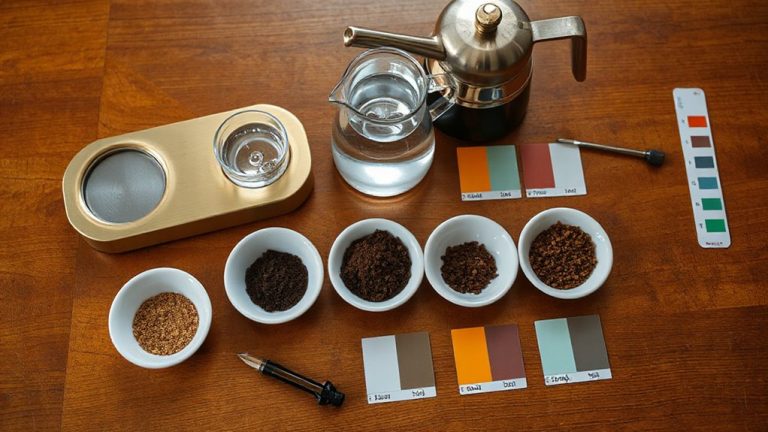
Achieving the Ideal Extraction Ratio for French Press Using Grind Size Adjustments
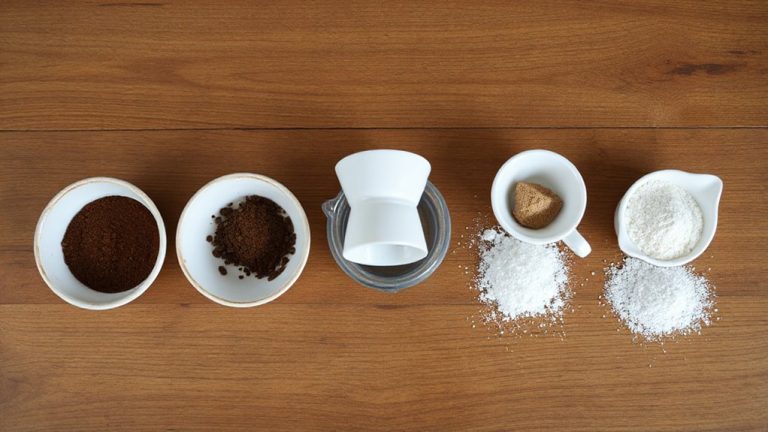
Your French press coffee’s balance hinges on grind size. Too fine, and you’ll get bitter over-extraction, especially with hot water above 205°F. Too coarse, and the brew stays sour or weak from under-extraction. Aim for a medium-coarse grind, like coarse sea salt, to match the 4-minute steep. Use a burr grinder for consistency. Adjust slightly based on roast-lighter beans may need finer settings. Get this right, and you’re closer to the ideal extraction every time.
Notable Insights
- Use a medium-coarse grind, like coarse sea salt, to balance extraction and avoid bitterness or sourness.
- Adjust grind size based on roast: finer for light roasts, coarser for dark roasts to match solubility.
- Ensure grind consistency with a burr grinder to prevent over-extracted fines and under-extracted boulders.
- Pair grind size with water temperature between 195°F and 205°F for optimal compound extraction.
- Fine-tune grind incrementally and record results to hit the ideal extraction ratio for your beans.
Why Your French Press Coffee Tastes Bitter or Sour
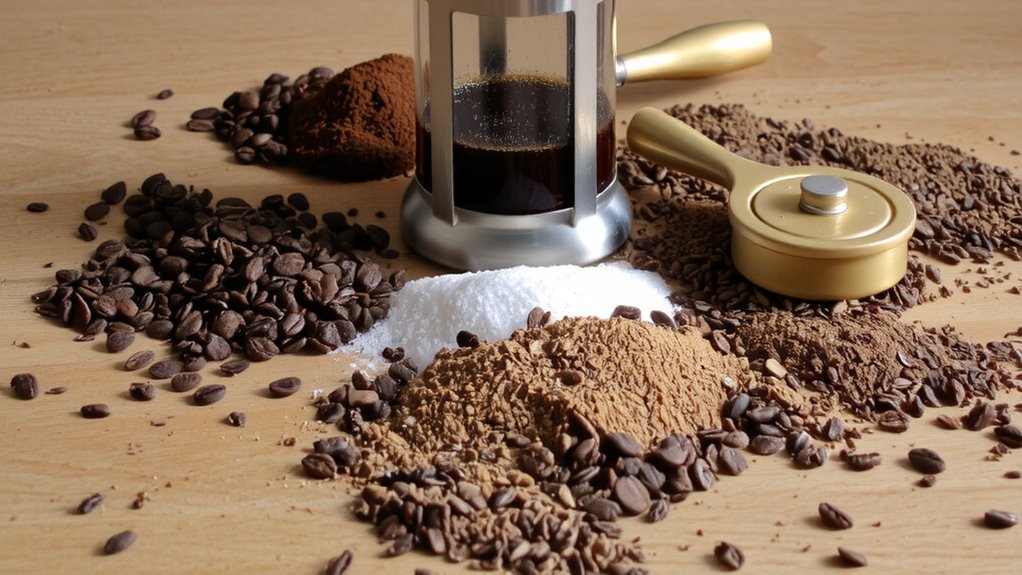
Brewing coffee in a French press seems simple, but getting it right means paying attention to a few key factors-especially your extraction ratio. If your coffee tastes bitter, it’s likely over-extracted, often due to water that’s too hot-keep brew temperature between 195°F and 205°F. Water that’s hotter can scald the grounds, pulling out harsh flavors. On the other hand, sour coffee usually means under-extraction, commonly from water that’s too cool or brew time too short. Don’t overlook water quality-spring water works well, but avoid distilled or heavily chlorinated tap water, as they hurt flavor clarity. Hard water can mute acidity, while soft water may exaggerate bitterness. You don’t need fancy gear, but using a thermometer and filtered water gives consistent results. Adjusting these variables helps you hit the sweet spot: balanced, rich coffee without sharp edges. For even better results, consider starting with one of the top-rated best French press picks based on durability, ease of use, and consistent brewing performance.
Is Your Grind Too Fine? How It Causes Over-Extraction
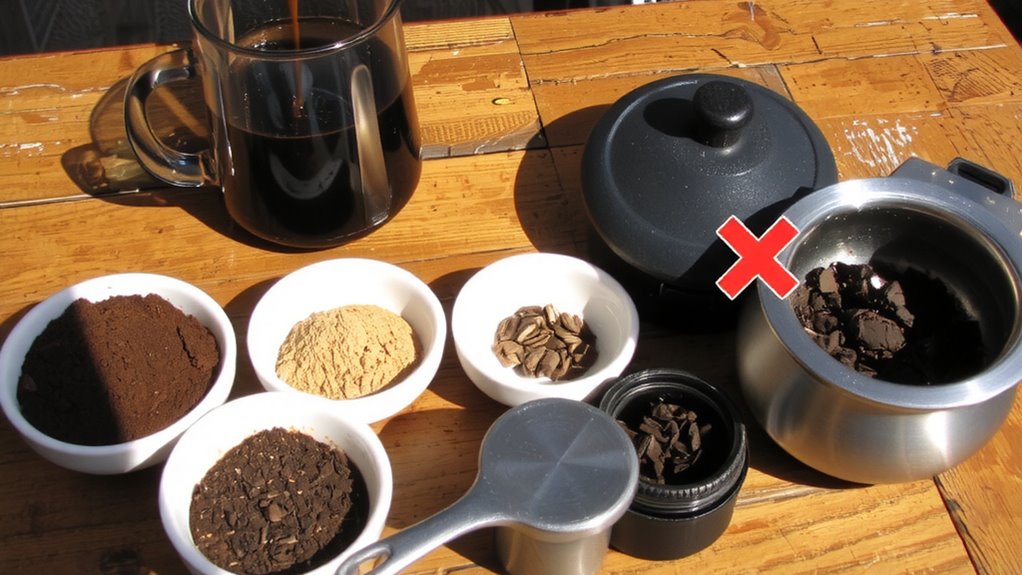
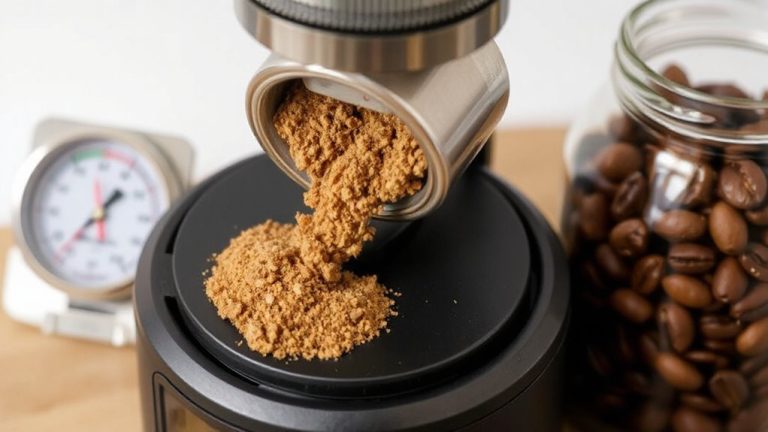
Your water temperature and brew time matter, but if you’re still getting bitter coffee, the real issue might be hiding in your grinder. When your grind is too fine, it increases surface area, speeding up extraction and often leading to over-extraction. This means undesirable bitter compounds are pulled too aggressively, especially in the French press’s full-immersion setup. Even with ideal brewing time-typically 4 minutes-over-extraction can ruin your cup if the particles are uneven or overly fine. Poor grind consistency from low-quality burr or blade grinders creates a mix of fines and dust that extract too fast, while larger particles lag. A consistent medium-coarse grind, like coarse sea salt, balances extraction. Adjust your grinder settings to avoid powdery results. If your coffee tastes harsh or medicinal, it’s likely not your beans or brew time-your grind size and consistency need attention. Monitoring your beans’ moisture content with a reliable coffee bean moisture meter can help ensure optimal grind performance and extraction.
Is Your Grind Too Coarse? Fixing Under-Extracted Coffee
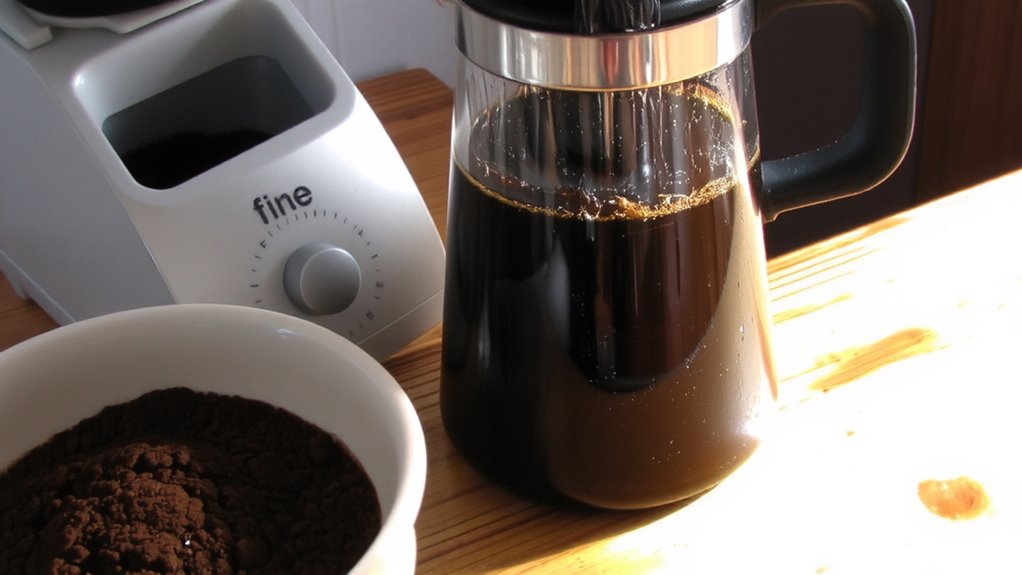
Why does your French press coffee taste weak or sour, even when you follow the standard 4-minute brew time? Your grind is likely too coarse, leading to under-extraction. When particles are too large, water passes through without pulling enough flavor, leaving a thin, sour cup. A coarse grind may seem ideal to avoid sediment, but without proper grind consistency, you lose flavor balance. Try adjusting to a medium-coarse setting-like sea salt-for better results. Also, guarantee your water temperature stays between 195°F and 205°F; too cool, and extraction suffers further. A gooseneck kettle helps control this. Fixed blade grinders often create uneven particles, so a burr grinder improves consistency. Fixing under-extraction isn’t just about grind size-grind consistency and water temperature work together. Make both adjustments, and your coffee will taste fuller, sweeter, and more complete. For better control over grind size and uniformity, consider using a manual burr grinder.
What Extraction Means for Your French Press Brew
Extraction is the quiet force behind every cup, pulling flavors from coffee grounds into your brew. You control how much comes out based on time, grind, and water temperature. If your French press coffee tastes weak or sour, you’re likely under-extracted-some acids come out, but sugars and deeper notes don’t. Over-extraction brings bitterness because too many compounds dissolve, especially with prolonged steeping or water temperature above 205°F. Ideal extraction balances flavor clarity and body, giving you full brew strength without harshness. Freshly ground beans help, but even perfect grind can’t fix poor temperature control. Use water just off boil-around 195°F to 205°F-for best results. This range promotes even extraction without scalding the coffee. Your French press soaks grounds completely, so proper extraction means richer, cleaner cups with each use. You’ve got the control-use it wisely.
How to Adjust Grind Size for Balanced Coffee
A consistent grind size directly shapes how evenly your coffee extracts, and it’s just as important as water temperature when aiming for balanced flavor. Your bean origin affects density and oil content, so adjusting grind size helps match the brew temperature and extraction needs. Lighter roasts from high-altitude regions often need a finer grind to offset their hardness, while darker, oily beans do better coarser to avoid over-extraction.
| Grind Size | Best For |
|---|---|
| Coarse | Soft water, dark roasts |
| Medium-Coarse | Balanced brews, 93°C temp |
| Fine | High-altitude beans, low temp |
| Extra Coarse | Cold brew, long steep |
| Uniform | Even extraction, any origin |
Always align grind with your bean origin and brew temperature to prevent bitterness or sourness. Adjust incrementally and record results.
Pro Tips to Nail Your French Press Grind Every Time
You’ll get the most control over your French press brew by treating grind moving as a tuning knob, not a one-size-fits-all setting. Start with a coarse grind-like sea salt-for maximum extraction and to reduce sludge. If your coffee tastes weak, go slightly finer; if it’s bitter, go coarser. Match your grind to your water temperature, ideally between 195°F and 205°F, since cooler water extracts slower and may need a longer brew time. Stick to a standard 4-minute brew time, then adjust in 30-second increments if needed. Use a timer and reliable kettle for consistency. A good burr grinder is worth it-bypass inconsistent blade grinders. Pre-wet your filter if using a secondary one to reduce paper taste. Always stir after pouring to guarantee even saturation. Small tweaks to grind, water temperature, and brew time make the biggest difference in flavor clarity and balance.
On a final note
You’ve got more control than you think. If your French press coffee tastes bitter, your grind’s likely too fine-try going coarser. If it’s sour, it’s probably too coarse; dial it finer. Aim for a consistency like coarse sea salt. A burr grinder, like the Baratza Encore, gives you precision. Blade grinders work but aren’t as consistent. Adjust in small shifts, brew, taste, repeat. That’s how you find balance.