Matching Grind Size to Brewing Method: A Comprehensive Chart Guide
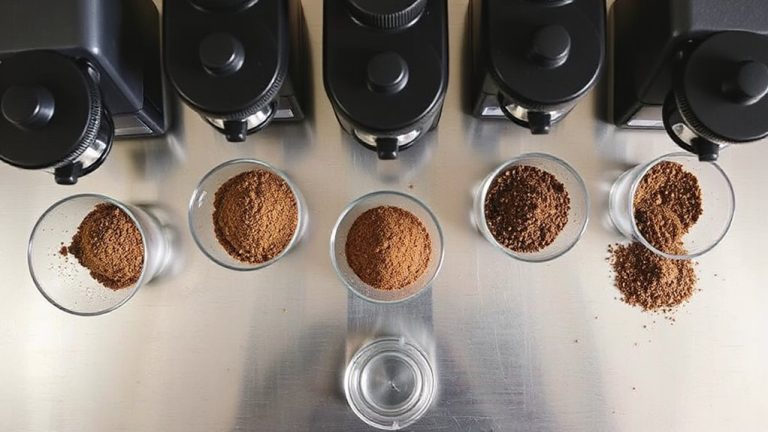
Match your grind size to your brew method for better flavor. Use fine grinds for espresso-like table salt-for quick, rich extraction. Go medium-fine for pour-over or drip to balance flow and taste. Choose coarse for French press to avoid sludge and bitterness. Use extra-coarse for cold brew or percolator to prevent over-extraction. Always grind fresh and adjust slightly based on taste and brew time-consistency makes all the difference, and small tweaks can transform your cup.
Notable Insights
- Grind size must match brewing method to optimize extraction and balance flavor.
- Espresso requires a fine grind, similar to table salt, for rapid high-pressure extraction.
- Pour-over and drip coffee perform best with a medium-fine grind, like granulated sugar.
- French press needs a coarse grind to prevent sludge and over-extraction during steeping.
- Cold brew uses extra-coarse grounds to avoid bitterness during extended steep times.
Why Grind Size Makes or Breaks Your Coffee
Every coffee bean holds hundreds of flavor compounds, and getting the most out of them depends heavily on how finely or coarsely you grind. When you grind too fine, you speed up grind oxidation, which dulls flavor fast-especially if you wait before brewing. Coarser grinds slow oxidation but expose less surface area. The key is even particle distribution: inconsistent grounds lead to uneven extraction, where some bits over-extract (bitter) and others under-extract (sour). Blade grinders often create a messy spread of particles, while burr grinders give you tighter distribution and better control. If your coffee tastes off, it’s often not the beans-it’s the grind. A consistent size means water hits each particle the same way, pulling balanced flavors. That’s why investing in a decent burr grinder makes a real difference. You’re not just grinding-you’re setting up for extraction success. For those looking to upgrade, exploring the best mill grinders can help you find a burr grinder that matches your brewing needs.
Choose the Right Grind for Your Brew Method
You’ll want to match your grind size to your brewing method, since water contact time and pressure affect how coffee extracts. Too fine, and you risk over-extraction-bitter, harsh flavors. Too coarse, and you’ll get weak, sour coffee from under-extraction. For pour-over like a V60 or Chemex, go medium-fine to medium; it balances flow rate and flavor extraction. French press? Use a coarse grind to avoid sludge and over-extraction. AeroPress can handle a range, but adjust based on brew time-finer for short steeps, coarser for long. Always prioritize grind freshness: grind beans just before brewing to preserve oils and aroma. Pre-ground coffee loses complexity fast. A good burr grinder gives consistent particles, boosting even extraction. Blade grinders? They create uneven bits, hurting flavor extraction. Match grind to brewer, keep it fresh, and you’re on track for better coffee. Achieving pour-over mastery starts with the right grind size and technique.
Espresso: Use a Fine Grind for Rich, Balanced Shots
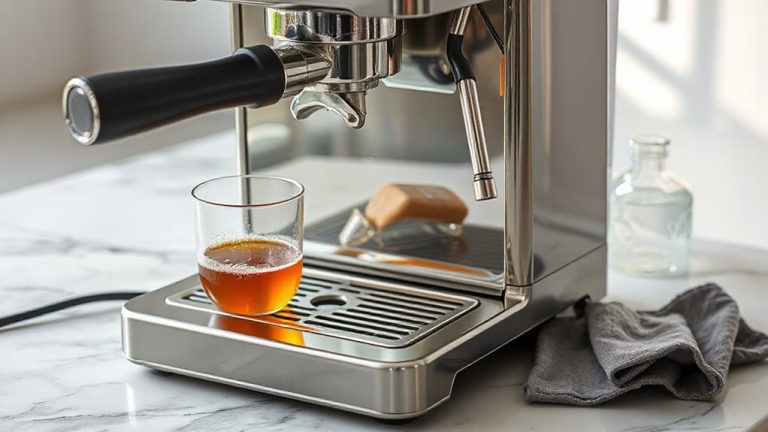
Because espresso relies on high pressure and short brew times, you’ll need a fine grind to maximize extraction in just 20–30 seconds. The right grind size helps control flavor extraction under espresso pressure, preventing under- or over-extraction. Too coarse, and water flows too fast, yielding weak shots with sour notes. Too fine, and flow slows, risking clogs and bitter tastes. Aim for a texture like table salt-consistent and uniform. A quality burr grinder gives you the precision needed, unlike blade grinders that create uneven particles. Machines like the Breville Barista Express or Lelit Anna blend grinder and brewer for convenience, but any good setup depends on grind quality. Adjust in small increments: if the shot runs too fast, go finer; too slow, go coarser. Proper grind size is essential-not optional-for balanced, rich shots. It makes the difference between hit-or-miss and reliable results. For even greater precision, consider a grind-by-weight espresso grinder that automatically measures dose weight for consistency.
Pour-Over & Drip: Aim for Medium-Fine Consistency
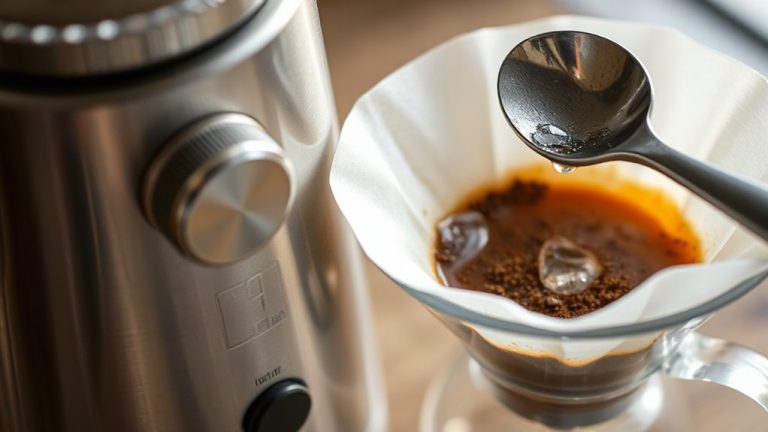
A fine grind works for espresso, but pour-over and drip brewing call for something a little more open-think medium-fine, similar to granulated sugar. This grind size lets water flow steadily through the coffee, extracting balanced flavors without overdoing it. If your grind’s too fine, the water struggles to pass, increasing brew time and risking bitterness. Too coarse, and water rushes through, shortening brew time and leaving your coffee weak. Aim for a brew time of 3 to 4 minutes, depending on your setup-like a V60 or Chemex. Water temperature matters too; use water just off the boil, around 195°F to 205°F. That range helps dissolve sugars and acids evenly. A good burr grinder gives you consistent particles, which improves extraction. Blade grinders can work in a pinch, but they create uneven sizes that hurt clarity. Match your grind to your gear, and adjust slightly based on taste.
French Press: Use Coarse Grinds to Avoid Bitterness
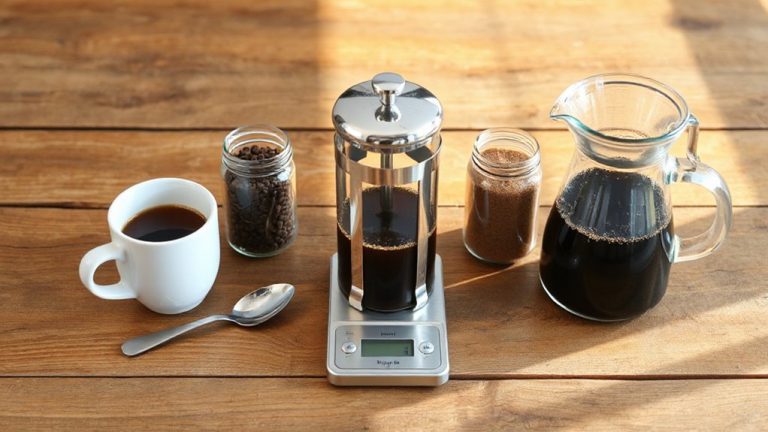
When brewing with a French press, using a coarse grind is key to preventing over-extraction and avoiding gritty, bitter coffee. You need grind uniformity to guarantee even extraction-irregular particles lead to some bits over-brewing while others under-extract. A burr grinder delivers more consistency than a blade grinder, so it’s worth the investment. Use water just off the boil, around 195–205°F, as proper water temperature helps extract flavor without scalding the grounds. Steep for four minutes, then press slowly. Coarse grounds settle faster, making separation cleaner and reducing sediment in your cup. If your coffee tastes harsh or cloudy, your grind may be too fine or your water too hot. Stick with coarse, consistent particles and controlled heat for smooth, balanced results every time.
Cold Brew & Percolator: Opt for Extra-Coarse Grinds
For cold brew and percolator methods, go even coarser than French press-aim for an extra-coarse grind, similar to rough sand or breadcrumbs. This size prevents over-extraction during long steeping and guarantees smooth cold brew strength without excessive bitterness. With cold brew, the slow extraction relies on surface area; too fine a grind increases friction, leading to muddiness and tannic off-notes. For percolators, which recirculate water through grounds, an extra-coarse grind maintains percolator clarity by reducing fines that cloud the final cup. Using a burr grinder set to 8–10 on most models gives consistent results. Blade grinders work poorly here due to uneven particle size. If your cold brew tastes weak or your percolator brew looks murky, check your grind first. Matching the right coarseness improves body, clarity, and overall balance in both methods.
Fix Common Grind Mistakes Fast
Ever wonder why your drip coffee tastes weak or your French press brew comes out muddy? Chances are, your grind size is off-or worse, there’s grind contamination from old coffee oils and particles clinging inside your grinder. Those residues can turn bitter and skew flavor fast. Wipe out chambers weekly with a dry brush or use grinder cleaning tablets. Also, check your burr alignment; misaligned burrs create uneven particles, leading to both under- and over-extraction. If your grind feels inconsistent or your coffee tastes off, realign or replace the burrs as needed-especially in blade grinders, which wear down quickly. For consistent results, stick with a quality burr grinder like the Baratza Encore or Fellow Ode. Adjust settings gradually, and always recalibrate after deep cleaning. Small tweaks prevent big flaws.
On a final note
You need the right grind size for your brew method to get the best flavor. Too fine, and your coffee turns bitter; too coarse, and it’s weak. Match your grinder to your brewer-use fine for espresso, medium-fine for pour-over, coarse for French press, and extra-coarse for cold brew. Blade grinders work but lack precision; burr grinders give better control. Adjust as needed based on taste, but start with these standards for reliable results.