How to Optimize Grind Size for Moka Pot Without Pressure Issues
Use a fine to medium-fine grind, like table salt, for your moka pot to avoid pressure issues and guarantee even extraction. Too fine clogs the filter, increasing pressure and risking the safety valve; too coarse causes weak, sour coffee. A burr grinder gives consistent results-start at a medium setting and adjust. If the brew takes over 5 minutes or tastes bitter, grind coarser. You’ll soon find the sweet spot for reliable, great-tasting results every time.
Notable Insights
- Use a burr grinder to achieve a consistent fine to medium-fine grind, similar to table salt, for optimal extraction and pressure control.
- Avoid overly fine grinds to prevent restricted water flow, excessive pressure buildup, and potential safety valve strain during brewing.
- Aim for a brew time of 2.5 to 5 minutes; longer times indicate the grind is too fine and should be adjusted coarser.
- If coffee tastes weak or sour, the grind may be too coarse-adjust finer to improve extraction and pressure balance.
- Clean and recalibrate your grinder regularly, especially when switching beans, to maintain grind consistency and prevent brewing issues.
Choose the Right Grind Size for Moka Pot
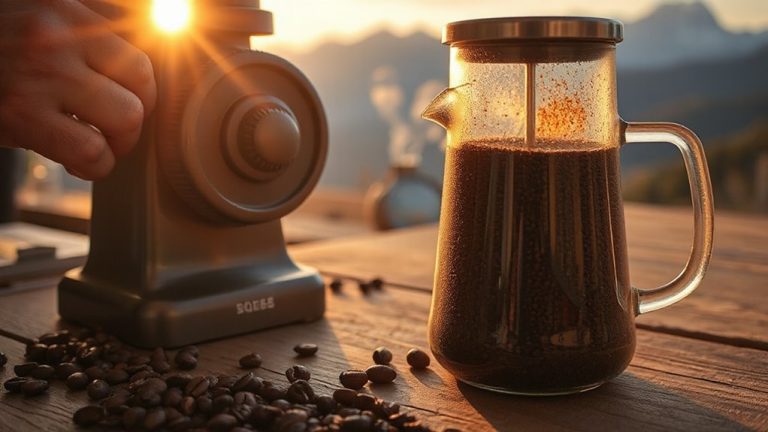
Grind size can make or break your Moka pot brew. You need a fine to medium-fine grind-close to table salt-for ideal extraction. Too coarse, and your coffee tastes weak; too fine, and it risks over-extraction or clogging. Grind uniformity matters because uneven particles lead to inconsistent flavor-some under-extracted, some burnt. A burr grinder delivers better consistency than a blade grinder, helping maintain that balance. Always use freshly roasted beans; bean freshness directly impacts aroma and strength, with peak flavor within two to four weeks post-roast. Stale beans produce flat, dull coffee no matter the grind. For best results, grind just before brewing. While pre-ground saves time, it sacrifices freshness and control. Adjust in small increments-tweaking grind size slightly can fine-tune taste without pressure issues. Your ideal setting might vary by bean type, roast, or machine size-consistency and freshness are your starting points. For optimal results, consider using best coffee beans specifically suited for Moka pot brewing.
Why Grind Size Affects Moka Pot Taste and Safety
While it might seem small, the grind size plays a critical role in how your Moka pot performs, directly shaping both flavor and safety. If the grind is too fine, it restricts water flow, increasing pressure and the risk of blockages, which can lead to dangerous steam buildup. This also extends brew time, over-extracting bitter compounds. A grind that’s too coarse reduces contact time, yielding weak, sour coffee. Water temperature rises steadily during brewing, and improper grind size throws off this balance. Too fine a grind traps water, causing it to overheat beyond ideal levels, risking scalded coffee and safety issues. The right grind guarantees smooth water movement, proper brew time, and even extraction. Always use a burr grinder for consistency. Aim for a texture like table salt-it gives reliable results without pushing pressure too high. For optimal results, consider a best burr grinder designed specifically for precision grinding across various brew methods.
Is Your Grind Too Fine? (And How to Fix It)
How do you know when your coffee’s pulling too hard or tasting off? If your Moka pot takes longer than 5 minutes, or you hear loud gurgling and hissing, your grind’s likely too fine. That fineness slows water flow, increasing brew time and causing excessive pressure buildup, which can strain the pot’s seal or safety valve. You might also get bitter, over-extracted coffee with oily residue on top. To fix it, adjust your grinder one notch coarser-most blade grinders need just 5–10 seconds less grinding. For consistent results, use a burr grinder like the Baratza Encore or Timemore C2. Re-test: ideal brew time is 2.5 to 4 minutes over medium heat. Watch the flow-steady, not explosive. Coarsening slightly reduces pressure buildup and improves flavor balance. Always make one change at a time to track results. Consider trying a pre-ground coffee specifically designed for Moka pots to ensure optimal grind consistency and brewing performance.
Is Your Grind Too Coarse? (And How to Adjust)
You just adjusted your grind finer and still aren’t getting good results-maybe it’s not too fine, but actually too coarse. If your coffee tastes weak or tea-like, a coarse grind could be the culprit, letting water pass through too quickly. This prevents proper extraction and hurts bloom consistency, leading to uneven flavor. Coarse grounds often don’t swell enough to seal the puck, reducing pressure buildup. Try adjusting your grinder one small step finer-many blades or burr grinders skip settings, so test each carefully. Make sure your water temperature is around 200°F before pouring into the base; too cool and extraction suffers, too hot and bitterness follows. Avoid boiling water directly touching the coffee. A slightly finer grind improves contact time without clogging, enhancing both body and clarity. Stick to repeatable settings and track changes. Consistency beats guesswork.
How to Dial In Your Moka Pot Grind
What if the key to better Moka pot coffee isn’t changing your brew time or water temperature-but your grind size? Dialing in the right grind helps extract balanced flavor without pressure issues. Start with a fine to medium-fine grind, like table salt. Make small adjustments and observe how brew time and taste change. Ideal extraction usually happens between 3–5 minutes. If it’s too fast, your grind’s too coarse; too slow, it’s too fine. Water temperature should be just off-boil (around 200°F) for consistent results.
| Grind Size | Effect on Brew Time |
|---|---|
| Too coarse | Too short, weak coffee |
| Slightly coarse | Fast, under-extracted |
| Just right | 3–5 minutes, balanced |
| Slightly fine | Slower, fuller body |
| Too fine | Over 5 min, bitter, pressured |
Best Grinders for Moka Pot Grind Consistency
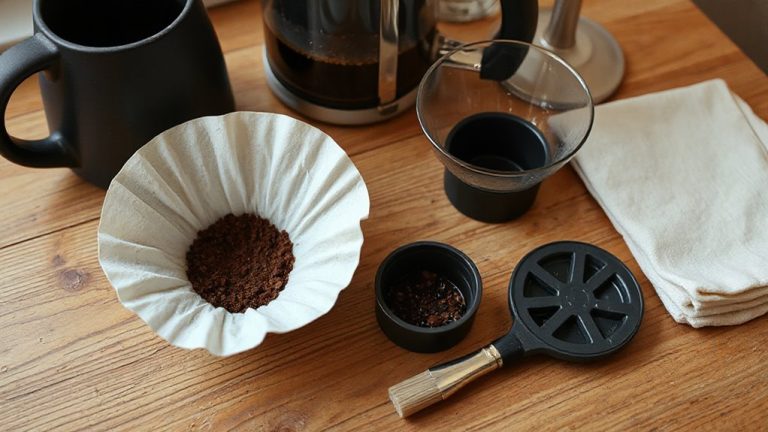
While no grinder guarantees perfect results every time, getting consistent particle size can make or break your Moka pot brew. Blade grinders? Skip them-they create uneven grounds, leading to clogged puck or sour shots. Instead, use a burr grinder. Look for one with high burr quality; flat or conical steel burrs in mid-range to high-end models (like the Baratza Encore or TIMEMore Kalita) deliver the uniformity you need. Inconsistent grind means uneven extraction and bitter, off flavors. You’ll also want easy grinder calibration-dials with marked settings help you tweak and repeat the right medium-fine grind. Entry-level burr grinders can work, but they often lack precision. If you’re serious, spend a bit more for consistent results. Clean the grinder regularly and recalibrate when switching beans. That small effort pays off in better, more reliable Moka pot coffee every time.
On a final note
You’ve got the control here-adjusting grind size directly shapes your Moka pot’s flavor and safety. Too fine risks pressure buildup and bitterness; too coarse delivers weak, sour coffee. Aim for fine sand consistency, like table salt. Dial it in gradually using a quality burr grinder-Baratza Encore or Timemore C2, for example. Fresh beans, consistent grind, and clean equipment make a real difference. It’s not magic-it’s method.