AeroPress Water Temperature Guide: 175°F–205°F by Roast
You’ll get the best AeroPress results between 175°F and 205°F, depending on roast and brew time. Light roasts need hotter water-closer to 200°F-to extract fully, while dark roasts taste smoother around 185°F to avoid bitterness. Too hot, like boiling, burns the grounds and makes coffee harsh. Short brews need more heat; longer steep times need less. Cold brew with the AeroPress uses room-temp water and 12+ hours. You’ll see how small tweaks make a real difference.
Notable Insights
- Water temperature between 175°F and 205°F optimizes extraction, with lighter roasts benefiting from higher temps near 200°F.
- Darker roasts extract best around 185°F to avoid excessive bitterness from over-extraction.
- Shorter brew times require hotter water (~195°F) to achieve proper extraction within a minute.
- Using boiling water (212°F) scalds coffee grounds, producing harsh, bitter flavors and dull aromatics.
- Cold-steeped AeroPress coffee uses room-temperature water over 12–24 hours for smooth, low-acidity results.
The Ideal Water Temperature for AeroPress Coffee
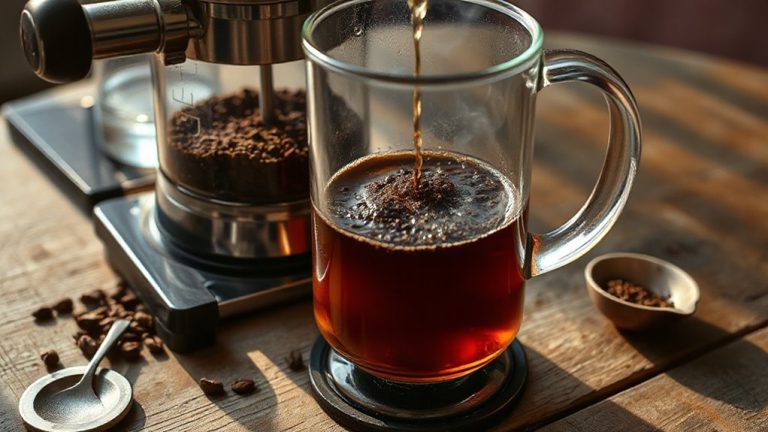
Water temperature plays a key role in how your AeroPress brew turns out, and getting it right means better flavor in your cup. For most recipes, 175°F to 205°F (80°C to 96°C) works best, depending on your roast and preferred strength. Lighter roasts often need hotter water-closer to 200°F-to extract fully, while darker roasts do well around 185°F to avoid bitterness. Your water chemistry matters too; balanced minerals help extract flavors evenly. Always use fresh, filtered water. Grind consistency is just as critical-uneven particles lead to over- and under-extraction, muddying your taste. A burr grinder delivers the uniformity you need. Too fine, and your brew may taste harsh; too coarse, and it’ll be weak. Match your grind to the temperature: higher heat pairs with slightly finer grinds, lower temps with a coarser setting. Experimentation within these ranges helps you find your ideal balance.
How Heat Affects Extraction and Flavor
Heat is the engine driving extraction, and knowing how it works helps you control flavor. When you pour hot water over coffee, it triggers chemical reactions that pull compounds from the grounds into your cup. Higher temperatures speed up solubility rates, meaning more flavor comes out faster-but not always the flavor you want. Too hot, and you risk pulling bitter, astringent notes from over-extraction. Too cool, and sour, weak flavors emerge because solubility rates drop, leaving desirable compounds behind. You’re balancing how much and what types of substances dissolve at different heat levels. This isn’t just theory-it affects every brew. For instance, at 175°F, you’ll see slower extraction, suited for dark roasts; at 205°F, brighter, more complex notes emerge from light roasts. You control this by adjusting heat, grind, and time.
Match the Temp to Your Brew Style
Why does your brew method matter when setting water temperature? Because your AeroPress recipe’s brew time and grind size directly influence how water temp affects extraction. If you’re using a short brew time-like 1 minute-you’ll need hotter water, around 195°F, to extract enough flavor quickly. With a finer grind size, the increased surface area means faster extraction, so slightly cooler water can prevent over-extraction. For longer brew times, say 2–3 minutes, drop the temperature to 175–185°F, especially with a fine grind. This balance keeps flavors balanced, not harsh. A coarse grind with extended steeping needs lower heat to avoid bitterness. Matching temperature to your specific combo of brew time and grind size gives consistent, tasty results. There’s no universal best-your method decides the ideal temp. Test small changes to fine-tune your cup.
What Happens When Water Is Too Hot?
Brewing with water that’s too hot can throw off your entire cup, even if you’ve nailed the grind size and brew time. When you use water near boiling, you risk scalded grounds, which extract too quickly and harshly. This leads to bitter notes that overpower the coffee’s natural flavors. Delicate aromatics burn off, leaving a flat, astringent taste. The AeroPress, known for clean, balanced coffee, can’t compensate for this imbalance.
| Water Temp | Effect on Grounds | Flavor Result |
|---|---|---|
| 212°F | Severely scalded grounds | Harsh, bitter notes |
| 200°F | Slightly over-extracted | Mild bitterness |
| 190°F | Even extraction | Balanced, bright |
Stick to 175–205°F for best results. Higher temps aren’t stronger-they’re uncontrolled.
Brewing Cold AeroPress Coffee: Lower Temp, Longer Steep
Ever wonder how to make smooth, low-acid coffee with your AeroPress when the weather heats up? Try brewing cold using a lower temp and longer steep. Skip the boiling water-instead, use room-temperature or slightly cool water and let it slow steep for 12 to 24 hours. The extended contact time extracts flavor gently, reducing bitterness and acidity. After steeping, place your AeroPress over a filled glass, press slowly, and immediately add ice for ice infusion. This cools the concentrate fast and prevents dilution. You’ll get a clean, bright cold coffee with less bite than traditional iced methods. Unlike hot brewing, slow steep preserves subtle notes, especially in lighter roasts. Just remember: longer steeping increases extraction, so grind slightly coarser to avoid over-extraction. It’s simple, efficient, and perfect for hot days when you want flavor without the heat.
5 Ways to Nail Your Water Temperature Every Time
How do you guarantee your water hits the sweet spot every time? Use a gooseneck kettle with temperature control-devices like the Fellow Stagg EKG or Hario Buono let you set and hold precise temps. This secures temperature consistency between brews, which is key for repeat在玩家中 flavor. Boiling water cools quickly, so preheating your AeroPress improves thermal stability. Just rinse it with hot water before brewing. If you don’t have an electric kettle, let boiled water sit 30–60 seconds before pouring: that usually brings it from 212°F down to 175–200°F, ideal for AeroPress. Avoid guessing-use an instant-read thermometer if needed. Consistent water temp means fewer variables, so you can tweak grind or time instead. With steady heat and smart tools, you’ll get balanced coffee every time. For even greater precision, consider a kettle with a built-in temperature display like the precision pour models recommended for pour-over brewing.
On a final note
You’ll get the best AeroPress results by controlling water temperature. Aim for 175°F (80°C) for a gentler cup or 205°F (96°C) for stronger flavor. Too hot, and your coffee turns bitter. Cold brew methods need no heat at all-just a long steep. Use a gooseneck kettle with a thermometer or a temperature-controlled kettle for accuracy. Your method should match your taste and gear.