French Press Mastery: Achieving Perfect Extraction With Correct Grind Size Selection
Use a coarse, uniform grind-like sea salt-with a burr grinder such as the Baratza Encore or Fellow Ode for best results. Blade grinders create uneven particles, leading to bitterness and sludge. A consistent grind guarantees even extraction, avoiding sour or bitter flavors. Adjust slightly finer for shorter brews, coarser for longer ones. Keep water between 195–205°F and use a double filter to reduce sediment. Master these details to consistently brew cleaner, fuller cups.
Notable Insights
- Use a coarse, uniform grind size resembling sea salt for optimal French press extraction.
- Grind coffee fresh with a burr grinder to ensure consistency and avoid bitter or weak flavors.
- Avoid blade grinders, as they produce uneven particles that lead to over- and under-extraction.
- Adjust grind size based on brew time-coarser for longer steeps, slightly finer for shorter ones.
- Clean your grinder monthly to maintain precision and prevent stale particles from affecting flavor.
What Does the Perfect French Press Grind Look Like?
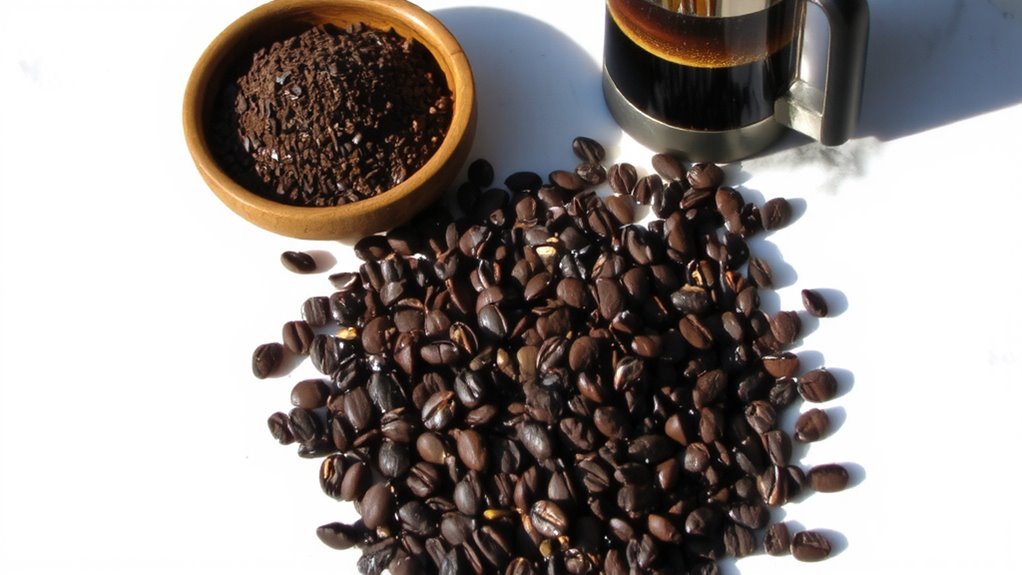
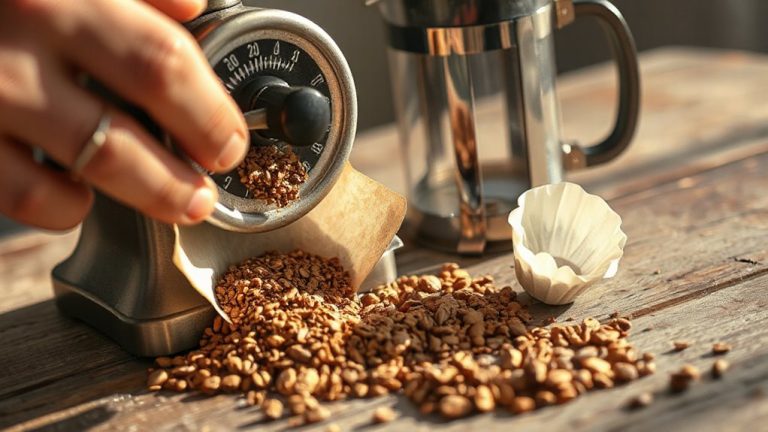
Consistency is king when it comes to grinding for French press. You need a coarse grind texture-think sea salt or breadcrumbs-to keep sediment low and prevent clogging the press. Blade grinders won’t cut it; they create uneven particles. Instead, use a burr grinder like the Baratza Encore or Bodum Bistro for better particle uniformity. Uneven grinds extract at different rates, leading to bitter and weak flavors in the same cup. A consistent grind means all coffee particles steep evenly, giving balanced flavor. Don’t rely on pre-ground-it’s often too fine and stale. Grind fresh, right before brewing. Aim for 20–30 seconds of grind time per 30g of beans. Skip the powdery fines; they slip through the mesh and muddy your cup. Uniform chunks are okay; dust isn’t. Your French press depends on it. For those with limited counter space, a compact coffee grinder can deliver the consistent coarse grind needed without sacrificing performance.
How Grind Size Controls French Press Extraction
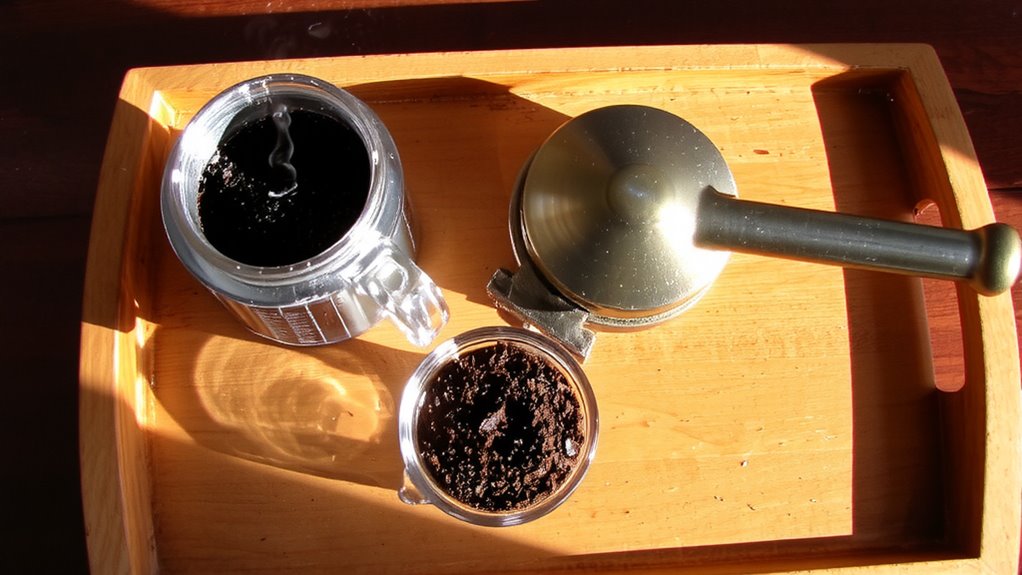
Your grind size is the gatekeeper of flavor in French press brewing. Too fine, and you’ll over-extract, pulling out bitter, muddy notes. Too coarse, and your coffee tastes weak or sour from under-extraction. The sweet spot lies in a consistent, medium-coarse grind-think sea salt. Grind uniformity matters because uneven particle distribution leads to unbalanced extraction: some bits over-extract while others under-extract. A blade grinder, for example, creates a chaotic particle distribution, making even extraction nearly impossible. A burr grinder delivers more uniformity, improving control. You’re not just adjusting size-you’re managing surface area exposed to water. With uniform particles, water flows evenly through the grounds, extracting more predictably. That’s how you get clarity and balance, not just strength. Adjust your grind to dial in flavor; it’s the most impactful variable you control.
Best Grinders for a Consistent French Press Grind
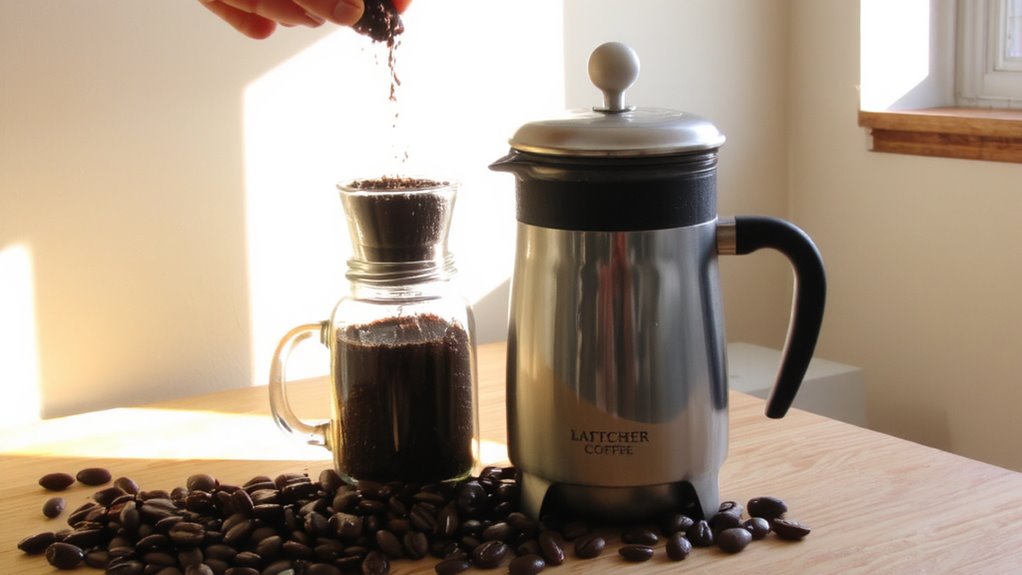
A decent burr grinder makes all the difference when you’re aiming for a consistent French press brew. Blade grinders just can’t deliver the uniformity you need, leaving you with uneven extraction. Instead, go for a burr model that offers a wide grind range and steady performance. Look at brands like Baratza or Fellow-both have strong brand reputation and focus on precision. The Baratza Encore, for example, handles coarse settings well and is built for grinder durability. Manual options like the Fellow Ode can be great too, especially if you want more control and don’t mind a little elbow grease. While pricier, their long-term reliability often justifies the cost. Cheap grinders may save money up front but tend to wear out fast, affecting consistency. When choosing, balance initial cost with grinder durability and the brand’s track record. Your French press will thank you with richer, cleaner coffee every time. According to Wirecutter’s recommendations, these grinders consistently rank among the top picks for home brewers.
Fixing Common French Press Grind Mistakes
Grind size blunders are the usual suspects behind a lackluster French press brew. If your coffee tastes bitter or muddy, you’re likely grinding too fine-resulting in over-extraction and possible grind contamination from residual fines clinging to grounds. Switch to a burr grinder if you haven’t already; blade grinders create uneven particles and accelerate equipment wear, sabotaging consistency. Check your grinder’s burrs regularly-worn or misaligned ones produce inconsistent grit, harming extraction. Clean your grinder monthly to reduce buildup and avoid stale particles mixing in. Use a gentle hand when adjusting settings; abrupt changes increase equipment wear and risk poor calibration. If your brew lacks flavor, don’t just grind finer-first verify your grinder outputs even crumbs. Replacing old parts or upgrading to a quality conical burr model like the Baratza Encore can drastically cut grind contamination and boost results. Stay consistent, stay clean, and your French press will thank you. For those interested in hands-on control over bean development, consider exploring manual coffee roasters to further refine your coffee’s flavor from start to finish.
Adjusting Your Grind for Brew Time and Temperature
Since brew time and water temperature directly influence extraction, adjusting your grind size to match these variables is essential for balanced flavor. If your brew time is too short-under four minutes-you’ll likely need a finer grind to increase surface area and improve extraction. Go too fine, though, and you risk over-extraction or sediment. For longer brew times, a slightly coarser grind helps maintain temperature balance and prevents bitterness. Always aim for grind uniformity; inconsistent particles lead to uneven extraction, no matter the brew time. Your water’s thermal stability matters, too-use a gooseneck kettle to maintain consistent heat. If brewing with lower temperature water (around 195°F), a finer grind compensates for reduced extraction efficiency. With standard 200°F water, a medium-coarse setting, like that from a Baratza Encore, usually works best. Adjust in small increments, and track results.
How Water Temperature Affects French Press Strength
Water that’s just off the boil delivers the most consistent extraction in a French Press, so you’ll want to aim for around 200°F-hot enough to fully dissolve sugars and oils, but not so hot it scorches the grounds. Too cool, and your brew will taste weak; too hot, and it brings out harshness. Your water chemistry matters-hard water can over-extract, while soft water might leave flavors flat. Always use a gooseneck kettle for control. The brew vessel shape of a French Press-wide and cylindrical-affects heat retention, so preheating the carafe helps maintain stable temperature. Unlike tapered brewers, its broad interior exposes more surface area, making temperature even more critical. Keep your water within 195–205°F for best results. That small range balances extraction without amplifying bitterness. Use an instant-read thermometer if needed-consistent water temp means consistent strength.
Fine-Tuning Your French Press for Cleaner, Richer Coffee
You’ve got your water temperature dialed in, and that’s half the battle-but clean, rich coffee from a French Press isn’t just about heat. The right grind size and your brew vessel setup make a big difference. If your coffee tastes muddy, it’s likely fines passing through the metal filter. Try a coarser grind; it reduces sediment without sacrificing flavor. Consistency matters-use a burr grinder for even particles. Press down slowly to avoid disturbing the grounds at the bottom. Some French presses come with a single metal filter, but double or triple-layer filters trap more silt. Just don’t press too hard-over-pressing forces sludge through. Pre-rinsing the metal filter with hot water helps, too, removing dust and preheating the brew vessel. Pour gently after brewing to leave the last, silty inch behind. Small tweaks like these sharpen clarity and deepen richness-no extra gear needed.
On a final note
You’ve got the tools and knowledge to nail your French press brew. Use a burr grinder like the Baratza Encore for consistent coarse grounds. Too fine means sludge; too coarse brings weak coffee. Adjust grind size to tweak strength and clarity. Match water just off boil-around 200°F-for ideal extraction. If things taste bitter, go coarser; if sour, your grind might be too chunky. Small tweaks make real differences.