How the S795 Arabica Variety Balances Resistance and Flavor in Indian Coffee
You get solid rust resistance from S795’s S288 lineage, which slows disease spread and cuts fungicide use, while its Kent parentage guarantees a clean, balanced cup with notes of caramel and spice. It grows well in southern India’s highlands, thriving in clay loam soils above 1,000 meters. Unlike many resistant varieties, it doesn’t sacrifice flavor for hardiness. Roast it medium for the best profile. You’ll find out how it compares to other Arabicas in practice.
Notable Insights
- S795 combines partial rust resistance from S288 with the refined flavor of Kent Arabica for balanced performance.
- Its inherited Timor lineage strengthens cell walls, slowing coffee leaf rust spread without compromising taste.
- Grown in India’s elevated Western Ghats, it thrives in ideal microclimates that enhance flavor and resilience.
- Produces a smooth cup with caramel, spice, and fruit notes while maintaining consistent disease resistance.
- Farmers benefit from lower fungicide use and reliable yields, supporting sustainable production without sacrificing quality.
What Is S795 Arabica Coffee?
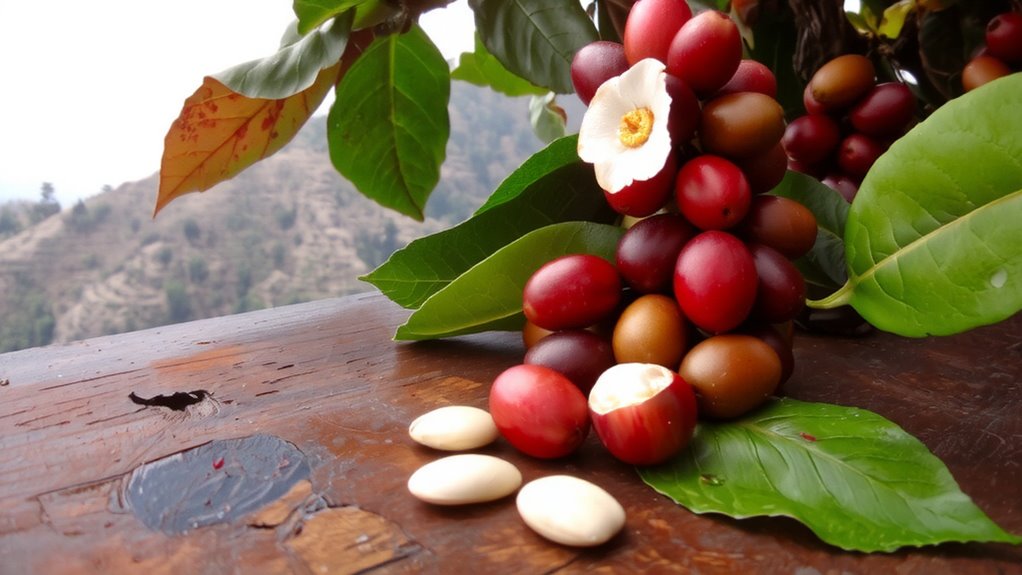
A coffee breed born in research, S795 is an Arabica variety developed in India during the mid-20th century by the Central Coffee Research Institute. Its origin history traces back to that breeding program, where scientists crossed S288 and Kents to combine yield, flavor, and resilience. You’ll find S795 widely grown across southern India, especially in Karnataka and Kerala, where elevation and rainfall suit its needs. It’s not just about disease resilience-though that matters-it’s also about cup quality. Farmers choose S795 because it delivers consistent beans with a balanced profile: mild acidity, medium body, and notes often likened to caramel or spice. Unlike high-yield Robusta hybrids, S795 maintains Arabica’s refined taste. You should consider it if you prefer coffees with character but still want some field tolerance. It’s not the most resistant type, but in moderate conditions, it performs reliably.
Why S795 Resists Coffee Leaf Rust?
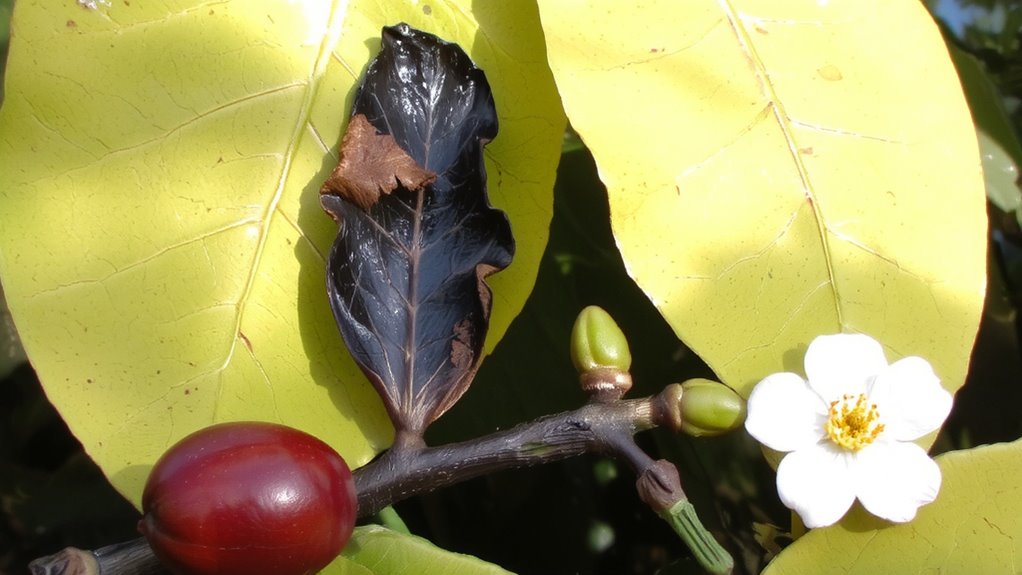
While not immune, S795 holds up against coffee leaf rust better than many Arabica varieties because it inherited partial resistance from its S288 parent, a hybrid that traces back to the Timor variety known for rust tolerance. You’ll find this resistance isn’t absolute, but it slows down pathogen interaction, giving farmers more time to manage outbreaks. A key genetic mutation in the S288 lineage enhances cell wall strength, making it harder for the fungus to invade. This means fewer spores spread, reducing crop damage. You still need to monitor plants and apply fungicides when pressure is high, but S795 cuts your reliance on chemicals. Compared to susceptible varieties like Typica, it offers a practical middle ground-better defense without sacrificing cup quality. Growers in rust-prone regions benefit from its balanced traits, though it’s not a standalone solution. Managing shade, spacing, and soil health further supports its natural resistance.
Where S795 Grows Best in India?
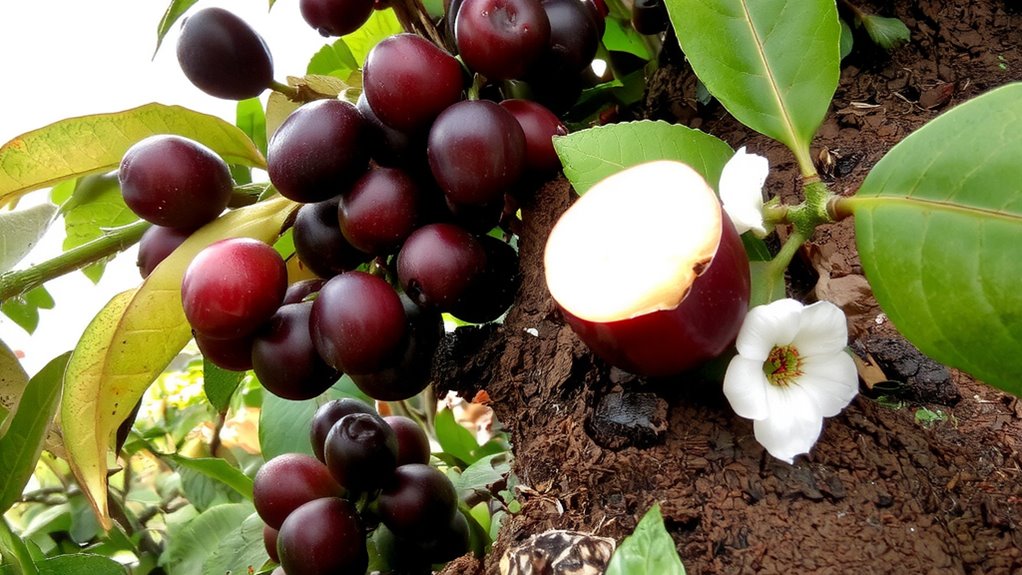
Where does S795 thrive in India? You’ll find it grows best in the southern regions, especially in Karnataka, Tamil Nadu, and Kerala. It performs well in high altitude zones between 1,000 and 1,400 meters, where cooler temperatures slow bean development and improve bean density. S795 prefers a well drained soil-clay loam works best-because it prevents root rot and supports healthy growth. Avoid areas with waterlogging or heavy, compacted earth. The Western Ghats offer ideal conditions: consistent rainfall, shade from tropical canopy, and rich, porous soil. While it tolerates some variation, sticking to these conditions guarantees better plant health and yield. Compared to lower-altitude robustas, S795’s quality shines where elevation and soil structure meet-giving you a resilient plant that’s easier to manage long-term without sacrificing crop potential. Best Indian Coffee Beans like S795 are often sought after by specialty roasters for their balanced cup profile and regional authenticity.
What Makes S795 Taste So Good?
Because it inherits traits from both Kent and S288 varieties, S795 delivers a cup profile that’s balanced and complex without needing specialty brewing gear. You’ll notice its smooth flavor profile right away-sweet, with mild acidity and a clean finish. It works well in drip brewers, French presses, or pour-overs, no precision scale required. The aroma notes often include caramel, spice, and a hint of fruit, developing fully even with medium roasts. Unlike finicky beans, S795 doesn’t demand high water quality or exact temperatures to taste good. It consistently produces a drinkable, nuanced cup, which is rare for a disease-resistant variety. While it won’t mimic the brightness of high-altitude Ethiopians, it offers more depth than many commercial blends. You get reliable flavor and subtle complexity, making it practical for daily brewing without sacrificing quality. That’s why it stands out.
Why Farmers and Roasters Love S795?
Though it’s not the most exotic bean on the market, you’ll find S795 stands out for how reliably it grows and roasts, which is why so many farmers and roasters lean on it. You’ll appreciate its strong resistance to rust, reducing crop loss and supporting sustainable farming practices. With moderate input needs and consistent yields, it’s a practical choice for smallholders managing costs. For you, the roaster, S795 offers balanced acidity, clean body, and sweet notes-traits that align with current market demand for approachable, high-quality Arabica. It roasts evenly, whether you’re using a drum or air roaster, making it ideal for batch consistency. Unlike finicky heirlooms, S795 performs in varied climates across India, from Karnataka to Araku. While it may lack the hype of Geisha or Pacamara, its stability, cup quality, and adaptability make it a go-to. You don’t need advanced gear to highlight its best traits-just solid technique.
On a final note
You’ll find S795 a reliable choice for both disease resistance and balanced flavor in Indian coffee. It withstands coffee leaf rust better than many varieties, reducing crop loss. Grown mainly in Karnataka and Kerala, it thrives at 900–1,400 meters. Its cup profile-hints of spice, chocolate, and mild acidity-pleases roasters and drinkers alike. While not as exotic as heirlooms, S795 offers consistency and good yield, making it practical for farmers and a smart option for quality-focused roasters.