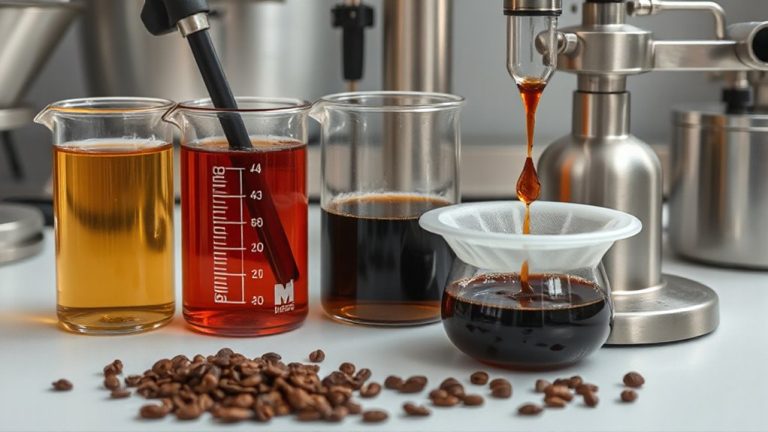
The Role of Depulping Machines in Preparing Coffee for Washed Processing
You need depulping machines to strip the skin and pulp from coffee cherries right after harvest, preventing spoilage and ensuring only seed and mucilage enter fermentation. This step keeps flavors clean and bright, especially in washed processing. Machines like Penagos or Agrocafé let you adjust pressure for ripe or underripe cherries, improving consistency. Skip this step poorly, and you risk off-flavors or over-fermentation. Get it right, and your coffee has better acidity, sweetness, and roast evenness-key for quality. More details follow on how to optimize each part.
Notable Insights
- Depulping machines remove the outer skin and pulp from coffee cherries immediately after harvest to prevent contamination during fermentation.
- They ensure only the seed and mucilage enter fermentation tanks, enabling precise control over the washed processing stage.
- Properly adjusted depulpers protect bean integrity, avoiding damage that can lead to off-flavors in the final cup.
- By reducing residual pulp, depulpers minimize the risk of over-fermentation and bacterial contamination during washing.
- Different depulper types (manual, disc, drum) suit various farm scales, ensuring efficient, consistent preparation for high-quality washed coffee.
Why Depulping Makes Washed Coffee Better
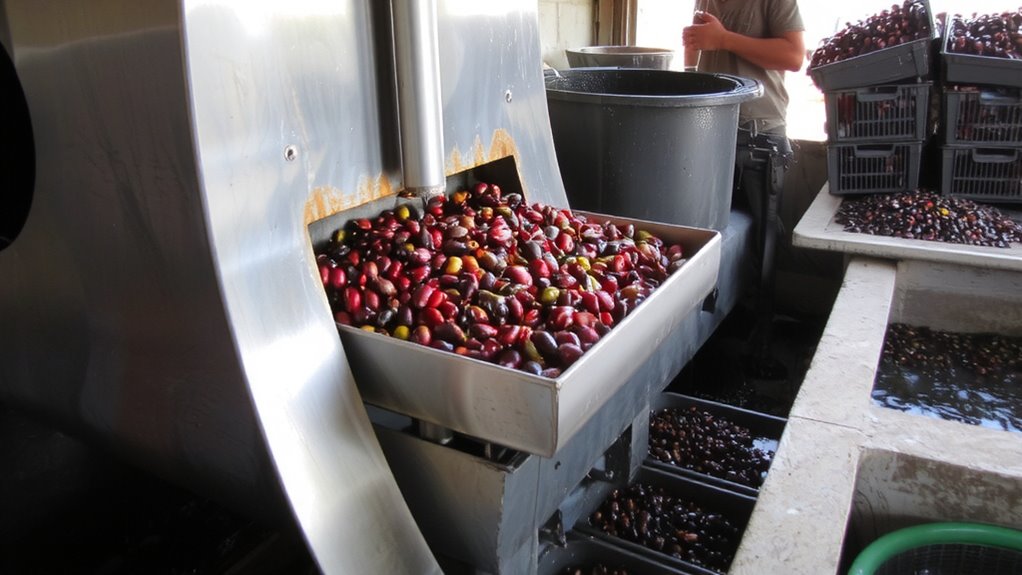
While the coffee cherry’s outer layers add ripeness signals during growth, leaving them on during fermentation would taint the cup, which is why depulping plays a critical role in washed processing. You remove the skin and pulp right after harvest, so only the seed and mucilage go into the fermenting tank. This helps control fermentation and supports consistent bean density, which affects how evenly the beans roast later. Depulping also reduces organic load in the water, especially important when water hardness varies-hard water can slow fermentation or leave mineral deposits on equipment. Machines like Agla depressers or Penagos hydro-demucilagers handle high volumes efficiently, but smaller setups might use hand-cranked models. You’ll get cleaner flavors and fewer defects, but only if you depulp promptly and calibrate the machine to avoid damaging beans. It’s simple, but skipping it-or doing it poorly-compromises quality no amount of washing can fix.
How Depulping Affects Your Coffee’s Taste
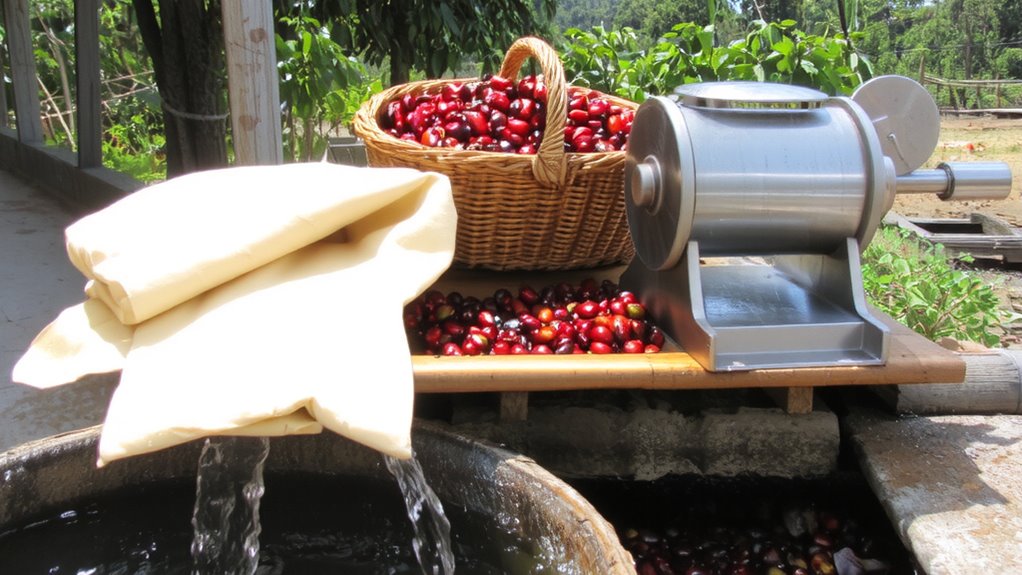
Right after harvest, removing the coffee cherry’s outer layers shapes the final cup more than most realize-you’re not just cleaning beans, you’re setting the stage for flavor development. If you depulp too aggressively, you risk damaging seed integrity, leading to uneven fermentation and off-flavors. Too gentle, and residual mucilage can cause over-fermentation. Machines like the Penagos or Agrocafé allow you to adjust pressure and screen size, giving you control over how much pulp stays on the bean. Consistency matters-each batch should be depulped under the same conditions to guarantee predictable results. When seed integrity remains intact and depulping is precise, you get cleaner, brighter cups with more nuanced acidity and sweetness. It’s not just about speed; it’s about protecting the bean’s structure so fermentation and drying can proceed without defects. Your brewing method later won’t fix early mistakes-get depulping right, and you’ve already won half the battle.
Inside a Depulping Machine: Step by Step
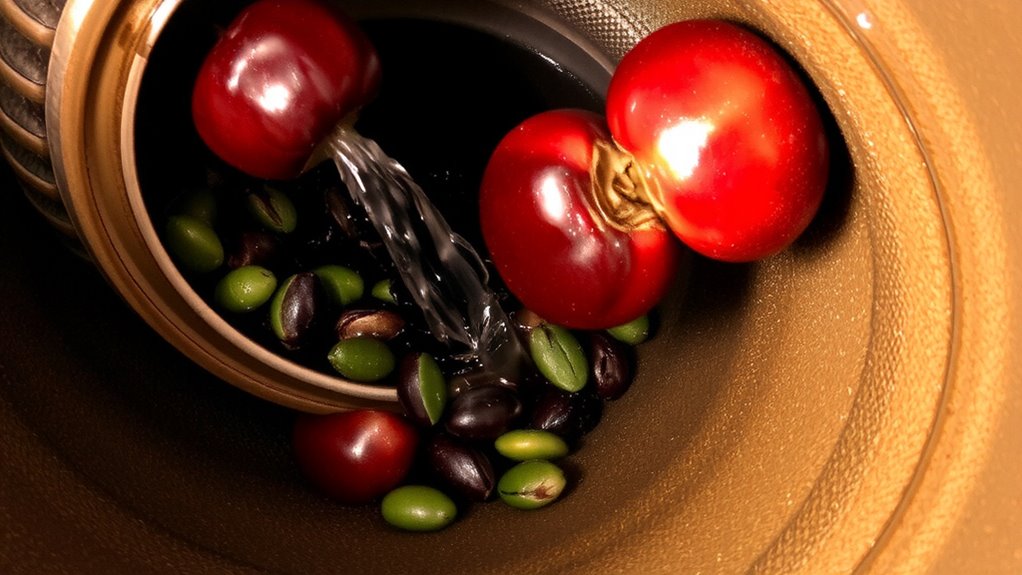
If you’ve ever wondered how coffee cherries lose their outer skin so efficiently, the process starts the moment they enter the depulper’s feed chute. You’ll see the cherries slide down toward a spinning disc or roller, which presses them against a metal screen. This action crushes the fruit, initiating pulp removal without damaging the beans inside. As the machine operates, water often flows through to help flush away the loose skin and mucilage. The screen’s holes let the pulp pass through while holding back the larger beans, aiding in bean separation. You’ll notice that adjustable gaps between the roller and screen allow control over pressure-critical for underripe or overripe cherries. Most small-scale depulpers, like the Agaro or Costa Rican manual models, rely on this simple mechanic. While effective, improper settings can bruise beans, so correct calibration matters. This step is fast, consistent, and essential before fermentation begins.
Pick the Right Depulper for Your Farm
You’ve seen how depulpers strip the skin from coffee cherries quickly and consistently, but now comes a more practical question: which machine fits your farm’s needs? Your choice affects both machine durability and cost efficiency. Small farms might prefer manual or small electric models, while larger operations need heavy-duty units. Consider volume, power access, and maintenance.
| Depulper Type | Best For | Durability & Cost Efficiency |
|---|---|---|
| Manual | < 500 kg/day | Low upfront cost, lower durability |
| Small Electric | 500–2,000 kg/day | Moderate cost, solid durability |
| Disc Type | 2,000–5,000 kg/day | High durability, good efficiency |
| Drum Type | > 5,000 kg/day | Highest durability, best long-term efficiency |
Choose based on your output and resources.
Fix These 5 Depulping Mistakes
Ever wonder why your coffee beans end up damaged or inconsistent after depulping? You’re likely making one of these five common mistakes. First, feeding overripe cherries into the machine clogs the system and increases fermentation risk. Sort carefully before processing. Second, running the depulper at inconsistent pressure bruises beans or leaves pulp behind. Adjust settings based on cherry ripeness and machine type-disc units need tighter gaps than drum models. Third, skipping regular cleaning leads to bacterial buildup and off-flavors. Wash parts daily. Fourth, overloading the hopper forces the machine to work poorly, reducing efficiency. Feed cherries steadily. Finally, ignoring wear on rubber components or burrs compromises performance. Check for cracks or flattening monthly. A well-maintained depulper with steady input and proper prep guarantees clean, uniform beans ready for fermentation and washing. Fix these, and you’ll see the difference at the cupping table.
On a final note
You’ve seen how depulping shapes washed coffee quality. A good depulper removes mucilage efficiently, cuts processing time, and helps avoid off-flavors. Manual models like the Helder save costs for small farms; electric ones, like AgroCafé, boost speed for larger operations. Avoid common errors-overloading, poor timing, or skipping maintenance. Choose based on your harvest size, power access, and labor. Done right, depulping sets the stage for clean, consistent beans.