Exploring the Feasibility of Desert-Grown Coffee in the Namib
You’re seeing farms in the Namib test coffee with drip irrigation, shade nets, and climate-controlled greenhouses to beat extreme heat and poor soil. Sensors track moisture and temperature, cutting water waste by targeting roots directly. Drought-resistant hybrids like Starmaya help, but desalinated water and high startup costs remain hurdles. While closed-loop systems and solar power improve sustainability, economic barriers could limit access. It’s a promising fix for climate-driven crop loss-if you weigh the costs. There’s more shaping this emerging shift.
Notable Insights
- Drip irrigation and shade nets help replicate coffee’s ideal highland conditions in the arid Namib Desert.
- Soil salinity and low nutrients are major challenges, addressed using organic compost and pH monitoring.
- Climate change is driving interest in desert farming as traditional coffee regions face increasing environmental stress.
- Smart irrigation systems use real-time sensors to optimize water use and minimize waste in desert conditions.
- High setup costs and water sourcing challenges create economic barriers despite environmental innovation and scalability potential.
Can Coffee Really Grow in the Namib Desert?
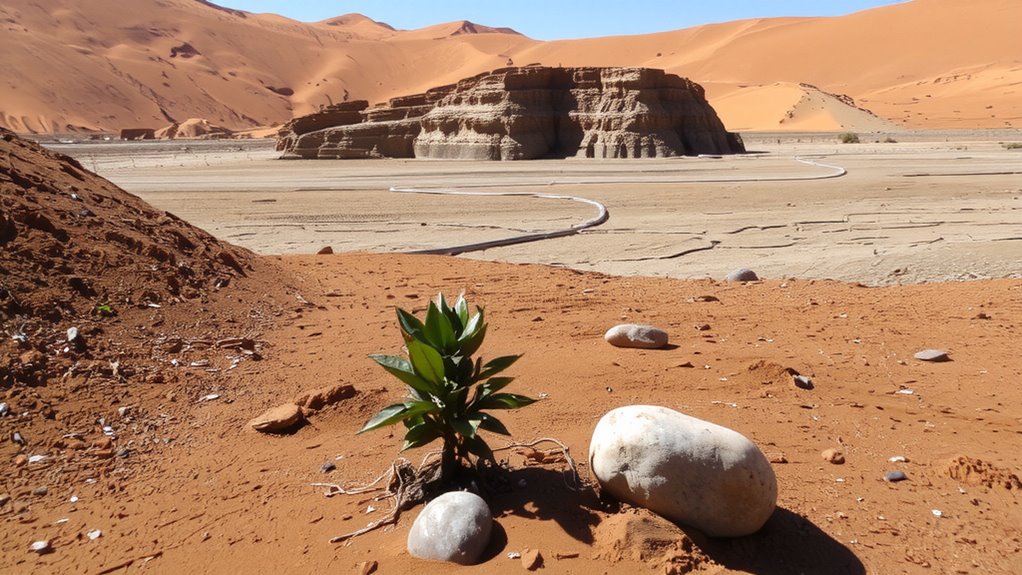
How could coffee possibly thrive in one of Earth’s driest places? You’re right to doubt it, but controlled trials in the Namib show it’s feasible under strict conditions. Coffee plants demand consistent moisture and nutrient-rich soil, both scarce here. Yet researchers use drip irrigation and shade nets to mimic highland environments. Soil salinity is a major hurdle-too much salt stunts growth and affects bean quality. Growers amend the ground with organic compost and monitor pH levels closely. Surprisingly, the effort supports minimal disruption to native desert biodiversity, as farms occupy small, enclosed plots. These aren’t sprawling fields but precision setups using hydroponic-adjacent systems. Arabica varieties like Geisha and Typica are tested, though yields remain low. Success hinges on constant monitoring. If you’re considering similar conditions, expect high input costs and energy use. It’s not natural-it’s engineering.
How Climate Change Is Driving Coffee to Desert Farms
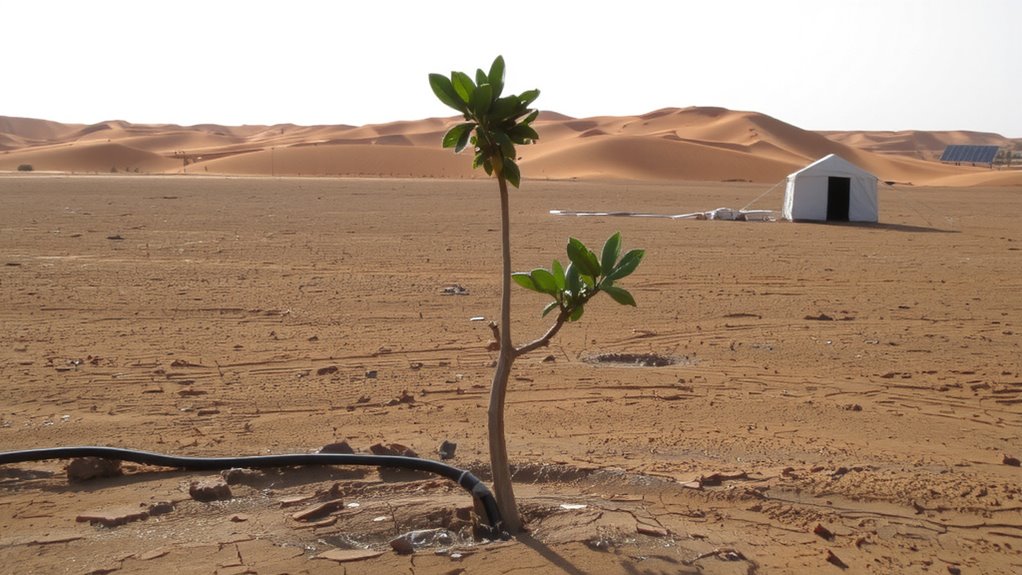
You might not expect deserts to grow coffee, but shifting climate patterns are pushing farmers to explore unlikely terrain. Rising global temperatures and erratic rainfall, driven by carbon emissions, are making traditional coffee regions less reliable. Many face increased droughts, pests, and soil degradation, reducing yields and quality. As arable land shrinks, some growers are testing cultivation in arid zones like the Namib, where controlled conditions can offset climate risks. These desert farms rely on enclosed systems that regulate temperature and humidity-critical for delicate coffee plants. While not a fix-all, such innovation offers a backup as traditional areas struggle. The shift isn’t easy: water is scarce, and setup costs are high. Yet, with climate pressures growing, moving coffee to deserts isn’t just experimental-it’s becoming a practical response to a warming world.
Smart Irrigation That Makes Desert Coffee Possible
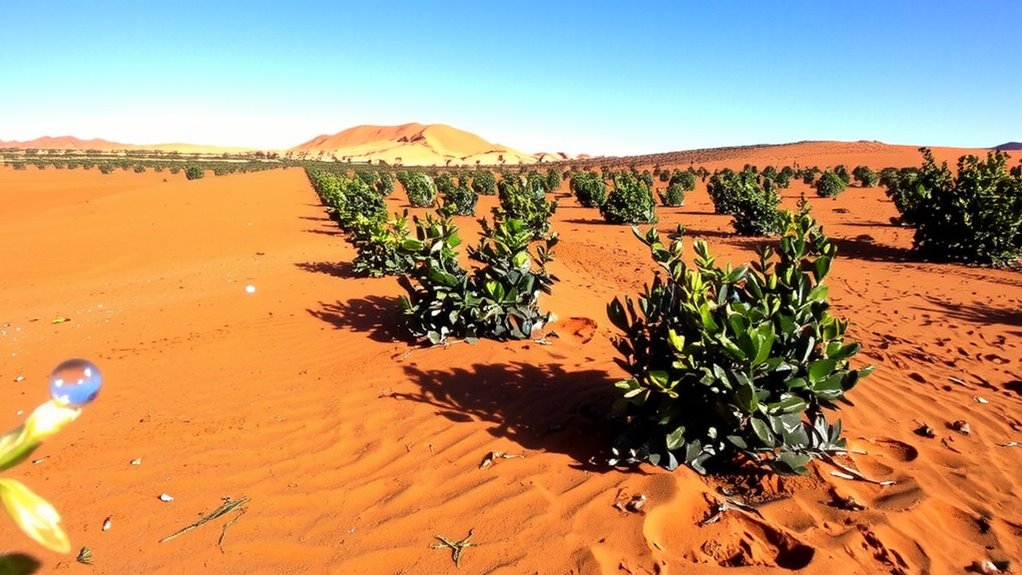
Even in the driest parts of the Namib, you can grow coffee if you manage every drop of water like it’s gold-because in the desert, it basically is. Smart irrigation systems make this possible by combining smart sensors and precision watering to deliver moisture exactly when and where coffee plants need it. These sensors monitor soil moisture, temperature, and humidity levels in real time, alerting the system before plants experience stress. Instead of flooding or guesswork, water is released in small, calculated amounts directly to the roots. Drip lines paired with timers reduce waste and evaporation, common issues in arid zones. Systems like Netafim or Rain Bird’s desert-adapted kits offer reliable performance under extreme conditions. While initial costs are higher than manual methods, the long-term savings in water and improved crop yields justify the investment. You’re not just surviving-you’re optimizing.
How Greenhouses Beat the Desert Heat
While the Namib’s heat can scorch crops, greenhouses give you a way to grow coffee without frying the plants. You’ll rely on shade management to control sunlight intensity, using adjustable shade cloths that block up to 50% of incoming radiation during peak hours. This keeps leaf temperatures in check and prevents sunburn. Ventilation systems are just as essential-roof vents, side louvers, and exhaust fans work together to pull hot air out and draw cooler air in. With automated sensors, you can activate fans only when needed, saving energy. You’ll also pair these with evaporative coolers in extreme conditions, though they use more water. Good airflow reduces fungal risks and strengthens plant stems. Unlike open fields, greenhouses let you fine-tune the climate, making it stable enough for coffee to thrive despite desert extremes. It’s not a perfect fix-but with the right setup, it’s practical.
Drought-Resistant Coffee Beans That Thrive in the Desert
Because desert conditions demand resilience, choosing the right coffee variety is critical-Arabica plants, typically sensitive to drought, usually struggle under Namib-level aridity unless heavily supported. You’ll have better luck with drought-resistant hybrids bred for extreme climates. Some are developed through genetic modification to limit water loss and boost root efficiency. These beans also require soil adaptation strategies, like mixing in organic matter to retain moisture and support microbial life. Varieties like Starmaya or Centroamericano handle dry conditions better and maintain cup quality. Though they’re not invincible, they cut water demands by up to 30% compared to traditional Arabica. You’ll still need to monitor soil salinity and pH, especially in enclosed desert plots. Success hinges on pairing tolerant genetics with smart, site-specific adjustments-don’t expect high yields without careful management. With the right beans and prep, desert coffee can work-but it’s not a guaranteed win.
Water and Wealth: Desert Coffee’s Trade-offs
You’ve got drought-resistant beans that can handle the heat and sand, but growing coffee in the Namib isn’t just about plant genetics-it’s also about water use and cost. Even efficient plants need some water, and in a region with extreme water scarcity, every liter counts. You’ll likely rely on desalinated or recycled water, both expensive and energy-heavy. That drives up production costs, making desert coffee a high-price crop. While that could boost local income, it may worsen economic inequality if only wealthy investors can afford the infrastructure. Small farmers might get priced out. You’re not just growing beans-you’re making trade-offs between sustainability, access, and equity. The tech exists, but its benefits aren’t shared equally. If you’re serious about desert coffee, you’ve got to account for who pays the costs-and who reaps the rewards. Water is limited, and so are opportunities, without fair systems in place.
The Future of Coffee in Extreme Climates
If you’re thinking about where coffee can survive next, the real test isn’t just heat or drought-it’s whether farming systems can adapt to extreme environments without draining resources. In the Namib, soil composition lacks organic matter, so growers must use precision composting and mineral balancing to support coffee roots. You’ll need closed-loop irrigation, powered by solar energy, to avoid depleting groundwater. Solar panels can run sensors that monitor soil moisture and temperature, adjusting water use in real time. These systems aren’t cheap upfront, but they cut long-term costs and emissions. Other arid regions, like parts of Australia, are testing similar setups with mixed success. The key is matching crop strain to climate resilience and infrastructure. If you’re investing, focus on modular designs that scale with demand. Desert coffee isn’t a guaranteed future, but with smart tech and resource limits in mind, it’s a risk worth measuring.
On a final note
You can grow coffee in the Namib with greenhouses, drip irrigation, and drought-resistant beans like Starmaya. These systems cut water waste and block extreme heat, but costs stay high. Desalinated or recycled water works, though energy use is a downside. For now, desert-grown coffee isn’t scaling fast, but it offers a test case for heat-stressed regions. If tech improves and prices drop, it might help secure future yields where traditional farms struggle.