Why Your Grinder Is Creating Excessive Noise When Idle
Your grinder’s loud idle noise often comes from worn bearings, misaligned burrs, or loose parts. Worn bearings create a low rumble, while uneven or warped burr plates cause grinding sounds even when idle. A humming motor might mean overheating or electrical issues. Loose housing or bolts-common in models like the Baratza Encore-amplify vibration. Tighten mounting screws, check belt tension, and inspect components. If the noise persists, you’ll want to explore which fix fits your situation.
Notable Insights
- Loose drive belts can cause slippage and vibration, leading to unusual noise during idle operation.
- Worn bearings often produce a low rumbling sound when the grinder is running without grinding.
- Misaligned or warped burr plates create uneven contact, resulting in grinding noise even at idle.
- A failing motor may emit a persistent buzzing or crackling due to overheating or damaged windings.
- Loose housing or mounting bolts amplify vibrations, causing loud humming or wobbling sounds when idle.
Is Your Idle Grinder Too Loud?
How often do you notice that low, persistent hum coming from your grinder when it’s just sitting there, powered on but not actually grinding? It might not seem like a big deal, but that noise can point to real mechanical issues. One common cause is improper belt tension-if the belt’s too loose, it won’t transfer power efficiently, leading to gear slippage under load. That slippage creates extra vibration and noise, even when idling. On the other hand, overtightening the belt can strain motors and shorten component life. Machines like the Doserless Vario often need periodic belt checks to maintain ideal performance. You’re better off addressing the tension early, using manufacturer specs as a guide. Ignoring it won’t just leave you with a loud machine-it can lead to inconsistent grind quality and eventual drive failure. A quick inspection could save time, money, and noise later. For more insights on maintaining optimal performance, consider exploring the best mill grinders and what to look for in a buying guide.
Worn Bearings and Grinder Noise
A grinding noise from your machine-even when it’s not actively grinding-might not just be normal operation. Chances are, you’re hearing the signs of bearing wear. Over time, the bearings in your grinder’s motor or burr carrier degrade from constant use, leading to uneven spinning and increased friction. This wear often produces a low, rumbling noise during idle, distinct from regular grinding sounds. Ignoring it can lead to total failure. Noise isolation helps reduce perceived sound but won’t fix the root issue. While rubber feet or enclosures might dampen noise, they mask problems instead of solving them. If bearing wear is confirmed, replacement is usually more cost-effective than buying a new grinder. Brands like Baratza and Eureka design some models with user-replaceable bearings, making maintenance easier. Check your model’s serviceability before deciding. For those considering long-term reliability, choosing one of the best manual coffee grinders can offer durable build quality and easier maintenance.
Misaligned or Damaged Grinding Plates
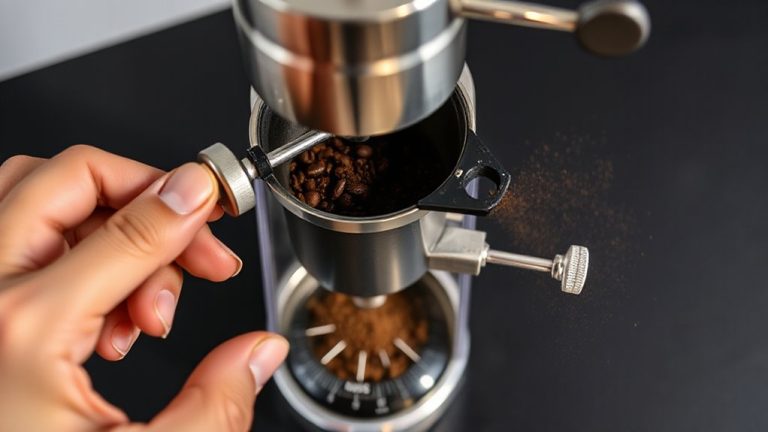
If your grinder’s making a rough, uneven sound even when it’s just idling, the issue might not be the motor-it could be your grinding plates. Misaligned plates cause inconsistent contact, leading to vibration and noise during operation. Poor plate alignment often stems from improper reassembly after cleaning or manufacturing defects in lower-end models. Over time, heat and pressure can also result in surface warping, especially in steel burrs exposed to moisture or heavy use. Warped plates don’t meet evenly, creating a grinding or scraping sound even at idle. Check your burr set for visible gaps or uneven edges; a dial caliper can help spot discrepancies in spacing. If warping’s confirmed or alignment can’t be corrected, replacement is usually the most reliable fix. Regular inspection helps catch these issues early, keeping your grinder quiet and your grind consistent. Choosing a high-quality grinder from the start can significantly reduce the likelihood of such mechanical issues, as top models often include precision-engineered best coffee and espresso grinders with durable, well-aligned burr sets.
Motor Problems Causing Idle Humming
That rough scraping noise from misaligned burrs isn’t the only culprit behind a loud grinder at idle-your motor might be the real source of the humming. If you hear a persistent low buzz, especially after extended use, overheating coils could be to blame. When the motor runs too hot, the copper windings expand and degrade, reducing efficiency and increasing noise. Continuous strain from grinding hard beans or long sessions can worsen this. You might also notice a burnt smell or slower performance. In some cases, worn brushes or damaged windings cause electrical arcing-a dangerous spark inside the motor that creates a sharp, crackling hum. This isn’t just noisy; it’s a fire risk. Brands like Baratza or Eureka design motors to handle daily use, but even they fail under poor maintenance. If the hum changes pitch or gets louder over time, unplug the grinder and inspect it. Don’t ignore signs of electrical arcing or overheating coils-replace or repair before further damage.
Loose Parts and Excessive Vibration
Your grinder’s hum might not just be about the motor-loose parts can turn a quiet morning routine into a noisy hassle. A loose housing often rattles when your grinder runs, creating vibrations that amplify sound. Over time, constant use can loosen mounting bolts, especially in flat burr grinders like the Baratza Encore or Fellow Ode, letting internal components shift slightly during operation. That movement doesn’t just add noise-it can wear parts faster. You might notice the grinder wobbling or sound becoming hollow, signs the housing or base isn’t secure. While tightness varies by model, checking mounting bolts with a hex key takes seconds and prevents long-term damage. Don’t overtighten-just snug them evenly. A stable fit reduces vibration and keeps grinding consistent. Fixing loose housing or bolts isn’t glamorous, but it’s one of the quickest ways to quiet things down.
How to Diagnose Idle Grinder Noise
What’s causing that rattle when your grinder sits idle? Start by unplugging the unit-safety first. Check for loose parts you might’ve missed, especially around the burr chamber. Next, inspect blade sharpness; dull or uneven burrs can create harmonic noise even when not grinding. Run your finger (carefully) along the edges-uneven wear suggests a need for cleaning or inspection. Also, test the electrical grounding. A poorly grounded motor may produce a humming sound due to current leakage, especially in older models like certain Baratza or De’Longhi units. Use a multimeter if unsure, or plug into a grounded outlet to compare noise levels. Don’t assume vibration always means mechanical failure-sometimes it’s an electrical grounding issue. Isolate each factor methodically: tighten components, assess burr condition, then verify power setup. This narrow focus helps pinpoint whether noise stems from wear, fit, or electricity-not guesswork.
Repair or Replace Your Noisy Grinder?
How do you decide when a noisy grinder is worth fixing or time to replace? Consider repair if the issue is minor, like loose parts or incorrect belt tension. If you’re hearing grinding noises during idle, check for gear slippage-this often points to wear but might be fixable. However, persistent noise after basic fixes usually means internal damage.
Here’s a quick guide:
| Issue | Repairable? | Replacement Recommended? |
|---|---|---|
| Loose screws or burrs | Yes | No |
| Belt tension misalignment | Yes | Only if recurring |
| Severe gear slippage | No | Yes |
Older models with consistent vibration or slipping belts often cost more to fix than replace. If your grinder is over five years old and lacks manufacturer support, replacement is usually smarter. Newer grinders with solid warranties offer better long-term value. Weigh repair cost against a new unit’s price and reliability.
On a final note
If your grinder’s too loud when idle, check the bearings, plates, and motor first. Worn bearings often cause grinding noises, while misaligned plates create uneven friction. A humming motor might need servicing. Loose parts increase vibration and wear. Diagnose by inspecting each component methodically. Repairing can save money, but if parts are outdated or damage is severe, replacing the grinder-like upgrading to a Baratza Encore or Fellow Ode-might be smarter for long-term performance and noise control.