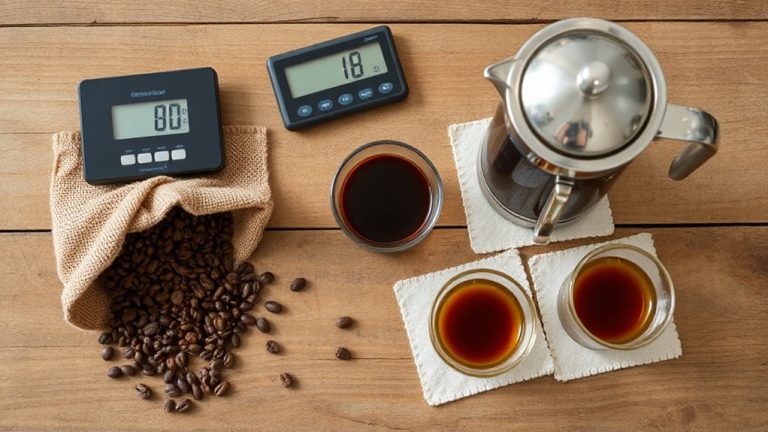
Troubleshooting a Grinder That’s Not Dosing the Right Amount
Your grinder might under- or overdose due to misaligned burrs, static, or buildup. Recalibrate the grind setting and clean the burrs weekly with a brush-use grinder tablets every two weeks. Reduce static with tools like Grounded AF or a light mist on beans. Check for wear if particles look inconsistent or retention climbs, especially on models like the Baratza Encore. Always weigh doses with a scale to catch variances. If doses still vary, deeper adjustments may be needed.
Notable Insights
- Calibrate grind settings and verify consistency across multiple days using a digital scale for accurate dosing.
- Clean burrs regularly to remove coffee fines and buildup that cause clogs and inconsistent grind output.
- Address static electricity with anti-static tools or light bean misting to improve bean flow and dose accuracy.
- Weigh actual output to detect discrepancies from set dose, checking for retention in burrs or chute.
- Replace worn burrs showing uneven wear or dull edges to restore precise dosing and particle consistency.
Calibrate for Consistent Dosing
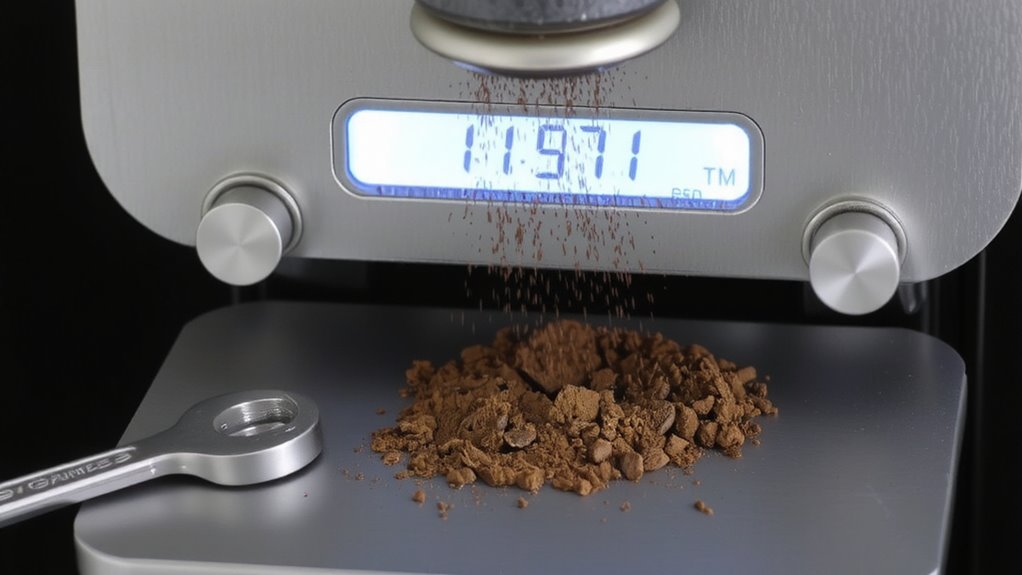
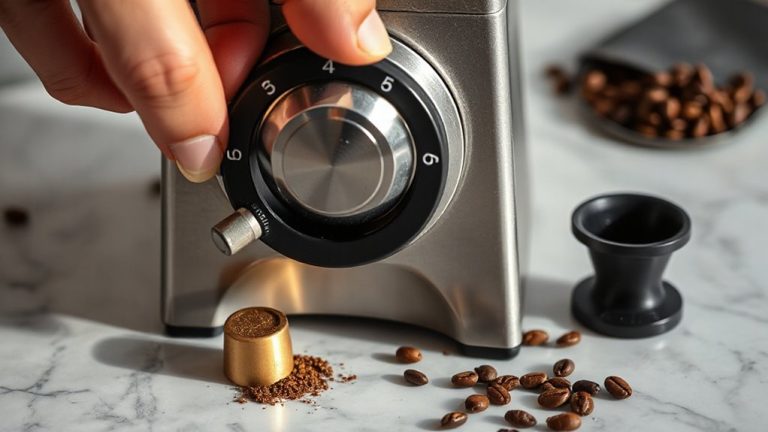
While your grinder might seem ready to go out of the box, it’s almost certainly not dosing consistently until you calibrate it properly. Dosing consistency starts with accurate grind calibration, especially for espresso. Most grinders ship with factory settings that vary between units, so relying on the preset won’t cut it. You’ll need to adjust the burr alignment or step setting-depending on whether you have a conical or flat burr model-to match your brew method. For example, a Lelit Bella or Baratza Sette requires different calibration than a high-end Eureka model. Small changes matter: even half a click can alter output by 0.5g. Always dose into a scale while testing. Run this check over several days to confirm repeatable results. Skipping grind calibration leads to under-extraction or channeling. Don’t assume it’s set right-verify it. For optimal performance, consider using one of the Best Mill Grinders recommended in our comprehensive buying guide.
Clean Burrs to Fix Dosing Issues
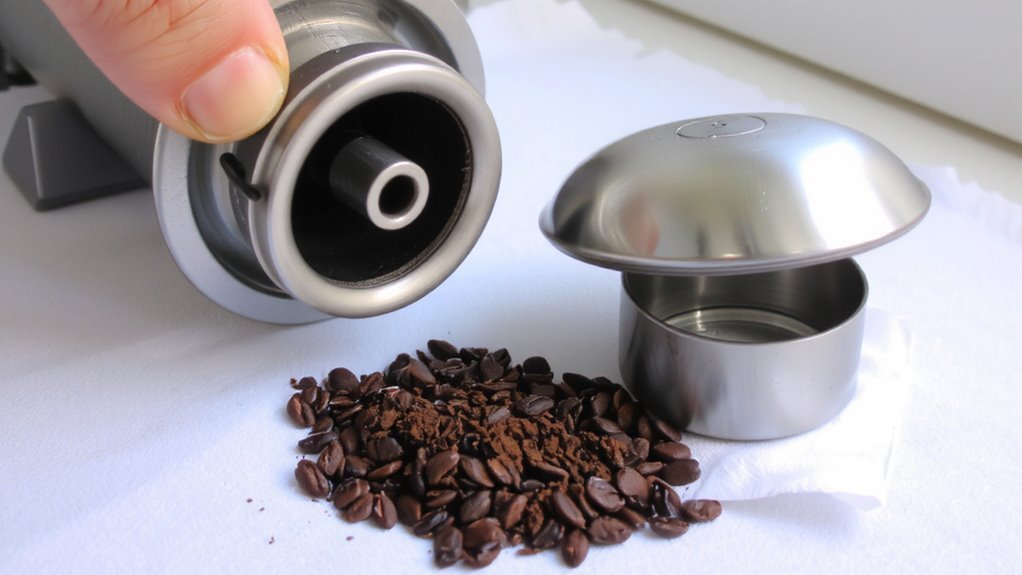
Grind buildup is the silent killer of dosing accuracy. Over time, coffee oils and fines clog your burrs, throwing off grind consistency and dosing. That’s why regular grinder cleaning and proper burr maintenance are essential. Skipping these tasks leads to uneven particle size, channeling, and frustrating shots. A clean burr set grinds evenly, ensuring your dosing reflects your settings.
| Tool | Use Case | Frequency |
|---|---|---|
| Brush | Daily debris removal | After each use |
| Grinder tablets | Deep residue cleaning | Every 2 weeks |
| Isopropyl alcohol & cloth | Stubborn oil buildup | Monthly |
| Compressed air | Dust in crevices | Weekly |
| Burr removal tool | Full inspection/cleaning | Every 3–6 months |
Check your burrs often-you’ll spot wear or clogs early. This routine keeps your grinder dosing right and extends its life. Treat grinder cleaning like clockwork, and your coffee will thank you. Using the right cleaning brush design can significantly improve cleaning efficiency and prevent residue buildup in hard-to-reach areas.
Fix Static and Improve Bean Flow
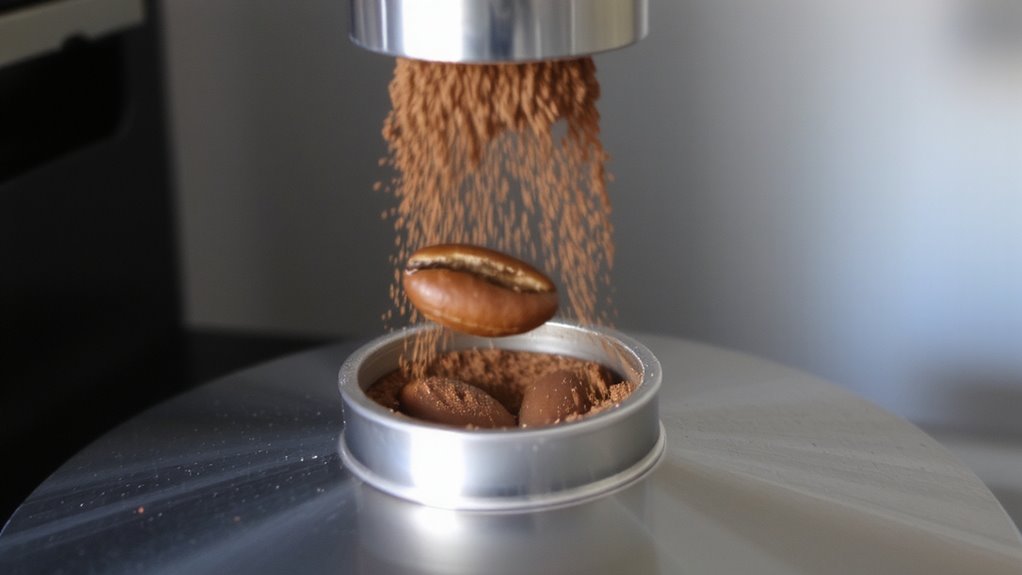
When beans cling to the hopper or shoot out uncontrollably during grinding, static is likely to blame. That charge builds up quickly in dry beans, especially in low-humidity environments, causing inconsistent bean dispersion and messy grind adhesion. You’ll notice clumps of grounds sticking to the chute or burr carrier-this disrupts dosing accuracy. To fix it, start by adjusting your environment: a small humidifier nearby can reduce static. Some users lightly dampen beans with a mist of water, though too much moisture risks damaging burrs. Anti-static grinders like the Niche Zero or modifications like the Grounded AF Static Guard redirect charge and improve flow. You can also try grinding a small buffer dose before your actual dose to clear clinging grounds. These steps cut down static, improve bean dispersion, and reduce unwanted grind adhesion-giving you more consistent dosing with less mess. For those exploring premium options, the Best Grinders for Cold Brew offer models specifically designed to handle coarse, consistent grinds with minimal static.
Replace Worn Burrs for Better Dosing
If your grinder’s output feels inconsistent no matter how many tweaks you make, worn burrs might be the culprit. Over time, burrs lose sharpness, leading to uneven particle size and poor dose control. This affects extraction, no matter how precise your settings seem. Worn burrs also worsen grind retention, trapping grounds that later fall out and skew your next dose. Even if you’ve adjusted burr alignment, degraded edges can’t maintain consistency. You might notice more fines or boulders in the puck, a sign the cut isn’t clean. For most grinders-like the Baratza Encore or 1ZPresso models-burr replacement restores performance. OEM burrs are usually the best fit, but some aftermarket options offer longer life. Replacing them isn’t hard, and it’s cheaper than a new grinder. If your grinder’s months or years old and doses wildly, fresh burrs could be the fix you need.
Weigh Doses to Test Accuracy
You’ve checked the burrs and ruled out wear as the cause-now it’s time to see exactly what your grinder is putting out. Weigh each dose with a digital scale to test accuracy. Even small variances matter: a 0.5-gram difference can affect extraction. Start by grinding as usual and catching the grounds in a portafilter or container on the scale. Compare the actual weight to your set dose. If they don’t match, check for grind retention-leftover grounds trapped in burrs or chute-which skews output. High retention models, like some entry-level grinders, waste coffee and reduce consistency. Bean density also plays a role; dense beans from high altitudes may need recalibration since they resist grinding differently. For best results, adjust grind settings and retest. Consistent weight means better shots. Repeat this test weekly to catch drift early.
On a final note
You’ve checked the calibration, cleaned the burrs, and weighed your doses-now you can trust your grinder’s output. If dosing’s still off, static or worn burrs might be the culprit. Try a quick anti-static fix or consider replacing old burrs with a fresh set, like the OEM ones from Baratza or Lelit. Consistent beans and regular maintenance make all the difference. Keep testing and adjusting-you’ll get it right.