Troubleshooting Weak Cold Brew With Increased Coffee Mass and Longer Steeping
Use a 1:4 coffee-to-water ratio or even 1:3 for a stronger concentrate, and steep it for 18–24 hours at room temperature. A coarse grind prevents over-extraction and clogging, so stick to a burr grinder for consistency. Go with glass or stainless steel containers to avoid off-flavors. Bloom the grounds with a little hot water first to boost extraction. Choose metal or cloth filters if you want more body and strength. Dilute the concentrate 1:1 with filtered water or milk, and serve over cold brew ice cubes. Try these tweaks to see where your brew improves.
Notable Insights
- Increase coffee-to-water ratio to 1:4 or 1:3 for a stronger concentrate without over-dilution.
- Steep for 18–24 hours at room temperature to ensure full extraction and bold flavor development.
- Use a coarse grind size to prevent over-extraction and ensure even water flow through grounds.
- Bloom coffee with hot water before steeping to release gases and improve extraction efficiency.
- Filter with metal or cloth to retain oils and fine particles, enhancing body and perceived strength.
Use More Coffee for Stronger Cold Brew
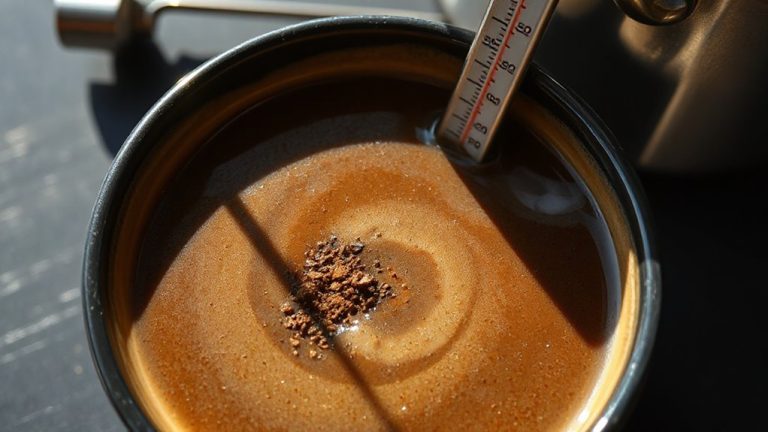
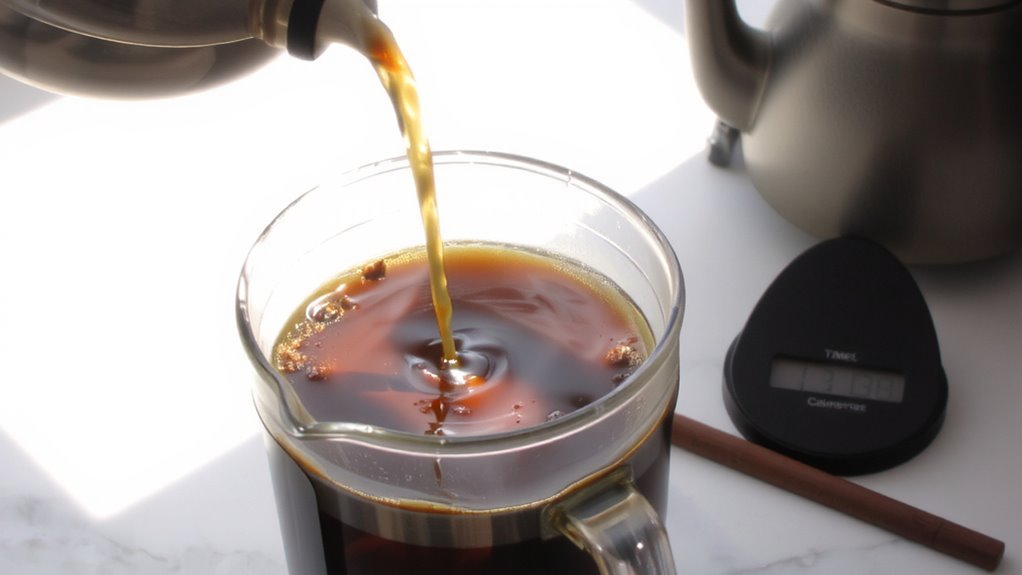
A lot of weak cold brew comes down to one simple fix: you’re probably not using enough coffee. Most people underestimate the ratio, but going heavier-like 1:4 or even 1:3 (grounds to water)-makes a stronger concentrate. Before you steep, try the bloom technique: pour a small amount of hot water over the grounds first, stir, and let it sit for 30 seconds. This helps release trapped gases, especially in fresh beans, improving extraction. Then, add the rest of your water, cool to room temp or colder. Water chemistry matters too-use filtered water with balanced minerals; overly soft or overly hard water skews taste. Tap water’s impurities can mute flavor, so a simple carbon filter like Brita helps. More coffee means stronger flavor, but only if extraction is efficient. Bloom and clean water set the stage. Skip them, and even extra grounds might fall flat. For best results, choose a coarse-ground medium-dark roast blend specifically formulated for cold brew.
Steep for 18–24 Hours for Full Flavor
If you want bold, well-extracted cold brew, you’ll need to steep your grounds for 18 to 24 hours-anything less and you risk underdeveloped flavor. Time allows the coffee to fully interact with water, drawing out rich, balanced notes without bitterness. Use room-temperature water; cold water slows extraction and may lead to weak results, while warm water can over-extract or spoil the batch. Room temperature is ideal for consistent, safe steeping. Choose a clean, airtight steeping vessel like a mason jar or a dedicated cold brew pitcher to limit oxidation and off-flavors. Plastic can retain odors, so glass or stainless steel is better. Stir the grounds and water well at the start to guarantee even saturation. Don’t disturb it during steeping-just let it sit in a cool, dark place. After 18–24 hours, strain thoroughly. You’ll get stronger, more complete flavor every time. For best results, consider using one of the best cold brew makers designed to simplify and enhance the brewing process.
Grind Coarse to Avoid Weak Extraction
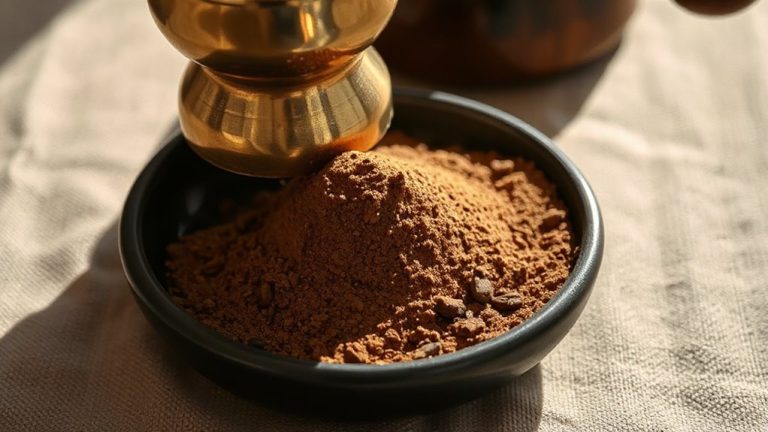
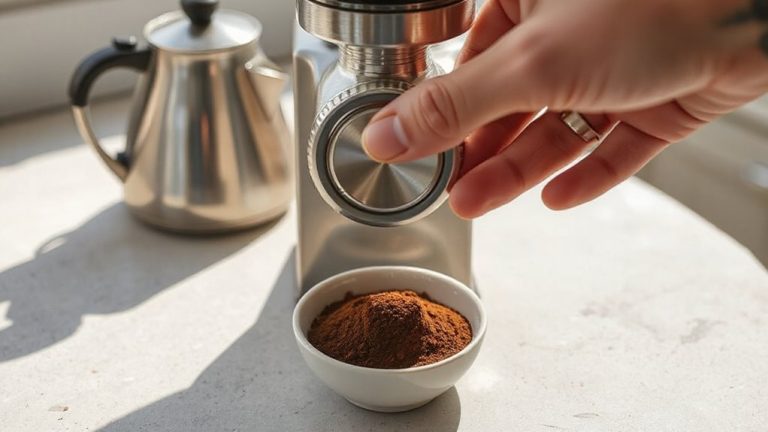
Most coffee lovers overlook grind size, but getting it right makes or breaks your cold brew. You need a coarse grind to prevent over-extraction and bitterness, especially with longer steeps. If your grounds are too fine, they clog filters and extract unevenly, leading to weak or muddled flavor. A coarse grind boosts extraction efficiency by letting water flow evenly through the coffee, pulling out balanced flavors without harshness. Use a burr grinder-it guarantees better grind uniformity than a blade grinder, which creates inconsistent particles. Inconsistent grinds lead to some bits over-extracting while others under-extract, hurting overall taste. For cold brew, aim for grounds the size of coarse sea salt. Brands like Baratza Encore or 1ZPresso Q2 offer reliable, consistent results. Always adjust grind size before changing ratios or steep time-it’s the quickest fix for weak or off-flavor cold brew. A high-quality coffee grinder for cold brew ensures optimal grind consistency and enhances flavor extraction.
Choose the Right Filter for Stronger Results
While grind size sets the foundation, your filter choice can make or break the strength and clarity of your cold brew. The right filter material impacts how much sediment and oils pass through, directly affecting brew clarity and body. Paper filters trap most fines and oils, giving a clean, bright concentrate-but they can slow drainage and sometimes absorb desirable compounds. Metal or reusable cloth filters allow more oils and fine particles, boosting body and perceived strength, but may result in a cloudier brew. If you want stronger, richer cold brew without excess grit, a metal filter like the Able Disk or a fine-weave cloth offers a balance. Just know that each filter material demands proper cleaning to avoid residue buildup. Choose based on your preferred clarity and texture-paper for crisp, clean results; cloth or metal for boldness.
Dilute Cold Brew Correctly for Balance
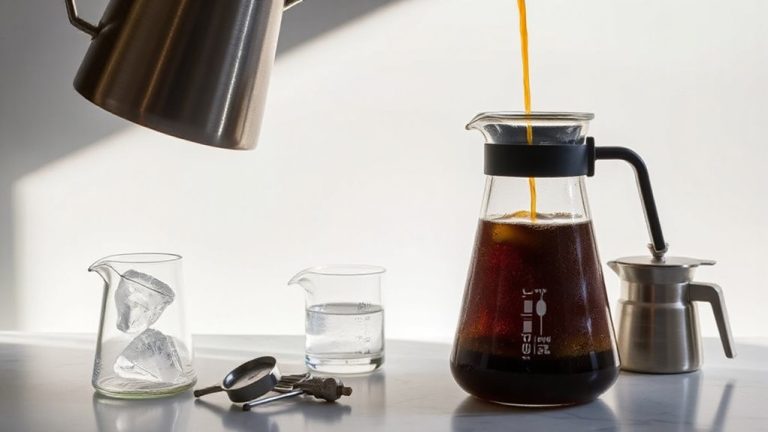
A well-made cold brew concentrate is too strong to drink straight, so diluting it properly is key to getting a balanced, enjoyable cup. You control the final brew strength by adjusting your dilution ratio-typically 1:1 with water or milk, but it depends on your taste and bean choice. For lighter coffees, a 1:1 ratio often gives the best flavor balance. With darker roasts, you might prefer 1:1.5 to avoid overwhelming bitterness. Use filtered water to preserve clean taste. Serve over ice, but remember that melting affects strength-stronger concentrate or chilled dilution minimizes weak results. Start with smaller additions, then adjust. Too much water dulls complexity; too little creates harshness. Finding your ideal balance guarantees smoothness and clarity in every sip.
Fix These Common Cold Brew Mistakes
Getting your dilution right sets the foundation for a balanced cold brew, but even with perfect ratios, other missteps can undermine your results. Poor water quality is a common culprit-using tap water with high chlorine or mineral content can mute flavor, so opt for filtered water to guarantee clarity and clean taste. Your brewing vessel matters too; use non-reactive containers like glass or food-grade plastic, not metal, which can impart off-flavors. Make sure the vessel seals well to prevent oxidation and refrigerate during steeping if leaving it longer than 18 hours. Grind size also impacts extraction-too fine leads to bitterness, too coarse yields weak brew. Stick to a coarse, consistent grind. Finally, always stir the grounds after adding water to eliminate dry pockets and promote even saturation. These fixes support better extraction without needing stronger coffee ratios.
Get Bolder Cold Brew: Quick Fixes That Work
If your cold brew lacks punch, you don’t need to start over-small tweaks can make it noticeably bolder. One quick fix: increase your coffee-to-water ratio to 1:4 instead of 1:8 for a richer concentrate. Steep for 16–18 hours; longer isn’t always better, but it helps if your brew tastes thin. Grind a bit finer-like coarse sand-to extract more flavor, but avoid fines that cause over-extraction. You might believe cold brew myths like “cold brew is always smooth,” but under-extraction leads to weak, sour results. Try flavor hacking with a pinch of salt or a cinnamon stick during steeping-small additions can enhance depth without sweetness. Avoid diluting too much when serving; use larger ice cubes or cold brew ice cubes. These adjustments are practical, low-cost, and more effective than buying new gear. Consistency beats complexity here.
On a final note
You’ll get stronger cold brew by using more coffee-try a 1:4 coffee-to-water ratio. Steep it 18–24 hours for full extraction, but not longer, or it turns bitter. Always grind coarse to prevent over-extraction and sludge. Use a metal or cloth filter for better flow and richer body. Dilute the concentrate with equal parts water or milk. Skip paper filters-they trap oils and weaken flavor.