Espresso Pressure Gauge: What 6-9-11 Bars Actually Mean
Your espresso machine’s pressure gauge shows pump output, usually at the group head, not the actual brew pressure at the puck-so a 9-bar reading might really be 8.5 to 9.3. Small fluctuations are normal, especially with vibration pumps; brief dips to 6 bars aren’t a problem. Rotary or pressure-profiling machines run smoother. Consistent pressure means better extraction. If it drops below 6 or spikes above 11, something’s off. You’ll want to check your grind, tamp, and machine type for better control.
Notable Insights
- The pressure gauge shows pump pressure at the group head inlet, not exact brew pressure at the coffee puck.
- A reading of 9 bars is ideal, but actual pressure may vary slightly due to gauge calibration and machine quality.
- Minor fluctuations between 6–9 bars are normal with vibration pumps, especially in entry-level machines.
- Consistent drops below 6 bars or spikes above 11 bars may indicate pump, grind, or blockage issues.
- Stable pressure supports balanced extraction; use grind adjustments and proper tamping to maintain consistent pressure.
What Your Espresso Machine’s Pressure Gauge Really Measures
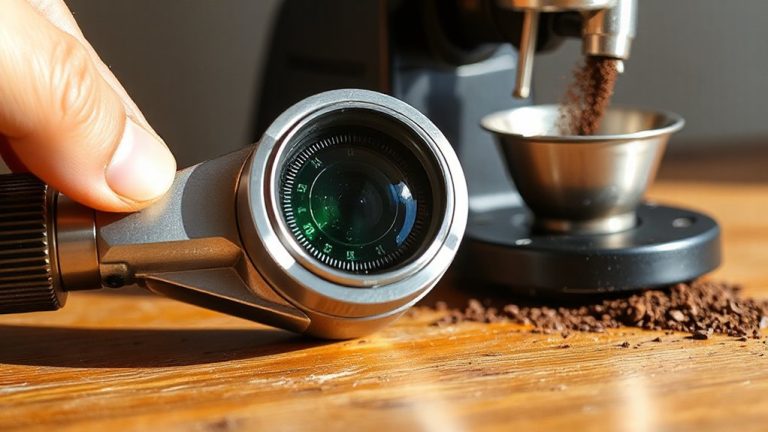
That needle on your espresso machine’s pressure gauge? It doesn’t measure brew pressure directly at the puck-it shows pressure from the pump, usually at the group head inlet. What you see is influenced by the pressure origin, whether it’s from a vibration pump or a more stable rotary type. These readings give you a general idea, but not the full story under the portafilter. Gauge calibration varies by machine; cheaper models may have looser tolerances, so a reading of 9 bar might actually be 8.5 or 9.3. That’s why pros often use third-party pressure stats for accuracy. Don’t rely solely on the built-in gauge. Instead, use it as a baseline. If it’s consistent and matches your taste, it’s likely fine. But if shots pull unevenly despite the gauge, calibration or pressure dynamics may be off. Know your machine’s limits.
When Pressure Fluctuations Are Normal (and When to Worry)
While some swing in pressure is expected during a shot, especially with certain machines, you’ll want to keep an eye on how much and when it happens. With entry-level pumps, minor fluctuations are normal due to pump cycling-where the pump turns on and off to maintain average pressure. You might see the needle dip to 6 bars and climb back to 9. That’s typical. Mid-range and high-end machines often have rotary pumps or pressure profiling, which allow smoother, more controlled pressure curves. In those cases, wild swings are rare and could signal an issue. If pressure drops below 6 bars regularly or spikes above 11, check for clogs, worn seals, or pump failure. Brief dips at the start or end of a shot? Usually nothing to worry about. Consistent instability during extraction, though, means it’s time to troubleshoot or service your machine.
How Rising or Dropping Pressure Changes Espresso Flavor
What if your espresso’s bitterness or sourness isn’t just about the beans-but the pressure curve pulling the shot? If pressure rises too high during extraction, you’ll likely pull out harsh bitter notes, especially near the end of the shot. This over-extraction happens when water forces through too slowly, often due to restricted flow or fine grind-though we’re not adjusting grind here. On the flip side, if pressure drops prematurely, you risk under-extraction, bringing sour tones to the surface. Water doesn’t spend enough time dissolving sugars and complex compounds. Machines with stable 9-bar pressure help avoid these extremes. You’ll taste cleaner balance when pressure stays consistent. Fluctuations matter-not just in numbers, but in flavor. Spotting this link helps you diagnose issues faster and brew better, shot after shot.
Adjusting Grind to Stabilize Pressure Readings
If your pressure gauge climbs too high or drops too fast during extraction, adjusting your grind size can help bring things back into balance. Grind coarseness directly affects water flow-finer grinds slow it, increasing pressure, while coarser grinds let water pass easier, lowering it. Small tweaks make a difference, especially if pump calibration is accurate. Always adjust incrementally and observe how the pressure settles around 9 bars at the peak. A consistent grind is essential for this process, and using a high-quality espresso grinder can greatly improve shot stability.
| Issue | Grind Adjustment | Emotional Outcome |
|---|---|---|
| Pressure too high | Coarsen slightly | Relief, control |
| Pressure too low | Refine slightly | Confidence, progress |
| Spikes early | Coarsen | Frustration reduced |
| Drops mid-pull | Refine | Satisfaction in fix |
Track changes over several shots. A stable reading means your grind and pump calibration are working together.
Pro Tips for Consistent Pressure During Extraction
You’ve dialed in your grind, and your machine’s pumping at the right pressure-now it’s about keeping that pressure steady from start to finish. Your tamping technique plays a big role: tamp evenly and level to avoid channeling, which causes pressure drops. Use a calibrated tamper and apply about 30 pounds of pressure-consistent force matters more than strength. Distribute the grounds evenly before tamping; a simple twist with a distribution tool helps. Also, check your water quality-hard water leads to scale buildup, which affects pump performance and pressure stability. Use a filter if your tap water has high mineral content. Machines like the Breville Barista Express need regular descaling to maintain consistent pressure. Avoid soft or distilled water, as it harms pump seals. Finally, preheat everything-portafilter, group head, cup-so temperature swings don’t disrupt extraction. Small habits make a real difference.
On a final note
Your espresso machine’s pressure gauge helps monitor extraction, with 9 bars being ideal for most shots. Small fluctuations during brewing are normal, especially with vibration pumps. Big swings or consistently low pressure could signal grind, tamping, or machine issues. Adjust your grind size first-finer increases pressure, coarser lowers it. For stability, use a quality burr grinder and check seals or group head function if problems persist.