Exploring the Genetic Origins of the Java Coffee Plant in Indonesia
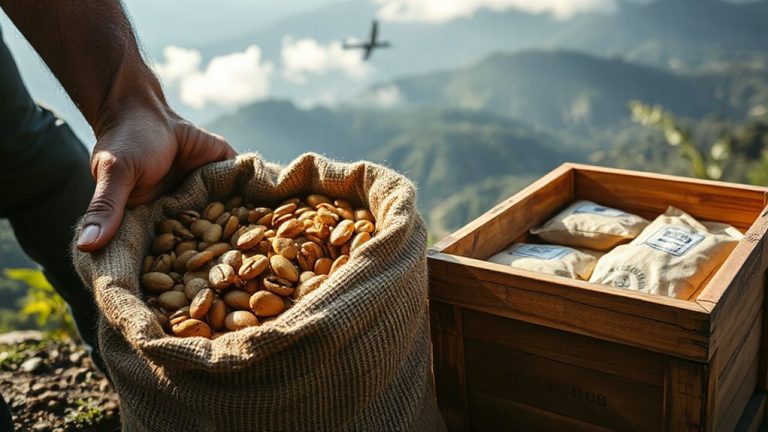
You’re tasting coffee that started in Ethiopia, carried by Dutch traders to Java in 1699. Those original Arabica plants adapted over centuries in volcanic soil rich in potassium and magnesium, shaping stronger roots and denser beans. Isolated growth limited genetic diversity, giving Java coffee a uniform profile roasters rely on. While this predictability helps at scale, it also reduces natural disease resistance. Climate and shade practices further refined its development, making today’s Java coffee both a product of old genetics and specific island conditions, with more layers to uncover.
Notable Insights
- Java Arabica originated from Dutch-smuggled Yemeni plants introduced in 1699, forming the genetic foundation of Indonesian coffee.
- Isolated cultivation in Java led to unique genetic markers and mutation patterns distinct from Ethiopian and Yemeni Arabica varieties.
- Volcanic soil rich in potassium and magnesium accelerated genetic adaptation, favoring dense beans and enhanced disease resistance.
- Limited cross-pollination and environmental pressures reduced genetic diversity, increasing cultivation predictability but decreasing natural resilience.
- Java’s shade-tolerant, climate-adapted Arabica evolved under humid highland conditions, shaping its distinct and stable genetic profile.
Ethiopian Roots of Java’s Coffee
While coffee’s journey to Java is often linked to colonial trade routes, its genetic origin traces back to Ethiopia, where Coffea arabica first grew wild. You’re looking at the birthplace of the beans that shaped global coffee culture. Ethiopian migration helped spread coffee beyond highland forests, carrying knowledge of its use and cultivation. Ancient cultivation practices there were simple-shading plants under forest canopy, hand-harvesting ripe cherries-but effective. These methods still influence sustainable growing today. Ethiopian heirloom varieties, genetically diverse and resilient, form the base of many modern coffee strains. If you’re sourcing beans for consistency or flavor clarity, understanding this origin matters. Wild Arabica from Ethiopia tends to have complex acidity and floral notes, unlike more uniform commercial cultivars. When choosing gear, consider lighter roasts to preserve these delicate profiles. Use a pour-over like the Hario V60 or a precise brewer like the Apex Pro to highlight origin characteristics. Indonesia produces some of the world’s most sought-after beans, including best Indonesian coffee that reflect both terroir and tradition.
How the Dutch Brought Coffee to Java
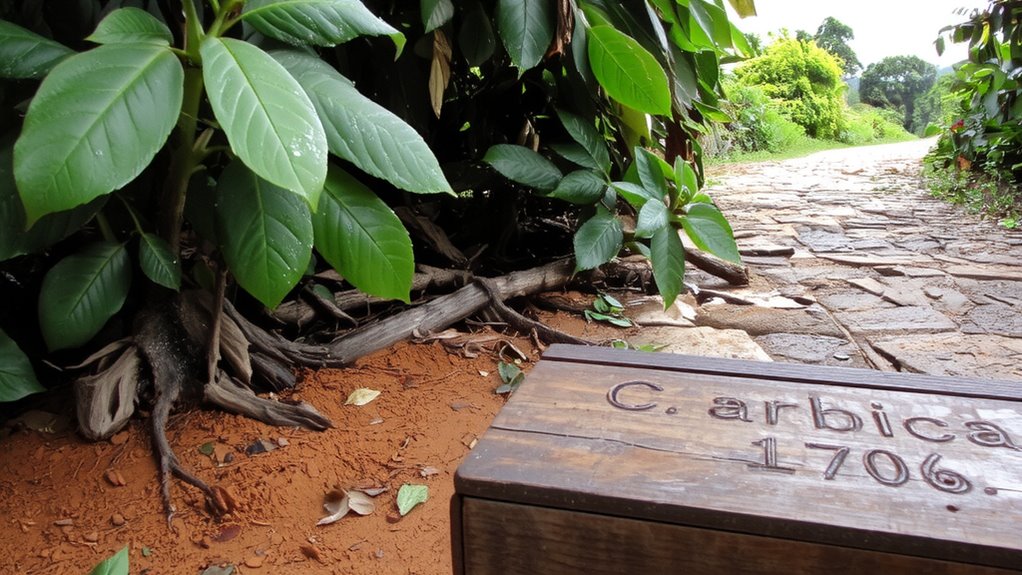
Since the Dutch East India Company wanted to break the Arab monopoly on coffee in the 17th century, they smuggled live coffee plants out of Yemen and shipped them to their colony in Java. You see, Dutch colonization wasn’t just about control-it was about profit through crop transfer. These early plants launched Java’s coffee industry, driven by trade expansion and global demand. The Dutch set up plantations, forcing local farmers to grow coffee under strict quotas.
| Year | Event | Impact |
|---|---|---|
| 1699 | First coffee seedlings arrive | Start of Java’s coffee economy |
| 1711 | First export to Europe | Proved commercial viability |
| 1725 | Java dominates Asian exports | Peak of early Dutch trade expansion |
You can trace modern production methods back to these roots-planting, harvesting, and processing all shaped by colonial systems. While today’s farms are independent, the structure remains.
How Volcanic Soil Shaped Java’s Coffee Genetics
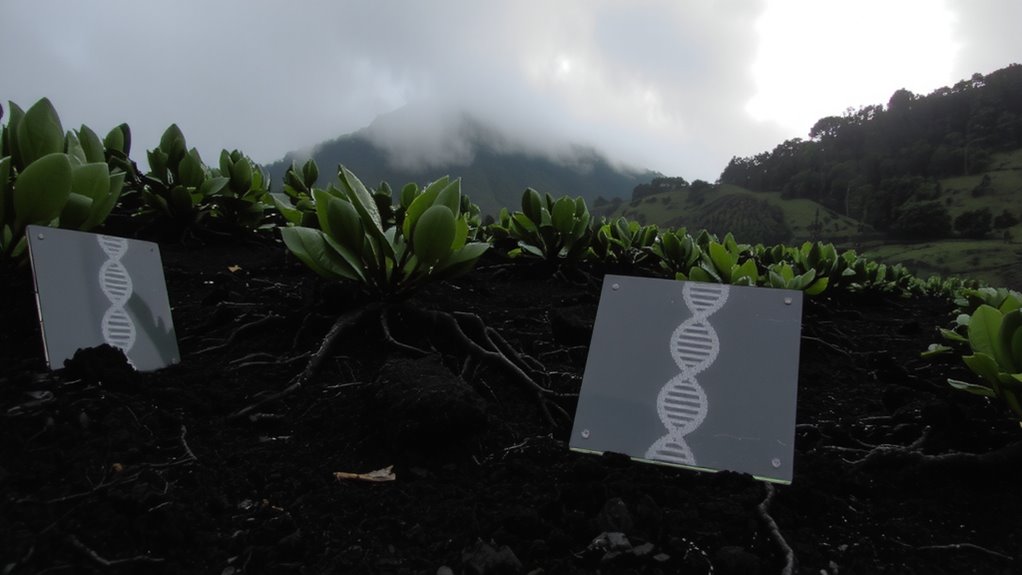
The rich volcanic soil of Java isn’t just ideal for growing coffee-it’s reshaped the genetic traits of the plants over centuries. You’re seeing the direct result of volcanic mineralization, where nutrients like potassium and magnesium seep into the earth, driving stronger root systems and disease resistance. This isn’t just fertile ground-it’s a genetic accelerator. Over generations, java coffee plants developed distinct soil adaptation traits, allowing them to absorb minerals efficiently and thrive in high-altitude, ash-rich slopes. These conditions favor denser bean development, which often translates to more complex flavor profiles when roasted correctly. While other regions rely on added fertilizers, java’s natural soil reduces dependency on external inputs. Still, consistent crop monitoring is necessary to prevent nutrient depletion. The soil doesn’t just support coffee-it actively shapes how the plant evolves. This natural advantage gives java a long-term edge in sustainable cultivation, provided farmers respect the balance between harvest intensity and soil recovery.
The Unique DNA of Java Arabica
Because Java Arabica has evolved in near-isolation on the volcanic slopes of Indonesia, its DNA carries markers not found in other Arabica populations, giving it a genetic signature all its own. You’ll notice this when comparing beans from Yemeni or Ethiopian stock-Java’s mutation patterns are distinct, shaped by limited cross-pollination and environmental pressures. These mutations haven’t reduced quality but instead added to its stability in cultivation. While many regions prioritize high genetic diversity for resilience, Java Arabica thrives with less, partly due to consistent growing conditions. Still, low diversity means you must manage pests and diseases carefully-there’s less natural resistance. If you’re selecting seeds for farming or breeding, consider these mutation patterns as fixed traits. They offer predictability, which benefits large-scale roasters wanting uniform flavor. Unlike more variable Arabica strains, Java’s DNA delivers consistency, a practical edge when scaling production. Know its limits, but use its stability to your advantage.
How Java Coffee Adapted to Local Climates
While you won’t find Java coffee thriving in frost or dry plains, it’s carved out a niche by adapting tightly to Indonesia’s humid highlands and rich volcanic soil. You’ll notice its shade tolerance lets it grow well under forest canopies, reducing the need for sun protection strategies. It’s not fully drought resistant, but short dry spells won’t cripple it thanks to deep root development. These traits make it low-maintenance compared to other Arabica variants.
| Climate Factor | Java Coffee Response | Practical Implication |
|---|---|---|
| High Humidity | Thrives | Ideal for mountain farms |
| Full Sun | Moderate stress | Shade cover improves yield |
| Light Frost | Poor survival | Not suitable above 1,800m |
| Volcanic Soil | Strong nutrient uptake | Less fertilizer needed |
| Shade Conditions | High tolerance | Allows intercropping |
How Java Coffee Fights Climate Change
Though you might not expect a coffee plant to make a difference in the climate crisis, Java coffee plays a quiet but meaningful role by supporting sustainable farming practices in Indonesia’s highland regions. When you choose shade-grown Java coffee, you’re backing farms that integrate trees into cultivation, boosting carbon sequestration. These systems trap CO₂ more effectively than full-sun plantations, reducing net emissions. Sustainable farming here means less chemical use, terraced plots to prevent erosion, and water conservation-key for long-term land health. Many smallholders use composting and intercropping with nitrogen-fixing plants, cutting synthetic fertilizer needs. Unlike industrial farms, these methods maintain biodiversity and soil quality. While yields may be lower, the trade-off supports climate resilience. You help sustain these practices when you buy from verified eco-conscious suppliers. Java coffee won’t solve climate change alone, but its farming model offers a practical, scalable example of agriculture working with nature, not against it.
Using Science to Save Java’s Coffee Legacy
If you’re serious about preserving Java’s coffee heritage, you’ll find science playing a key role in securing its future. Researchers use genetic preservation to identify disease-resistant and climate-resilient traits in Java’s native coffee plants, helping breed stronger varieties. By analyzing plant DNA, scientists pinpoint genes that improve yield and flavor while withstanding rising temperatures. This data guides farmers in selecting robust seedlings. Pairing this with sustainable farming-like shade growing and composting-reduces environmental strain and maintains soil health. For example, farms using cover crops and drip irrigation conserve water and prevent erosion. These methods aren’t just eco-friendly-they boost bean quality. Tools like disease monitoring apps and weather sensors help farmers act fast. Though shifting takes effort and investment, the long-term payoff includes stable harvests and premium beans. You don’t need high-tech labs to contribute-start by supporting farms that use verified seeds and eco-conscious practices.
On a final note
You can brew great coffee from Java beans by focusing on fresh, high-quality beans and the right grind. Use a burr grinder and water just under boiling for best results. Pour-over suits Java’s smooth profile, while French press brings out its richness. Store beans in an airtight container away from light. Freshness peaks within two weeks of roasting.