Cold Brew Fermentation: Risks and Benefits of Extended Room-Temperature Steeping
You can develop richer, wine-like flavors by fermenting cold brew at room temperature, but don’t exceed 12 hours or you risk mold and off-flavors. Light roast beans from fruity origins often yield the most interesting results. Use a clean glass jar, stir once daily, and keep temps around 70°F. After steeping, refrigerate immediately. If it smells sharp, sour, or shows mold, toss it. Short fermentation can add complexity-just know when it’s safer to stick with standard brewing. You’ll find the finer details worth considering before your next batch.
Notable Insights
- Extended room-temperature steeping of cold brew can enhance flavor complexity but increases spoilage risks.
- Fermentation lasting over 12 hours at room temperature raises chances of mold and bacterial growth.
- Light roast beans often develop more desirable fruity or floral notes during short fermentation periods.
- Use sterilized glass containers and stir daily to reduce contamination risk during room-temperature steeping.
- Discard brew if mold, off smells, or stringy particles appear-refrigeration after 12–36 hours improves safety.
Does Fermenting Cold Brew Improve Flavor?
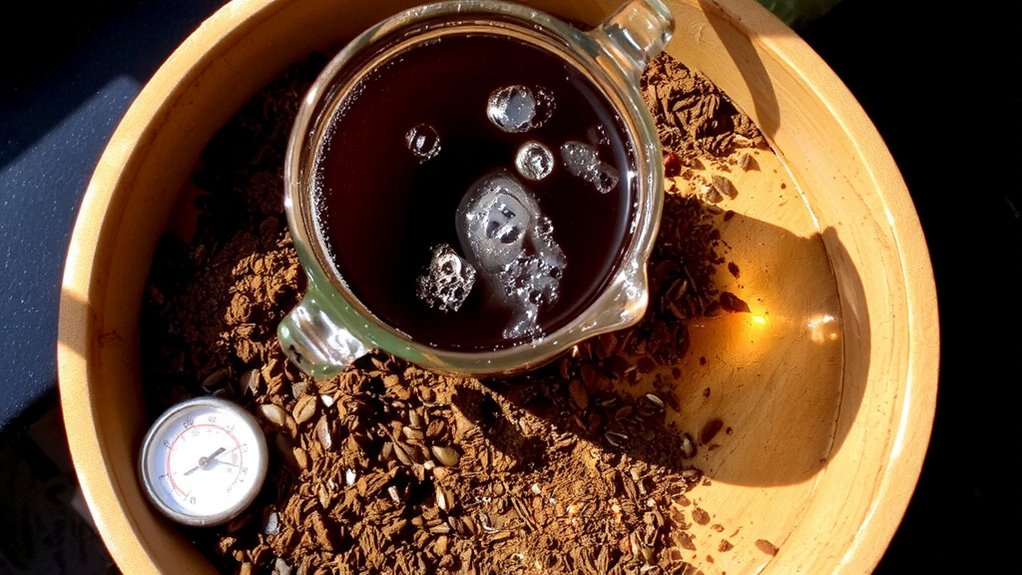
Could fermentation be the secret to smoother, more nuanced cold brew? Some brewers think so. When you let coffee steep longer at room temperature, natural fermentation starts-yeast and bacteria trigger chemical changes that can lead to flavor enhancement. You might notice subtle fruity, floral, or wine-like notes not present in standard cold brew. However, results vary based on water quality, bean origin, and ambient temperature. Lighter roasts often respond better to fermentation, offering more complexity. But there’s risk: over-fermentation can produce off-flavors or vinegar-like sourness. Stainless steel or glass containers help control this better than plastic. While not guaranteed, some small-batch specialty roasters intentionally use fermentation to differentiate their cold brew. If you try it, taste frequently and keep variables consistent. It’s experimental-but for flavor seekers, it’s worth a controlled trial.
How Long Can You Steep Cold Brew Safely at Room Temperature?
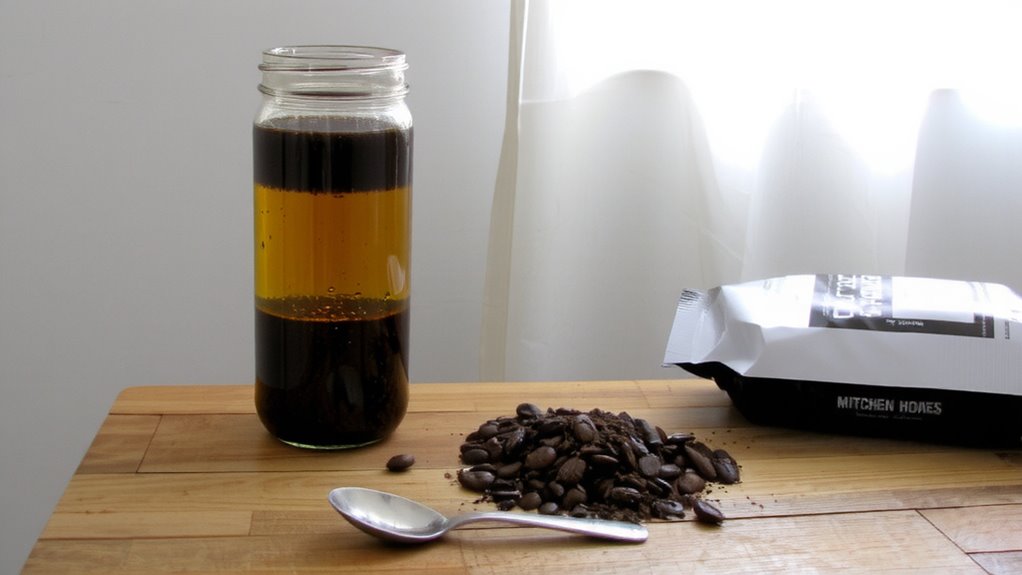
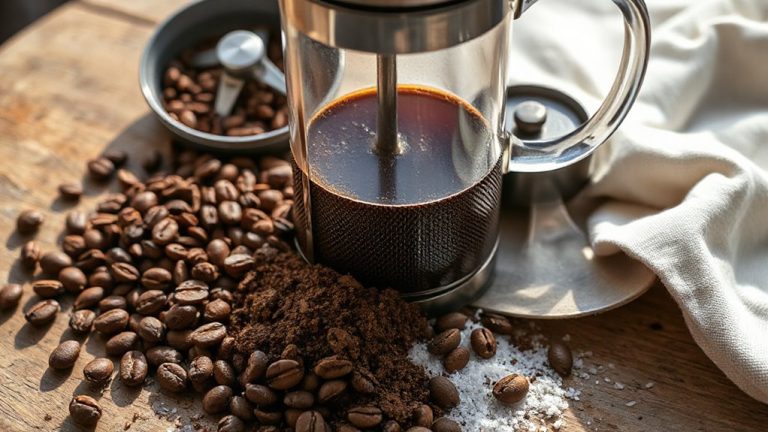
Leaving coffee to steep at room temperature can bring out unique flavors through natural fermentation, but time matters when it comes to safety and taste. You can safely steep cold brew at room temperature for up to 12 hours. Beyond that, the risk of mold growth increases, especially in humid environments or if the coffee isn’t stirred regularly. While some chemical changes during fermentation may enhance fruity or tangy notes, extended steeping often leads to off-flavors and spoilage. Coffee left out for more than a day could harbor bacteria and begin breaking down in undesirable ways. Using a clean, airtight container helps, but it doesn’t eliminate risks past the 12-hour mark. For longer steeping, refrigeration is a safer option, slowing bacterial growth and preserving flavor. If you’re aiming for fermentation effects, stick to controlled timing and always inspect for signs of spoilage. A coarse grind size is ideal for cold brew French press use, as it reduces sediment and improves extraction during extended steeping.
How to Ferment Cold Brew Without Risking Spoilage
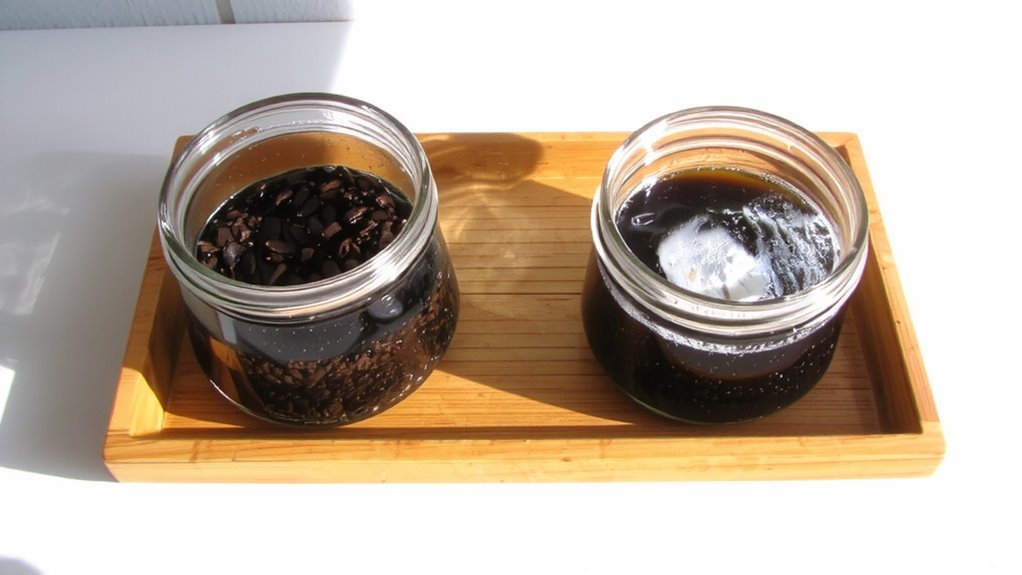
While you can develop deeper, more complex flavors by fermenting cold brew, doing it safely means controlling time, temperature, and cleanliness. You need consistent temperature control-keep your brew between 68°F and 72°F (20–22°C) to avoid encouraging harmful microbes. Use a sealed, food-grade container like a mason jar or fermentation crock, and sterilize all equipment beforehand. Start with freshly ground, high-quality beans to support better microbial balance. Limit steeping to 12–36 hours; longer times increase spoilage risk. Stir once daily to promote even extraction and oxygen distribution without introducing contaminants. Avoid metal or porous plastic containers, as they can harbor bacteria. If you’re new, try a controlled starter culture designed for coffee fermentation, though most rely on natural microbes. Always wash hands and tools thoroughly-small lapses can disrupt microbial balance and lead to off-flavors or spoilage.
Signs Your Fermented Cold Brew Has Gone Bad
Sometimes, even with careful prep, your fermented cold brew can go south-so it’s important to know the warning signs. If you see any mold growth on the surface or along the container’s rim, toss it immediately-mold isn’t something to risk. You might also notice off odors, like sourness beyond typical fermentation, vinegary sharpness, or a sewage-like stench. These aren’t just unpleasant-they’re signs of harmful bacteria or unwanted yeast strains. Cloudiness is normal, but large floating clumps or stringy bits aren’t. Taste a small sip only if there are no visible or smell red flags. If it’s excessively tangy or bitter in a harsh way, discard it. Always store your brew in a clean, airtight container and stick to a 12–48 hour window at room temperature to lower risks. When in doubt, throw it out.
Why You Should Skip Fermentation (And When It’s Worth the Risk)
You’ve just learned how to spot when fermented cold brew turns dangerous, and that knowledge matters-because not every batch will behave. Skipping fermentation avoids potential health implications from harmful bacteria or off-putting molds, especially when leaving grounds at room temperature over 24 hours. Without strict control, even jars or mason-style containers can harbor unwanted microbes. For most people, standard cold brew-steeped in the fridge or for under 16 hours at room temp-is safer and still smooth. That said, if you’re chasing complex flavor notes similar to kombucha or nitro brews, short fermentation (12–18 hours) might suit your taste preferences. Just weigh the risk: beginners should skip it, but experienced makers using clean equipment and immediate refrigeration after steeping may find the trade-off worthwhile. Use glass, sanitize well, and never drink anything suspicious. Investing in a dedicated cold brew coffee maker can improve consistency and safety during steeping.
On a final note
You can steep cold brew at room temperature for up to 16–18 hours safely, but longer may risk spoilage or off-flavors. Fermentation might add complexity, but it’s unpredictable. If you try it, use filtered water, clean gear, and taste frequently. A mason jar with a lid works, but airtight isn’t best-use a paper towel cover. Always check for mold, sour smells, or fizz; when in doubt, throw it out.