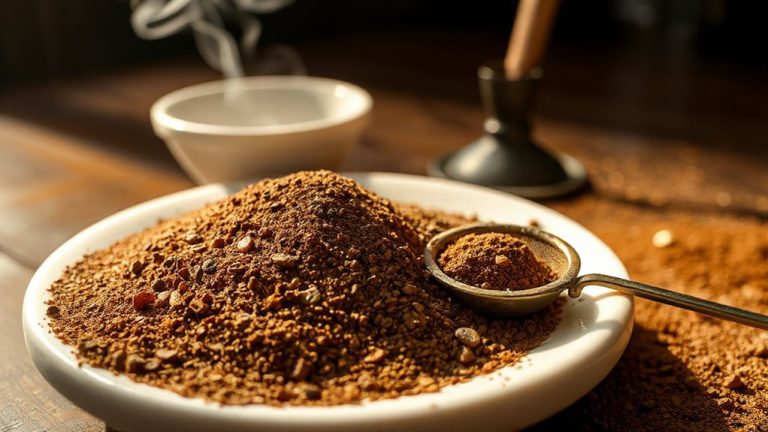
Why Tamping Technique Must Be Adapted to Grind Size for Even Extraction
You need to adjust your tamping pressure based on grind size because fine grounds pack tighter and resist water flow, while coarse grounds leave gaps. Use light pressure (5–10 lbs) for fine grinds to avoid over-extraction, and firm, consistent pressure (around 30 lbs) for coarse grinds to prevent channeling. Uneven or excessive tamping disrupts flow, so keep it level and steady. Pair your grind with the right dose and basket size. Tools like a calibrated tamper or distribution aid help you get it right every time-small tweaks make a noticeable difference in your shot’s balance and flavor.
Notable Insights
- Coarse grinds need firmer tamping to reduce gaps and prevent fast water flow that causes under-extraction.
- Fine grinds require lighter pressure to avoid over-compaction, which restricts water flow and leads to over-extraction.
- Tamping pressure must match grind size to ensure even resistance and uniform extraction across the coffee bed.
- Inconsistent tamping aggravates channeling, especially with uneven particle sizes from low-quality grinders.
- Adjusting tamping technique after setting the correct grind size minimizes extraction defects and shot variability.
Why Grind Size Dictates Your Tamping Pressure
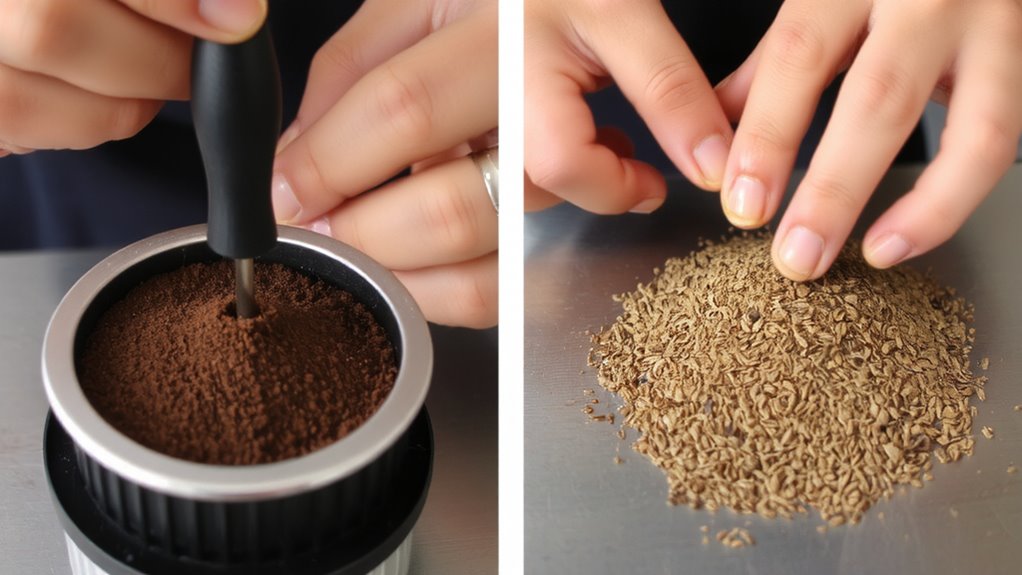
Every little detail matters when pulling a solid espresso shot, and your grind size directly shapes how hard you need to tamp. If your grind is coarse, you’ll need more downward force to compact the grounds-otherwise, water zips through too fast, causing under-extraction. With finer grinds, less pressure is needed; over-tamping restricts flow and risks channeling. The key is matching tamping pressure to grind size to maintain even water distribution. Tamp consistency guarantees each shot starts the same, reducing variables. Grind uniformity from a high-quality burr grinder-like those from Mazzer or Baratza-makes this balance easier, as uneven particles lead to inconsistent resistance. Without uniform grinds, even perfect tamp consistency won’t fix extraction issues. Adjust your grind first, then dial in tamp pressure. This order cuts down trial and error and gets you to balanced shots faster. Choosing the right best espresso grinders ensures consistent grind quality essential for proper tamping and extraction.
Tamping Fine Grinds? Use Light, Even Pressure
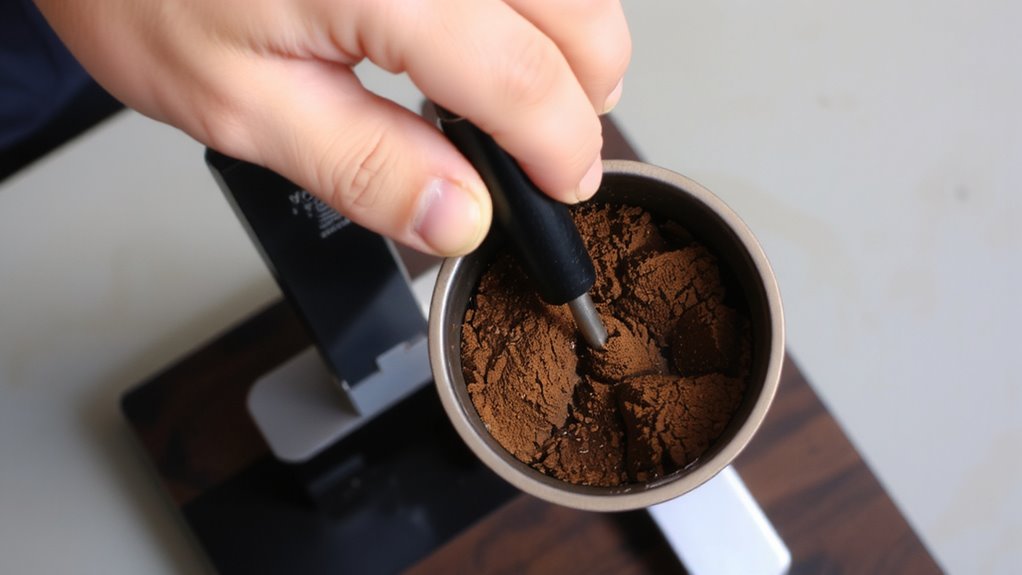
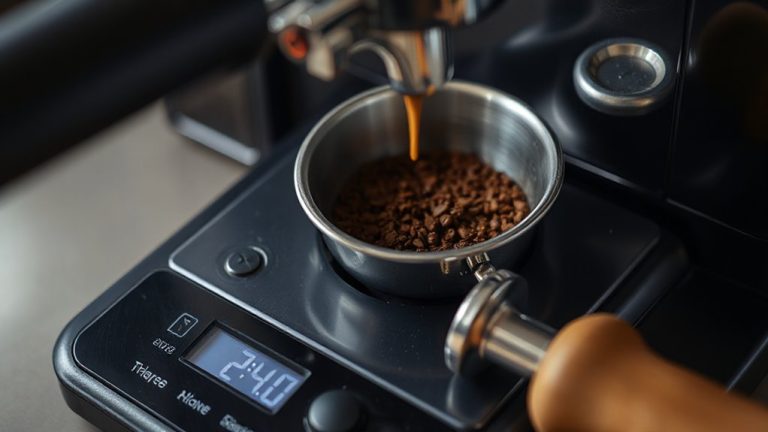
Fine grinds pack tightly by nature, so applying heavy pressure when tamping can overcompact the coffee bed and restrict water flow. You’ll end up with uneven extraction or worse-stalled shots. Instead, use light, even pressure to settle the grounds without sealing them. Aim for about 5–10 pounds of force; more isn’t better here. Your goal is tamping consistency, not brute strength. A calibrated tamper, like the Reg Barber or Puqpress models, helps maintain pressure sensitivity across shots. Uneven or excessive tamping leads to channeling, especially with finicky fine grinds used in espresso. Keep your wrist stable, apply pressure straight down, and check the puck after a few test shots. If you see cracks or water pooling, adjust your technique. A light hand, combined with uniform contact, gives you control and repeatable results-no guesswork needed. For those seeking precision, investing in a calibrated tamper can make a significant difference in shot consistency.
For Coarse Grinds, Apply Firm and Consistent Tamping
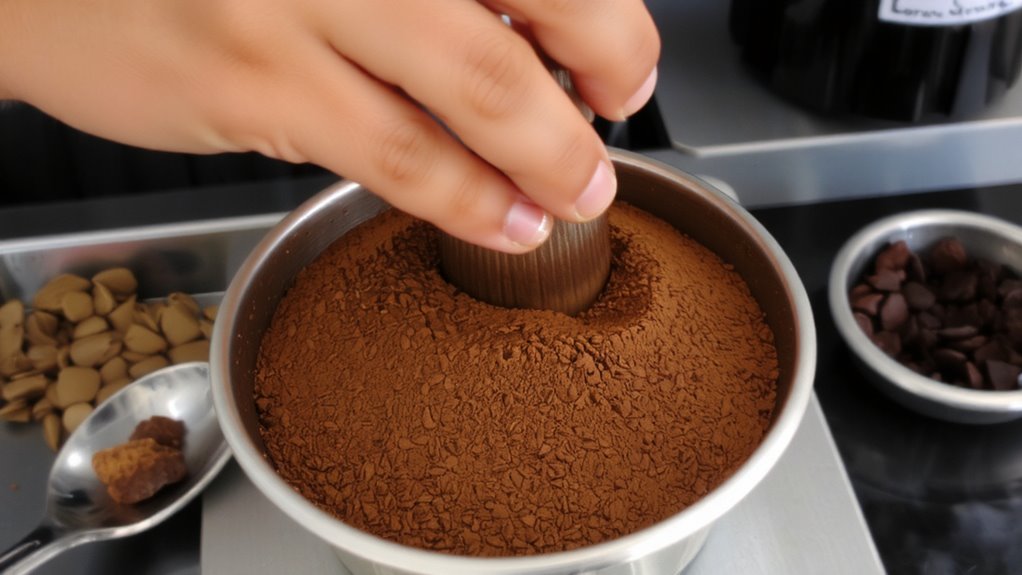
A coarse grind needs firm, consistent tamping to guarantee even water flow during brewing, especially in espresso shots where gaps between grounds can lead to channeling. When you use a coarse grind, the larger particles create more space in the puck, so a firm tamp helps compact them evenly and reduce uncontrolled pathways. Unlike fine grinds, which lock up easily, coarse grinds require deliberate pressure-around 30 pounds-to stabilize extraction without over-compressing. Stay level and steady; uneven tamping ruins the shot balance. Choosing the right Best Mill Grinders ensures consistent particle size for optimal tamp performance.
| Grind Size | Tamp Pressure | Resulting Flow |
|---|---|---|
| Coarse | Firm tamp | Controlled, even |
| Medium | Moderate | Balanced |
| Fine | Light | Slow, restricted |
Always match your tamp style to the grind-you’ll see better flavor and consistency shot after shot.
How Grind and Pressure Control Water Flow
Because water follows the path of least resistance, how you grind your beans and apply pressure directly shapes the flow during extraction. A finer grind increases water resistance, slowing the flow rate and risking over-extraction if not monitored. Go too coarse, and water resistance drops, causing a fast flow rate that may leave your shot tasting weak or sour. Tamping applies even pressure to compact the grounds, helping control how water moves through the puck. Without proper tamp pressure, channels form-water rushes through gaps, creating uneven extraction. Machines like the Breville Barista Express let you tweak grind size and dose, giving you leverage over flow rate. Even a good scale and timer can help fine-tune results. Ultimately, balancing grind size and tamp pressure gives you consistent water resistance, ensuring even, flavorful shots every time.
Fix These 3 Tamping Mistakes for Better Grind Balance
You’ve seen how grind size and tamp pressure shape water flow through the puck, but even the right settings can’t fix poor tamping habits. First, avoid tamping at an angle-uneven contact creates channeling. Use a calibrated tamper like the Pullman Big Step to guarantee level pressure distribution. Second, don’t tamp too hard. Excessive force compacts fines excessively, especially with finer grinds, restricting flow. Aim for 30 pounds of pressure; many baristas over tamp, thinking more is better, but consistency matters most. Third, skip the twist at the end. It disturbs the bed and ruins tamping consistency. Instead, lift straight up. A flat, level tamp with even pressure distribution helps water move uniformly. These fixes are simple but effective. Use a distribution tool like the Stockfleth or OCD before tamping to help. Small changes improve extraction balance fast-no gear upgrade needed.
Balance Dose, Basket, and Tamp for Even Extraction
Getting the right balance between dose, basket size, and tamp pressure is key to pulling even, repeatable shots. If your dose is too high for the basket, you’ll overfill and restrict flow; too low, and you’ll see channeling. Standard 18g double baskets work best with doses close to that weight-go with a precision scale. Basket material matters: stainless steel is durable and neutral, while coatings like titanium may alter heat transfer slightly. Always align your tamp orientation squarely to avoid uneven puck compression, which leads to imbalance. A misaligned tamp skews extraction, no matter how consistent your pressure. Match your basket type-ridgeless vs. ridged-to your tamper for better fit and stability. These details aren’t fussy-they’re foundational. Nail the trio of dose, basket, and tamp, and you’ll set the stage for extraction consistency every time.
Adjust Tamping Pressure in 1kg Increments When You Change Grind Size
Once you’ve matched your dose to the basket and confirmed a level, even tamp, the next variable to fine-tune is tamping pressure-especially when adjusting grind size. Going finer? Increase pressure in 1kg increments to maintain tamp consistency and prevent under-extraction. Coarsening the grind? Reduce pressure the same way to avoid over-compacting, which can restrict flow. This gradual approach supports precise pressure calibration, letting you respond to subtle changes in resistance. Most baristas start at 15kg and adjust up or down based on shot time and taste. Digital tampers like the Pullman Chisel or Reg Barber offer real feedback, helping you stay accurate. But even with a standard tamper, practicing consistent motion and measuring pressure improves control. Small tweaks make a real difference: too much force on a fine grind causes channeling; too little on coarse means weak, fast shots. Adjusting in 1kg steps keeps extraction balanced and repeatable.
On a final note
You need to match your tamping pressure to grind size for even extraction. Fine grinds require lighter pressure-around 15–20kg-to avoid restricting water flow. Coarse grinds need firmer tamping, about 25–30kg, to compact the bed properly. Adjust in 1kg steps when changing grind size. Always use a calibrated tamper, level dose, and check basket condition. This balance stops channeling and improves shot consistency, especially with machines like the Lelit or Decent.