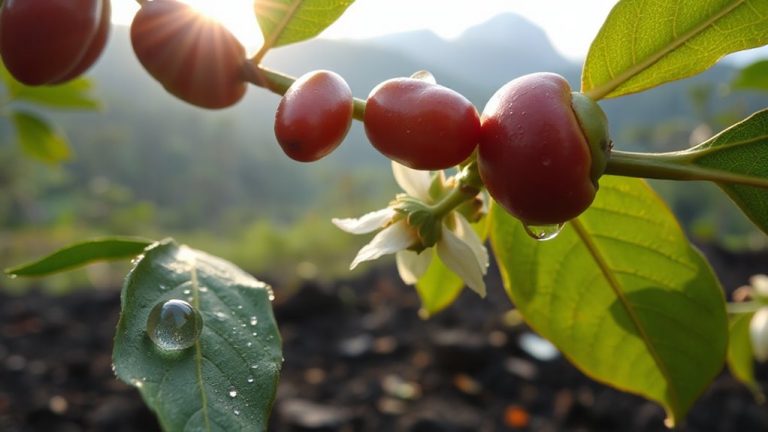
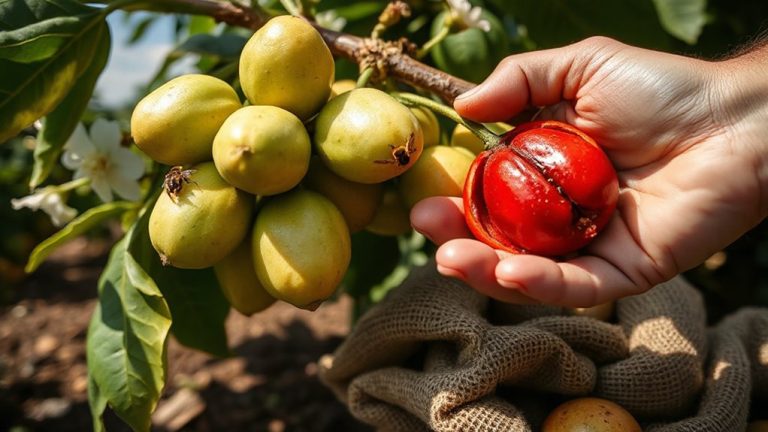
What Makes Gabon’s Rainforest Coffee a Conservation-Driven Experiment
You’re growing coffee under intact forest canopies in Gabon, preserving wildlife corridors and protecting biodiversity. This shade-grown method stops deforestation, stores carbon, and enriches soil without chemicals. Farmers earn fair wages and access carbon credits, all while maintaining native trees. It’s a working model where agriculture supports conservation instead of harming it-proving farms and forests can coexist. See how this approach reshapes farming in rainforest regions.
Notable Insights
- Gabon’s rainforest coffee preserves intact forest canopies, eliminating deforestation for farmland.
- Shade-grown methods maintain biodiversity by mimicking natural forest ecosystems.
- Wildlife corridors on farms enable safe animal movement between protected areas.
- Farmers earn carbon credits by storing carbon in preserved forest ecosystems.
- Conservation-aligned income supports communities without compromising long-term environmental health.
Gabon’s Rainforest Coffee: A Conservation Experiment
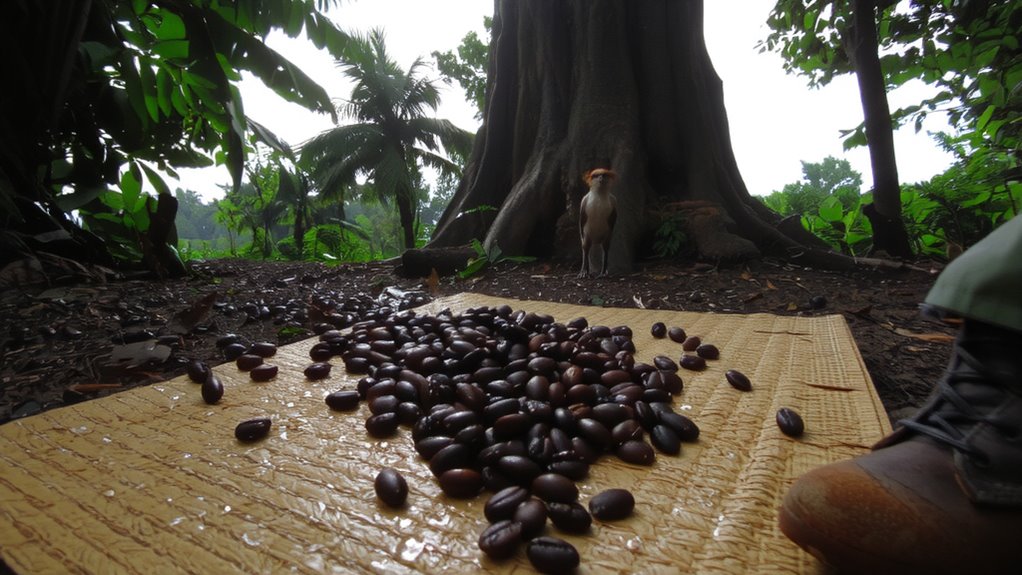
While you might not expect a coffee to come from one of Africa’s last dense rainforests, Gabon’s new Rainforest Coffee is more than just a brew-it’s part of a conservation plan. You’re supporting wildlife corridors when you choose this coffee, helping animals move safely between protected areas. These corridors reduce human-wildlife conflict and maintain genetic diversity. The coffee farms also contribute to carbon sequestration by preserving native tree cover instead of clearing land. This stored carbon helps slow climate change. Unlike full-sun plantations, Gabon’s approach integrates coffee into the existing forest canopy, requiring minimal disruption. You’ll find the beans have a smooth, earthy profile, best brewed with a pour-over or French press to highlight their complexity. It’s not the cheapest option, but the price supports both farmers and ecosystem health. Choosing this coffee means backing a model that values long-term environmental gains over short-term yields.
How Shade-Grown Coffee Protects Biodiversity
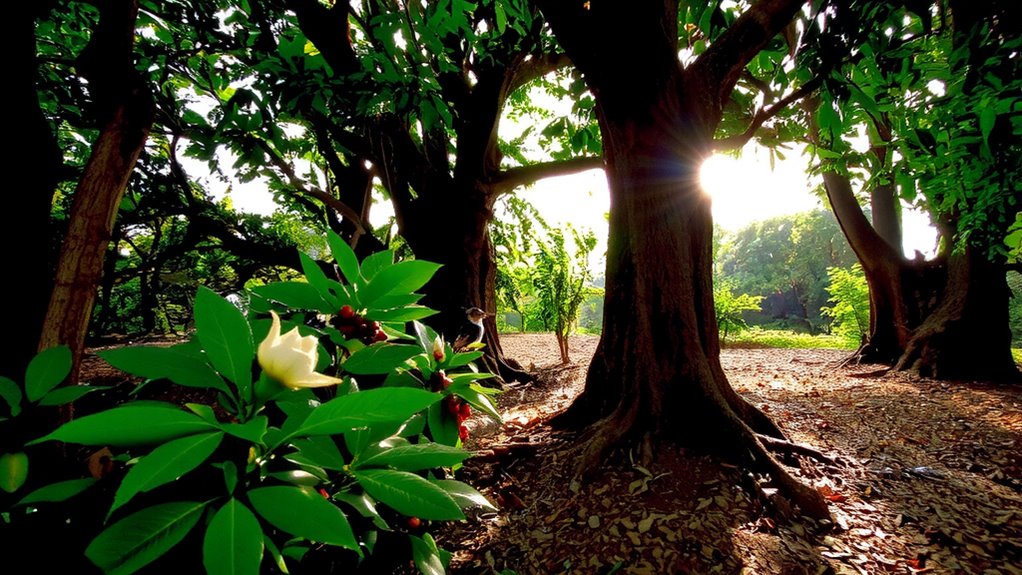
Your morning cup can play a role in preserving biodiversity when you choose shade-grown coffee like Gabon’s Rainforest Coffee. Instead of clearing forests for full-sun plantations, shade-grown farms keep trees overhead, creating a stable ecosystem. This method reduces forest fragmentation by maintaining canopy cover, allowing animals and plants to move and thrive. It also slows soil degradation, since tree roots hold soil in place and fallen leaves enrich the ground naturally. Without constant erosion or chemical reliance, the land stays productive longer. You’re not just buying coffee-you’re supporting a system that mimics natural forests. Compared to conventional sun-grown coffee, which often leads to habitat loss and weak soil, shade-grown options offer a resilient alternative. It works especially well in biodiverse regions like Gabon, where protecting native ecosystems is key. Your choice helps sustain both wildlife and long-term farming.
Why Coffee Helps Stop Deforestation in Gabon
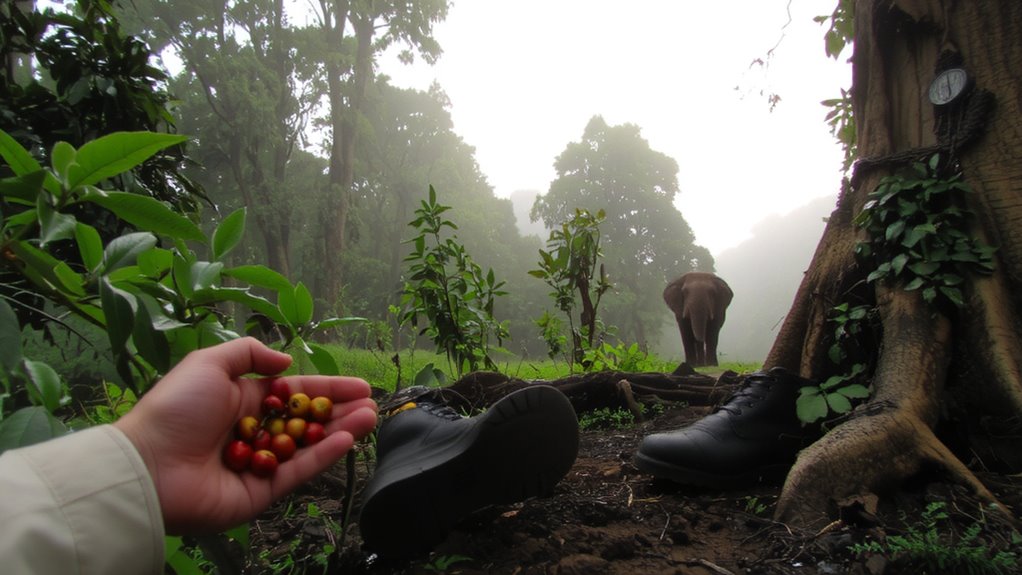
Because coffee farms in Gabon are grown under forest canopies instead of replacing them, they help reduce the pressure to clear new land for agriculture. You support forest retention simply by choosing this coffee, since farmers earn income without cutting down trees. This system aligns with carbon farming-keeping forests intact stores carbon and helps combat climate change. Unlike sun-grown coffee, which demands full deforestation, shade-grown methods preserve tree cover and soil health. These farms also qualify for carbon credits, offering extra revenue that reinforces conservation. Through sustainable trade, buyers get high-quality beans while funding forest protection. Certification guarantees transparency, so you know your purchase has real impact. It’s a practical model: farming that doesn’t sacrifice forests. By supporting this trade, you help maintain Gabon’s ecosystems without sacrificing farmer livelihoods. It works where other conservation models fail, offering a realistic alternative to land conversion.
The Ecology of Farming Under the Canopy
How does farming coffee under the forest canopy actually work? You preserve the existing forest structure, letting native trees shade coffee plants below. This mimics natural growing conditions, reducing sun stress and need for irrigation. The intact canopy limits weed growth and pests, cutting chemical use. You’re not clearing land, so soil composition stays rich in organic matter and microbes, which boosts water retention and nutrient cycling. Roots from original vegetation hold soil, preventing erosion common in full-sun farms. Coffee grown this way matures slower, often improving bean density and flavor potential. However, yields are lower and harvesting takes more labor. You’ll need to manage spacing carefully-too dense, and coffee struggles; too open, and you risk disrupting shade balance. It’s not ideal everywhere, but where forest structure remains intact, this method supports ecological stability while producing high-quality beans.
How Communities Gain From Rainforest Coffee
While coffee may grow under the canopy, it’s the people beneath those same trees who see real, lasting benefits. You’re part of a system where Fair trade agreements guarantee you earn stable, livable incomes, protecting you from market swings. Organic certification means you use no synthetic pesticides, preserving soil and water-key for long-term farming success. These standards aren’t just labels; they open access to premium markets, increasing your profits. Workers receive fair wages, and community funds support schools and clinics. Because farms stay small-scale and labor-intensive, more jobs are created locally. Unlike industrial plantations, this model keeps wealth in your hands, not corporate ones. Equipment is simple-handheld harvesters, sun-drying beds, low-tech depulpers-so maintenance stays affordable. Training focuses on quality control, boosting bean value. You work smarter, not harder, using clear methods that improve yield without harming the forest. This isn’t charity-it’s a practical, trade-based path to resilience.
Can This Model Work in Other Rainforests?
This approach in Gabon shows how small-scale, canopy-grown coffee can support both people and forests, but that doesn’t mean it fits every rainforest region automatically. You’d need similar governance, low population pressure, and intact canopy cover to replicate it. In places like the Congo Basin or parts of Borneo, where deforestation pressures are high, combining coffee with carbon credits could add financial incentives to keep forests standing. You’d also have to think about ecotourism potential-some areas attract visitors interested in wildlife and sustainable farming, which strengthens community income. But without access to specialty markets or fair pricing, this model won’t stick. Unlike sun-grown coffee, shade-grown systems take longer to yield but protect soil and biodiversity. You’d need strong local cooperatives, technical support, and buyer partnerships to succeed. Carbon credit programs must be transparent and accessible to smallholders. It’s not a one-size-fits-all fix, but with the right mix, it could work in select high-conservation zones.
On a final note
You’ll need medium roast settings to highlight Gabon’s shade-grown coffee’s smooth, earthy notes without burning its delicate flavors. Use a burr grinder for even grounds and a pour-over or French press to capture its full body. This coffee supports forest conservation, but only if demand grows. For best results, brew with freshly boiled water at 200°F. It’s practical, planet-friendly brewing-no extra gear needed, just attention to source and freshness.