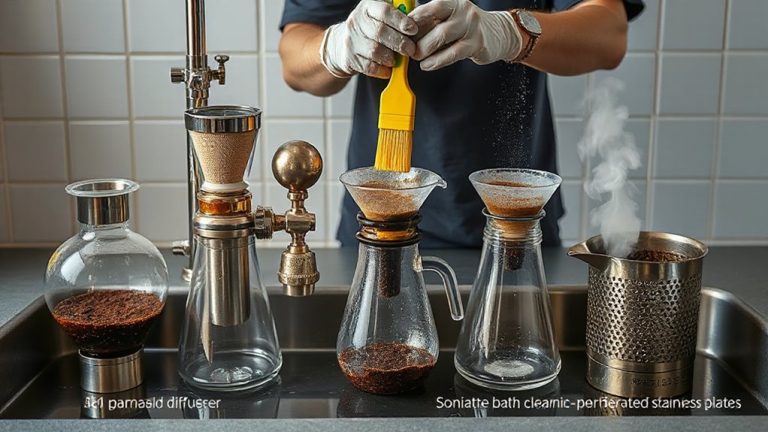
Why Pre-Ground Coffee Residue Accelerates Burr Deterioration
Pre-ground coffee packs fine particles tightly into burrs, especially in low-clearance grinders like the Baratza Encore or Fellow Ode, increasing friction and motor strain. Its exposed oils oxidize quickly, forming a sticky residue that traps grinds and accelerates wear. Flavored or oily blends can even corrode stainless steel burrs over time. This gummy buildup dulls edges faster than whole beans, reducing grind quality. You’ll also clean more often. Keep your grinder running smoothly-know what’s really at stake with each dose.
Notable Insights
- Pre-ground coffee’s fine particles pack tightly in burrs, increasing friction and accelerating wear.
- Oxidized oils from pre-ground coffee turn gummy, creating sticky residue that traps particles and damages burrs.
- Sticky residue builds up rapidly, forcing motors to work harder and increasing mechanical strain.
- Flavored pre-ground coffees contain additives that corrode stainless steel burrs over time.
- Residual sludge from static-prone pre-ground coffee raises cleaning frequency and promotes long-term burr degradation.
Does Pre-Ground Coffee Ruin Your Grinder?
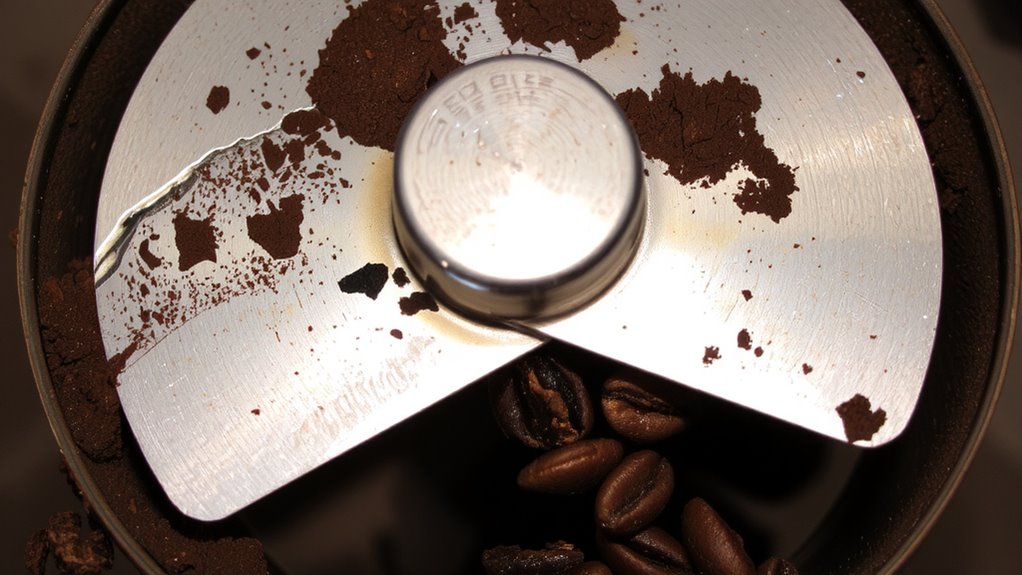
Why risk damaging your grinder by running pre-ground coffee through it? Pre-ground beans might seem convenient, but they can cause real issues over time. Since the grounds are already fine, they pack into the burrs and lead to grinder clogging, especially in low-clearance flat or conical grinders like Baratza Encore or Fellow Ode. This blockage forces the motor to work harder, creating unnecessary motor strain that wears components down faster. Unlike whole beans, which move smoothly through the mechanism, pre-ground coffee doesn’t break apart, increasing the chance of jams. While occasional use may not destroy your grinder immediately, repeated use raises the risk of long-term damage. For consistent performance and longevity, it’s best to grind fresh. Your grinder isn’t designed to process powder-it’s built for beans. Keep it clean, reduce wear, and protect your investment with proper use. Upgrading to a high-quality Best Mill Grinders & Buying Guide can further ensure durability and optimal grind performance.
Why Pre-Ground Coffee Leaves Sticky Residue in Burrs
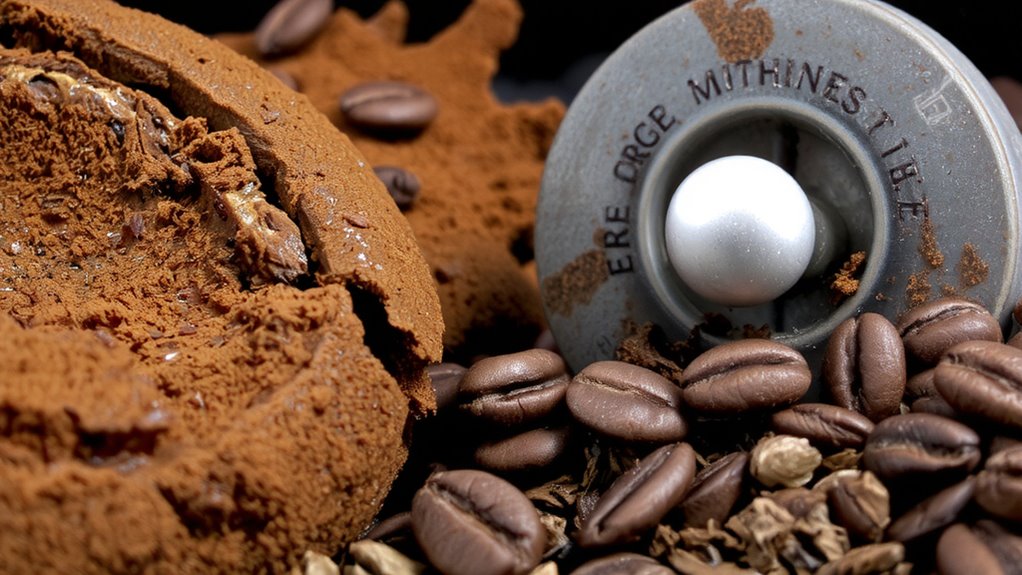
While fresh beans flow cleanly through your grinder, pre-ground coffee often leaves behind a sticky residue that clings to burrs over time-especially if the grounds have been sitting for a while. This happens because pre-ground coffee exposes more surface area, allowing coffee oils to oxidize and turn gummy. These oils contribute to residual buildup, trapping fine particles and creating a paste-like film on burr surfaces. One key reason this occurs is due to the compromised grind quality when using pre-ground coffee, as emphasized in comprehensive buying guides that highlight the importance of grinder performance and maintenance.
| Factor | Fresh Beans | Pre-Ground Coffee |
|---|---|---|
| Oil exposure | Low, sealed in bean | High, already released |
| Grind consistency | Uniform, dry | Inconsistent, can clump |
| Residual buildup | Minimal | Common |
| Cleanliness over time | Easier to maintain | Requires frequent brushing |
| Impact on grind quality | Stable | Degrades with residue |
You’ll notice clogging and flavor carryover faster when using pre-ground, all due to this sticky, oil-driven mess.
How Oils and Additives Accelerate Burr Wear
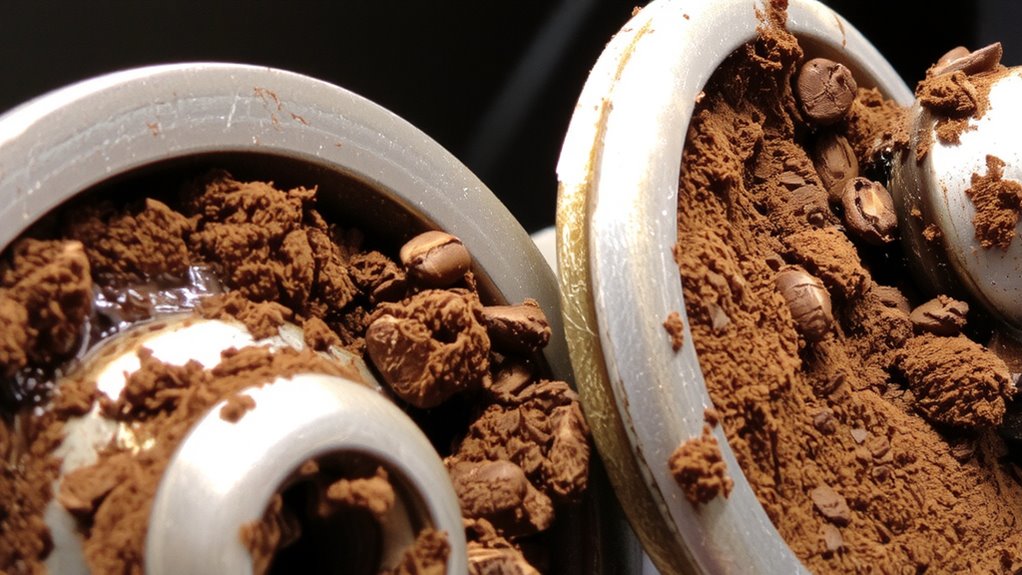
That sticky residue from pre-ground coffee isn’t just a cleaning hassle-it actively wears down your grinder’s burrs over time. When you use pre-ground beans, especially oily or flavored ones, oil buildup accumulates on the burrs, creating a grinding surface that’s less precise and more prone to drag. Over time, this gummy layer increases friction, forcing the motor to work harder and accelerating wear. Worse, flavored coffees often contain additives that cause additive corrosion, particularly on stainless steel burrs. These chemicals eat away at the metal, dulling edges and compromising grind consistency. Unlike plain coffee oils, which might just clog, these additives actively degrade the burr surface. If you’re grinding pre-flavored beans regularly, you’ll likely see reduced performance in months, not years. Cleaning helps, but avoiding flavored or oily beans altogether is the best way to protect your grinder and maintain consistent results.
Why Heat and Friction Degrade Your Grinder Faster
If you’re running your grinder for long sessions or dialing in fine for espresso, you’re probably generating more heat than you realize, and that buildup takes a toll. As burrs spin rapidly, friction raises temperatures quickly, especially with high-density beans or fine settings. This heat causes thermal stress, making metal expand and distort slightly over time. Repeated expansion and contraction weaken the burr’s structure, leading to mechanical fatigue. Once fatigue sets in, burrs lose sharpness faster and produce uneven grinds. Even premium grinders like the Mazzer Super Jolly or Eureka Mignon Silent suffer this if overused without breaks. Letting your grinder rest between batches helps dissipate heat. Frequent grinding without pauses speeds up wear, reducing precision and shortening the tool’s lifespan. You don’t need to stop entirely-just space out use. That small habit slows degradation and keeps results consistent longer. A well-maintained Best Espresso Grinders Under $500 can still face premature wear if exposed to constant heat and friction without proper usage intervals.
Why Pre-Ground Coffee Is a Nightmare to Clean
Grinding generates heat, and heat wears down burrs over time-but that’s not the only downside of how you handle your beans. When you use pre-ground coffee, you’re skipping the grind but inviting serious cleaning challenges. Pre-ground is finer and more static-prone, sticking to grinder components even after use. That leftover powder leads to rapid residue buildup, especially in the burr chamber and chute. Unlike whole beans, which leave minimal waste, pre-ground dust cakes in moisture and oils, creating a gritty sludge that’s tough to remove. You’ll find yourself brushing, wiping, and disassembling more often just to keep things functional. Over time, this gunk increases friction and clogs moving parts, stressing the grinder. Simple maintenance turns into frequent deep cleaning-time you didn’t plan for. If you want fewer cleaning challenges and less residue buildup, skip pre-ground. Your grinder will run cleaner and last longer.
Whole Beans Keep Your Grinder Sharp and Clean
Your grinder’s longevity starts with what you pour into the hopper-whole beans. When you use them, you avoid the oily buildup and static-cling fines that pre-ground brings, keeping burrs cleaner and cooler. Whole beans don’t clog the grooves, so your grinder runs with better grinding efficiency and maintains consistent particle size over time. You also preserve bean freshness-exposure to air starts degrading flavor the moment you grind, so grinding just before brewing locks in aroma and taste. Machines like the Baratza Encore or Fellow Ode handle whole beans well, lasting years with basic brushing. Pre-ground might seem convenient, but it sacrifices both flavor and function. Sticking to whole beans means fewer clogs, less wear, and no hidden gunk dulling your burrs. It’s a small step that boosts performance and extends your grinder’s life-practical, effective, and backed by daily results.
On a final note
Using pre-ground coffee leaves sticky oils and additives in your grinder’s burrs, speeding up wear over time. The residue builds up, increases friction, and traps heat, dulling the blades faster than whole beans. Cleaning becomes harder, too, since gunk gets packed deep in the mechanism. Whole beans grind cleaner, reduce buildup, and help maintain consistent performance. For longevity and better taste, grinding fresh isn’t just ideal-it’s practical maintenance.