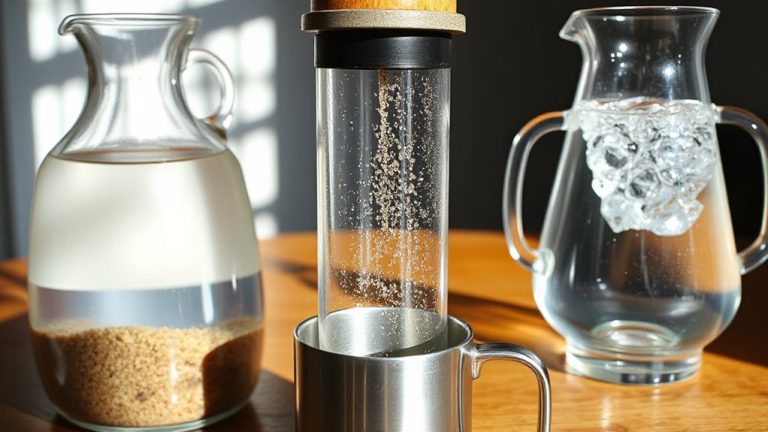
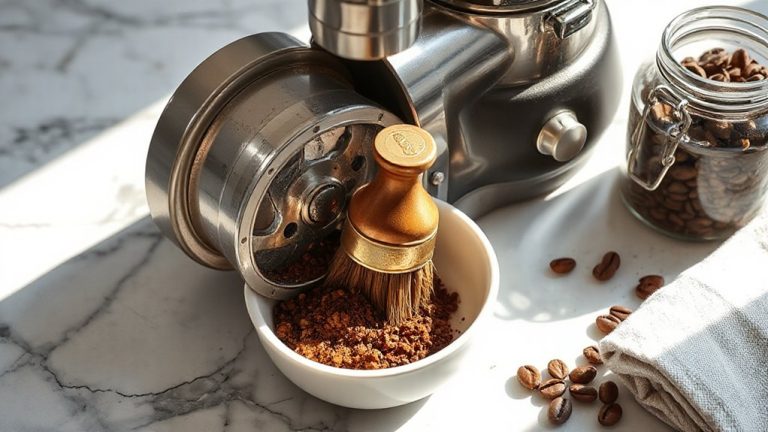
Deep Cleaning Procedure for a Cold Brew Coffee Tower’s Multiple Chambers
Empty all chambers and remove baskets before disassembling your tower. Soak parts in a mix of one part white vinegar to three parts water-or use Cafiza to avoid lingering taste. Scrub chambers with a soft brush, clear tubes with a pipe cleaner, and flush water backward through the spout. Rinse well, check seals, reassemble securely, and run filtered water through the system. You’ll keep flavors clean and flow consistent. There’s more you can do to maintain peak performance over time.
Notable Insights
- Disassemble all chambers, removing filter baskets and checking seals to prevent leaks during reassembly.
- Soak removable parts in a vinegar-water solution or Cafiza to break down oils and mineral deposits.
- Scrub chambers and tubing with soft brushes, using bottle brushes for interior surfaces and pipe cleaners for narrow tubes.
- Flush the system backward with clean water to clear clogs and remove loosened residue from internal pathways.
- Reassemble with intact gaskets, then sanitize with food-grade peroxide and flush with filtered water before use.
Why Buildup Ruins Your Cold Brew Tower
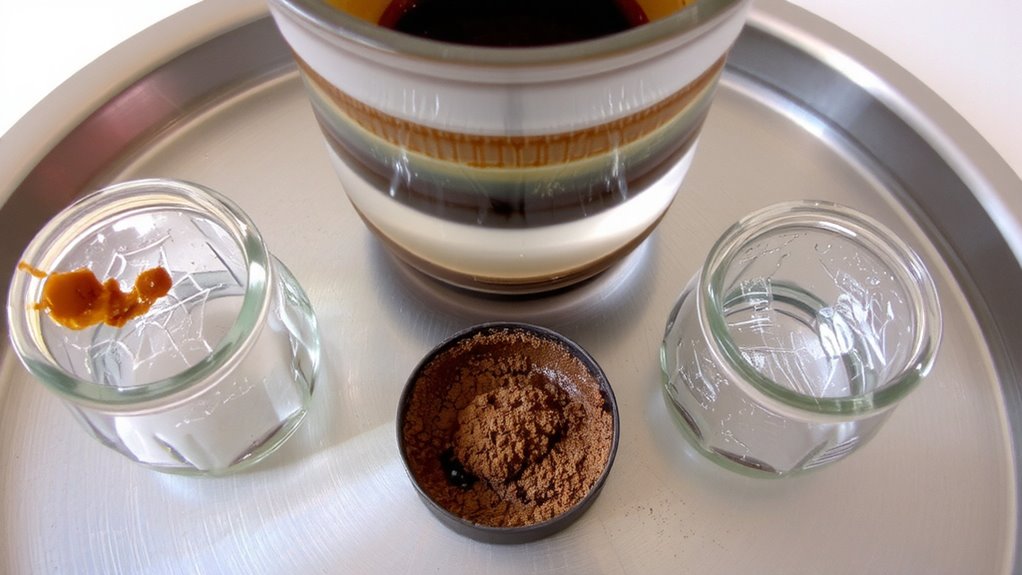
While it might seem harmless, buildup in your cold brew tower can silently wreck both flavor and function over time. Mineral deposits and coffee oils accumulate in the chambers and tubing, altering water flow and blocking even saturation. This residue affects coffee flavor, often adding bitterness or dulling its natural brightness. Even if you use cold water, which slows extraction, trapped residues react unpredictably-especially if your setup is exposed to fluctuating water temperature during cleaning or prep. Over time, inconsistent water temperature and clogged pathways lead to under-extracted or over-steeped batches. You might not notice right away, but the coffee flavor degrades subtly with each brew. Regular cleaning prevents this. Keeping the tower free of buildup guarantees stable water temperature distribution and consistent extraction, preserving the clean, smooth cold brew you want. Neglecting it risks ruining both taste and equipment longevity. Choosing the right camping coffee makers ensures ease of use and cleanability, which can inform better maintenance habits even with complex systems like cold brew towers.
How to Safely Disassemble a Multi-Chamber Tower
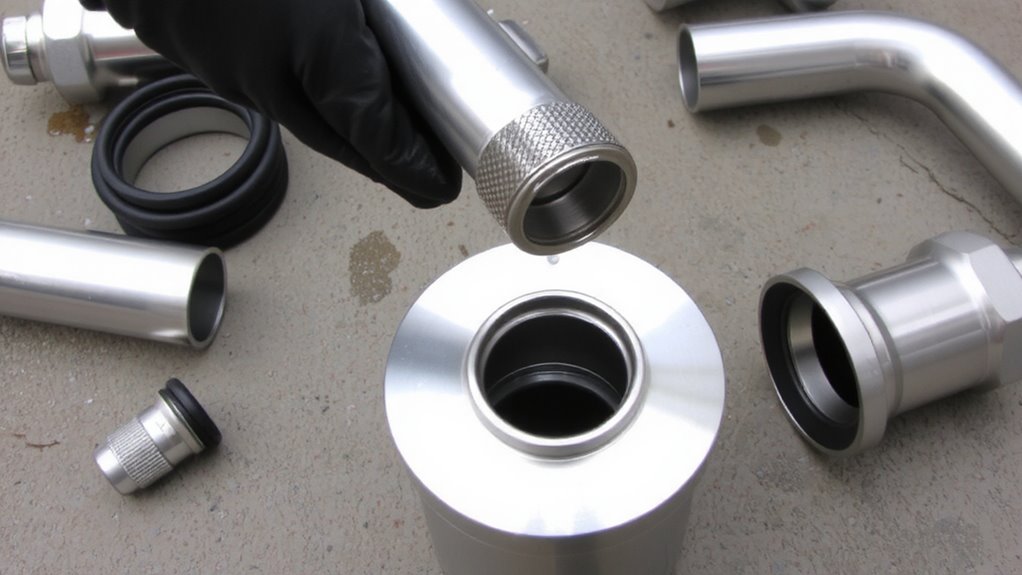
Most multi-chamber cold brew towers break down into a few key parts: the upper reservoir, middle chambers, filter baskets, tubing, and base. To disassemble safely, start by emptying all chambers and removing the filter baskets. Pay close attention to chamber alignment-misaligned chambers can cause leaks or slow drip rates. Carefully separate each chamber, checking for tight seals and cracks during seal inspection. Store small parts together to avoid loss. Choosing the right cold brew maker can significantly impact ease of cleaning and maintenance, especially with multi-chamber towers designed for high-volume brewing.
| Part | Tool Needed | Common Issue |
|---|---|---|
| Reservoir | Hands only | Cracks near spout |
| Middle Chambers | Hands only | Misalignment |
| Filter Baskets | Hands only | Clogged mesh |
| Tubing | Pliers (optional) | Sticky residue |
Handle each piece gently to avoid warping connections. Proper disassembly sets the stage for effective cleaning.
Best Cleaning Solutions for Coffee Oils and Residue
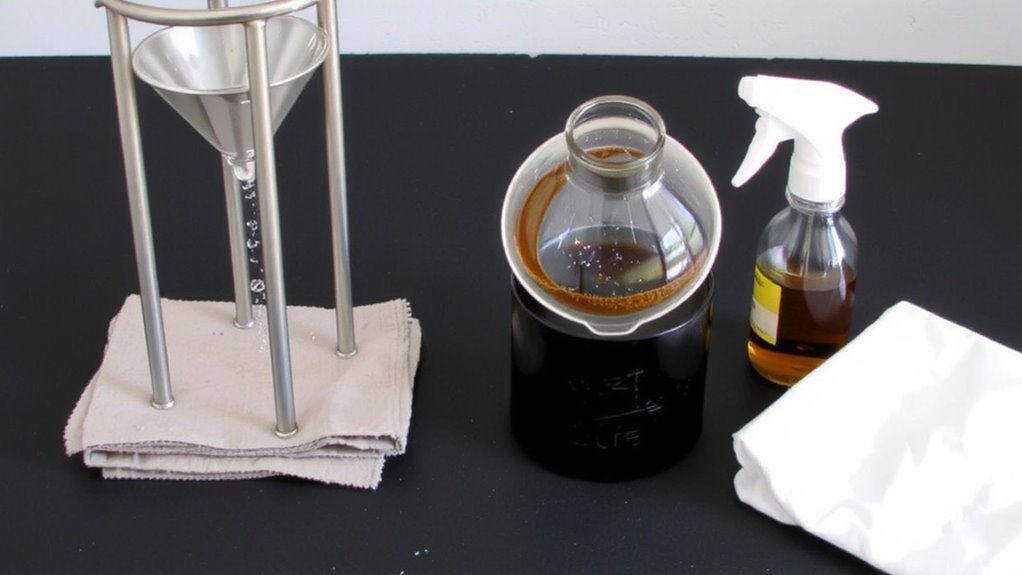
Now that you’ve taken the tower apart and checked each piece for damage, it’s time to tackle the sticky, oily residue that builds up from repeated cold brew use. Skip plain water-it won’t cut through oils. Instead, use a mix of one part white vinegar to three parts water. The mild acidity helps break down residue without harming food-safe plastics or metal. Alternatively, specialized coffee cleaner like Cafiza works well and avoids any lingering vinegar taste. Avoid high water temperature-hot water can bake on oils, making them harder to remove. Lukewarm water is best. Never mix vinegar with commercial cleaners; doing so can create harmful fumes. Also, don’t rely on vinegar long-term-it’s less effective on heavy buildup and repeated use may degrade seals over time due to coffee acidity exposure.
Scrub, Soak, and Flush Every Chamber and Tube
Since residue can hide in narrow tubes and hidden chambers, start by soaking all removable parts in your chosen solution-vinegar mix or Cafiza-for at least 15 minutes to loosen stubborn oils. After soaking, gently scrub each chamber and tube with a soft brush to preserve tube flexibility and avoid damaging surfaces. Pay close attention to connection points where chamber alignment affects flow. Flush all parts with clean water to remove any leftover cleaner.
| Part | Tool Needed | Tip |
|---|---|---|
| Main Chamber | Bottle brush | Check for cloudiness |
| Connecting Tube | Pipe cleaner | Test tube flexibility weekly |
| Filter Basket | Soft-bristle brush | Align before reattaching |
| Spout | Small brush | Flush backward to clear clogs |
This routine helps maintain performance and prevents clogs.
Reassemble and Sanitize for a Fresh Brew
With all components cleaned and thoroughly rinsed, it’s time to put the tower back together with care. Start by inspecting each gasket and O-ring-proper seal integrity is critical to prevent leaks and maintain consistent water pressure. Reattach chambers in the correct order, ensuring fittings are snug but not over-tightened, which could damage the seals. Once assembled, run a sanitizing solution-like a diluted food-grade peroxide or no-rinse sanitizer-through the entire system. This step kills residual bacteria without affecting taste. After sanitizing, flush with filtered water to remove any trace of cleaning agents. Double-check flow calibration by releasing water through each chamber; it should move smoothly and evenly. Uneven flow may indicate misalignment or blockage. A well-reassembled tower guarantees reliable performance and better cold brew extraction over time.
Prevent Mold and Buildup Between Cleanings
Regularly rinsing your cold brew tower after each use can go a long way in preventing mold and mineral buildup between deep cleanings. Proper air circulation and consistent cleaning frequency are key to maintaining performance and longevity. After rinsing, disassemble the chambers and let them air-dry upside down to promote moisture evaporation. Avoid leaving water sitting in the system, as stagnant moisture encourages mold. Store the tower in a well-ventilated area to improve air circulation and reduce dampness. For optimal results, consider using one of the best cold brew coffee makers that are designed for easy maintenance and durability.
On a final note
You’ve cleaned each chamber and tube, now reassemble carefully to avoid leaks. Use food-grade sanitizer before brewing again. For best results, rinse daily and deep clean weekly with a mix of warm water and vinegar or a dedicated coffee cleaner like Urnex. This prevents mold and residue, especially if you run sweetened brews. A clean tower means smoother, better-tasting cold brew every time-no off-flavors, no clogs.